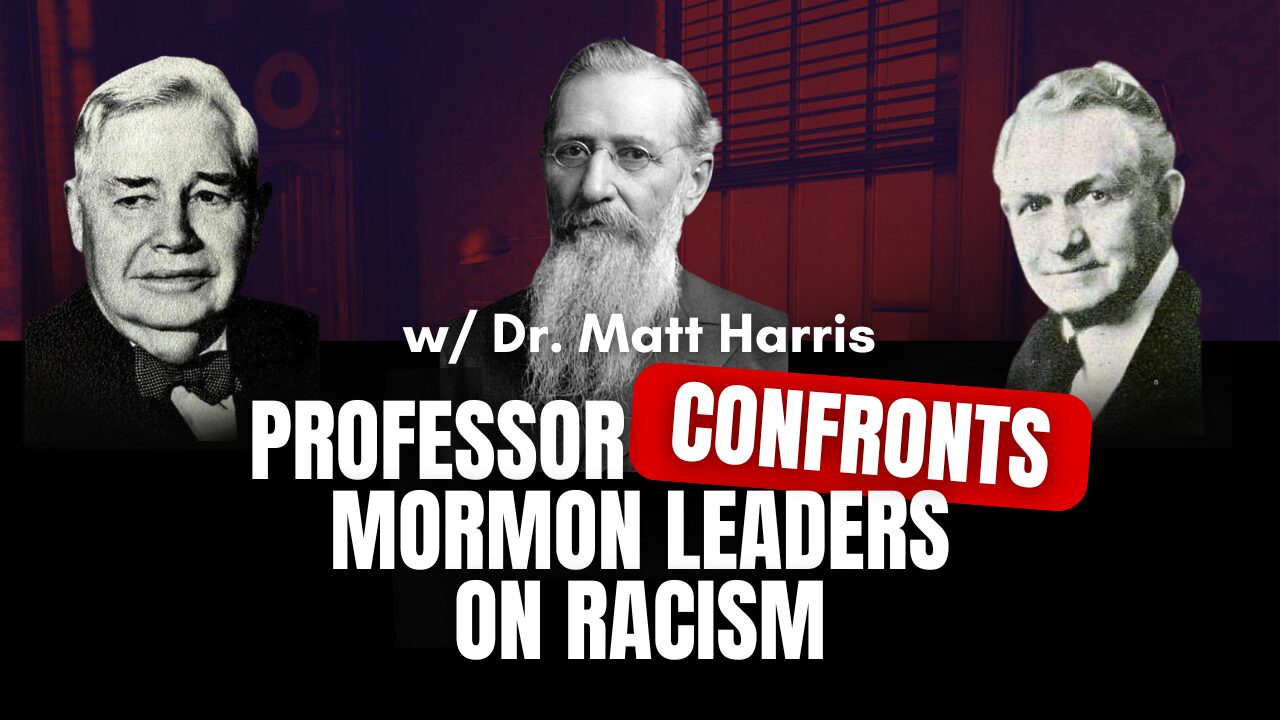
The Professor Who Confronted Mormon Leaders on Racism – Lowry Nelson
Listen on Apple Podcasts Spotify YouTube Download MP3
About this episode
In 1947, Lowry Nelson, a respected Mormon academic, challenged the LDS Church’s racist policies in a series of letters to top leadership. Occurring on the cusp of the Civil Rights Movement, the First Presidency reacted by doubling down on encoding white supremacy into Mormon doctrine. Nelson wasn’t ready to give up though and continued to flirt with excommunication by publishing his correspondence with the brethren in a national magazine. Explore with us the story behind these letters and the national reaction once they became public.
We are thrilled to announce that we have reached our donation goal to compensate Dr. Matt Harris for his contributions to this series. We sincerely thank everyone who supported this effort. While the goal to pay Matt has been met, producing this series incurred significant costs for the Open Stories Foundation. If you find value in this content and want to help cover these expenses and support future productions, we encourage you to donate at mormonstories.org/donate. Your generosity makes a difference—thank you!
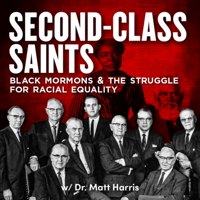
Purchase Matt Harris’ book, Second-Class Saints: Black Mormons and the Struggle for Racial Equality
You can read The Lowry Nelson Letters directly on our website:
Lowry Nelson 1st Presidency Exchange [PDF]
Originally published on mormonstories.org.
Transcript
Machine-generated and lightly edited. Click any timestamp to jump the audio to that moment. The audio is authoritative; please check it before quoting.
Introduction to the Series and Episode
John Dehlin Hi everyone. This is Dr. John Dehlin of Mormon Stories podcast. I want to thank you for joining us today on this epic 17 part series featuring Dr. Matthew Harris and his amazing book, Second Class Black Mormons and the Struggle for Racial Equality. This series has been groundbreaking. We've never had the response so far that we've had in terms of people really valuing our in depth coverage. This groundbreaking book that's talking about the Mormon Church's priesthood and temple ban against black people and then the dynamics, the inner workings, the political machinations of how the sausage gets made in terms of lifting the priesthood ban in the aftermath. So we have some good news and bad news about this series. The good news is thanks to the generous donations of those who have been watching it so far, we've been able to, I believe, more than generously compensate Dr. Harris for his contributions. That's the good news. The bad news is, you know, because we made the promise that 100% of the donations would go to Matt, we have not received any compensation for about the $20,000 of production costs that we incurred to produce this series and that that sort of imbalance would make it so we wouldn't be able to produce series like this going forward. So. So if you value this series, if you want to see the Open Stories foundation also be compensated for its production cost for this series and if you want to see series like this with Matt and with other people, continue, we kind of need you to step up and donate to cover our production costs. And it's really easy to do that. All you have to do is go to mormonstories.org donate or go to mormorstories.org and click on the donate button and you can do a one time donation, a recurring donation, and if you want to, you can type Second Class Saints or Matt Harris in the description and that will hopefully allow us to cover our production costs for this epic series. Regardless, we want to thank Dr. Matt Harris for his generosity in doing this series. We want to thank all of you who have supported us. Please go buy this book, Second Class Black Mormons and the Struggle for Racial Equality. And again, if you're wanting, if you're grateful for this series and you haven't donated and you want to see it continue, please please donate to Mormon Stories Podcast. Thanks again to everyone who donated to make the series possible. Thanks to Matt and we hope you enjoy this next episode in the series. Take care. Hello everyone and welcome to another edition of Mormon Stories Podcast. I'm your host, John De lynn. It is 6-6-2024. We are here for part three of our amazing, epic, groundbreaking series on this book, Second Class Black Mormons and the Struggle for racial equality by Dr. Matthew Harris. As those of you know, we're doing a deep dive into the Mormon Church's priesthood and temple ban on black people that lasted for over 150 years. And this, this is not only integrated into the Mormon Stories podcast feed, but it's also its own standalone podcast on Spotify and on Apple Podcasts. Wherever you get your podcast. Today we're going to be covering one of the most important heroes in 20th century Mormonism, or maybe in all of Mormonism. And his name is Lowry Nelson. Dr. Lowry Nelson. I assume he is a Ph.D. will. I'm pretty sure he was. But this is a man who stood up for black members of the church, stood, even spoke out against the priesthood ban in the 40s, 1940s and 50s, and had not only a public debate with another BYU professor in a national magazine, but also had several exchanges with the Mormon Church First Presidency. And eventually this led to kind of of forced the hand of the Mormon Church First Presidency, which led to one of the first, if not the first sort of doctrinal affirmations of the priesthood ban, which later gets reinterpreted as the opinions of church leaders. Not necessarily doctrine, just policy. Anyway, this is a really important episode and I am joined today again by my colleague in all good things, Gerardo Simono. Hey, Gerardo.
Gerardo Sumano Hi, John.
John Dehlin Thanks for joining me.
Gerardo Sumano Yes, of course. I'm really excited about this one.
John Dehlin Yeah. And we've got, of course, the author of this book, Matt Harris. Hey, Matt, welcome back.
Matt Harris Hey, John. Hey, Gerardo.
John Dehlin So really quickly, I just do what I do every time. This is a, this is kind of a pilot. We're three episodes into what we hope to be a series much like the John Larsen series on Mormon and much like the LDS discussion series. So at some point we're going to have to assess whether y' all want this series to continue. But the way that you can vote for it would be to become a monthly donor. Go to donorbox.org mattharris Sign up to become a monthly donor. If we get, let's just say 50 to 100 of you to donate 10 bucks a month, I'm certain that we can make this a 10 to 20 part series. And I'm also certain that the world Mormons, progressive Mormons, ex Mormons, never Mormons, will all benefit from this really thoughtful discussion because it doesn't just talk about the Mormon Church priesthood ban. And temple ban and racism. But it also talks about how the Mormon Church makes decisions, how the inside Mormon leadership, how issues get raised, how they get debated, how they get decided, how the church deals with dissenters. All of that is super crucial. And why we believe this is worth a series because it extends far beyond into even how the church has dealt with critics in recent times, how it deals with women, how it deals with the LGBT issues, just how the church changes. So anyway, please donate to this series so that it can become the 10 to 20 part series that it deserves. All right, so before we jump in, anything that Gerardo, anything you want to say as a precursor to this deep dive on Lowerly Nelson?
Gerardo Sumano No, other than I agree with you that this is probably going to be a, well, this is going to be a really important episode where we're going to get really interesting correspondence with the First Presidency. I think these are, are topics that a lot of our audience are really interested to hear.
Origins and Foundations of the Priesthood Ban
John Dehlin All right. All right. So Matt, we debated whether or not to start by doing a deep dive into the scriptural bases, basically the main Mormon scriptures in Book of Moses and Book of Abraham and the Book of Mormon that were used to kind of justify the priesthood ban by some general authorities. We decided we're going to hold that analysis for a future episode dealing with Adam Bennion, Apostle Adam Bennion and Lowell Bennion. So, but, but for some reason I felt like that would be an important place to start today's episode. And I don't know if that's, if you would even want to say anything about that before we jump into Larry Nelson, but where do you think we should begin on our discussion of Larry Nelson, other than I have one question, and that would be were there any, were there any opponents, private or public, to the priesthood ban before Lowry Nelson starts speaking up in the mid-1940s? Maybe let's start there. And anything else you want to say about Scriptural justification?
Matt Harris Yeah, so I think the best way to talk about the scriptural justifications would be to talk about, just to briefly recap some things we've said over the past couple of segments, which is that in 1852 the ban was put in place by Brigham Young, which also barred people of black African ancestry from the temple. And throughout the 19th century, there are various racial theories circulating among high church leaders about why they can't hold the priesthood. Some leaders argued that it's because they were less valiant in the pre existence. Some argued that it's because they were neutral. They were offense, sitters in the pre existence, that is they didn't take sides between, in this war between Jesus Christ or Jehovah and Satan. Some argued that they were cursed. They bore this biblical curse and this is why they were denied the priesthood. And some argued for all of the above, some form of all the above. So needless to say, it raised a lot of questions in the minds of Latter Day Saints about why it was that the church had barred people of black African descent from the temple and the priesthood. And so they wrote the brethren questions or sent them letters in Salt Lake asking them questions about why they were barred. And there was really no doctrine up until the mid 20th century. It was more of a policy and a practice and less about a doctrine. And as we're going to talk about today, it becomes a doctrine. In 1949. The brethren will solidify these policies and practices of black priesthood denial into doctrine. And one of the pivotal figures in this story would be a man named Lowry Nelson. But with the Scriptures, there are four different.
John Dehlin Can I just jump in and just say we covered in last episode that both Joseph F. Smith, Tell me if I'm wrong. The Mormon prophet Joseph F. Smith and Mormon eventual Mormon Apostle and prophet Joseph Fielding Smith both. It's our understanding that both acknowledged in the early 20th century that they couldn't find any record of, of a priesthood band being codified by Joseph Smith or Brigham Young. Is that right?
Matt Harris Yeah, that's an important point. And they, Joseph F. Smith and his counselors in the First Presidency, they had looked and looked and they weren't the only ones. But they had looked at some of the founding revelations to ascertain whether the band began with Joseph Smith or Brigham Young and whether there was an actual revelation from God suggesting why black people ought to be banned. And they couldn't find one. And they write letters among themselves talking about, you know, we're looking and we can't find one. But nevertheless, they maintain this narrative that the ban began with Joseph Smith, even though some of a handful of black men were ordained to the priesthood in the early days of the Church. They argue that he was the founding prophet. He was the one that exposited the great founding doctrines of the church, and therefore he must have put the ban in place that Brigham Young and other successors had followed. So it's a little bit nebulous with the provenance and the origins of the ban and from Joseph F. Smith's part. And so there's a lot of confusion about again, who started the ban and when and by whom and what were the justifications for the ban, and this would all be settled in the 20th century.
John Dehlin And also in last episode, we talked about Joseph Fielding Smith being commissioned by the first presidency to write this book, the way of Perfection, where he basically neglects to mention black people receiving the priesthood during Joseph Smith's time. And this sort of begins, this puts the church on the road to codification of the priesthood ban as doctrine. Wouldn't you say that's fair?
Matt Harris It is. And when, because of the various racial theories circulating, Joseph Fielding Smith wrote this book to systematize the church's race teachings, he felt that he had the authority of the first presidency to do it. And the book is not just about black people in the priesthood, but certainly those are the most aggressive chapters in the entire book, chapters 15 and 16, in which he articulates a new systematic theology, trying to understand how black people fit into the plan of salvation, why they were cursed, and what it would take to remove that curse. And so the chapters are really, really explicit. And we also talked about last hour, that the brethren, by the mid 20th century, they recognize that this book is controversial. And when they translated into Portuguese, in particular, they remove chapters 15 and 16 because they don't want Brazilian and Portuguese Latter Day Saints to read these offensive chapters.
John Dehlin Okay.
Gerardo Sumano Even though they didn't remove it from the English version for decades.
Matt Harris Right. It was, as far as I know, it was never removed from the English versions up until they, they. So it was published in 1931, went through, I think, 17 different reprinting over the years. And I checked with my good friend, sad to say, the late, great Kurt Bench, who owned a wonderful bookstore in Salt Lake called Benchmark Books. His son now runs it. But anyway, Kurt used to work for Deseret Book. And I asked Kurt, I said, you know, the way to perfection just seems to have disappeared. When did it happen? And I had an idea when it happened, but I wasn't quite sure. And so Kurt looked at some old catalogs from desert Book that he had at Benchmark, and Kurt speculated that it was removed from Desert bookshelves sometime in 1989 and 1990, when the church was starting to expand globally and calling its first black general authority and so forth. So, but the last edition that I've seen from 1989, actually, the last edition was 86, I think they removed it. 89. But anyway, it had 15 and 16 in there.
John Dehlin Okay, so you were saying, I, I, I stopped. I just want to make sure we got the, the Joseph feeling Smith part in. So where I, I Guess we were wondering, I was wondering if there were any other dissenters, significant dissenters, internal or external. We talked about Talmage. Was it Widstow last time? Thomas or Widstow, one of the two Witso. Elder Witso, Any outright opponents to the priesthood band, internal or out? Internal that you know of, Internal or external prior to Larry Nelson?
Matt Harris Yeah. So Elder Widow did not support the ban and didn't support, I should say that he didn't support the One Drop role. Maybe that's more accurate because what we see in the Council of 12 Minute Records that Elder Widtso recommends ordaining biracial Latter Day Saints to the priesthood. And that would of course contradict the One Drop rule. And so he's not comfortable with that. J. Reuben Clark is another high ranking church leader. He's in the First Presidency. He is not comfortable with the One Drop rule. And just to remind your listeners, the One Drop rule means that if you have 100 people in your ancestral line and one of them has ties to Africa, just one out of the hundred, you would be deemed cursed. You would be denied the priesthood and access to the temple. And also in 1930, the U.S. census used the One Drop rule to define African ancestry. So it's, it's, it's, it's sort of mainstream at this point in the United States and that the church follows this, this rule. All right, so let's see. Elder Widtsoe would be one of them. And then we're going to talk about today or maybe next episode, an apostle named Adam as Bennion. He would be another one who opposes the priesthood ban.
Mormon Racial Theology in Flux Before Lowry Nelson
John Dehlin Before Lowry.
Matt Harris Just a, just a. Well, hard to say, but certainly around the time of the 1940s that Elder, Elder Bennion has reservations about it. And David O. McKay, who's an apostle and he would go on to become the LDS Church president from 1952 to 1970, but when he was an apostle. Elder McKay is starting to have some grumblings within. And I think it's really important to contrast something for a quick moment. And that is just because Elder Bennion, Elder WIDTSO and Elder McKay have reservations about the ban and the One Drop rule and so forth. It doesn't mean that they're really, really pressing the issue. These guys are consensus figures. They're not activists. And we'll see that change later on in the late 1950s and 60s when Hubie Brown comes into the first presidency, he not only rejects the priesthood ban, but he spends every minute of the day, figuratively speaking, trying to end it. And he does so in ways that Latter Day Saints couldn't even imagine today. So a few people, mid century, Marion D. Hanks, who was called in as a general authority, and I think 46 or 47, he does not support the ban, but he's a lower ranking general authority. He doesn't have the cloud of the 12. But I guess the important point here is that most of the apostles will follow Joseph Fielding Smith and his hardline views.
John Dehlin Okay, okay. So. So definitely no like agitators. Let's just say Lowry Nelson might be the first known real agitator against the priesthood ban. Right. Confrontational activist agitator.
Matt Harris There's no question about it. He's okay. Yes.
John Dehlin All right. Okay, let's keep going.
Lowry Nelson's Background and Growing Concerns
Matt Harris All right, so, well, let's talk about. With the Mormon racial theories and teachings in flux by the mid 20th century, with members being confused about, you know, were they less valiant, were they neutral, all of that stuff, this all comes to a head in 1947 when a Mormon academic named Lowry Nelson should give you his biography. He was born in the late 19th century in a little small town in Utah called Farron F E R R O N and grew up in an orthodox Mormon home. And he went to Utah State Agricultural College where he graduated, went on to do PhD work in sociology at the University of Wisconsin in the 1920s. And in his academic career he taught at BYU for a short stint, he taught at Utah State, what would become Utah State, and he spent the bulk of his career at the University of Minnesota teaching sociology. And he retired in, I think, 1958. He also spent some time, brief stints in between his academic work, working for the New Deal, the Franklin Delano Roosevelt administration, working in agricultural affairs. And so his specialty is sociology and particularly Cuba. And so doing his field work over the years, he spent a lot of time in Cuba. So he knew this island well, he knew the population well, he knew that it was biracial, he knew that it was the last one of the last. It was a long standing slave colony. It produced sugar. And so he knew that it had a long history of race mixing. And so in 1947, Lowry Nelson, Professor Nelson, received a letter from an old friend of his named Heber Meeks. And Heber Meeks, they grew up together and I think they knew each other in college as well. But Heber Meeks, he was the president of the Southern States Mission at the time, in the 1940s. And out of the blue, I don't think he had talked to Lowry in a Long time. But out of the blue, he wrote Lowry a letter and he said, hey, the Brethren have asked me to gauge the feasibility of expanding our mission into Cuba. So he's in the Southern states mission with the Southern United States. But the Brethren wanted to add Cuba on as part of his responsibility. And so he was tasked by the First Presidency to look into sending missionaries to Cuba. And he said, he asked Lowry, he said, you've been to Cuba many times. What do you think? What is the possibility of us preaching the gospel to Cubans who have a pure white blood? Now, this is just.
John Dehlin Can I ask a question, Matt?
Matt Harris Yeah.
John Dehlin So was Larry Nelson. I know he was at byu. I hope you didn't just say this. You mentioned he was at what, Minnesota for a long time?
Matt Harris Yeah.
John Dehlin Did he become a BYU teacher after Minnesota?
Matt Harris Yeah. Yeah, thanks for the question. I neglected to say something critical, which is he leaves BYU under a cloud of controversy because he is unorthodox.
John Dehlin But is that before Minnesota or after?
Matt Harris This is before.
John Dehlin Okay, so he's at BYU before Minnesota.
Matt Harris He's at BYU before he's Minnesota.
John Dehlin Tell us about that. Tell us about that.
Matt Harris And so he, he, this is really interesting because at BYU he teaches for a short period. He's, he knows the authorities. He meets John A. Widtsoe, the apostle that we talked about a moment ago, who doesn't support the ban or at least the one drop rule. So he becomes close friends with John A. Widtso when he's on the faculty at byu. He becomes, I don't know if they're friends, but they were certainly strongly acquainted with a man who would later go on to be the BYU president, a guy named Ernest Wilkinson. So he got to know Ernest Wilkinson when he was on the BYU faculty. Lowry was just a little bit older than Ernie Wilkinson. And in the 1920s, the late 1920s, Lowry Nelson had Ezra Taft Benson and Mark E. Peterson in class. And later on, Lowry Nelson would brag to a friend when he was criticizing Elder Benson and some of his political views. He said, this guy is not very bright. I only gave him an A minus when he had me in class. I think it was tongue in cheek because he did think that Elder Benson was smart. But anyway, so he did have connections with two of his students would later go on to be apostles. And also Elder Widtso, who was a well respected apostle at the time. And he leaves BYU under a cloud of controversy when he says to a few of his associates that he doesn't really believe in the Trinity. He doesn't Know if there's a God, doesn't know if there was a Christ who was redeemed for our sins. And, you know, for a person teaching at a church school to make this admission, that's a problem. And it gets back to church President Heber J. Grant. They call Larry Nelson in, and he's the kind of guy that doesn't have a filter. He doesn't know. I shouldn't say, doesn't know boundaries. Maybe he does and just doesn't care, but he's not very circumspect. And he tells the president, he said, it's true, I'm having some issues about the Trinity. And you know, what happens next? President Grant responds, I don't know if BYU is a good fit for you. So Larry Nelson leaves under a cloud of controversy when he denies the Trinity to the church president.
John Dehlin Okay, wait, what do you. What do you. Do you know, what?
Gerardo Sumano Did.
John Dehlin Is there any deeper reading on what his concerns about the Trinity were, or do you just not know?
Matt Harris He. I'm basing this on is one of the things I'm basing this on is his autobiography that I have and that he published in 1985, a year before he died. Oh, and later in life, he was really, maybe, as most people want to do as they get older, that he was very thoughtful and reflective about his life. And so he talks about his time at BYU in his autobiography in 1985. And he said that he just didn't feel that this. That there was anything to the scriptures. He didn't think that there was any reason or evidence for it. Clearly, I guess a proper Christian response would. Would be that he lacked faith. But. But that was where he was at. He just. And he also. He didn't think that the suffering that he saw in. In the world, he just couldn't reconcile that with the Maker.
John Dehlin Okay, so he was questioning the existence of God. Is that what you.
Gerardo Sumano Oh, yeah.
Matt Harris Oh, yeah.
John Dehlin Okay. So was it like, is God three separate beings versus one? The whole Book of Mormon has a trinitarian view of. Of God. And then Joseph Smith develops the three separate beings later. It's not that. It's just. Is there a God at all?
Matt Harris No, it's all of that. John.
John Dehlin Got it.
Matt Harris Got it. He's. He's like. I guess you would say he was an agnostic. He wasn't a militant atheist by any stretch, but he certainly questioned if there really was a God. And he read church history, the First Vision, and Joseph Smith, he became very skeptical about that. I'm not sure at what point in his life he started to have these grumblings? Certainly when he was at BYU in the 1930s. But did he, did he develop these, these thoughts as a young, younger man? I don't know. But he certainly became more outspoken in his heretical views as he aged. And as we'll find out in just a moment, he starts to criticize what he calls the Negro doctrine. And you can see his voice and his tone getting more militant with each passing year point in the 1970s, after a long history of criticizing the Brethren, 1975, he tells one of my good friends, the late, great Armin Moss. He wrote Armin a letter in 1975 and he just said, you know, I just don't give a damn anymore. I'm going to make my views known and if it hurts anybody's feelings, I don't care, you know.
John Dehlin Do you know if he talked about his doubts or non belief more in detail in his autobiography? Did he lay it all out there?
Matt Harris He does, yeah.
John Dehlin Then I want to read, I want to read that for sure.
Matt Harris Yeah, he does.
John Dehlin Because I mean, now it's in vogue to be atheist or agnostic or to be skeptical the church's truth claims, but I'm just not aware of, you know, of people really thinking about that or talking about it prior to like Fon Brody, you know, Fon Brody comes out in 45 where she's attacking the church truth claims head on. I wasn't aware of other Mormon intellectuals doing that prior to Fawn Brody.
Matt Harris Well, I think there's an important distinction with, between Larry Nelson and Fawn Brody. I mean, when Fawn Brody writes, no man knows my history. I mean, her uncle is, is, would go on to be the church president. Right. Her father, Thomas McKay, is a member of the First Quorum of the 70s. She's got deep roots in the church.
John Dehlin Yeah.
Matt Harris And she's doing this publicly, whereas Lowry Nelson is doing it privately. That's a big difference, right?
John Dehlin Yeah. I didn't know it. I just didn't know if it existed at all. I've just been wondering for quite some time, when did Mormons start becoming atheist agnostics and you know, losing their faith entirely? I'm just, I'm just curious when that started happening, you know.
Matt Harris Well, for Lowry argue. For my reading anyway, I'll stand corrected. But for my reading, it probably happens in the 1930s.
John Dehlin That's fascinating.
Matt Harris And I mean, can you imagine today a BYU professor, you know, telling a few colleagues, you know, I really don't know if there's A God.
John Dehlin Oh, it's happening all the time.
Matt Harris Yeah, no, I, I'm aware, I'm aware. I'm just saying that the people who are doing this, and I don't want to say, you know, anything more about this really, but the people that, that feel this way, they're just doing it in private to a few, you know, people that they're friends with. Right?
John Dehlin Yeah.
Matt Harris Yeah. Whereas Larry Nelson obviously didn't know his audience. He told a few people that maybe he thought he could trust, or maybe he just never occurred to him that they may rat him out to the church president. But that's what happened.
John Dehlin Okay.
Matt Harris Got back to the church president.
John Dehlin So it's likely that in 47, he doesn't really believe in the Church's truth claims at all anymore, right?
Matt Harris No, no, because at first, we'll talk about this, but at first his, his questions or his letters to the First Presidency about the priesthood banner gentle. And then you can see this sort of tone where he just, you know, several letters in, he's telling them they're racist and he doesn't hold back.
Gerardo Sumano But you were getting to a good point where, like, this is true. The reason why he's writing the First Presidency is not just because he had questions. It's like he's really riled up by the fact that the brethren have asked his friend Meeks to open a mission in Cuba. And Meeks asking him, do you think I'm going to be able to find white blood, pure white blood in Cuba? And he's like riled up by this. And this is what triggers him to write the First Presidency?
Matt Harris Is that, is that right, Trigger? Yes, this is what triggers him to write the First Presidency. Because Lowry Nelson, he wrote back Meeks right away and he said, are you kidding me?
John Dehlin Okay, wait, wait, wait, wait. I want to actually read it. I've got it up here.
Matt Harris Yeah. Okay, let's do it.
John Dehlin Discourteous. But I wanna. I've got a couple things I want to show. So here's the letter. And we're going to share this. We're going to share this, these PDFs, hopefully. Julia. I've copied them up to the directory, but this is the letter. Y' all can download this yourselves. It's basically Church of Jesus Christ, Office of Latter Day Saints, Office of the Southern States mission, Atlanta, Georgia. June 20, 1947. Heber Meeks is the mission president. A letter to Lowry Nelson. And I just, I just want to read a little bit of it. You know, he starts out Dear Lowry and you know I visited Cuba doing missionary work. Blah, blah, blah, Havana, you know, I learned that you're a specialist in Cuba. And then he writes, I would appreciate your opinion as to the advisability of doing missionary work, particularly in the rural areas of Cuba, knowing, of course, our concept of the Negro.
The Mission President's Letter and Cuba Question
Gerardo Sumano Can you zoom in? Just use the zoom button on Acrobat on the right side.
John Dehlin Thank you. Thank you, Gerardo. Is that better?
Gerardo Sumano Yeah, I can't see.
Matt Harris A little better.
Gerardo Sumano I can't see it. You stop sharing.
John Dehlin So there we go.
Gerardo Sumano Yeah.
John Dehlin Is that better?
Gerardo Sumano That's great.
John Dehlin Okay, thanks, Roto. Okay, so he goes on. First of all, he's calling them the Negro, which I think is common. But then he writes on, are there groups of pure white blood in the rural sections, particularly in the small communities? If so, are they maintaining segregation from the Negroes? The best information we received was that in the rural communities there was no segregation of races. And it would probably be difficult to find with any degree of certainty groups of pure white people. Okay, I'm already, like, triggered. Then he goes on, I would also like your reaction as to what progress you think the church might be able to make in doing missionary work in Cuba. In view of, particularly in the rural section, the ignorance and superstition of the people and they're being so steeped in Catholicism, do you think our mission, our message would have any appeal to them? So I could go on, but I'd love to hear your reactions to, to, you know, Gerardo or, or Matt, your reactions to this letter and, and what he's trying to do here.
Matt Harris Go ahead, Gerardo.
Gerardo Sumano Well, he, he's definitely a believer in this one, one drop rule. Right. So that's why he's talking about the pure white blood and, and asking if he's going to be able to find white pure blood people to baptize in Cuba. Yeah,
John Dehlin this is a bit of. What is it called when you. Presentism, when you basically apply present sensibilities to the past. But this idea of a top Mormon leader saying, we got to find the white. We got to find the, the pure white people. He literally says pure white people. Like, that's just blowing up my modern sensibilities. Ma, this.
Matt Harris Wasn't this. The church's policy about black and biracial people with their missionaries was simple. We don't go to them, they come to us. And what that means is we don't specifically seek them out to proselytize because of the complications of the church's race teachings. But if they come to us and they know the restrictions, they know the theology, and they're still okay with that. We'll baptize them, we'll give them a patriarchal blessing. But that's really about as to the extent to which they could participate in the church. And so they're not. This is a classic example of when Meek says, you know, dear Lowry, what do you think about Cuba? You've been there. He's not saying we're going to teach black and biracial people. What he's trying to say is, is there a segregated part on the island that we can go to and talk to the people with pure white blood? This is the same thing they do with in Brazil as well, when they go into this, you know, biracial country. We'll talk about Brazil the next episode at length. But they go into southern Brazil because that's where the German people reside and their ethnic origins are certain in southern Brazil, whereas in northern Brazil, stay away from northern Brazil because Afro Brazilians are known to live in northern Brazil. So they're really targeting white people in black and biracial countries. And this is what's so challenging about this question is really born out of ignorance because Cuba, I mean, it's. It's absolutely impossible to detect who's got pure white blood when you have this island that has a history of interracial marriage.
Gerardo Sumano And don't forget that we talked about last episode, that there's this idea of pure white blood is. Is a fallacy. It's not true. It doesn't exist. Every. Everyone has some kind of black African ancestry in them. Is that, Is that right, Matt?
Matt Harris Yeah, yeah, that's correct.
John Dehlin Not just black, but also Neanderthal. I mean, it's. Right.
Gerardo Sumano Yeah.
John Dehlin Okay, so. So Lowry, Lowry gets this question from a mission president about Cuba. What happened?
Matt Harris And Lowry is. He's just, he. It catches him off guard and he, by this point, he's drifted away from the church a little bit. And of course, I don't think Hebrew Meeks knows this. And he writes Meeks back and he says, you know, this is just absurd on. On a. For a couple of reasons. Number one, it's absurd because there's no such thing as a pure white blood. This is an island with a long history of race mixing. And number two, these people are my friends. This is offensive to think that we can go in there and target certain groups of people and not others for salvation and so lower Nelson's bothered by that. And in the midst of all of this, Heber Meeks will present a report to the First Presidency. And I've got it right here. It's called.
John Dehlin Oh, wow.
Matt Harris Yeah. Submits a report to the First Presidency. It's called Report A Visit to Cuba. And he lays out a whole demographic about the population there. And I'll just read a couple of things from this report that is interesting. So he's got one segment that says why we should stay out of Cuba. Unfavorable factors, he calls it. The first one is possible restrictions against the church and introducing a doctrine of race superiority into an existing condition of race equality. The reaction may come from the government, from Negro leaders, entire mulatto element, a general public and our own government officials in Cuba. So we list five reasons why it could be problematic.
Gerardo Sumano So he's admitting that the. The Mormon Church has a doctrine of white superiority.
Matt Harris Yeah. Race superiority he calls. And he put that in quotes. Correct. He also says that there's another factor, the difficulty of determining Negro blood in large part of the population. And of course he's influenced by Larry Nelson here. The co mingling of the races have been going on for many years. Again, Larry Nelson. And no adequate records are kept by which color can be determined. And then a couple of more things. He says that the sins of the people mixing white and colored blood through marriage have denied them the blessings of the gospel. Then the last thing he says is they are of Latin blood, meaning Cubans. They are of Latin blood and if opposition arises, local or general, it would be swift, intense and ruthless. And then he also gives a rationale. I won't read them all, but he gives a rationale about why they should go into Cuba. He says that we need to carry the gospel to every kindred nation, tongue and people. He said that there are at least 1 million people on this island who are presenting their or preserving their racial purity that are entitled to all the blessings of the gospel. I'm not certain where he gets a million people preserving their racial purity, but that's what he says. There is a great need for the gospel, the program of the church among the white people. And he says the white element would be responsive to the progress of the church. So he makes it very clear that if we do go in there, it's the white people that need salvation. He doesn't seem to bother with people of African descent.
John Dehlin And who is that again you were reading from?
Matt Harris That's the report that Heber Meeks sends to the First Presidency about the pros and cons of going into Cuba.
John Dehlin Can I read really quickly some from Lowry's response back to Meeks, because I think it's really interesting.
Matt Harris Yeah, yeah, please.
John Dehlin Okay.
Gerardo Sumano Just so people know, this is going a little bit back. Right. Because Mix would have produced that report to the First Presidency after he got his response from Lori Laurie. So.
John Dehlin Yeah, that's fine. Yeah. This is six days later. Six days later, Larry Nelson writes Meeks back. Okay. And I'm just. I'm just going to read just a little bit, a few excerpts from it. So this is again, you know, June 26, 1947. Dear Heber, and you know, it's nice to hear from you after many years. I'm going to now the third paragraph. So this is Lowry Nelson talking. The attitude of the church in regard to the Negro makes me very sad. Your letter is the first intimation I have had that there was a fixed doctrine on this point. So I think that's interesting. So a prominent Mormon intellectual is saying, in the mid-1940s, I didn't know the church had a fixed doctrine on this point. That's interesting. Right?
Matt Harris Matt, he grew up in the church, and for him to not know or believe that there was a fixed doctrine is challenging. Well, he didn't know it because there wasn't a fixed doctrine.
John Dehlin Even though, you know, the way to perfection was out there. I mean, you know, but. But it's still. That wasn't perceived as doctrine up through mid-1940s, right?
Matt Harris Correct.
John Dehlin Okay. All right. So he's, he's sad about that. I had always known that certain statements had been made by authorities regarding the status of the Negro, but I had never assumed that they constituted an irre. Iraq irrevocable doctrine, which now we know doesn't exist. There's no such thing as an irrevocable doctrine. But that's interesting.
Gerardo Sumano I just want to point out something out. Is that. Is that a word that the First Presidency would later use on their statement?
John Dehlin Irrevocable?
Gerardo Sumano Yeah.
John Dehlin You'd have to ask Matt. I don't know. I don't know.
Gerardo Sumano We'll. We'll. We'll see later. I don't know. Just try to remember that word.
John Dehlin Yeah. I just want to say I don't think there is such thing as an irrevocable doctrine in 2024. But, you know, that's a side point because if anything, the church changes over time. Okay. I hope no final word has been said on this matter. I must say that I've never been able to accept the idea and never shall. I do not believe that God is a racist, but if the church has taken an Irrevocable stand. I would dislike to see it enter Cuba or any other island where different races live and establish missionary work. So that's a really cool point. He's saying if the church is going to be racist, then they shouldn't be doing missionary work to countries with people with African descent. And that's a really principled stance. Right? I mean, it makes sense to me.
Matt Harris Yeah, it's implausible to find a white race for one. And for two, it just violates any kind of sense of fairness and justice to. To favor certain groups of people. This is really progressive on his point, not just in the LDS Church, but also in the 20th century. I mean, this is the time of Adolf Hitler and his racial theories and racial hierarchies. This is a time of segregation. This is a time when black people were being lynched. This is a time of gross oppression. And here you have a Latter Day Saint intellectual who is really, really pushing back on his church for promoting racism in the larger American.
John Dehlin It's why I felt like that Larry Nelson deserved his own episode. Let's go ahead and go to the second page now of his letter. I'm skipping down towards the end. He writes, I am talking about the white people now. The rural people are predominantly white. That is, they are as white as Mediterranean peoples are Spanish, Italians, etc. Who have been in contact with color for centuries. The Moors occupied Spain, you know, for seven centuries. There are no pure races on this. Anthropologists are in general agreement. Of course, this does not mean that Negro blood. This does not mean that Negro blood exists throughout the white races or vice versa. There's grave doubt, however, as to the purity of the Nordic, Mediterranean or even the Negro, because I think our system of religious organization could serve the rural Cuban people as no other system could. I am sad to have to write you and say, for what my opinion is worth, that it would be better for the Cubans if we did not enter their island unless we are willing to revise our racial theory. And then he ends by saying, I repeat, my frankness or bluntness as you will, is born of a fervent desire to see the causes of war rooted out of the hearts of men. What limited study I have been able to give the subject leads me to the conclusion that ethnocentrism and the smugness and intolerance which accompany it is one of the first evils to be attacked if we are to achieve the goal of peace. What a legend. This guy's a prophet as far as I'm concerned. Matt or Gerardo, anything y' all want to say just in response to that letter? I think that's an awesome letter.
Gerardo Sumano Yeah.
Matt Harris This is the first time that arguably it's the first time the Brethren are hearing that there's no such thing as a pure white race. Anthropology doesn't support it. In our segment last hour, we talked about that. In the early 20th century, there was a famous anthropologist named Franz Boas, who essentially is the founder of anthropology, teaches at Columbia University. And, and he and his students had produced a spate of scholarship arguing that race is a construction, that the world is full of interracial encounters. It had been that way ever since. And so Lowry Nelson is the intellectual that he is. He's reading Franz Boas and other people making similar arguments. And so he's telling the Brethren, he'll ultimately tell the brother, and not just Hebrew Meeks, but he'll tell the brethren that there's no such thing as a white race. For you to pretend that there is is ethnocentric. And then later on, Lowell Bennion and others will follow up and let the brother know that there's no such thing as a pure white race. So they're being told this around the mid 20th century.
John Dehlin Okay, and.
Gerardo Sumano And if we go back a little bit, Susan, we talked about this before, but Susan Young Gates would have written a book already about, in the Mormon community, about this idea that there's not that all the races have been mixing for. For as long as races have existed.
Matt Harris Is that.
Gerardo Sumano Is that right?
Matt Harris Yeah, the word she used was the lineages have been blurred. But I think that the point to, to note from that is it goes right over their heads. They don't make that connection, and neither does Susan Young Gates either. They don't make the connection that because of these interracial encounters, there's no such thing as a pure race.
Gerardo Sumano Okay. Okay.
John Dehlin Okay. So Larry. Larry gets heated up by this question of Cuba. What happens next?
Lowry Nelson Shares His Views with Church Leaders
Matt Harris Well, he decides to share his views with the First Presidency. And as one can imagine, it doesn't go over well. If you want to put that letter up, John, that this might be a
John Dehlin good time to do it, here is June 26, 1947. So it's. It's the same day. It's the same day he writes back Meeks. So he writes Meeks. And on this, if I'm getting that right, it's the same day he writes George Albert Smith. So here's the letter. And it basically, you know, it's, it's, it's Addressed to George Albert Smith. Dear President Smith, I'm. I'm in receipt of a letter from Heber Meeks. I close it as a copy, with a copy, and then he writes out because perhaps I'm out of order, so to speak. It expects. Just.
Gerardo Sumano Sorry, just one point. Just pointing out that he's saying he's attaching his response as well to Meeks. So the first president, we have access to what he wrote to Meeks, not only to what he's writing to the first Presidency.
John Dehlin Oh, very good, very good, thank you. So he. So, okay, I didn't catch that. So, so, so basically you're saying George Albert Smith is put on notice that there is no pure race at all. Right, what you're saying.
Gerardo Sumano Yeah, yeah. If you read the first paragraph that's not highlighted, he says, I'm attaching my response to Meeks here.
John Dehlin Okay, got it. Thank you. But I want to just make sure we, we, you know, acknowledge the implications of that. Yeah, okay. So George Albert Smith has put on notice that there's no pure race. He says, perhaps I'm out of order in expressing myself as I have. I've done so out of a strong conviction on the subject and with the added impression that there is no irrevocable church doctrine on the sub subject. I'm not unaware of statements and impressions which have been passed down, but I've never been brought face to face with the possibility that the doctrine was finally crystallized. I devoutly hope that such crystallization has not taken place. The many good friends of mixed blood, through no fault of theirs, incidentally, unless you think the pre existence it was their fault, which I have in the Caribbean and who know me to be a Mormon would be shocked indeed if I were to tell them my church relegated them to an inferior status. As I told Heber, there's no doubt in my mind that our church could perform a great service in Cuba, particularly in the rural areas. But it would be far better that we go in, that we not go in at all, than to go in and promote racial distinction. I want you to know my feelings on this question and trust you will understand the spirit in which I say these things. I want to see us promote love and harmony among peoples of the earth. Now Matt, I may be overblowing this, but this seems like a potentially very significant moment in the 20th century Mormon church leadership because it's basically 31 years before the priesthood ban ends up being lifted. But it's before the brethren have really, really kind of come down in a hard line. So it could have been an opportunity for the brethren to never really indoctrinate, you know, enshrine the priesthood, band indoctrination at all. Right, yeah.
Matt Harris History is always predicated upon contingent moments. And what that means is, is that you look at the choices before you and history would have turned out much differently if George Albert Smith, for example, said, you know, Larry, you make a good point, but that's not what happened. That's not what happened. And I think, I think it's instructive here that, that in the First Presidency is George Albert Smith, but also J. Reuben Clark, who had been in the, the first presidency since 1933. He was enormously powerful figure. And then the second counselor is David O. McKay. And so of the three, David O. Was certainly President McKay was the one that was least inclined to be a hardliner on this view. But the church is always interested in unanimity and presented, presenting a unified front. And so some of these guys will go along with this, but they didn't have to. And, but that's a choice they made, and it certainly had catastrophic consequences for people of color in the church.
John Dehlin Okay, all right, so what happens next, Matt?
Matt Harris Well, so I, I think I want to point out one thing from that letter about his tone, and he's certainly direct, but he acknowledges, you know, I may be out of line. I mean, this is the church president. You, you don't typically get rank and file members like Lowry Nelson telling the church president what to do. This is not how. It's how it works in Mormonism. It's not how it's ever worked. And so Larry Nelson recognizes that he's walking on careful ground here by telling the church president his views about going into Cuba. And if you want to show the response of George Albert Smith, he doesn't really take Brother Nelson's views in the spirit in which they were intended.
John Dehlin Absolutely. Okay, so this is, this is July 17, 1947. So it's basically, you know, a few weeks later, there was this intermediary letter from Joseph Anderson, basically saying, send us your, you know, your letter to President Meeks.
Gerardo Sumano Oh, I do want to point out that it says there that they didn't get the copy.
John Dehlin Yeah, yeah.
Gerardo Sumano Okay, you saw that.
John Dehlin Okay, so then they got it. Then they got it. Okay, so this is basically George Albert Smith. This is signed by the First Presidency. So it's George Albert Smith, J. Reuben Clark, and David O. McKay, July 17, responding to Larry Nelson. That's kind of weird. I could see the First Presidency publishing approved statements with all Three signatures. How weird is it for a private correspondence to be signed by the First Presidency? That strikes me as weird.
Matt Harris That's the first thing that I noticed when I read this exchange years ago, is that he's reaching out to the church president and he gets a response from the entire presidency. And really what that means is it's a show of force that you're not only contending with me now, Lowry, you're going to contend with my counselors, and we're going to speak from the office of the First Presidency, which is the highest quorum in the church. So really, as a show of force, it's meant to say that what we say is definitive, it's final, and it's authoritative. That a lot in Mormon history, that a concerned church member will write the church president and then the entire First Presidency writes back. You see it a lot with race, and it's really a show of force as much as it is anything.
John Dehlin What we're saying about unanimity, Hera, it's just.
Gerardo Sumano Would it be to show unanimity as well? Is that one of the things?
Matt Harris Yeah, they're presenting a unified front because prior to this point, as we've been talking about, a lot of the general authorities had different views about race theories, and they're all over the place. And the Saints will pick up on this. You know, they'll write the First Presidency letters and various apostles letters asking about, you know, Elijah, Abel, asking about part. They call them part Negroes in those days, we'd say today biracial. And so here they recognize by mid 20th century that race is becoming an issue among the church, or at least among church members and including Lowery Nelson, and I might add that the church has always been worried about what they call the thinking people of the Church. This is what a lot of the authorities call them, the thinking people of the Church. That's a fancy way of calling them intellectuals. And these are people who are intelligent, they're well schooled, they're articulate, they write, they speak. And the brethren are always worried about what the thinking people are thinking and saying. And so they're going to nip this in the bud pretty quick with Lowry Nelson. They don't want him to go off. And that's why, in my mind, in my reading, they respond as a unified presidency.
John Dehlin Okay, all right. Well, let's jump back. So again, this is the First Presidency and they write, dear Brother Nelson, as you have been advised, Your letter of June 26 was received in due course. And likewise, we now have A copy of your letter to President Meek. So they've read the no pure race thing. We have carefully considered their contents and are glad to advise you as follows. So for me, that's significant. They read the documents. Is that what I'm seeing here?
Gerardo Sumano Correct.
John Dehlin Okay. So they're put on notice again in Mormon stories. We want to know who knew what when. They're put on notice. All right, so let's keep going. We make this initial remark, and I want to get your take on this, Matt. The social side of the restored gospel is only an incident of it. It is not the end thereof. Can you please interpret that for us, Matt?
The First Presidency's Defense of Racial Segregation
Matt Harris Yeah. So I think by social studies, talking about interracial mixing. And the end result, of course, would be that if you allow people to mix interracially, they will. They might date. And if they date, they might marry. And of course, the end result would be the temple and temple blessings. And so if you have interracial couples mixing in mating, as it were, then that'll prevent them from going to the temple. And they'll say this in private, not just to Larry Nelson, but to other members over the years. They'll say that if a black person marries a white person, the white person will inherit the seed of Cain. And they're very vocal about this, and they're trying to protect the pollution of the bloodlines, as they. As they say, because the pollution of the bloodlines would lead to a prohibition from attending the temple.
John Dehlin Okay. All right, let's. Let's continue.
Gerardo Sumano If a white person would have married a black person back then, would the white person be denied their temple blessings?
Matt Harris Yes. Yeah. So just to complicate your question for a minute, Gerardo, there was no question in the 19th and into the 20th century that if a black and white person married that their. Their meeting minutes. They talk about this all the time. That. What. What do we do if a black and white person marry? What do we do if they adopt children? If a white couple adopts black children, can they be sealed in the temple? And the short answer to all of this is they'll tell interracial couples that they can't. Well, they obviously can't go to the temple, but they'll say that the white woman who marries a black man, for example, that she can't go to the temple and receive her temple endowment because she's inherited the. The curse of Cain from her husband. Her children cannot be sealed to her or them. And then finally, what happens is in the 20th century, if you get white. A white couple Adopting black children. The policy was at first from David O. McKay, that those children could not be sealed to the white couple. And David O. McKay at one point in the mid 20th century said that white Latter Day Saint couples should not be adopting Negro children. He says. But later on, under Spencer Kimball's administration, that seems to have changed. Where the Brethren allow it becomes permissible for white couples who adopt black children. They're allowed to have those children sealed to them in the temple. And this is long before 1978, when the ban was lifted. So the. The policies of these kinds of things are being worked out as they go along.
Gerardo Sumano Yeah. Wow. It's really interesting.
John Dehlin So, Matt, I'll just say that comment about the social side of the restored gospel is only an incident of it. It is not the end thereof. What I took it to mean is that the Brethren are saying, you academics, you sociologists, you're going to have your opinions about how societies work. What really matters is the doctrine, what the God, what God wants. And that. That's what I thought he was maybe saying there. But you're saying.
Matt Harris Yeah, yeah, I was putting a fine point on it. What God wants is a pure race line. Right.
John Dehlin Okay.
Gerardo Sumano All right.
Matt Harris But, yeah, no, I think that's a fair reading of that.
John Dehlin Okay. All right, go on to write. This is the First Presidency. The basic element of your ideas and concepts seems to be that all God's children stand in. In equal positions before him in all things. And I'm just immediately I'm struck by that because that means they're about to strike down this idea that all are equal unto God, which is what in modern times, all the apologists are saying shows that the church is and has never been racist. Because the Book of Mormon says all are like unto God. So I'm curious now to go out and read the First Presidency arguing with the notion that all are like a God. Why are you laughing, Gerardo?
Gerardo Sumano Yeah, because, I mean, this is something you hear over and over again again these days on Tick Tock. You know, that almost that. That phrase verbatim saying, you know, explaining how the church is not racism hasn't
John Dehlin been racist, but because all are looking to God.
Gerardo Sumano So, yeah. So I'm curious to see what the first person is going to say.
John Dehlin You should respond to any modern argument of all are like unto God with the First Presidency letter to Larry Nelson in July 17, 1947. You can just use the First Presidency to argue against the point.
Gerardo Sumano That would be interesting.
John Dehlin All right, so your knowledge of the gospel indicate to you that this is contrary to the very fundamentals of God's dealing with Israel dating from the time of his promise to Abraham regarding Abraham's seed and their position vis a vis God himself. Indeed, some of God's children were assigned to superior positions before the world was formed. This was why I thought it might be useful to talk about like Abraham 3, 22 and 23 as a precursor to today's episode. But we'll talk about that later. We are aware that some higher critics in capital H, capital C do not accept this, but the Church does. Now he's saying the church. He's speaking for the Church. Your position seems to lose sight of the revelations of the Lord. Revelations now, okay. Of the Lord touching the pre existence of our spirits, the rebellion in heaven and the doctrines that are birthed into this life and the advantages under which we may be born have a relationship in the life heretofore. So there they are, they're throwing down the preexistence. And that preexistence valiance affects race in modern times. Am I, am I right? They're throwing that down right there.
Matt Harris Yeah, they're appealing to Abraham chapter three as their proof text. And something is going on in the pre existence and that would merit a black skin, that would merit somebody to be born in an impoverished country to merit privilege. It's not just a penalty or a punishment, but also people who born born into, let's say a middle class, upper middle class home. They did something in the pre existence to merit that. And so the brethren are creating this theology that gets worked out in the 20th century trying to understand why there are privileged or punished people. And they hearken to the pre existent life to do that. And this is a classic case of the First Presidency writing back to this skeptical LDS intellectual saying look, you can't argue with the doctrine. This is what the Book of Abraham says and this is what God is really teaching us about the pre existence and why the Church favors certain races and lineages over others. The letter says superior positions, but really this is just kind of a different side of the coin from what Joseph Fielding Smith had written in the Way to perfection, which is favored lineages. And so this is what the First Presidency is saying, is that God has favored lineages because of their valiance in the pre earth life.
John Dehlin And that shouldn't be controversial to people who read the Bible or the Book of Mormon because the Jews are God's chosen people, right? I mean according to the Old Testament, New Testament.
Matt Harris Well I think a lot of people who defend Mormon Racial theology in the 20th century. They're certainly going to appeal to the Bible that God does have favored lineages and favored groups of people, that he brings the gospel to them first and others last. And. But really what's interesting, as some interesting black and biracial people, they'll write the first presidency letters and they'll say, you know, how do you deal with this idea that God is no respecter of persons? How do you deal with 2nd Nephi 2633, where it says all are alike unto God? How do you justify. How do you reconcile that? And frankly, the brethren don't have good answers for it. And just a quick thought. At byu, they run a. There's a database. It's really. For researchers and scholars. It's really wonderful. It's a database of the standard works. And what somebody had done at BYU is they had corresponded the standard works with general conference talks, which is to say that you can put the years in there, like for example, 1950 to 1978 or, or 1900 to 1978. How often or how many times did the brethren use or quote all are likened to God in their sermons? And when I did that, I think I found one instance. It was just a, a passing reference that one of the general authorities had said about all the reliking to God. And then after 1978, of course, all over like unto God becomes the new branding for the church when the band's been lifted.
Gerardo Sumano So interesting.
Matt Harris So they just didn't. They didn't. They couldn't quite understand it. And one of the people, one of my heroes, in fact, is Hubie Brown that we'll talk about at length in another episode. But Hubie Brown is one of the only apostles that I've seen. There's one other one, a guy named John Henry Smith who was an apostle in the early 20th century. But between Hubie Brown and John Henry Smith, they were the only two apostles that I know of that are really trying to understand the band vis a vis the great Book of Mormon scripture that all are like unto God. I mean, how is this possible? If all are alike and they're equal, how can we have this ban? And so they're asking hard questions. And Hubie Brown in particular will ask these hard questions sometimes in general conference when Joseph Fielding Smith is just a short distance from him as he's at the pulpit speaking. So there's not a lot of, you know, there's not a monolithic thought on all of this. But some of these brethren are reading the scriptures differently, like Hugh Brown and John Henry Smith.
John Dehlin Interesting. All right, so let's go to the next paragraph. This is. This is getting interesting for me more and more. So it goes on to say this. The First Presidency. This is already blowing me away from the days of the prophet Joseph Smith. Even until now, it has been the doctrine of the church, never questioned by any of the church leaders, that the Negroes are not entitled to the full blessings of the gospel. Now, anybody who listened to just the last two episodes can. Can lay out what the problems are with that statement. Matt, why don't you go ahead and just tell us why that's objectively wrong.
Claims About the Pre-Earth Origins of the Ban
Matt Harris Well, because that they're arguing. You mean the part where they're revelations prior to the foundation of the earth?
John Dehlin Well, it's. It's saying that the Joseph Smith was the origin of the doctrine.
Matt Harris Yeah.
John Dehlin Didn't we already talk about Joseph and Joseph Fielding Smith and even. Even BH Roberts acknowledging that there was no doctrinal basis for a revelation?
Matt Harris Yeah. So you have the First Presidency. They're aware that there's no revelation they found, but they're now exercising their dogmatic opinions and they're throwing down the dogmatic gauntlet on Lowry Nelson saying there is a revelation we have. This is. It's a commandment from the God, when the truth is they didn't find one. And I don't know if George Albert Smith, to be honest, if he knew what Joseph F. Smith believed that because Joseph F. Smith. We have letters where he says there's no revelation we could find. But I believe it began with Joseph Smith, the band.
John Dehlin But we also have Joseph Fielding Smith.
Matt Harris Yeah, right. Saying Joseph Fielding Smith as well, knew that there wasn't an exact revelation. And he was asked that. I've got a diary entry from William Grant Banger, who was the mission president, Brazil, in 1960. And Joseph Finley Smith had visited his mission and, you know, does what most apostles do. They give a short message to the missionaries at his own conference, and then afterwards they open it up for Q A. And Grant Banger, the mission president, writes about this in his diary. He says that my missionaries asked President Smith a whole bunch of questions about the Negro doctrine. One missionary perturbed him when he was adamant. He wanted to know where the revelation was, denying black men the priesthood. And, you know, Smith knew there wasn't one. And so he had a hard time, you know, telling this elder, you know, take it on faith. And the elder thought that if this is such an important subject, there ought to be a revelation. So Joseph filling knew it likely George Albert Smith knew it, but this is the response to Lowery Nelson. They're really trying to flex their muscles now to let them know that, look, this is a policy and this is we haven't made it a doctrine yet, but this is a practice that's not going to go away anytime soon. And obviously Larry Nelson won't take this as the final matter.
John Dehlin Yeah, because I'm, I'm, you know, that that becomes, you know, once once the church is is writing the Gospel topics essays in the 19 in the in the 2000 teens, let's just say you would hear people like Richard Bushman or others say, you know, the brother just didn't know any of this stuff. And and so they weren't the church was never really hiding things from the membership. They just the apostles never learned it. Well, what this is showing us is for sure Joseph F. Smith knew. Joseph Fielding Smith, who later becomes a prophet, he knew. And so the question is, did Heber J. Grant and or George Albert Smith know? And if Joseph F. Smith did, how in the world did Heberger Grant and George Albert Smith not? Or was there some way to like, change the narrative to keep it from subsequent apostles? Because the other problem in that paragraph is when they say Joseph Smith was the origin of Negroes not being entitled to the full blessings of the Gospel is what we already covered, which is that Joseph Smith ordained somewhere between, what, three to five black men to the priesthood and Elijah Abel got at least some of his temple blessings because he had his washings and anointings and was in the third quorum of the 70. So like, either they're hiding this or somehow George Albert Smith, J. Ruben Clark and David Obaquet didn't get the memo, but Joseph Smith and Joseph Fielding Smith did. How do we make sense of that, Matt?
Matt Harris Well, you know, I think it's true today is is also among today's leadership in the church is also true in the mid 20th century, and that is these guys are they're ordaining bishops, they're ordaining state patriarchs. They're involved in the church's businesses. I remember reading J. Reuben Clark's diary and I was struck that 95% of his day was sitting on board meetings that dealt with business, nothing ecclesiastical. And so I think it would be remiss for us to say they know this stuff and they're hiding it because I don't see that. I mean, some, I'm not saying sometimes they don't try to hide things or obfuscate issues but to assume that they have this, you know, working perfect knowledge of, of church history and they know the little ins and outs. I would never make that assumption because I think that the Brethren are like today and also then they're like any, any number of us, some of us know more about church history than others based on our, our diligence and our study. And I'm thinking of, you know, Russell Ballard, the late apostle who passed away recently. I mean the guy was a used car salesman before he came into the, before he became a member of the quorum of the 12. One does not imagine he's reading Dialogue or the Journal of Mormon History in his spare time. And I don't mean that as an insult. I'm just saying that he's not an academic. Jeff Holland, Dallin Oaks, on The other hand, two academics, two PhDs or OAKs is a lawyer, but former law professor. But you know, they were known to read scholarship, they were associated with Mormon academic journals. And so I think the same is true here. The people that were really cerebral and who was, who were well adversed or tried to be well versed in Mormon history would be people like John Widtsoe. He was trained in chemistry, but he had a magnificent Mormon history library. James Tallinch, one of his colleagues in the quorum of the 12, he was also reading stuff, BH Roberts was reading stuff Joseph Fielding Smith would spot read. And he was a church historian, so he had access to certain documents, but a whole bunch of the other apostles. I'm thinking of a guy named Charles Callister who spent I think, what, two decades as an apostle presiding over the Southern States mission. I mean, you know, he's dealing with 19 and 20 year olds. He's not really having time at night under a candlelight to go read church history as he's, you know, perched in the south at the mission home. So I don't know if these guys, I, I have no evidence and I'm a historian, I work from evidence. There is absolutely no evidence to suggest that the Brethren knew that there was more than one black person ordained to the priesthood except for Elijah Abel. And I say that, and there's one exception to that. And if you make one exception, maybe it's logical to say that other people may have known as well. But in 1954, when Reuben Clark was poised to give this great civil rights address, just after the Brown versus the board decision had been made by the US Supreme Court, Reuben Clark wanted to acknowledge in General Conference that there were a few colored brethren, as he put it who held the priesthood. And when I read that unpublished talk, it was never given. President McKay didn't want him to give it. But as I read that draft of that talk, I was astonished because this is the first indication that I have that one of the top leaders knew that there was more than just Elijah Abel who held the priesthood and to Reuben Clark's credit wanted to acknowledge that to the church body. But I don't think there's a lot of COVID up as much as just certainly leaders who are uninformed about the church's history.
John Dehlin But David O. McKay is signing this letter that we're reading right now. His name's on it.
Matt Harris Yeah, let's cut to the chase here. And that is most of these letters in the 20th century are written by Reuben Clark. George Albert Smith has a long history of, he's had mental breakdowns for at least three decades and he's got a nerve condition. And his, he writes in his diary, my nerves are shot. I could barely function today. And in my book I've got a little footnote where I just give one episode of his nerves being shot. But I was struck when I read George Albert Smith's diary of how many mental breakdowns the guy has. He's just really, you know, with all due respect, he's, he's having a rough time with his mental health. And so, you know, it's not likely that he's writing this letter and because most of the tough letters that come into the office of the First Presidency are turned over to Reuben Clark. And let me say a quick word about Reuben Clark, because he's really one of the most influential church leaders in the 20th century. And most Latter Day Saints today know very little about him. But Reuben Clark was a, he was trained in the law. He went to Columbia University at the turn of the century. And his mentor benefactor was James Talmadge, who was the former president of the University of Utah. And Talmadge of course, would go on to be a high ranking church apostle. But Talmadge mentored Reuben Clark, recognized his brilliance and saw to it that he was able to further his education at Columbia Law School. And so Reuben Clark is a brilliant man and makes his mark at Columbia, goes to work for the United States government and the State Department, works in the Woodrow Wilson administration, becomes an ambassador in Mexico. And when he's in Washington D.C. doing his government work, he's not active in the church. And he doesn't go to church, hasn't been to the temple, the temple doesn't. He was Sealed in the temple, but doesn't bother to go with his wife. The emphasis on temple attendance and doing regular endowment sessions is not, Was not. Didn't hold up then like it holds up today. The church leaders emphasize that today, but not so in those days. But nonetheless, it was still unusual to not go to church and to not go to the temple, however infrequent. So, anyway, he wasn't active. And Heber J. Grant called him into the quorum of the 12 in 1933, even though he wasn't active. And because they wanted his. They wanted his skills. He was a smart man. He had government connections. And President Grant wanted the church to expand into Mexico. And who better to help do that than the ambassador to Mexico? So Reuben Clark gets called into the first presidency, and you can imagine that this is a young guy who's not been active. And he gets ordained an apostle, but he's not given a position in the quorum of the 12. And so he vaults over the other apostles and goes to the highest quorum in church leadership. And you can imagine that some of the existing apostles are a little put off by this because, you know, they put in their time, right? They've done the heavy lifting, they've done the hard work, and all of a sudden, this outsider gets elevated over them in church, the church hierarchy. So there is some jealousy. We'll see this later on with Hugh Brown, too. But he cuts his mark pretty quick. He's the guy. He's not a very good speaker, and he's not charismatic like David O. McKay, the other counselor in the first presidency. And so David O. McKay becomes sort of the face of the operation to the Saints. He's handsome, he's charming, he's articulate. But Reuben Clark is the guy behind the scenes making the policy, if you will.
J. Reuben Clark and David O. McKay's Roles
John Dehlin Okay, yeah.
Matt Harris So he's the guy writing the all of the First Presidency. Most of the First Presidency responses. When people ask hard questions, they turn to Reuben Clark. They have him do it. This statement here, John, in my mind, I can't prove this, but in my mind's eye, it's just simply, George Albert Smith, his health is not well. They turn to Reuben Clark. Hey, you answer this Lowry guy. He's an intellectual. You're an intellectual. Write him back. We'll put our name to it. And that's what I see happening.
John Dehlin But, you know, we went down that road about J. Reuben Clark, because I asked you the question. If you acknowledge that David O. McKay knew that Joseph Smith had given the priesthood to other black men And David O. McKay's on this letter, which means that he would have allowed it to go out. You were implying that maybe he didn't read it, but that would. So do you.
Matt Harris No, not necessarily. I mean, it's, it's possible that he didn't read it, but I think David O. McKay was a placator and he was not a guy. I have a friend who's a good scholar of David O. McKay and he, he, my friend, makes the comment that McKay could tell somebody, you know, a liberal Mormon like Sterling McMurran or Lowry Nelson one thing on Monday and then tell a church education system employee another thing on Tuesday. He was always trying to please people. And so it's possible in my mind that Reuben Clark went to him and said, look, we've got this challenging question from this disgruntled Latter Day Saint intellectual. I'm going to write this statement. Here it is. Just sign it. If you want to read it, fine, but sign it. We need to, we need to be unified as a presidency. I think that's very likely that that could happen.
John Dehlin What I was also wondering is, is it likely that one of them could send out a letter signed by all of them that all of them didn't all read?
Matt Harris Possible, John. I think that David O. McKay was a. 10 of the details. I mean, you know, it's only a couple of paragraphs. So. Okay, you know, it's likely that he probably read the letter. But George Albert Smith is by this, by his presidency. He's, he's not doing well mentally. So Reuben Clark's running the church.
John Dehlin Well, my point is it's to it. This would be deceptive to say that Joseph Smith was the origin of the priesthood ban, because they would have known most likely that Elijah, Abel and possibly others. And so that ends up being deceptive, whether it was intentional or knowing or not.
Matt Harris Well, I would say that, John, that I don't know.
John Dehlin It's misleading.
Matt Harris Yeah, it certainly could be misleading, but deception tells me, or at least in my mind, deception means they know and they're trying to deceive willingly. I think really what's going on for my studies and thinking about this is that they're really trying hard to create a coherent narrative that the ban began with Joseph Smith. They're still working out Mormon theology even into the second generation of the church. And so they're really, really fastidious about pinning the ban on Joseph Smith. And this. I'm going to jump ahead just for a quick second, if I can, for 30 seconds, that even after the Ban is lifted. Even after the ban is lifted, the general authorities are really, really careful. Even in 1978, 1979, they're really careful to make sure that church historians pin the ban on Joseph Smith despite massive evidence to the contrary that it began with Young. And so that's what I see happening in the mid 20th century, that they're not really asking the hard questions. And we've got letters that at least Joseph Hilling Smith and maybe one other apostle they will respond to inquiring Latter Day Saints about Elijah Abel. And they'll say it was a mistake. And so I think some of them think that it was a mistake that he was ordained. Or they'll say, David O. Said this, there was an exception to the rule of Abel, but nobody else was ordained. And again, I don't see any evidence that David O. McKay knew anything about Quack Walker Lewis or.
John Dehlin Okay.
Matt Harris Or any of those guys.
John Dehlin All right, okay. Well, I'm just, you know, I. A lot of us want to know who know what when, and then who said what when aligned with what they knew. And so that, that's why I'm asking these questions. Okay, back to Larry Nelson. Back to this letter to Larry Nelson from the First Presidency. It goes on. This is the First Presidency speaking again. Furthermore, your idea. This is kind of a rough paragraph for me. Furthermore, your ideas as we understand them, appear to contemplate the intermarriage of the Negro and white races, a concept which has heretofore been most repugnant to most normal minded people from the ancient patriarchs till now. God's rule for Israel, his chosen people, has been. And is it endogamous or endogamous? I don't even know.
Matt Harris Endogamous.
John Dehlin Endogamous. Modern Israel has been similarly directed. So that's disturbing to me to hear The Mormon Church First Presidency in the 1940s refer to interracial marriage as obviously repugnant. Not just repugnant, but like, face valid, obvious repugnant.
Matt Harris Yeah. There are two main things with interracial marriage going on here. And I remember talking to the late, great Lester Bush, one of the pioneers of Mormon racial history. Lester, rest his soul, just passed away last year. And anyway, I remember talking, had a lengthy phone call with Lester about interracial marriage and the theological justification for it, and shared my ideas with Lester. It was fun talking to him. He was a brilliant man. And the two things that I shared with Lester that I talk about a little bit in this book, and that is what we're seeing now is we're seeing the most extreme form of interracial marriage among church leaders. And again, this is not unique to Latter Day Saints. Other people in larger American culture believe this as well. And that is that you shouldn't have these bloodlines mixing because it sullies the purity of the white race. That's a very extreme view, right? That's like this is the stuff that Hitler would talk about with bloodlines. And that's also an extreme view. So it's an extreme view to oppose interracial marriage because one bloodstream will pollute the other. The other idea that LDS Church leaders will latch onto in the 20th century is they will start reading what we call marital help literature. And in this marital help literature, this popular prescriptive literature about what makes a good marriage, Spencer Kimball in particular will pick up on this. And Kimball will read that the best. These are non LDS writers talking about what makes good marriages in the 20th century. And these 20th century American marital experts will write books that Kimball will read in articles, mostly articles, and you'll see them in Kimball's private papers, which is how I know what he's thinking. And so he's reading these articles about marriage, what makes a good marriage. And he's not talking about bloodlines being contaminated like this letter does. He's talk, it talks about that the best marriages are the ones that are where Christians marry Christians and Muslims marry Muslims and middle class marries middle class and Japanese marry Japanese and black people marry black people. And the idea would be that marriage is hard enough. Why would you want to complicate it if a Jewish person married a Christian person or a Christian person married an agnostic, or a rich person married a poor person, or a black person married a white person. And so for those of you listening audience who are familiar with Kimball's views on interracial marriage, which he talks about a lot over the years during his ministry, this is what he's latching onto. It's this popular prescriptive literature that he's reading. It's not the stuff of Reuben Clark, where we're going to sully the bloodlines. Maybe Kimball believes that, but the fact is that's not really what's undergirding his sermonizing on interracial marriage. So those are two different views of why certain leaders oppose interracial marriage. And in this letter we're seeing the most extreme one.
John Dehlin All right, very good. Okay. So they call, they call it repugnant. And, and then I think, I think the, the only other part I think that's worth mentioning in, in this statement is they're basically codifying interracial marriage, the, the ban on interracial marriage as being doctrinal as well. Because he writes, we are not unmindful of the fact that there's a growing tendency, particularly among some educators, as it manifests itself in this area, toward the breaking down of racial barriers in the matter of interracial marriage between whites and blacks. So he's basically saying, hey, you liberal academics are trying to build acceptance in the broader culture for interracial marriage. And then he ends by saying, but it does not have the sanction of the Church and is contrary to church doctrine. Now harad. I don't know if you think that's significant, but that's basically the first president saying that the ban on interracial marriage is church doctrine. Right?
Gerardo Sumano Right. Yep. Yeah,
Matt Harris that's what's happening. So I think that this isn't a private letter. Right. And if Lowry Nelson doesn't quite know its doctrine, what about the tens of thousands of other Latter Day Saints? Do they know it's doctrine? And so what the Church does is they're really alarmed by Nairi Nelson's letter, because in the letter he says a couple of things. In some of his exchanges of the First Presidency, he says that, I hope this had not received an aura of the sacred. When he said this, he's referring to the priesthood doctrine, the race doctrine. And now the brethren write him back saying it is doctrine and you shouldn't question doctrine. But then it occurs to them that if he doesn't understand its doctrine, a man who's been in the church his entire life, a man who taught at BYU, then what about the other members? And so by August 17, 1949, they decide they want to fix that. And so they produce a First Presidency letter in which they're going to lay down the law. And the letter is going to state very clearly that it's a doctrine, that it's founded as a commandment, and that it's a result of the behavior of black people in the pre existence. They don't talk about neutral or less valiant. They stay away from that. But they do argue that this, this is a doctrine and God's responsible for it. And I want to go off record for a minute. I think your listeners may be curious about this, that there's been a lot of discussion about this 1949 letter. And the reason why there's a lot of discussion about it is because in the LDS Church, the Office of the First Presidency, they are the ones that produce Doctrine. And for Latter Day Saints. I've had to explain this a lot over the years about how doctrine works, because I think a lot of members don't understand it. And in the 19th century, when Brigham Young spoke, he would get up to sermonize behind the pulpit and he would say, wave his finger and say, I speak in the name of the Lord Jesus Christ. What I'm saying here today is doctrine. I'm paraphrasing, of course. And so it was just the church president declaring doctrine. But by the 20th century, the church, high church leadership didn't want church presidents going off by themselves and pontificating because then you get stuff like Adam, God, and you get some other tough teachings that the church would later repudiate. So by the 20th century, doctrine then becomes the provenance, not solely by the church president, but by the office of the First Presidency. So the entire First Presidency, the prophet and his two counselors have to agree about what doctrine is. And by the late 20th century, to add one more point to this, by the late 20th century, the church has now added another layer, and that is the quorum of the 12 apostles also have to agree. So it's now the two highest quorums of the church that agree to something and that becomes the doctrine of the church. So it starts out just by the church president, then the 20th century, it moves into the first presidency, and then by the late or by the 21st century, then becomes both the quorum of the 12th and the first presidency. And so in the mid 20th century, when it was just the providence of the first presidency declaring doctrine, this was well known to the leadership. And I want to read just something that your leaders, your listeners will find interesting. This is Marion g. Romney. In 1944, he was an assistant to the member of the Quorum, to the quorum of the 12th. And he gave a general conference talk and he said something interesting. He said, quote, today the Lord is revealing his will to all the inhabitants of the earth and to members of the church in particular on the issues of this our day, through the living prophets with the First Presidency at the head. What they say as a presidency is what the Lord would say if he were here in person. This is the rock foundation of Mormonism. So I repeat again, what the presidency say as a presidency is what the Lord would say if he were here. And it is Scripture. And I, I'd read that statement by Elder Romney a long time ago. And when I read this first presidency statement countering Lowry Nelson and enshrining these theories and teachings and Policies and practices into doctrine. The question I had was, was this considered scripture, this First Presidency statement? And I want to go off script. Just a quick moment. I gave a conference talk years ago at Independence, Missouri. It was at the John Whitmer Historical Association Conference. It was at their church headquarters. And the Whitmer Conference is comprised of all the restorationist religions and scholars who present their work. And I remember talking about race. This would have been, I don't know, 2012 maybe. And I remember talking about race in my paper. And there was this man who I'd never seen or met before. And after my presentation was over, I walked out, he made a beeline for me. I remember he had this starchy button down shirt and his little oval glasses and I could pick him out from a ways away. He was a church bureaucrat, so he worked in Salt Lake. And he said to me, he said, I heard you say in your paper that the church teachings on race were doctrine. Where do you get that from? And because at that point the church was talking about it just being a teaching or an opinion of a few church leaders. So it was a branding effort that the church was trying to put out. And I said, where did I get it from? I got it from the first presidency of a statement they made in 1949. And he just looked at his glasses, straightened him for a moment and he said, yeah, that's a tough one to deal with because it's hard to argue in the 21st century that it's, you know, the opinions of some church leaders when the First Presidency themselves declared it doctrine in 1949. And that's what's going on here, is that they're throwing down the gauntlet on Lowry Nelson. The other thing I'll share with is that the church archivists over the years have looked and looked and looked for this statement. And I think there was even some people out there, not the church archivists, but some people out there that thought that this may have even been a spurious statement, that it wasn't real because they couldn't find it. And so when I was looking in the John A. Widtsoe papers at the Utah State Historical Society, I found his copy of the First Presidency statement. And what was interesting about this is that he had typed at the top of his personal copy he wrote church Doctrine regarding Negroes. And so Elder Widtsoe and also Elder Kimball, I have his personal copy of this as well from his private papers in the church archives. So Elder Widtsoe and Elder Kimball both Call it church doctrine because they're recognizing something transformative here, that the Church is trying to elevate its teachings into doctrine. And if you do that, if people have questions like Larry Nelson in the future, you can simply share this copy with them and say, look, this is not something that's open for debate. This has been settled by the Office of the First Presidency.
John Dehlin Right, Right.
Gerardo Sumano Sounds a lot like how the home members or general authorities will use other documents today, such as the Family Proclamation. But I don't know. That's how it sounds like to me. John, do you want to share the the First Presidency statement? Because I don't think we have shared that yet.
John Dehlin All right, perfect. Well, you know, I'll just, let me just say this really quickly before we jump to the 1949 statement. I'll just add, and this will be in the PDF that we share in the show, notes that people can go through and read. I just want to highly recommend that people go to the PDF because after the First Presidency responds to Lowery Nelson almost doubling down in that July 17, 1947 letter, Lowry Nelson responds with an October 8, 1947 letter that's three pages long. That's sort of just this brilliant response as a professional, as a sociologist, not only sharing his expertise as a sociologist, where he talks about the development of cultures, how organizations tend to resist change, he talks about ethnocentrism and in group and out group dynamics and how that likely has influenced both religion and the church over time. He talks about, you know, Japanese cultures and American Indian cultures and how the priesthood ban is problematic in its selectiveness, you know, in so many different ways. He talks about Jesus Christ, how he can't find Jesus's support for the priesthood ban. And then he just shares in that final page his very personal reflections on why he's very troubled with the idea of the priesthood ban being enshrined as doctrine. Sort of just saying how ironic it would be that someone like George Washington Carver, who was a brilliant black, you know, scientist, would be, it would be assumed that he would have been unworthy in the pre existence and then in this life found unworthy for the priesthood, whereas just some random white person would be assumed to be worthy because of pre existence valiance. How just disturbing those types of things are. It's such a brilliant response. We don't have time to really dig into it in this episode, but I really highly recommend those of you do check that out. So anyway, what a brilliant series of exchanges. Matt, I'm so grateful you're Bringing these exchanges to the forefront. Let's go ahead now and just jump to that 1949 statement. You've already talked about it briefly, but I think it might make sense to actually talk a tiny bit more about it, to tell people about what led to it, what it was, and maybe a passage or two about why, you know, it might be important.
The 1949 First Presidency Statement on Race
Matt Harris Yeah. So a couple of passages I'll just read that are instructive. The first one is the. It says, the attitude of the Church with reference to Negroes remains as it has always stood. It is not a matter of the declaration of a policy, but of direct commandment from the Lord on which is founded the doctrines of the Church from the days of its organization to the effect that Negroes may become members of the church, but that they are not entitled to the priesthood at the present time. So the attitude of the Church with reference to the Negroes remains as it has always stood. Well, not entirely true. Right. Black men were ordained to the priesthood during Joseph Smith's time. So clearly there's an evolution in the policy. And then there are earlier leaders like Orson F. Whitney, the Apostle, and Joseph F. Smith who are calling these teachings policies and practices. Well, now this first parenthesis statement is enshrining into doctrine by saying it is not a matter of the declaration of a policy. So it's not just a policy, but it's also a direct commandment from the Lord on which is founded the doctrine of the Church from the days of the church. So this is. They're using the word doctrine. And so they're really trying to be emphatic by mid 20th century that they're trying to really tighten up their church teachings by elevating them into doctrinal status. And in the last paragraph, as your readers can see, it says, the position of the Church regarding the Negro may be understood when another doctrine. So the second time they use the word doctrine, another doctrine of the Church is kept in mind, namely, that the conduct of spirits in the premortal existence has some determining effect upon the conditions and circumstances under which these spirits take on mortality. And that while the details of this principle have not been made known, the principle itself indicates that the coming of this earth and taking on mortality is a privilege that is given to those who maintain their first estate. And that the worth of the privilege is so great that spirits are willing to come to earth and take on bodies, no matter what handicapped may be, as to the kind of bodies they are to secure. And that among the handicaps, failure of the right to enjoy Immortality, the blessings of the priesthood, is a handicap which spirits are willing to assume in order that they may come to earth. So, I mean, they're making it really, really clear. And this is not a statement that was going to be circulated in the church magazine, the Improvement Era. It was not a statement that was going to be broadcast over the pulpit in General Conference. It was simply a statement that would supplement Joseph Fielding Smith's the Way to Perfection. So when people like Lowry Nelson had questions about the ban, then they would simply look to this statement for guidance. And so what was the shelf life of this statement? Well, in 1951, it got misnamed. The statement somehow got titled 1951. But it was done in 1949, as Elder Widtso's personal copy indicates. And in 1951, it was mislabeled. But the Brethren asked Ernest Wilkinson to share this statement with members of the BYU faculty who had been having some difficulty with the church's teachings on race. And I know we're going to talk about BYU later. So they shared this with the Brethren or some of the BYU faculty. They also shared it with missionaries. Henry D. Moyle, who was an apostle and also a First Presidency member, he would speak to various church missions as a general authority, and he would distribute copies of this statement. But this statement was never meant for public consumption. It was only to be used when people had questions about whether this was a policy or a doctrine. And by the mid-1960s, by 1965, the Brethren started to feel uneasy about this statement. And there was a BYU religion professor named James Clark, who was the nephew to J. Reuben Clark, the First Presidency counselor. And James R. Clark was producing a, I think, five volume series called Messages of the First Presidency. He started And I think 65 or early 60s, and the last volume was published in 75. And James Clark wanted to publish some of the seminal first presidency statements of the 19th and 20th century. And so he went to his nephew, Reuben Clark, and he talked to Joseph Hilney Smith, and he wanted to include some messages on first parentheses statements on polygamy. He also wanted to include the 1949 First Pregnancy Statement on race. And Joseph Fielding Smith told him, let's not do this. This is not wise to include controversial statements like the 491 and also ones on polygamy. And the reason why it was controversial to Joseph Fielding Smith, it wasn't because he disagreed with the views. It was because that this religion professor is trying to publish this statement in the midst of a civil rights movement. And so the brethren recognized by 65, that having this statement out in print for everybody to see could be problematic. Year and a half ago, when the church archivists called me, they wanted some guidance on this statement. I told them, as I mentioned a minute ago, where to find it. And I sent them my copy. Actually, I told them where to find it in the Spencer Kimball papers. And I said that they'd been looking in the church magazines for it. I said it was never published in church magazine, it was never published in church newspapers. It was just simply a private document to be shared among Latter Day Saints who had questions about the race doctrine.
John Dehlin Yeah, and that's so fascinating. And I'm just going to highlight, like many people will debate over, you know, what led to the cessation of polygamy or what led to the cessation of the priesthood ban or, you know, how does change happen in the church? And the. The perception is that God decides it's time and then he telephones the prophet and then the prophet writes down what God says and then lets the membership know that God is in charge of change in the church and he's at the helm. And that instigation or activism or public relations pressure aren't what would ever lead to a revelation, because God would never be bullied or influenced by social pressure or activism or the like. But what this whole story gives to me is just this kind of insider inside look at sort of what happens. A statement is not generated proactively because the brethren want to let everyone know what God's view is. It's like some academic has some concerns based on a mission president trying to think about missionary work. And so he writes a letter and exchange happens, and then a statement gets written, but it's not published openly. They don't want necessarily the whole church to know. They don't want to necessarily be on the record to the whole church. And so the statement gets written in response to activism, and then it's judiciously decided how much this will be shared from a broader perspective. And by 1949, the decision is clearly made. Not yet. Not yet. Is this going to be something that's a matter of public discussion from the first presidency standpoint. And to me, that's all very interesting and important.
Gerardo Sumano Really quick. Sorry, did you put back up the image on. On the screen? John and I wanted to ask Matt who. Who's this copy of? And then I think there's some handwriting at the top. Yeah, yeah, explain that really quick.
Matt Harris Thanks, Gerardo. That's good. Those are good questions. This is John Witso's copy and Apostle John Witstow, Apostle John Widzo's copy. This is the guy that wanted to didn't like the one drop rule we talked about and he calls it the Negro program. And he says that. And it was his typewritten note that says the church doctrine regarding the Negroes. So now this is becoming settled doctrine. And one can imagine that he didn't quite like this statement because he had been asking the Brethren to ordain biracial people to the priesthood at this point. And you know, I want to say John, you, you, you mentioned, you know, throughout your episodes about who knew what and when. And so, and I mentioned that in 1965, Joseph Fielding Smith didn't want this published in James Clark's compilation and Messages of the First Presidency. But this is on the cusp of a national civil rights movement. And by the late 40s, the brethren are starting to recognize that, oh my goodness, our teachings on race are not popular. And we have to be really careful, especially if you're trying to explain to a non member, you know, that black people were less valiant in their pre existence and you can imagine somebody saying what? And it's just a hard thing to teach and it makes no sense to them. And so the Brethren are going to start to realize that the less is said about Mormon racial teachings, the better. But this is a statement that was internal. It was not meant to have a public audience. And I think that's the instructive thing to note here.
John Dehlin Sure, sure.
Matt Harris It's also the first of three statements the church will produce on race over the 20th century.
John Dehlin Yeah, absolutely. Okay, so the 49 statement gets written, it becomes used internally, but it's not yet external, right?
Matt Harris That's correct. And it will never be external. It's never been. I should tell you that the first time this is noted or outed out, if you will, was in 1984 when Lester Bush, the great Mormon scholar of race, he published a book with Armand Moss that was published in, I think 84. And in the appendix they included this document. And I'm not sure where Lester got his copy from, but actually I think I know the Adam Bennion Papers is probably where he got his copy from. But anyway, that was the first time that Latter Day Saints at large had most likely ever seen that document. If they had read his book, they would have seen this. Well, that's not. I'm going to. Correct, Sorry, let me correct myself. The first time that Latter Day Saints would have seen this document would have been 1960 when a Mormon apologist named John J. Stewart, he included this statement in his book. It was in a work of apology and he mislabeled it though 1951, he had the same copy that the BYU faculty had. And so he. If you look at his book that was published in 1960, it contains the statement, but yet the date is wrong.
John Dehlin Now on this document itself, it says box 6, folder 5 of the John A. Widgetow Papers Collection, Utah State Hist. I'm assuming that's Utah State Historical Society.
Matt Harris Yeah, that's my chicken scratch. So you're, you're getting an up close and personal view of how historians do their work. So when I went to the archives, I, I've scoured every general authority paper that I could think of and get access to as I wrote this book. Took me 15 years to do this book. And when I realized that part of Elder Widtsoe's papers were at his collection were at the, the Historical Society in New York, downtown Salt Lake, I went through the boxes and I found in box six, folder five, it's just a typical box. We've got different folders in it. And as I was going through the box, one of them says the Negro Doctrine or something like that, something with the Negro on the tab. And so I thought, oh my goodness, this is something that's going to interest me. So I popped it open and out came this statement here. And I had seen the one from Jon Stewart's book. I'd seen the one that Lester Bush had published in 1984, but I had never seen somebody's personal copy of it. And of course, Gerardo, as you pointed out, there's some handwriting at the top that's even more rich because it deals with Elder Widtso's own personal reflections on what this statement is.
John Dehlin How meaningful or not meaningful is it that there's no First Presidency signature to this particular statement?
Matt Harris I don't think it's, you know, I don't think that that's as important because it wasn't meant for public consumption. It was just meant to be a documentation share. And I think the most important thing too is, is what we call what English scholars call literary theory or literary reception or reception history, rather reception theory, which is how do people interpret the document and how do they create meaning from the document? And clearly when the Brethren wrote this, it was meant to lay down the law. This is a doctrine. It's not an opinion, it's not a theory. This is a doctrine. And this is the law of the Land it's going to remain. And so that's how the brethren taught it and that's how the saints had interpreted, at least the ones who had heard it. BYU faculty, missionaries, and I'm sure had a wider circulation in private. But the operative word here is this was never shared over the pulpit. It was never published in the improvement era, and it was never otherwise showcased by the brethren needlessly. They only shared it when somebody had a question about the priesthood doctrine.
John Dehlin Okay. All right. Well, this is wonderful stuff, Matt. So. All right, go ahead.
The First Presidency's Timeline and Final Reply to Nelson
Gerardo Sumano Just one thing that was not, I don't know if you read it, but I just wanted to emphasize this statement by the First Presidency does give an approximate date to when the priesthood band would be lifted or the curse removed from black people. And it says that it would be done after all the children of, of God have received their blessings in the holy priesthood, then the curse will be removed from the scenic seat of Cain. So it's a little bit different from what happened in 78, but I, I just wanted to point that out that. Yeah, so residency didn't believe.
Matt Harris This is, that's, that's great, Gerardo, because that's going to become a line throughout the 20th century when people ask the leaders, when critics ask the leaders, I should say say, and even non critics just, you know, in good faith members wanting to know, when will black people get the priesthood? And the, the line was always that they'll get it in God's due time. And that doesn't mean anything. God's due time, what does that mean? Right. And then some of them would be specific and say they would quote Brigham Young. They would quote this statement here because Brigham Young is the one that says this, that after all the non cursed lineages, I.e. people whose veins or lineage do not flow from, from Canaan or Ham or Canaan. When non cursed lineages get the priesthood, then black people will have their time. And when I'm going to jump ahead just for a quick second, but when Bruce R. McConkey, the famous apostle in the late 20th century when the priesthood ban was lifted, he gave this famous talk, and I'll talk at great length on this because it's such a seminal talk, but he said that, forget that I was wrong. And a lot of people in the church thought that he meant the race doctrine, the justifications for the doctrine. And that's not what he meant because he still taught that the black people were cursed and less valiant to the day he died in 1985. What he meant was that that black people will never get the priesthood in mortality while I'm alive because non cursed lineages will not have had that opportunity first. And so when he said. Forget what I said.
John Dehlin Oh.
Matt Harris Referring to the timing of it.
John Dehlin Wow. I didn't know that. That's good to know.
Matt Harris Yeah. There's so many church leaders and members who butcher that they argue that, hey, he's talking about the church doctrine, you know, the curse and the Les Valiant. Forget what I said earlier in Mormon doctrine and other writings and sermons that we have a new day. That's not what he meant.
John Dehlin Wow.
Matt Harris Because in General Conference, he's still calling. He's still referring to people in General Conferences. The seat of cain. This is 1981.
John Dehlin Got it. Okay. And then how, how do we know that that 49 statement was in response to, to Lowery Nelson's exchange with the First Presidency? Or do we?
Matt Harris We do. Yeah. We've got records from J. Reuben Clark in particular.
John Dehlin Saying what?
Matt Harris Saying that. That this Brother Nelson's caused a ruckus. We need to lay down the gauntlet.
John Dehlin There's an 80s movie that says, can you describe the ruckus, sir?
Matt Harris I mean, they're worried about people like Ruben or like Lowry Nelson. I mean, the intellectuals of the church make them nervous because they're free thinking and they're not always orthodox in their views.
John Dehlin They also are science based and evidence based, which is also a problem.
Matt Harris That's correct. And when the response that the First Presidency said to Larry Nelson, you know, we understand that the world does not accept these teachings. And by the world, he's talking about essentially people in institutions of higher learning like you. And, and they also use the word higher critics was a very specific reference to higher biblical higher criticism where people start to employ reason and ask questions like, you know, is it true that people lived in the, the mouth of a fish, you know, for a few days? Or is that just a, you know, algorithm allegory? But anyway, so they didn't like people like Larry Nelson asking hard questions predicated upon his learning and they tried to shut him off with this dogmatic First Presidency statement. But as we'll learn, it doesn't shut him off.
John Dehlin Let me go ahead. Even though it's kind of a tiny bit in the weeds, let me share the final, the final exchange between the First Presidency and Lowry Nelson, at least, you know, at least in the documents that I have. So this is the First Presidency responding to the longer Larry Nelson letter that we didn't read. But again, this is the First Presidency and it's kind of a rebuke. It basically says, hey, Brother Nelson, we have your letter of October 8th. In further development of the matter, we feel very sure that you understand well the doctrines of the church. They are either true or not true. There's the binary. They are either true or not true. That's interesting. They go on to write, our testimony is that they are true. Under these circumstances, we may not permit ourselves to be too much impressed by the reasonings of men, however well founded they may seem to be. We should like to say this to you in all kindness and in all sincerity that you are too fine a man to permit yourself to be let off from the principles of the gospel by worldly learning. You have too much of a potentiality for doing good. And we therefore prayerfully hope that you can reorient your thinking and bring it in line with the revealed word of God. We're faithfully yours. The first Presidency. And then it says, signed George Albert Smith. What do you think about that?
Matt Harris They're putting this juxtaposition against church teachings versus worldly learning. And they're asking a person who's been trained in sociology, who went to 10 years of schooling to sort of put that aside and just follow the strictures of the church. It reminds me of something that years ago, I remember a long time ago, I went home teaching to a family, a well established family in my community, and the man would go on to later become a patriarch. But the woman told me that she had come back, she just had returned with her children from youth conference at BYU and she heard a talk by somebody that she shared with me. And the talk was that somebody from the BYU religion department were hiring too many people with PhDs in biblical studies and ancient, ancient languages. And we've just told them so. This is the person at BYU recounting to my friend and other people presumably criticizing some of their new hires who have biblical credentials. She said, she told me that the person given this little talk said that we told them that when they come here to put all of their training aside and we will train them. And I mean, I burst out laughing. I mean, you went to school for 10 years and you're gonna shove that outside all because somebody who doesn't know a whiff about biblical languages and culture is going to teach you about the Bible and how to teach it. I mean, it's absurd. And that's what's going on here a little bit. Is that he, the first pres. He's saying, you know, don't be swayed by worldly learning. Who cares about all the race stuff you've been talking about? Who cares that you've been and lived among people in Cuba and you've witnessed firsthand what's going on? Don't worry about that. Just follow us, trust us. And Lowery Nelson, of course, is an independent thinker. The same guy who questioned the Godhead at byu. And he. I think that. I want to emphasize something that I think is critical. He's not trying to be a provocateur. He's just simply saying, look, this is a problem. We shouldn't be going into Cuba and elsewhere where we have mixed race populations. And we shouldn't even be subscribing to these views anyway because they're racist. And the word he uses is ethnocentric. That's the first time he uses that word in that October 8th letter, John, that you referred to is. And that's the first of many times where he'll write the first pregnancy and various apostles over the next 20 years in which he'll say, look, this is an ethnocentric teaching. The teachings on race. We think that we're better than other people. We're not. And so he starts to be more bold as time goes on with his views.
John Dehlin Okay, okay. All right. So the exchanges between the First Presidency and Lowry Nelson seem to come to a close by. By, you know, late 1947. How do we get to this becoming a debate in a national magazine. Do you want to take us there, Matt?
Lowry Nelson Goes Public with His Dissent
Matt Harris Oh, my goodness. So Larry Nelson learned the hard way that he was not going to sway the brethren with his views. So he decides to go public. And this is something Hugh Brown will do later on as well, although Hugh Brown has an ecclesiastical position, whereas Lowry Nelson does not. And so he decides to go public. And later, years later, Lowry Nelson will brag this is the first time the world had learned about the church's Negro doctrine. So he's like, giddy by this point that he's the one that's gonna tell the World in 1952 that the church has some racist teachings. And so he decides to publish his view of the Church's views as he understands them in the. The New Nation magazine, which is one of the most popular magazines in the United States, mid 20th century. And John, if you want to. I think you have the.
John Dehlin Yeah, I do.
Matt Harris Let me put that up later.
John Dehlin Later in your book, you talk about how, like, tell me if I'm wrong, that Nelson's exchanges with the First Presidency end up getting distributed throughout sort of the ces, the Church Education System staff, and also BYU faculty. And it's almost as if he starts to become this folk hero of someone who is an intellectual directly engaged with the Brethren. Is that prior to the Nation's article getting published?
Matt Harris Well, prior. Enduring. So when it was published in 49, almost immediately there were copies that began to circulate on the Underground. And Larry Nelson calls them. He calls it the underground. That's a word he used, not me. And he also says that he calls them sub rosa copies. And he said, I didn't approve of any of this stuff, but I'm happy they're circulating. And so he shared the Exchange of the First Presidency with one of his friends on the BYU religion faculty, a man named Gustav Larsen, who didn't like the race doctrine. And Gustav Larsen, when he received copies of the Exchange of the First Presidency, he was absolutely just thrilled. And he and his wife stayed up till 1:30 in the morning reading them. And he said, we were simultaneously amused and disheartened as we read them, amused by Lowry Nelson's boldness and disheartened by the fact that the Brethren were emphatic that these were the doctrines of the Church. And so Gustav Larsen and others start to share them with their friends in the church education system, the BYU religion faculty. And the copies had made their way all the way back to the University of Michigan, where a guy by the name of Levan Kimball, Spencer L. Kimball, that rings a bell. That's Spencer W. Kimball's oldest son. He went by the name of Levan to separate himself from his father, his namesake. And so Levan Kimball talks about reading this exchange and being amused and heartened by them. And a lot of the people, they wrote Lowry Nelson letters, these, these LDS intellectuals, and they said that we admire your ability. To be frank, we are employed by the Church. We would lose our jobs if we were as bold with the Brethren as you. But we sympathize with your position. And this is in 49, 50, 51. And so Lowery Nelson is getting an audience of support. I don't think he understood how many people within the Church education system supported his views. And because rarely do people see what the Brethren are thinking behind the scenes as they would in this private exchange. And so Lowry Nelson decides to seize the opportunity by publishing further more of his views about the Church's race teachings. The New Nation magazine. And now this is Nelson coming out into the open where he wants to expose to the world what the Church says about race. And one of the things that he says, is that the church's race teachings are an embarrassment. And I remember reading Spencer Kimball's papers. Of course, the brethren are always worried about what's being said in public venues. And Spencer Kimball had a copy of this article in his private papers. And Spencer Kimball analyzed or circled the word embarrassment that, that somebody would, a member of the church would use the word embarrassment to describe an LDS Church teaching. And obviously people like Elder Kimball, who's then an apostle, and some of his colleagues were absolutely upset that Larry Nelson would call them out publicly like that.
John Dehlin Yeah. Okay. So. So before, before Nelson chooses to publish this letter in the Nation, he actually seeks for permission. Right. From. From David O. McKay.
Matt Harris Yeah. He sends a copy of. What's that?
John Dehlin He gives him a heads up.
Matt Harris He gives him a heads up and he says, you know, so he's not really entirely trying to be an antagonist, but he's, he's really trying to push for change in the best way that he can. And so he sends the President a copy and just says, look, I'm going to do this. And I don't have David O's President McKay, or I guess it's President McKay at that point. He's in the first presidency. I don't have his. Or he's the church president by this point. I don't have his response to the article in draft form. But we do know how he responds afterwards because President McKay and Elder Kimball and others are just furious that, that one of their own would do this.
John Dehlin I think it's worth sharing. What we do have, which was, is a letter to Larry Nelson by Joseph Anderson's secretary to the First Presidency. And I. I do think this is worth sharing. It's a very short letter, but it's basically dated May 23, 1952. Dear Brother Nelson, your. Your letter without date addressed to President McKay was received. About the article you intend to publish. President McKay wishes me to say that obviously you are entirely within your rights to publish any article you wish. That's nice. But then he has this ominous final sentence. He says, I should like to add on my own account. So this is Joseph Anderson, not the first presidency, or McKay, that when a member of the church sets himself up against doctrines preached by the prophet Joseph Smith and by those who have succeeded him in the high office which he held, he is moving into a very dangerous position for himself personally. And I'll just add two quick observations. One is that Joseph Smith didn't teach the priesthood bad. So that's a problem. But then the second thing is this is a pretty ominous threat, probably to his membership. At least that's how I'm reading it. Anything you want to say about that statement, Matt?
Matt Harris Yeah. He's saying that by openly opposing the church's teachings in a public venue like this, you are sliding into apostasy. And so it's. It's an absolute threat. And President Kimball, or President McKay, rather, you see a pattern with him that when Latter Day Saint scholars in particular wanted to advance something that they thought was morally conscionable, that is, they felt that they should do it. That when they apprised him about what they were to do, he didn't like it. But he would always say, you have your free agency. They never wanted to get into the business of saying, no, don't do it. So what they would do is they would say something like, you know, you have your free agency. You can do it if you feel you must. However, there's a consequence, and the consequence is you're going to find yourself out of the church.
John Dehlin H. Do you know of other instances of apostasy for public dissent prior to this, this sort of ominous threat to Larry Nelson? Did that happen much in the early 20th century that you're aware of?
Matt Harris Yeah, absolutely. With the race teachings, the race ban. There are plenty of people. That's another whole book. You could write a whole book about how many Latter Day Saints were excommunicated because they publicly. Keyword is public. You can privately disagree, but when you go public with your disagreements, then you run the risk of getting excommunicated. So we have a long list of people, and we'll meet some of them in subsequent episodes, folks who spoke out, including church education system employees who spoke out against the ban and got excommunicated. We also see it with people who, in polygamy who speak out publicly and get excommunicated. We also see it with people who follow Adam God, the Adam God teaching, into the 20th century. They will argue that the church is wrong for moving away from that doctrine that Brigham Young and John Taylor and others had taught. And so when they speak publicly, especially in newsprint, that's when you run the risk of incurring the most trouble with the brethren.
John Dehlin Interesting. I knew about, you know, dissidents around polygamy turn of the century. I didn't realize people were excommunicated for public dissent around Adam God theory in the early 20th century. But I. But are you saying there were people excommunicated before Lowry Nelson for speaking up publicly about the price?
Matt Harris Yeah, yeah. Mostly it would be over polygamy. And it wasn't just obviously, people practicing polygamy. That this takes us off into a different angle for a quick moment, which is fine. But those who are. When the church was trying to move away from polygamy in the early 20th century, took them three manifestos to kind of do that.
John Dehlin Yeah.
Matt Harris And a lot of the people that were. That were targeted for excommunication were people who were practicing polygamy. They continued to practice it, but by the 1920s and 30s, Reuben Clark, in particular the first. The powerful first pregnancy counselor that we've talked about, he argued that it ought not to be people who were refusing to give up their polygamous families, but people who were sympathetic to polygamy ideas. Because Reuben Clark did not believe in a big tent theory. He didn't think that the church could accommodate people who supported polygamy, at least in theory and maybe not in practice. So if you publicly said that you agreed with polygamy, even though you were monogamist, you were still subject to church sanction.
John Dehlin Got it. Okay. All right. So now that Larry Nelson has been warned that he's skating on the edge of apostasy, if he publishes this letter with the Nation, I'll just show it really briefly. This is the. This is the letter appearing in May 24, 1952 edition of the Nation. It's around a single full page. We'll be including that in the show notes. You read a few excerpts, including this idea that it's embarrassing to the church. Can you just describe, how should we think about the Nation as a magazine? Is it like a National Review? Is it like an Atlantic Monthly or a New Yorker? What was its role in broader American discourse in the late 40s, early 50s?
Matt Harris Well, Larry Nelson purposely chose the Nation because it was like a Time or a Life magazine. They would run popular stories of interest to Americans.
John Dehlin Got it.
Matt Harris And he thought that the Nation would be the best way to get the story out. And also, too, Nelson thought that this is critical. Nelson thought that the New Nation had a large Negro readership, as he put it, and he wanted black people to read this. And that was. This was the best venue to do it because they were already reading it.
John Dehlin Okay. All right. And yeah. Okay. So he. So he releases that in the Nation. Was it a pretty broad readership? Was it pretty popular at the time? Or was it more niche and kind. Niche and kind of, you know, smaller audience?
Matt Harris No, no, Huge. Huge. He purposely told a. Chose a magazine that had a huge audience reading audience from all different races and Ethnicities and also that somebody had told him that it had a large black readership. And that's really what nudged him to go with the New Nation as opposed to another venue.
Apologetic Responses and Nelson's Legacy
John Dehlin Okay, all right. And then we're also going to be sharing in our PDF a response. So apologetics, Mormon apologetics, BYU apologetics apparently were alive and well in the early 1950s, because just a couple months later, in August of 1952. So May, June, July. So three months after a BYU professor publishes a response to Larry Nelson's essay. Do you want to just tell us about the response?
Matt Harris Yeah. So Roy Doxie is an interesting character. He is. So he's a junior member of the faculty. He does not have a PhD. He's a fundamentalist, he's anti evolution, he's not an intellectual. And it's. I don't have any proof for this. You know, I, I don't know if somebody from church headquarters asked him to write the response or he just did it on his own. That's just unclear to me. But one imagines that if Hugh Nibley, the great master of languages, the the most prominent BYU religion faculty man trained in classics from Berkeley, his PhD, or Sidney Sperry, a man trained in biblical languages at University of Chicago, those are two hefty erudites members of the religion faculty. Their response may have looked much different than this young whippersnapper, fundamentalist, anti evolution guy. And so what he does is he quibbles with. He does a couple of things. He takes issue with Lowry Nelson. You know, you're a member of the church, you used to teach at byu, I'm told, how could you do this and embarrass the church? And so there's a personal attack that way. And he also quibbles with Lowry Nelson for saying that black people were neutral in the pre existence. And this is something. Excuse. Yeah, neutral. They were fence sitters. And Larry Nelson had heard this as a boy growing up, that black people were fence sitters. And of course we've talked about this already, that this was one of the competing claims out there, that black people are either neutral or less valiant. Well, Nelson had heard the former, that they were neutral. And by 1952, after the way to Perfection, when Joseph Fielding Smith sort of made the less valiant position mainstream, Roy Doxy criticizes him for not getting the doctrine of the church straight, that they're less valued, not neutral. I mean, like this matters, but this is what doxy is doing. And he also says that, that the church does some, does more for the Negro as He writes more than any other church. And Larry Nelson does not suffer fools gladly. He's upset that this no Name Religion guy is lecturing him about not knowing the doctrines of the church. It's kind of humiliating. And there's change that, that these two men engage in that unfortunately got cut from my book in the editing process. But they, they exchange five or six or seven letters. And in one of the exchanges, Larry Nelson tells Roy Doxy, he said that, are you, do you really believe that this church does more for the Negro than anybody else? Are you kidding me? There are a lot of churches out there that give Negroes full participation. And this church does not even want to baptize them. They don't even seek them out when they missionize, when they prioritize. And so it's a heated exchange between these two passionate latter day saints about race in the mid 20th century. And needless to say, Roy Doxy is thinking he's doing the church a service by having to defend its good name before this, in front, before an audience is learning about these teachings for the first time.
John Dehlin Okay, all right. So this response gets published. And it can't be a joyful thing for the Brethren, the top church Mormon leadership, to see such a polarizing and potentially embarrassing topic debated between people that are alleged, supposedly active, faithful church members. This has to be just like a PR nightmare from the standpoint of church leadership, right?
Matt Harris Yeah, yeah. It's the. Again, this is all, all these teachings about race have been internalized thus far. And, and again, this is the first time in, in American popular culture where people are going to read about church teachings on race for the first time. And the Brethren are just beside themselves. If you read Spencer Kimball's diaries and some of his private letters, David O. McKay's diaries and private letters. J. Reuben Clark. Boy, they don't know what to do with Lowry Nelson. They're, they're really, really unhappy with him. And they start to keep an eye on him. They want to know what he's saying. Who, who's he saying it to? Because there's always this notion that there needs to be damage control if Lowry Nelson is speaking publicly. And in 1952, after this exchange, he gets. Larry Nelson gets more feedback, just as he did the first president from the first presidency exchange from 47. He gets feedback from his 52 nation piece. And all of the same people who praised him for being so bold with the brethren in 1947 are going to praise him again in private for writing this piece. So these are people who work for the church. They teach religion at byu. Obviously not Roy Doxy, but some of his more liberal colleagues, they work for the church education system and they're just fueling Lowry Nelson, who doesn't work for the church, who's not active in the church, but feels like he has an independence that allows him to be so frank. And the brethren really, really start to think about how do we deal with these renegade Mormons who are causing us grief. And I should say that Lowry Nelson is just the tip of the iceberg. Sterling McMurran, another high profile latter day saint who will work in the John F. Kennedy administration, addition to being a full time philosophy faculty member at the University of Utah. He'll give them the most grief. And we'll get into his story later. But the intellectuals of the church, they write about McMurran and Lowry Nelson a lot. And typically they always link those two in the same sentence. We got to watch the McMurrans. We got to watch the, the Nelsons of the church. And so it's a, it's something, it's a tension that the church never resolves.
John Dehlin Yeah. And I, I just, you know, I, I grew up learning about, you know, in my 30s and 40s, what was going on with dialogue in the 60s and, you know, Sunstone and dialogue in the 70s. And so I knew about this rich culture of thinking Mormon academics that, you know, were progressive or liberal or just fully aware of problems with church history and truth claims. But my, I did not have an understanding that, and I knew about the swearing elders that we'll talk about later, sort of peripherally in the late 50s, early 60s. But I had no idea that there was an underground of Mormon intellectuals contemplating the church's truth claims and, or its positions on matters of social justice extending all the way back to the late 40s and early 50s. That's just something I wasn't aware of. And it's important and also fascinating not only because, you know, we know that now that the top church leaders knew about these problems, but it sounds like there was a culture of awareness of a bunch of people in CES and a BYU that also knew, but few of them, if any, were as courageous as Lowry Nelson to actually speak up about it.
Matt Harris Yeah, I think it's also a commentary, John, about how, how Latter Day Saints make their views known. So Lowry Nelson's taking it to the most extreme level by publishing his views in a major national magazine. And then you get other Latter Day Saints like Lowell Bennion that we'll talk about along with Joan McMurran. But Lowell Bennion is a loyal member, unlike Lowry Nelson, he's a practicing Latter Day Saint. He teaches, he teaches in the church education system at the University of Utah. And so clearly, Lowell Bennion could not have written anything publicly. He would have gotten him fired. But, but Lowell Bennion's pushing back in private. And so there are different ways that people push back to make their views known. And in some cases it's effective. Right, because Lowell Bennion's talking to his good friend Hubie Brown, and they're, they're planning and plotting together. And then whereas people like Larry Nelson, it was easier, it's easier to brush him aside. And also Sterling McMurran, because they were not practicing Latter Day Saints, even though they always identified as a Mormon, albeit a cultural Mormon, and even though they always defended and praised their Mormon upbringing.
John Dehlin Yeah. Yeah. Well, that's just so fun and so fascinating. Okay, so the, the, the Atlantic debates happened. There is an interesting exchange between Larry Nelson and this, this Doxy character. And we'll be sharing the PDFs of that as well. Is there anything you want to say about the, the direct personal exchanges behind the scenes between Larry Nelson and Doxy?
Matt Harris No, but I will. Well, I'll add one thing about Doxy is that Doxy is a person who assumes an aura of authority. I don't think a general authority asked him to do it, but he sort of fancied himself as one of the guardians of Mormon orthodoxy. And it wasn't just as we're seeing this idea on race, where he pushes back against a man who's much, much a senior, but also Roy Doxy will be on the Church Correlation committee in the 1970s and I think into the 80s. And so when people like John Sorensen, who is a prominent anthropologist at BYU, he wrote a famous book in 1985 called An Ancient America Setting for the Book of Mormon, and he had some theories about Book of Mormon geography. While those theories did not set well with Roy Doxy, because when Sorensen had written in, written an article to be published in the Ensign, it had to go through correlation. And Doxy read it and he thought, this doesn't correlate with my views. And so it got nixed. And Sorensen, who was an up and coming scholar of this topic at the time when people were starting to think more earnestly about Book of Mormon geography, I mean, he certainly had a, you know, principled and reasoned argument he was making. And. But it did matter with Doxy. And the same with evolution. So when the church tried to sort of move into, at least some church scholars tried to let people know that it was okay to believe in evolution. It was not incompatible with the gospel. Doxy didn't see that. And so he was the guardian of orthodoxy from his position on the Church Correlation Committee.
John Dehlin Fascinating. Okay, wow. All right, so since this episode is primarily about Lowry Nelson, was he excommunicated? Do we know? Did he fade into oblivion? Did he continue to stir up things behind the scenes? Just take us through kind of the remainder of his life and anything that you think is important for our audience to know as we kind of honor him a little bit today.
Matt Harris Yeah. So he said in 1952 that this was the last time that he would make his views known on the race issue. This is 52. Well, he didn't keep to his word because in 1975 he published another screed. So this would have been, you know, more than two decades later, but in 1975, now he's older, he's in his 80s, and his eyes are failing him. But he writes this page and a half screed, I think, to Christian Century magazine, because the Nation, he tried to publish it in the Nation again, and the editor said, no, we've already done this. We're not interested anymore. And so they turn him down. But he goes to the Christian Century and he publishes a short piece. It doesn't really say anything new. It's just basically rehashing his disgust with the Priesthood Band. And he wrote a couple of his friends, including a much younger man, Lester Bush, and he wrote also a much younger man, Armand Moss. And he said to both of these up and coming LDS scholars, he said that my writing this piece in the Christian Century was my attempt to stir up the animals again. And because he recognized that he got such a profound response from his 1952 Nation article that he wanted to stir up the animals again. And I found no evidence that anybody paid the Christian Century piece any attention, just because by that point, the Civil Rights act had or the Civil Rights movement had finished and the church was just being brutalized in the national news media. So Lowry Nelson, it didn't do anything because his was just one voice of many that got drowned out by some other protests. The other thing that Nelson does is that he becomes critical of Ezra Taft Benson, who in the 1970s is a senior apostle. He's the president of the quorum of the 12. And Lowry Nelson writes members, writes Benson letters. And he's just saying, you know, you've lost your mind on this politics stuff. So he criticizes Elder Benson. He also writes Markey Peterson a letter in 1975. And I talk about this in chapter three. And he tells Peterson, in 1975, you know, you gave this BYU talk in 1954, so 20 years ago. And it's pathetic, it's terrible, it's racist, it's ethnocentric. That's his using that word again. And he lectures his former student, Elder Peterson, on ethnocentrism. And he said, you, fear of interracial marriage is crazy. You're fighting an uphill battle. You're fighting a losing cause. The entire world has mixed blood. So the church's teachings, interracial marriage, make no sense. And as I point out in chapter three that Elder Peterson writes back and basically denies even having given this talk at BYU that we'll talk about. It's one of the most controversial talks ever given in Mormon history. And it was Mark Peterson's talk at BYU in 1954. So Nelson's ribbing him on those talks. Nelson's also ribbing Ernest Wilkinson, his old friend in the late 1960s, when BYU is incurring tremendous protests against their athletic teams. Other universities are boycotting BYU sports teams. And so Larry Nelson writes Ernest Wilkinson letters saying, you know, and I know what needs to happen to get these people off our backs. We've got to admit black people to the priesthood. Wilkinson writes back, dear Lowry, you know that I don't have the authority to do that. So he's staying active with all of this, and I'll end this story here. Or two last quick points. One is in 1978, when the revelation occurs, somebody asked him, they said, you know, what did you think about the revelation? And unlike Fawn Brody, another critic, unlike Sterling McMurran, another critic, who praised the revelation in superlative terms, Lowry Nelson just said simply, it's long overdue. He didn't, you know, praise the brethren, didn't praise President Kimball. It's just long overdue. And in the 1980s, as 1978 to 1985 to the day, or, excuse me, 78 to 1986 to the final years of Larry Nelson's life, he really becomes reflective. And he writes a couple of lengthy pieces about his life, his employment at byu, his views on the race issue, his views about other doctrinal issues with which he disagrees. And he's definitely one of those lost voices in Mormon history because he's a guy that doesn't hold an ecclesiastical position. He sort of fades away from the church in the mid 20th century. And the only people who really know are people like me who study Mormon racial history.
John Dehlin Still, what a legend, though, when I think about people that really, really move the needle in. You think about William Law, who, you know, objected to Joseph Smith's polygamy with Nauvoo Expositor that led to so much in the Nauvoo time period. You know, you think about BH Roberts and the role he played in the early 20th century in helping the Church kind of deal with historicity issues in the Book of Mormon. When you think about Fawn Brodie and the role she played with publishing no man Knows My History or Juanita Brooks with the Mountain Meadows Massacre. You know, these are the legends that I've come to think about along with others as really moving the needle. Larry Nelson, just. If there's a Mount Rushmore of dissidents or critics or academics or intellectuals, Larry Nelson, in my view, deserves to be on that Mount Rushmore. Maybe.
Matt Harris I can tell you the brother would not agree with you. He caused them a lot of fits.
John Dehlin So did Fahd Brody. So did William Law. That's my whole point, I think.
Matt Harris Yeah, yeah, yeah. There's no question he's to Mormon intellectuals in the 20th century who are independent thinkers. I mean, Lowry Nelson's a hero to them and they write him very explicit letters. I was shocked when I went through these letters at BYU and elsewhere and other collections that how much they would praise him. And this is a guy who's an open defiance of the church leadership. And people who work for the church are praising this guy in private. And it certainly fuels Lowry Nelson to continue to do what he's doing. But he becomes a hero to a lot of people, including young college students who somehow get. Get access to this first presidency exchange. They start. These college students start reading these letters and in some cases it leads them right out of the church because they don't trust the brethren.
John Dehlin I'm curious if Lowery Nelson and Hugh Nibley had correspondence and if so, what that looked like. I'm sure that would have been interesting. You probably don't know anything about that.
Matt Harris Not that I've seen. I mean, I've gone through Lowery Nelson's. He's got two collections and they're both excellent collections and for your listening audience. Should explain what this means when you live a full, enriched life and you're a public figure like Larry Nelson was. He worked in the Franklin Roosevelt administration and he was a high profile Mormon intellectual. Anyway, he's got correspondence with church Leaders about this topic that we're talking about and other topics. So what that means is that when you're getting close to the end and you realize, you know, I've got a lot of private letters from the general authorities and from government leaders and so forth, I want to keep those letters alive. I want people to be able to read them. And so Lowery Nelson donated the biggest part of his collection to the University of Utah, which is where I found a lot of the material that I found in this book. But also he donated some of his collection to byu. And the stuff with Heber Meeks and Heber Meeks Report. The Heber Meeks papers are at byu. So between these two collections, actually three collections. Larry Nelson Papers at the U. The Larry Nelson Papers at byu and the Heber Meeks Papers at the byu. Between those three or among those three collections, this is really what informed me today. And this is where I read some of his unpublished writings about the church that he had written in the later part of his life. Even though his eyesight was poor, he still was able to write his life history, if you will. And he's definitely an interesting character because this is a church that promotes obedience and deference to leadership. And Lowry Nelson was none of those.
John Dehlin Yeah. Is there a way for any of us to get even a PDF copy of his autobiography? Do you know?
Matt Harris I don't know. I don't have the full copy. I mean, I took notes is what I did when I read it. But, yeah, you could get a copy. Yeah. There's no question. So let me be clear. One of the writings called the Last Judgment, it's a lengthy thing that's unpublished, and he spells out a lot of his views about theology in this Last Judgment piece. I think that was written in 1978. And then John, his autobiography, was published by a publishing press in New York, and it was published in 85, the year before he died. And you can get a copy because that's. I got a copy through my own university library.
John Dehlin Of his autobiography.
Matt Harris Of his autobiography. You could probably buy used copy online for cheap, I would imagine. I don't have a copy myself, but like I said, I reviewed the copy, I took notes, and that's what I have.
John Dehlin Okay, perfect. I'm also curious to know if he corresponded with, like, Eugene England or, again, any correspondence between Lo Bennion and Larry Nelson.
Matt Harris No, you know what? Yeah, that's good. I can speak to that because I've gone through all of his collections very carefully because he's such a pivotal figure in all this. He does not, to my knowledge. I'll stand corrected if somebody proves me wrong or if my memory fails me on this, but I didn't find any evidence of correspondence between Hugh Nibley. I didn't find you, Gene. England's too, too young at this point, and England's in graduate school in the, in the 60s. And England is trying to. He's worried about his own career as an academic. So he's not quite involved in Lowry Nelson disputes. But the reason why Armin Moss and Lester Bush are having regular correspondence with Lowry Nelson in the early 70s. And by this point, Lowry's in his 80s, early 80s. And of course Armand and, and Lester are probably in their, what, late 30s, maybe early 40s, but anyway is because they're interested in race. And so they came across. They came across Lowry's exchange with the First Presidency in 1947, and both Armen and Lester at different points wrote him letters about it. So they developed a friendship that way. And the only other person that I know of that I haven't talked about today, and I know time's winding down here, but is Lowry Nelson inspired a man that's from his generation, a guy named Chauncey Harris. And Chauncey Harris was a. The BYU's first Rhodes Scholar. I think he graduated like 1933. His dad was Franklin Harris, the president of BYU. So Chauncey Harris has deep connections to BYU. He married a woman whose father was Clifford Young, who was a member of the quorum of the 70, and her grandfather was Heber J. Grant. So Chauncey Harris's wife had deep connections. Anyway, Chauncey Harris went on to get a PhD in geography, became one of the world's leading authorities in Soviet and Russian cartography, and he taught at the University of Chicago for years. Anyway, when I went through his collection at the University of Chicago, I found letters between he and Lowry. And Chauncey was so moved by what Lowry was doing on this race issue, not just with the First Presidency, but with the the Nation piece that he published in 52. Chauncey Harris said, hey, coach me, Lowry, I'm going to make my views known to David O. McKay, the president as well. And the only difference in strategy was that Chauncey, who is then moving out of the church because of the race doctrine, and I mentioned this in a later chapter in my book, but he's on his way out of the church at this point, but he's very, very loyal. And he wrote President McKay a letter, a nice letter, and he Just said, look, this doctrine is killing the church. It's got to go. And he was getting coats by Lowry about what to say, what not to say, the words that would be most effective to this aging prophet. And David O. Wrote Chauncey back and he just said, basically, it's out of my hands. I'm waiting for a revelation. And that's essentially how President McKay ends the discussion.
John Dehlin And he was being coached by Larry
Matt Harris Nelson, you're saying, Being coached by Larry Nelson.
John Dehlin Fascinating. And again, Larry Nelson, there's no evidence that he was ever excommunicated. Do we know how he avoided that fate at all?
Matt Harris You know, that's a good question. It's. It's one of those things where publicly the brother and I don't have any evidence they ever talked about excommunicating him. I think they just ignored him as much as they could. And I'm going to look again. I've never found any evidence that he was excommunicated. I don't think he was. He would have said it in his autobiography if he was excommunicated. But essentially the brother had ignored him because he only went public twice in 52 and 75. And by 75, I said it was awash because the church by that point had been just, just criticisms everywhere. So his voice was sort of drowned out. But 52, you know, I have. I haven't seen any first pregnancy or corn. The 12 meeting minutes where they talked about excommunicating him. But I can tell you that in the 1950s and 60s, from David O. McKay's diary, Spencer Kimball's diary, and also Reuben Clark's diary, they're not happy with him. He's very much on their radar, but. And they're taking potshots at him. We don't need more Lowry Nelson's in the church, Spencer Kimball writes, and meaning we don't want any more free thinking Mormon intellectuals causing us harm. But I've never seen any church courts associated with Lowry Nelson. And I think one of the biggest reasons, I think, is because he had forged relationships with various apostles over the years. Not just Elder Widtsoe, as I mentioned, but he taught Mark Peterson and Ezra Benson. And even though he criticized Elder Peterson for this racist talk that he gave, their exchange was always deferential. It was Dear Mark who by that point was an apostle. So it wasn't Elder Peterson, it was Dear Mark because that's how he knew him as a student. And Peterson wrote back. I think he said at one point he called him Dear Professor Nelson. And another point, he called him dear Brother Nelson. So the exchanges were always respectful.
John Dehlin I have to say, I love the idea of both. Both Ernest Wilkinson and Markey Peterson being called on the carpet by somebody. And that's also something that, hold for me, would. Would put Larry Nelson in high esteem, that he could. That he could do that to someone. People like Markey Peterson and Ernest Wilkinson.
Matt Harris Yeah. I mean, there's. We're gonna. We're gonna talk about Ernest Wilkinson in great depth. But Ernest Wilkinson, by the 1960s, is put into an impossible position. On the one hand, he's trying to maintain the church's teachings on race. On the other hand, he's got federal authorities from the government Department of Justice coming after him, and he's got all kinds of bad publicity from these protests, and he's absolutely fed up because he looks to the board for guidance, and the board just hangs him out to dry. And so Lowry Nelson writing him in. Lowry Nelson wasn't trying to rib Wilkinson during all of this. He was just simply saying, look, we got to end this band. This is the only way to make this all go away. And Wilkinson writes back, you and I both know that, but I don't have that authority.
John Dehlin That's great. Love this. Okay. And Julia's wanting to know is the memoir. Is the autobiography called in the Direction of His Dreams, Memoirs by Larry Nelson and Larry Nelson Jr. That's correct. That's the book we should get where he would have been sharing his own struggles with. With truth claims and faith issues.
Gerardo Sumano Yeah.
Matt Harris Let me. Let me just lean down for a minute. I've got a couple of Xerox copies, I think, of just the chapter on race, and I didn't copy it all. Let's see. I mean, that. That's the. That's the memoir, for sure. Yeah. I don't know where it is, but that. That's what it is.
John Dehlin Okay, perfect. Well, Gerardo had to go. But, Matt, I just want to thank you so much for today's episode. Larry Nelson, at least in my opinion, as the host of Mormon Stories, deserves his own Mormon stories. And there's no one better that I know of to. To give him the tribute that he deserves than you. So, Matt Harris, thank you for sharing us the story of Larry Nelson.
Matt Harris Yeah. It's a pleasure to bring to light people who are otherwise obscure in Mormon history.
John Dehlin And also, just let me make sure to take the time to say you can learn about Larry Nelson and so much more in this amazing book, Second Class Black Mormons and the Struggle for racial equality. You can pre order it on Amazon right now. Please do, please pause this episode. Go buy this. Whether it's pre ordering it right now on Amazon, if you watch this before early July or after early July, you know, please buy this book. We want it to be a New York Times national bestseller. We want this to be read all throughout Mormonism and beyond. It's a phenomenal book. Please read it. There's that. And we also want to remind everybody that this, we're hoping that this series, in addition to being released on Mormon Stories podcast, is also released as its own standalone series, like the John Lars. Sorry, like the LDS discussion series. So if you want to just consume this series on Matt's book in sequence, you can do that at Spotify, you could do that on Apple Podcasts, and this series will have its own playlist on YouTube under the Mormon Stories Podcast channel. We're thinking about calling this series Inside Mormon Leadership the Struggle for Racial Equality. But to do this series, to continue it beyond four episodes, three episodes, as of today, we need your financial support. So if you want to see this episode continue, we just need 100 people willing to pay 10, 20, 50 bucks a month, whatever they can afford. Go to donorbox.org Matt Harris, become a monthly donor, and we'll take this series as far as long as we can and as long as Matt's patience and temperament and time will allow. So, Matt, thank you so much for today.
Matt Harris It's been a pleasure, Don, as always.
John Dehlin All right. And we hope to see you next time for the next episode where we're just going to continue where we left off in your book, hopefully having our first guest panelist we're hoping can join us for the next episode. Anyway, thanks again, Matt.
Matt Harris Yeah, thank you, John.
John Dehlin And a huge thanks to Gerardo, Maven, Julia Brooklyn, everyone who makes Mormon Stories in the Open Stories foundation possible. In addition to our board, we'd welcome your feedback. Subscribe to this channel. Comment like it Give us your feedbacks in the comments or you can email us@mormonstoriesmail.com if you have any feedback for Matt or questions for Matt. I'll make sure and forward them on to Matt so that he gets them. Matt, do you want to share your email with people if they want to email you directly?
Matt Harris Yeah, it's. It's Matt Harris. Csupuelo Edu. So it's Matt Harris. M A T T dot H A R R I S at C as in cat, P as in pat U E B L O edu and if you can't remember that. Just Google Matt Harris, Colorado State. I'll pop up.
John Dehlin And Julie will from now on, include that email in the descriptions and in the show notes as well. All right, Matt, take care. Thanks so much. Bye, everyone, and we'll see you all again soon on another episode of Mormon Stories podcast. Take care.
Transcript © 2026 John P. Dehlin. All rights reserved. Brief quotations are welcome with attribution and a link to mormonstories.org; all other use requires written permission.