Renegade Apostle: Hugh B. Brown’s Early Attempts to Lift The Priesthood and Temple Ban
Listen on Apple Podcasts Spotify YouTube Download MP3
About this episode
Today we are joined with historian Matthew Harris to discuss Hugh B. Brown and his attempts to lift the priesthood and temple ban for black members of the church. Hugh B. Brown was an attorney and joined the Quorum of the Twelve in 1958 and joined the First Presidency in 1961. He made countless efforts to convince the Brethren that the ban on blacks should be lifted and even told the New York Times that there was a strong possibility the ban would soon be removed. This response caused a great deal of problems at Church Headquarters.
We are thrilled to announce that we have reached our donation goal to compensate Dr. Matt Harris for his contributions to this series. We sincerely thank everyone who supported this effort. While the goal to pay Matt has been met, producing this series incurred significant costs for the Open Stories Foundation. If you find value in this content and want to help cover these expenses and support future productions, we encourage you to donate at mormonstories.org/donate. Your generosity makes a difference—thank you!
Purchase Matt Harris’ book, Second-Class Saints: Black Mormons and the Struggle for Racial Equality
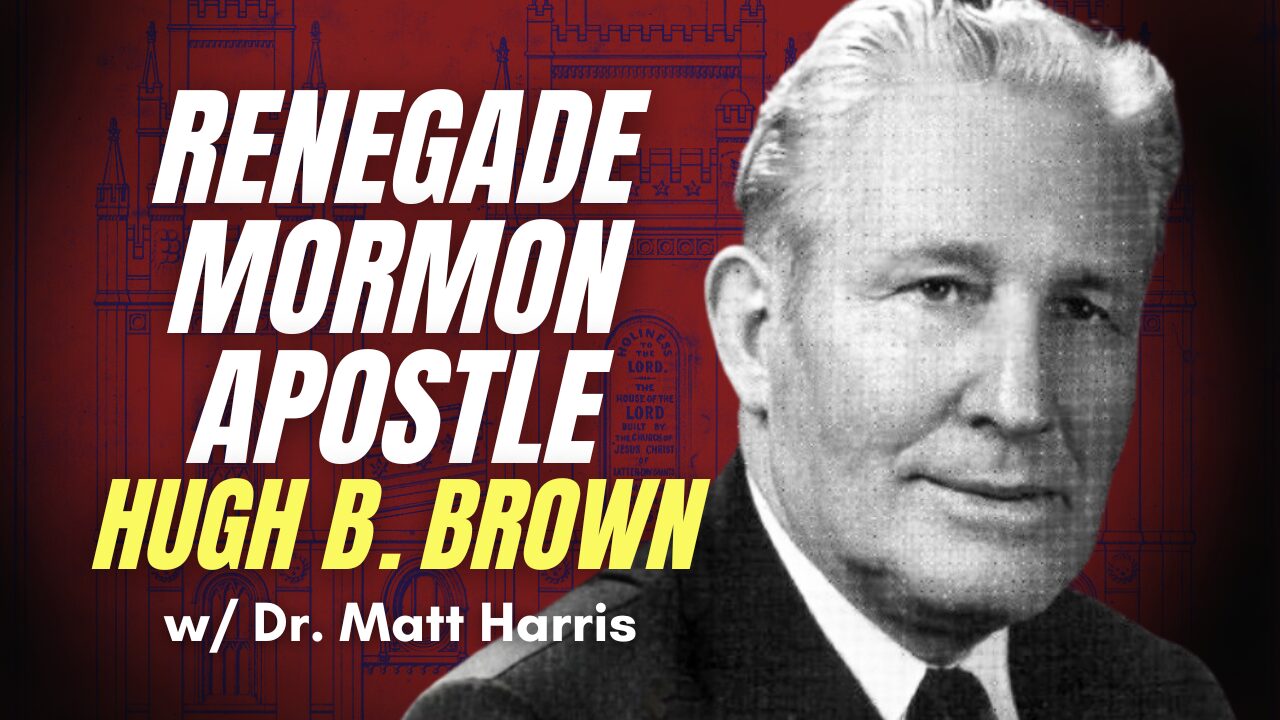
Thumbnail Credits: Image of Hugh B. Brown from the public domain; Image of the Salt Lake Temple from the public domain
Originally published on mormonstories.org.
Transcript
Machine-generated and lightly edited. Click any timestamp to jump the audio to that moment. The audio is authoritative; please check it before quoting.
Introduction and Series Overview
John Dehlin Hi everyone. This is Dr. John Dehlin of Mormon Stories podcast. I want to thank you for joining us today on this epic 17 part series featuring Dr. Matthew Harris and his amazing book, Second Class Black Mormons and the Struggle for Racial Equality. This series has been groundbreaking. We've never had the response so far that we've had in terms of people really valuing our in depth coverage. This groundbreaking book that's talking about the Mormon Church's priesthood and temple ban against black people and then the dynamics, the inner workings, the political machinations of how the sausage gets made in terms of lifting the priesthood ban in the aftermath. So we have some good news and bad news about this series. The good news is thanks to the generous donations of those who have been watching it so far, we've been able to, I believe, more than generously compensate Dr. Harris for his contributions. That's the good news. The bad news is, you know, because we made the promise that 100% of the donations would go to Matt, we have not received any compensation for about the $20,000 of production costs that we incurred to produce this series and that that sort of imbalance would make it so we wouldn't be able to produce series like this going forward. So. So if you value this series, if you want to see the Open Stories foundation also be compensated for its production cost for this series and if you want to see series like this with Matt and with other people, continue, we kind of need you to step up and donate to cover our production costs. And it's really easy to do that. All you have to do is go to mormonstories.org donate or go to mormorstories.org and click on the donate button and you can do a one time donation, a recurring donation, and if you want to, you can type Second Class Saints or Matt Harris in the description and that will hopefully allow us to cover our production costs for this epic series. Regardless, we want to thank Dr. Matt Harris for his generosity in doing this series. We want to thank all of you who have supported us. Please go buy this book, Second Class Black Mormons and the Struggle for Racial Equality. And again, if you're wanting, if you're grateful for this series and you haven't donated and you want to see it continue, please please donate to Mormon Stories Podcast. Thanks again to everyone who donated to make the series possible. Thanks to Matt and we hope you enjoy this next episode in the series. Take care. Hello everyone and welcome to another edition of Mormon Stories Podcast. I'm your host, John Dehlin. It is 6-19-20, 20, 24. And we are, I believe this now is seven episodes in to what I think is a groundbreaking series about a groundbreaking book. We are covering this book, Second Class Black Mormons and the Struggle for racial equality by Dr. Matt Harris. We've done six episodes so far. We're releasing this as its own series both on Spotify and on Apple podcasts. But we're here to talk about the Mormon Church's priesthood and temple ban on members of what the church thought was of African descent. And, you know, you'll value this series best if you watch it sequentially. But today we're going to be starting chapter four and we're going to be talking about a host of things, including sort of this lone hero of, of civil rights and equality, Hubie Brown, a member of the first Presidency. We're going to be talking about the Church of Nigeria. We're going to be talking about, we already talked about L. Bennion and Ted your Lyon. We're going to be talking about that a bit more. We're going to be talking about George Romney, who ran for president, Mitt Romney's dad, Stuart Udall, another congressman, and some articles that came out in look magazine and the New York Times and a couple other things. But we're also going to be talking about what does and doesn't lead the Mormon Church leaders to change. And of course, we have Matt Harris here with us and her art is going to be joining us soon. Before we bring Matt on, I just want to remind people that we are doing a fundraiser to pay Matt extra for these very, very important episodes that, that are absolutely premium content, that are worth your time. Mormon Stories is stepping up to pay out of its own cash pile, you know, a fixed amount of 500 bucks per episode. We want to pay Matt a thousand per episode. And we've opened up a fundraiser asking for you to make up the difference. We've had 34 people so far step up and contribute and we've raised about $1,400. And we're asking you if you really value these episodes and you want to see them continue and you want to make sure Matt gets paid for his great work. Please go to donorbox.org Matt Harris Become a one time or a monthly donor to this series. And again, also, please buy this book right now. Go to Amazon. Make this book a continued national bestseller within at least the Mormon category, if not better. I promise you this book will be one of the top three most important Mormon history books you read to date. So please buy it. Check it out. And without any further ado, Matt Harris, welcome back to this podcast series. It's great to have you.
Matt Harris Yeah, thanks, John. I'm happy to be back.
John Dehlin And, Matt, this is the first episode we've recorded since the first episode has been released, so we're like seven episodes ahead. But why don't you talk just briefly about the response you've received so far to the podcast boy?
Matt Harris I've heard from a lot of people, Latter Day Saints, and some people who aren't Latter Day Saints or have never been members of the church, and it's been overwhelmingly positive. I realize that some of these stories, the history is painful for especially black Latter Day Saints. And I've heard from a number of black Saints, and I'm just. I share your pain. I hear you. I see you. And I think that in order to address racism, both in the church and in the broader society, it has to be acknowledged, it has to be talked about. And unless those two things happen, it's very hard for healing to occur. So I hope in some small way that my book may close some old wounds and help with the healing process.
John Dehlin Well, that's great. All right, so today we're going to. I'll also add that we are working really hard to both have black scholars incorporated into these episodes. If you are or know a. A, you know, a. A black historian who cares about these sorts of things, we would love to entertain volunteers or nominations. You know, Matt has full creative control on this. He's reached out to a few. So we have heard your feedback that we want to incorporate panelists of color. I'm also thinking about, separate from the. The actual recordings with Matt doing some reaction episodes. So if you are a black Mormon or black ex Mormon and you want to maybe watch some of these episodes and then be part of a panel, maybe without Matt, that just kind of reacts to what you're learning so far. I talked to Matt about doing that as well. But please know we're doing our best to. To incorporate black voices into these episodes. I should also mention that today is Juneteenth, even though this will be aired Later, I believe June 19th is Juneteenth. It's a very important day in terms of recognizing black history and black civil rights. And that is a great segue into chapter four, today's episode. The chapter is entitled Civil Rights Resistance 1962-1967. And of course, we're not going to be able to cover this entire chapter in today's episode. So, Matt, I don't think we need to recap all that we've covered so far, but how do you want to kind of begin talking about today's episode?
The Civil Rights Movement and the Church
Matt Harris Well, the 1960s, the early 1960s, the civil rights movement is picking up in full steam. It began in the mid-50s with Rosa Parks, with Emmett Till, this young African American boy who was murdered, and also the Brown versus the board Topeka, Kansas decision that desegregated schools. So those three events were pivotal for the development of the civil rights movement. And by the early 1960s, more and more Americans are focusing on racial equality, what it means to profess that all men are created equal, in the words of Thomas Jefferson. And the church, of course, is not immune to these larger discussions. The church was already, as we talked about one of the previous episodes, the church was already focused on Brown, what it would do for the church if they desegregated schools, fearing that it may affect church properties. And now what we see is there's a movement picking up in the early 60s to grant voting rights protections for African Americans to extend desegregated policies not just in schools, but across everything else in American culture, including restaurants, zoos, bus stops. And then of course, we see a great era of protesting. We see sit ins, we see marches. And of course, it leads to the emergence of the most iconic civil rights figure in Dr. King. And also in the 60s, it leads to some rivals of Dr. King who have a different vision of racial equality. And this, of course, is led by Malcolm X and some other black power advocates. And we'll talk about that in the course of this episode today and the next episode, how black activism and also this burgeoning movement for civil rights affects the church. And needless to say, it dominates their discussions and it shapes how they fear about national events and also leads to concerns over their own safety. So there's a lot going on here. And it's happening against the backdrop of Hubie Brown of the governing first presidency. He's going to push to end the ban, push to support civil rights. It's happening against the backdrop of George Romney, a faithful Latter Day Saint governor from Michigan who will become a presidential aspirin in the early 60s. And then finally, it's happening against the backdrop of the possibility of opening up a mission in a sub Saharan African country in Nigeria when these Nigerian saints ask for the priesthood. So there's a lot going on here and the brethren are really having to work through all of these different issues and tying in.
John Dehlin And by the way, Gerardo is now joining us. Hey, Gerardo. Glad to have You. I think you're muted, but thanks for joining us. We're glad to have you.
Gerardo Sumano Yeah. Thank you.
Why Church Leaders Resisted Lifting the Ban
John Dehlin So, Matt, it's fair to say we. We talked in last episode. It's not like. It's not like the church didn't spend a couple decades, the Mormon Church, LDS Church, having concerns or fears about this issue. We've already talked about the 1940s and Lowry Nelson and. And we talked about Lowell Bennion, and we talked about the Bennion Report that came out in the early 50s where the church was put on notice that there were doctrinal, historical and theological issues with the priesthood ban. You know, and we already talked about, like, you know, Lowell Bennion and Thiadgarlayon being punished, even though we'll revisit that briefly today. But it's not like the church wasn't already knowing this was a problem. And again, we've already talked about South Africa and, and Brazil and how the church knew that the one drop rule was problematic. But in terms of, like, actually lifting the ban, you know, it wasn't until the civil rights movement starts heating up in the mid-1950s and early 1960s where the church would have even felt much pressure to seriously entertain lifting the ban and tell me if I'm right, that. That it really isn't until Hubie Brown kind of enters the scene. The combination, the one, two punch of the ramping up of the civil rights movement in the late 1950s and early 60s, combined with Hubie Brown in the first presidency, starting to voice concern that really the brethren start considering whether change is even possible. Do I have that right? Yeah.
Matt Harris Well, they talk. Yes, they talk about it in 1954. And President McKay gets back from South Africa. We've talked about this in a previous episode. And President McKay convenes a committee of apostles that Lowell Bennion was associated with, even though he wasn't an apostle. And they produced this report called the Bennion report. And McKay sees the report, and the report says that there's nothing doctrinal about the band. It's based on practice and traditional, and it's incompatible with scripture. And President McKay would have lifted the ban in 1954. But there were two things that held him back. One was he didn't have a consensus among the apostles. And also he was worried about lifting the ban in the South. I mean, this is the south in the post World War II era. This is the south that's full of, you know, Jim Crow laws and Latter Day Saints in the south, of course, were not any different from their Protestant neighbors in terms of their hardened views towards black people. So Brown knew that it, or McKay knew that it wasn't the time to do it, but he wanted to do it. His friends talk about him wanting to do it. And by the early 1960s, even if he did have a consensus to lift the ban in the church leadership, it would have been very difficult for him to do it because the Brethren never wanted to give the impression that external pressure was forcing a revelation. That's something they really, really tried to avoid. And. And so the time had passed because if they lifted the ban in the nineteen early sixties, the word would have gone out that Dr. King and other leaders had forced them into it. And that's just something they didn't want to get into. So it was a tough time in the church. And the scrutinization became more intense throughout the 60s as George Romney decides that he's going to run for the presidency. And also as hundreds, if not thousands. Hundreds is probably more accurate, but hundreds of people in Nigeria, they got word about the church and they started to write the Brethren letters saying, we want our own churches. We believe the Book of Mormon is true. We believe in Joseph Smith. We believe in the church's prophetic claims. Baptize us and give us the church.
John Dehlin And so that was without missionaries, Right? Nigeria, like, do we know how this sort of critical mass of Nigerians wanting to be baptized came about?
Matt Harris Yeah, yeah, we do. In the late 1940s, as far as I can tell, the late 1940s was the first time that some of some Nigerians had written the First Presidency letters saying, hey, we heard about your church. Usually they found out about it through the media. Reader's Digest would run stories on the Mormons. And one Nigerian had a vision that he saw the Salt Lake Temple in his vision, and he knew that this was what God wanted him to do. So the late 1940s, they wrote letters, we want our own church. And the brother ignored them. I mean, you know, they're dealing with Larry Nelson, they're dealing with other things. So they just sort of ignored the letters. But by the early 60s, after these Nigerians, some of them are experiencing these, you know, otherworldly visions where they see the temple, they get a hold of the Book of Mormon, and they realize they want to get baptized. And so there's a critical mass of Nigerians writing the first presidency letters. In the early 60s, in the 1940s, it was just a handful of people. Now in the early 60s, you're getting a Number of people, dozens. And they're all saying the same thing. We want the church in Nigeria. And So David O. McKay realizes we can't ignore them. We've got to deal with this. But how do you deal with this when you can't. When they can't run their own churches? And therein lay the problem.
Gerardo Sumano And, Matt, just to put it into context, I think we talked about how privately McKay would have been telling close friends that he.
Matt Harris That.
Gerardo Sumano That the band was not Dr. Doctrinal. Is that. Is. Is that right? Or maybe that it would be lifted at some point.
Matt Harris He did. He was. Gerardo, welcome back to the program, by the way. Thank you. He. He was telling people that in private. And he didn't share those views a lot with the hardliners in the 12 because he knew they didn't support them. But he's telling Hubie Brown, Sterling McMurran, Lowell Bennion, and some others that the ban is more of a policy than a doctrine. But it doesn't change the fact that he has to have buy in in order to change it. He doesn't have the support.
Gerardo Sumano Okay, that makes sense.
Matt Harris Yeah. And.
John Dehlin Oh, go ahead, Roberto.
Gerardo Sumano Just to set the context of this, can you also talk a little bit about. I mean, you're talking about civil rights. It seems like. Well, some of the brethren you like are gonna be in favor of that. The overall consensus was, to my understanding, to stay quiet about it. Is that. Especially in the early stages of civil rights. Is that right?
Matt Harris Yeah. So we talked about in the last episode, civil rights bills from the 1950s. This would have been Brown, and there was a civil rights bill in 1957. And in 1950, with Brown and the civil rights bill of 57, President McKay tells the leadership, let's just be quiet about it. Let's not say anything pro or con. We want to keep ourselves out of the firing line. We don't need to bring ourselves additional criticism. And in the 1960s, which we'll talk about the next episode when we get right into the Civil Rights act of 1964. That'll be the next episode. But they're going to adopt a similar strategy. But the NAACP will force their hand. They won't be able to maintain their silence when the NAACP is protesting at Temple Square during General Conference. Not a good look for the church. So they'll be forced out of their position of silence. But. But in the early 60s, there's three, you know, main things going on. I just want to repeat. One is that Nigeria, they're getting all these Letters. What do you do about this? Number two, George Romney is a very popular governor and he's being recruited by Republican Party operatives for the 1964 presidential nomination. And it turns out he won't be the candidate. It'll be guy named Barry Goldwater, conservative senator from Arizona. But people are looking at Romney early on. And when Romney ran for the president or the governorship of Michigan in 1962, he went to the Brethren in Salt Lake, had a special meeting with the first presidency and he said, look, they're pressuring me to run for the governor position and you know, I won't run if you don't want me to because I know that if I run for public office, it's going to bring a lot of attention to the church's Negro doctrine, as he puts it. And Michigan is a, it's, it's, there are a lot of African Americans in Michigan. And of course it would be disastrous for Romney if word gets out that his church believes that black people are cursed. And we're going to talk this episode about look magazine article a little later on and how this affects Romney because it does affect him. But Anyway, so President McKay tells him in 62, he says that we considered we the first presidency, we considered telling you not to run, but in the end it is your decision. You have your free agency and we will support you in whatever you do. And so this is kind of a tension that President McKay has. On the one hand, he's telling McKay, you know, it's not going to be good for the church if you run because it's just going to bring attention to the church's race doctrine. But on the other hand, we're going to honor a time honored principle in Mormon theology which is free agency. You have your free agency and if you feel like this is what God's telling you to do, then why don't you run? And ultimately he gets the President's blessing, even though they know it's going to be a very difficult situation. He runs in 62, he wins. And he's running against the backdrop of his church's teachings on race, which people will ask him about. And he's also running against a national conversation where churches will begin to be singled out for their opposition to civil rights. And so he's in a very tenuous position, Governor Romney, and it only increases when he becomes a presidential candidate in 1964. In other words, if you think the tension over his governorship is going to raise issues, wait till he runs for the presidency. It'll even be magnified further. In the meantime, let's go back to Nigeria now. So they're receiving letters from Nigerians by the dozens. I have these letters, they're really fascinating.
Gerardo Sumano Oh, wow.
Matt Harris And they're asking and begging for the church. This had been going on for at least 13, 14 years at this point. But now the brethren have to take it seriously because there's a critical mass and they talk about opening up the church in Nigeria. This is a, this is a black country. And it's. If they thought they had issues in South Africa and Brazil, wait till we get into Nigeria. Hugh Brown said, Hugh Brown said in a first presidency meeting, he said if we go into Nigeria, that is, if we open up churches and send white missionaries in, it will be a precedent setting decision. We've never done this before and I don't think Brown realized they had done it before. They tried it in 1853 in Nigeria or in Jamaica, didn't work. The missionaries were there about a year and decided this was a very poor place for our doctrine, one of them said. And then they tried it in South Africa in 53 as well. And there were a lot of issues with that and they couldn't stay. And then they came back into South Africa in the early 20th century after a 50 year hiatus. So they recognize that it could be perilous with Nigeria and they're also concerned about what the optics will look like if a high profile Mormon is running for the governorship in Michigan and then subsequently the presidency. What does that look like? How will that affect Governor Romney's campaign? And if we're trying to move into a majority black country when all white missionaries from Utah have to go in to run the church. And sometimes people like to say that President McKay, you know, he's in his late 80s, he's sort of out of it and you know, all of this stuff, he's very attuned to the problems and he tells his counselors in the first presidency meeting, he said that I'm going to paraphrase, but he said that I'm worried that how it will look if we send white missionaries in to run these churches in Nigeria. And so the president knows that this is a problem and that's why they use the word experiment. They don't know if it's going to succeed or fail. And yet they decide to forge ahead and try the experiment. They decide that the an apostle who was just called in 1962, guy named Nathan Tanner, who's Hugh Brown's cousin from Canada. So Tanner's one of two Canadians in the high church leadership. And I'm going to go off record for just a quick moment, but when they called Tanner into the apostleship, Brown claims to not have known anything about it. And I'm like, I don't believe that.
John Dehlin And this is. He's known as N. Eldon Tanner, is that right?
Matt Harris Yeah.
John Dehlin Okay.
Matt Harris Yeah. And Eldon Tanner. And I called him Nathan Tanner. Some people, his friends call him Nathan, but to the church he was known as Eldon Tanner. That's a lot of people called him Eldon. I guess I've read too many letters where his family calls him Nathan.
John Dehlin But yeah, banking or a business guy. Do I have that right?
Matt Harris He was. He was in finance. And one of the reasons. I'll just jump ahead for a moment. But when he was called into the first presidency in the early 60s, so he wasn't an apostle very long before he was elevated into the highest quorum of the church. And they did it because they needed his financial expertise. And President McKay recognized that he had that skill and that's why he was called in. So he was a great administrator. So Enel the Tanner would be the inaugural president of the Nigerian Mission. It was part of the West European mission. So they're going to run Nigeria out of Western Europe. So they decide to send missionaries in. There's a missionary employee named Lamar Williams who works for the church. He works for the missionary department. He's a white man. And he is instructed by the brethren to go in to assist president Tanner, the mission president, with the opening up the gospel in Nigeria. And Lamar Williams is 62, right? This is 62.
Gerardo Sumano Okay. Okay.
Matt Harris So it had been March of 62 that they make the decision to go into Nigeria. And what's interesting is they want to keep it under wraps because they know it's an experiment. And the first presidency minutes say something really interesting. It says that let's not establish the mission and announce it until after November's election cycle. They were afraid that when Governor Romney was running for the governorship in November of 62 in Michigan, that somehow if word got out what the Brethren were up to in Nigeria, it would adversely affect his candidacy. And so they decide that they wouldn't announce this mission until after the election, presumably after Governor Romney won, which is indeed what happened. So they announced it in weeks after he wins the governorship in November of 62. Lamar Williams is boots on the ground. He's assisting. He's living there in Nigeria. And then he's, of course writing letters to an Eldon Tanner, who's in Western Europe, telling him this is what's going on. And Lamar Williams is also writing the Brethren back home in Salt Lake, apprising them of the church and the members. And Lamar Williams got a special blessing from David O. McKay that he was to be their eyes and ears and really govern if they have the leadership to stabilize the church there and to grow the church. And so Lamar Williams becomes acquainted with Hubie Brown. And these two guys would be two kindred spirits, both of them, Lamar and Hubie Brown, who had by this point, just had been elevated into the First Presidency the previous year and a half. So he hadn't been in the. The high leadership very long. He had been appointed to the. A member of the quorum of the 12 in 1958, just a handful of years earlier. So he's a new voice in the high quorums of leadership. He hadn't been in the quorum like Joseph fielding Smith in 1910 or Spencer Kimball at Ezra Daft Benson in 1943 or Mark Peterson, 1944. I mean, these are people who've been there for, you know, over a decade at that point.
Gerardo Sumano Do we have a sense if any of these older, older guys, Apostles, were somehow frustrated that someone like Brown, who's a liberal, would be brought into the apostleship and then just a couple years later become a part of the First Presidency?
Matt Harris Oh, we do, Gerardo. They are not happy.
Hugh B. Brown's Background and Rise
John Dehlin You want to give a little background on Hubie Brown and yes, he ascended so quickly.
Matt Harris Yes. So, Hugh B. Let me give you just a quick background. Your listeners will find this fascinating. So Hubie Brown was born in the Salt Lake Territory in the late 19th century. And when he was 13 or 14, he had moved with his family from the Salt Lake Territory. So this is before Utah became a state, moved to Western Canada. And Hubie Brown was in church one day when the church president, Heber J. Grant, had visited Western Canada. This is a. Western Canada is interesting place in church history. This is one of the places in Mexico where the polygamists would. Would go to hide from federal authorities in Utah when they were being arrested. Anyway, Hubie Brown's in Western Canada growing up just outside of Cardston in a small community called Spring Coulee. And. Or if I said that right, somebody will correct me, I'm sure. But in this sacrament meeting this one day, President Grant was visiting and he prophesied that one among the congregation would rise up and be an apostle one day. And Hugh B's 14 years of age, you know, I'm I don't know about you guys. When I was in Church at 14, I was not thinking about these kinds of things. I'm just trying to figure out how to get through high school. Right?
Gerardo Sumano Yeah.
Matt Harris And anyway, so after the meeting was over, Hubie's bishop and his mother, they approached him and they said, hugh, President Grant was talking about you. And his mother had reaffirmed to Hugh B. That this blessing that President Grant promised is yours if you are worth worthy of it.
Gerardo Sumano Wow.
Matt Harris And his mother says something really fascinating. This is going to be jarring to Latter Day Saints to hear. It is your destiny, she says, to be a member of the Quorum of the twelve Apostles. And the reason why I said jarring is I'm not trying to be flippant. Most people don't think of a high church calling like this as their destiny. But that's what the mother, that's what Mother Brown, the word she uses. And that's also what Hugh B. Uses to describe it. It's my destiny. And anyway, I'm sure we'll talk about this later. There's so much to this story. And Hugh B. Had moments of depression throughout the 20th century because every time there was an opening in the quorum of the 12, he was passed over. There's a man that who had been promised that this was his destiny. And when there was an opening as early as 1933, I've been able to chart this because of the diaries of the church presidents that I have that when there are there were openings, they passed him over. In 1933 was the earliest time that I had seen where they talked about him as a possible candidate and they chose J. Rubin Clark instead. But he was passed over. And I'm just going to throw out a teaser that because I'm writing a biography on Hubie Brown now. But the he was passed over because word got out that he had he was part of an embezzlement scheme when he was placed on the Utah Liquor Commission in the mid-1930s. And this is after Prohibition's repeal. And so the same church president, Heber J. Grant asked Hubie Brown to be on the liquor commission. And it was a three man liquor commission in which they would dole out liquor licenses. So this is again after the repeal of Prohibition where liquor was now illegal, early illegal again in the United States. And so the church president wanted to see that the liquor licenses were doled out sparingly. And obviously when there's a lot of money to be had. Spoiler alert. Some Latter Day Saints like to drink alcohol. And there were also non Mormons coming into the area who wanted free access to liquor. And so a lot of LDS businessmen wanted to establish restaurants and taverns and saloons where they could sell liquor, but they had to apply for a liquor license to do so. And so the men who were denied the liquor license for whatever reason, they were angry because it was robbing them of their ability to make a living. And so they took it out on Hubie Brown and they spread rumors and indeed lies that he was taking money from the people that he had given licenses to. Bribes. Now, there's absolutely zero evidence for this. But you guys know, we all know that perception can often be reality. And so the perception gets out that this up and coming church leader who's been promised the apostleship, he's taking bribes, it ruins him professionally and religiously. And so I, I'm skipping over a lot of the story. Well, I'm sure we'll cover this some other time in a future podcast, but by 1953, he's called into the to be the Assistant Quorum of the twelve Apostles. And he's not happy about this. He's an old man by this point. He's, let's see, he would have been in his mid-70s and he's been passed over, he's depressed, he's got this profound depression and this wasn't his destiny. He was promised the quorum of the 12, not the assistant. Well, anyway, so by 53, there's been enough of a distance that's elapsed with the allegations of bribery. He proves himself to President McKay, he's elevated into the quorum of itself of 1958, and then he's elevated yet again in the two year span to the first presidency. And the hardliners, Gerardo, you asked this good question. The hardliners are not happy about it because they've seen his mediocre, meteoric rise in church leadership and they don't know him as a person. And they're frankly suspicious. And they have reason to be suspicious because he's a liberal on the racial, the priesthood ban. And they know this by the way. They know this. But yet he somehow gets into the high church leadership and with Lamar Williams, he's going to seize the moment when Nigeria becomes a possibility. Hugh Brown is going to work in private with President McKay to see if he'll get Nigerians to be ordained to the Aaronic priesthood.
Gerardo Sumano Wow.
Matt Harris And that's what he's doing behind the scenes. It becomes the perfect moment to lift the Ban and it creates a lot of problems with the brethren.
John Dehlin Really quickly. Matt, did you mention what Hubie Brown's like profession was throughout his life? I'm just curious. If I missed that, I apologize.
Matt Harris No, I didn't. Glad you asked. He was the Jack of all trades and probably the master of none. He was. And that would be. That's not me. That's probably something he would say. He had a delightful sense of humor. He was a lawyer, a self taught lawyer. Those are the days before you had to, you know, pass a bar exam and go to three years of law school to get a juris doctorate. Those are the days when you can work as an apprentice in somebody's law shop. And so he worked with J. Reuben Clark was one of his mentors in the law. The, the man would first sort of beat him out in 1933 for an opening in the 12. And he worked with Henry D. Moyle, another lawyer who would later become an apostle in 1947. So he had mentors in the law. He was also a businessman. He had a couple of businesses in his life. He was involved in the oil business, for example. And he also taught for a short stint at, for about three or four years in the late 1940s, he taught religion at BYU because he was known as a gifted speaker. So he was, he had his fingers in a lot of different pies. And he. So in 1962, Hugh Brown, he's this formidable presence in the church leadership. He's. Any of your listeners, if you want to get a sampling of his formidable gifts as a speaker, just Google his name and some YouTube thing I'm sure will pop up with a sermon that somebody put online and is really just remarkable. Franklin Roosevelt in the 1930s said that Hubie Brown was the second greatest public speaker he'd ever heard and second only to Winston Churchill.
Gerardo Sumano He, he has a really good talk, really famous talk about Joseph Smith titled the Profile of Prophet. I love that talk on my mission.
Matt Harris Yeah, it's a, it's a remarkable talk. It's one of many that he gave. And yeah, when we. Some other time we'll get more into his gifts as a speaker and how the saints responded because it really is extraordinary. But so he gets elevated into the 12 after being accused of embezzlement and bribery. And some of the hardliners like Joseph Fielding Smith are really, really wary of him because he's just risen so quickly into the highest ranks of leadership and they're even more weary of him in 62 when he starts to propose that the ban be lifted. And he broaches it to the first Presidency. He broaches it to meetings of the Quorum of the twelve. And then he starts to speak publicly. He tells his good friend Lowell Bennion, he said this was February of 62. He tells Low Bennion and Edgar Lyon, these two high profile institute teachers that we talked about last hour and how they got fired from their teaching assignments because they had been telling their students the ban would be lifted. They had it on good authority. President Brown told them. In fact, Brown was always so dramatic. I love this about him. He would say, you know, he say, LOL. This is February 62nd. Lowell, make sure you make sure you attend conference in the next session. Like you wouldn't, right? Make sure you attend conference. Make sure you're alert. So we're going to have some big news. President Brown, what is it? We're going to lift the band.
Early Attempts to Grant Priesthood Access
John Dehlin Oh.
Matt Harris And so Lowell Bennion and Tiager Lyon, they start sharing that news with their students. They share it with African Americans, a couple of African Americans, a man named Abner Howe and Ruffin Bridgeforth. They share it with an African American convert who would later go on to become the inaugural president of the Genesis Group in the early 70s. And then Lil Banion then starts to share it with George Romney, the governor. I mean, this is like a exciting news. Wally Turner of the New York Times, who writes about Mormon affairs, been interested in Mormons for a long time. He gets word of it that the ban will be lifted in April of 62. And then all of a sudden, boom, nothing happens. They don't lift the ban.
John Dehlin Do you know why Brown had the impression that the ban was going to be lifted? I, I think your book says he was just kind of like wishful thinking. But surely McKay would have given him some reason to think that. Do you have any correspondence about that,
Gerardo Sumano John, before, before he responds to that? I, I mean, this part on the book is probably one of my favorite parts. And it's only one paragraph or two.
John Dehlin Yeah.
Gerardo Sumano And it's. You're telling the story of Brown telling these people, telling lion about the van being lifted.
John Dehlin And page I could, I could read a hurdle six. Okay.
Gerardo Sumano And it says, it starts on paragraph two, as the brethren debated.
John Dehlin Okay. Yeah.
Gerardo Sumano All the way down to at the end of Edgar Lyon's notes.
John Dehlin Okay. And I've got. It's fun. I've got my marked version of my book here. And so I'll show it. So as the brother. Tell me when to stop. Rardo, as the Brethren debated. Brown confided to a church member in March 1962 that the priesthood band, quote, is having more constant and serious attention by the first presidency and the 12 than at any time, I think, in the history of the church. Close quote. A few weeks earlier, he had summoned Lowell Bennion to his office at church headquarters to inform him that a change was coming. At the April General Conference, he said that President McKay would lift the ban and ordain Nigerians to the erotic priesthood. And that was fascinating to me that they were thinking this kind of middle road of erotic priesthood's okay, just not Melchizedek. It goes on. The meeting lasted 35 minutes. Afterward, Bennion rushed to tell his close friend Edgar Lyon the good news. Lyon scribbled down notes as fast as he could. And so this is an entry, I guess, right, Matt, from Lowell Bennion's diary.
Matt Harris Yes.
John Dehlin It says President Bound told Lowell that President McKay had discussed the Negro question with the presidency and the 12 within the past week or two. Everyone spoke, quote, almost to a man. They agreed that a change would have to take place. President McKay said a change must come, but he didn't know when it would be said. This Negro question was the greatest issue the church had faced since plural marriage. That's a huge deal. I'm glad you had me. I'm glad you made me read that. And then it goes on. I. I started this. Bennion also told two African American Latter Day Saints, Abner Howell and Ruffin Bridgeforth, that a change was imminent. And he informed George Romney as well. Like you just said, Matt, quote, I have it on good authority that the Brethren are deeply concerned and most of them feel that something must be done on the Negro problem. Is that. Is that it? Yeah, yeah, yeah.
Gerardo Sumano And I mean, what was impactful to me is first how, how he's leaking this information. Right. But then also, I don't know, I just imagine, who was it? This person writing on his notes really quickly, what he's hearing to make sure they don't forget about what. What this meaning the secret meetings that the Brethren are having and talking about these important things. That's just so interesting.
Matt Harris But when, when word gets out that he's telling these people. Of course, I was curious about how Lowell Bennion students would have responded to this, because Lowell Bennion talks about that. I'm sharing the news with my students, but I, I wanted to get a firsthand account from his students. And of course, that could be difficult because you have to figure out who these People are. And did they leave a record? Are they still alive? This is 1960 too. So it's possible that a lot of these people, if they're still alive, they're in their late 80s, maybe 90s. So I found a diary, a guy named Frederick Buchanan. He was a professor at the University of Utah, professor of education. And he was one of Lowell's students in the early 60s. And when I learned that his papers were at the University of Utah, I got excited because I thought, boy, if anybody would know, it might be Frederick Buchanan. So I went there as diaries and there are several entries about, you know, today and I. Well, I'll read one. This is from 1962. Frederick Buchanan recorded the exciting news in his diary. Quote, the priesthood will be given to the Negroes sooner than we think. Close quote. Two weeks later he wrote again, quote, lowell Bennion mentioned this week that the general authorities are agreed that the Negro should have the priesthood. The only thing is when they're afraid of the effect on the southern states and South Africa. Close quote. So word is getting out. And you know, John, you asked a question a minute ago about what happened. Why did. What was President McKay's role? And President McKay recognizes that he doesn't have the support of the hardliners. I mean, they know that they're in this conundrum that they're moving the church into Nigeria. They know that people are worried about George Romney's campaign. People are watching them, the news media is watching them. And can we at least compromise? Can we give them the Aaronic priesthood which would allow them to do certain functions in the church like bless and pass the sacrament and maybe home teach, which is the program of the church at the time. But of course they couldn't serve in pastoral capacities because you have to be a bishop or a branch president to do that. So white people would have to do that.
Gerardo Sumano Although bishop isn't a part of the Aaronic priesthood, to be bishop isn't.
Matt Harris There's kind of like a, yeah, the bishops, the. Over the Aaronic priesthood, but which is true. But it would be a white bishop over the all black Aaronic priesthood. That's really what this means. And so President Brown brings it up in the spring of 62. He said, look, we've got all these problems. You're worried about the NAACP criticizing us for what we're doing in Nigeria and Governor Romney. Well, there's one answer to it. Let's give them the Aaronic priesthood. That way it takes the heat off us a little bit. Not fully, but A little bit. And President McKay said something kind of funny. He said, well, President Brown, if you give them the Aaronic priesthood, they're going to want the Melchizedek priesthood. And Brown's response was, that's precisely my point. I mean, he's trying to do this inches, you know, give him the Aaronic priesthood so that they can prove themselves. That's the word they preach frequently use. Prove themselves? Yeah, so they can prove themselves that they're worthy of the higher priesthood. And you know, the hardliners just, they're not ready. They're not there yet. And President McKay knows that. And even for a moment in February of 62, if they had kind of learned that maybe that's the direction they should go into, at least ordain them to the Aaronic priesthood. Obviously that doesn't happen, and I can only surmise it doesn't happen because there are. There's a few holdouts and they don't want to move ahead with this as long as there are dissenters among them.
John Dehlin Really quickly, I thought it was also worthwhile to just show one other quote. And this is from a little bit earlier, and you may have already talked about this, but going back to UB Brown, you write Brown's ambitious efforts to end the ban occurred during a precarious time. The brother believed that it was imprudent of Brown to. To push to end the ban when George Romney, a Mormon governor from Michigan, emerged as a presidential candidate just as the civil rights movement gained momentum. And here's the key point. If the ban was lifted, they believed it would signal to members that they had caved from outside pressure. I think that's a critical point that is going to come up again and again and again. The brethren have to maintain the appearance of. That they're getting directions from God that they're prophetic leaders governed by God and that they're not leaders who simply cave to social pressure. And I think that was a really important thing to bring out.
Matt Harris Matt, let me respond to that. You know, I think there's no question they just don't want to give that appearance or cave into external pressure. But as I point out in this book, quote quoting Henry David Thoreau or Ralph Waldo Emerson, excuse me, that Emerson said that the ideas that are in the air infect all the. All of those who breathe it. In other words, people are products of their time. And to suggest that external events don't influence leaders, I mean, that's just, that's remiss. And I think today the church has probably Done a better job about that in terms of responding to current pressures, whether it's LBGTQ and recognizing civil unions, let's say. But in those days, they just were hard and fast that somehow external pressure couldn't produce a revelation. And remember something that's important to this discussion. Revelation is a process, not an event. It's where they debate, they discuss, they pray, they vote. And then if there's unanimity, the president says, I feel to say that this is a revelation. So it's a process that takes place over time, and it's not some kind of, you know, metaphysical event that occurs on a moment's notice.
Gerardo Sumano Let me, Let me just say something really quick that I learned from your book, my impressions from the book, Matt, about this. It is my impression that although it seems like at least some, it could be the majority or all the brethren understand that that's how revelation really works. It is clear that at least some of the hardliners still want to maintain or know that that's not really what the. All the membership believe, how revelation works. And some of them once, once to still want to still maintain the idea or, or let lead members to believe that revelation is God appearing or God talking to them. And that, that was just clear to me, learning from. I mean, and we're going to talk about it in later episodes when, when some of the apostles start embellishing the story of the priesthood revelation later on. So it, it is clear that, that, that. Yeah, again, I, I think in their minds, they. They know that that's how revelation works. It's a process, and it's about debating. But they also want to keep the appearance of God talking to them or appearing to them, in my view, kind of like what I learned from the book. But correct me if I'm wrong.
Matt Harris Well, I mean, these guys are trying to do what they think God wants them to do. And what they frequently do is they invoke God. When, when certain critics approach them, they would say, you know, don't get mad at us, get mad at God. I mean, we're just following his wishes. And right now, he hasn't told us to lift the ban and we're not going to do it. And you see this a lot throughout the 1950s and 60s when critics, usually journalists, the media, but when they ask the leaders, the brethren, when he left the band, they'll say, well, it has to be a revelation and we're waiting for God to tell us. So they do give that impression, Gerardo, that it is an event rather than A process. And obviously they don't want to open themselves up to know, letting people know, hey, it is a process. We debate, we discuss, we pray, and. Because it's something that might not, you know, fly with them. But I will just say something to, to a quick point here. In all of my reading in LDS Church history, I've only really found maybe two events that have been published that talk about revelation as a process. And I could be wrong. There might be others out there that I didn't see. But one is the Huey Brown memoir that was published in the late 80s. And then secondly was a biography by Bruce Hafen of the apostle Neal A. Maxwell, where Hafen talks about revelation, institutional revelation, in a way similar to Brown's. And in my book, I quote Brown. But. But I did see that in Bruce Haven's biography, which was published by Deseret Book, and that was heartening because it's really giving a sense of how institutional revelation works in the church, being a process, not an event.
Internal Debate Over the Nigeria Mission
John Dehlin I'll add just another point in the book that touches on this. This is sort of how a decision like whether or not to open up a mission might or might not get made. You write the First Presidency instructed Williams and tell us who Williams is again,
Matt Harris Matt Lamar Williams, a missionary employee from Utah who is sent to go to Nigeria to watch what's going on there.
John Dehlin Okay. You write, the First Presidency instructed Williams not to depart for Nigeria until after the election in November, fearing that, quote, certain politicians might take the view that the church had established a Nigerian mission, quote, to influence the Negro vote in favor of Romney. I think a lot of us who are members would just think when the church opens or doesn't open a mission or times a mission, they're just going to, you know, a mission times a mission opening, they're just going to do it when God tells them. But to see behind the scenes, the calculus of them sort of thinking about, well, there's an election and there's Romney. What's the right timing? Like, that's of course, how humans work. But I just think many of us raised in the church would never think the decisions are informed by that sort of political calculus.
Gerardo Sumano Or temples.
Matt Harris Right.
Gerardo Sumano Like, if you, if you think about how temples are built or whatever, you know, yeah, the majority of members would believe it's God telling them, oh, there's a temple that needs to be built here.
John Dehlin Right.
Gerardo Sumano But, but this gives us a good insight about how these decisions are made.
John Dehlin I love that, I love that aspect of your, of your book, Matt. It's just this insider stuff is just gold. All right, so we were talking about. We were talking about Hubie Brown. Is that right? And the hardliners versus Hubie Brown. Do you think when Hubie Brown joins the first presidency, he wasn't in the quorum long? Do you have a sense that he was frustrated with the hardliners before he joins the quorum? And do you have a sense that he was frustrated with the hardliners before he, you know, joined the first presidency? Or. Or was that sort of something that he faced once he joined the first presidency? Or do you even know?
Matt Harris Yeah, I know half of your question. The other half I would speculate. So Ed Fermage, who was the grandson of Hubie Brown and he was very close to his grandfather. Ed was a law professor at the University of Utah for a number of years. He passed away handful of years ago. I had the opportunity to interview him on more than one occasion. And also I've been through his private collection of papers at the University of Utah, which is a rich collection for a lot of things. Ed was an interesting guy and he did oral history interviews with his grandfather in the late 60s. So this is, this is in real time. This is during the civil rights movement. This is when Hubie is pushing to end the priesthood ban. I mean, a lot. This is with the John Burr Society and stuff with Benson that we'll talk about in the next, next episode. And those interviews become the basis for the autobiography or the memoir. Well, the memoir that Ed Fermage would publish in the late 80s of his grandfather. And those interviews encompass hundreds of pages and only a small fraction of them get published. But so in the interviews, Ed Furmage deduces that it was his father's, his grandfather's opposition to the priesthood band that kept him out of the 12. I found no evidence for that in the research I've done over the years on this. I just sort of assumed that that was the case because of what Ed Furman said. But I've seen no evidence for that. And what I've seen, however, is plenty of evidence that it was the bribery thing with the liquor commission that I mentioned that kept him out of the 12. And I don't know. I mean, he was a stake president and also a mission president prior to becoming a general authority. And I mean, I just don't see Hubie Brown talking about racial equality in his stake in Salt Lake City. I just don't see that. So, you know, but he was friends with the Brethren, so they. It's possible that He. He didn't like the ban early on, but I've seen no evidence.
John Dehlin Okay.
Matt Harris And. But when he is a general authority and gets into the apostolic ranks, he finds his voice and he definitely expresses himself to the chagrin of the hardliners.
John Dehlin I guess I'm wondering if they, like, knew he was a more liberal, progressive guy and brought him in for that reason or. Or if they just, like, didn't think about it and then all of a sudden he starts going off the rails. But, like, why would they promote such a potential troublemaker who was so different? Like, he was other than, like, Marion Hanks. He was really the only dissenting voice as it related to the priesthood ban. And I'm thinking, why did they include this troublemaker to begin with?
Gerardo Sumano And not just dissenting voice, but an activist.
Matt Harris Right.
Gerardo Sumano Like he said, he's actively activist, talking to people and the media about the private meetings.
Matt Harris Yeah, those are really good questions. So let me just tell you what we do know. So we don't have evidence that he's advocating to end the ban in the 1930s or 40s. We just don't have evidence. But he is a Democrat when he leaves, comes from, moves from Canada to Salt Lake city in the 1920s. He's a Canadian. And the first thing he does is he asked the great Mormon theologian general authority B.H. roberts. He said, what party should I join? And Roberts said, you should be a Democrat, like me. Decides to become a Democrat because B.H. roberts and a guy named Anthony Ivins, who was in the first presidency with Joseph F. Smith, he was also a Democrat. And he told both of those men, told Brown, you should be a Democrat if you care about people. And Brown's, you know, I care about people, I'll be a Democrat. And if you care about the wealth of the nation, you should become a Republican. They tell him. So they give him that stark choice. He chooses to become a Democrat. But he is not just a voting Democrat. He decides to get involved in Democratic party politics, the 1930s. And I mentioned a minute ago that Franklin Roosevelt said that he was the second best speaker he'd ever heard, other than Winston Churchill. And maybe that should be kind of, you know, sort of alarming for some of your listeners, which is, how does Franklin Roosevelt know about Hubie Brown? And the answer is, is that Hubie Brown becomes the Democratic Party chairman in the state of Utah during the New Deal. And so he meets with Franklin Roosevelt and he calls the president a good friend. And so there's that meeting there. There's that connection and he is full bore involved with New Deal liberal policies. This is the administration that creates the modern welfare state, or as I like to say, the safety net. So that if, if you fall through the cracks, if you get hurt at your job, the government can be there to pick you up if your church or your charity or family don't have the resources to do so. So, so he is a liberal. They know he's a liberal. And to President McKay's, to his credit, he calls him into the high church leadership even though he is a very conservative Republican. And I should tell you too that McKay and Brown do not have a good relationship. And when the whole scandal hit with the liquor commission, it was David O. McKay, a counselor in the First Presidency, that, that had really pushed to get Hu B. Brown released from his calling as stake president. They also took him off the board of governors for the LDS Business College, which has a different name today. And Hugh B's crushed. And it's President McKay, the counselor, who's pushing for it. And he was also upset at President Grant. You're the one that asked me to be on the liquor commission and you won't even defend me against your counselor. And so they want to get him out of the state because, because of the high profile nature of this allegation. And so they call him to be a mission president and he's bitter about it. And so there's a huge grudge between President McKay and President Brown for a lot of years. And of course the question is, if there's a grudge between these two men, why would he call him in to be his counselor in 1960?
John Dehlin Yeah.
Matt Harris And the best answer I can give is that President McKay recognizes two things. Number one, Hubie Brown was making up for lost time when he was called in to be a general authority at the age of 75. So this would have been 1953. President McKay gave him some very delicate and sensitive church assignments that Hubie Brown performed admirably, including temple ceilings, which is a big issue at the time, especially with the war, know, a young GI, Mormon GI getting killed in World War II or the Korean War. And then all of a sudden the widow is like, you know, really struggling with this idea that do I remain sealed to my first husband, the mother of my two kids, or do I remain, or do I get sealed, break the ceiling and get sealed to a second husband? And I mean, it really is a perplexing issue. So Huey Brown works through these delicate issues and wins the favor of President McKay. And by 1960, President McKay has heard Hugh B. Speak many times. He knows the delicate work he's doing with these ceilings and overlooks their past grudges and recognizes that Hubie Brown could do the church a great service if he had more authority in the first presidency.
John Dehlin Okay, that's good to know. So maybe let's jump to how Hubie Brown starts causing trouble specifically with the New York Times. Should we jump there?
The New York Times Story and Its Fallout
Matt Harris Yes. Yes. So In April of 62, we're going to give Nigerians ironic priesthood. Brown's telling everybody about it. His close friends institute teachers. Doesn't happen. And a year later, in June of 1963. So a little over a year later, Brown will do something that's completely unthinkable in today's leadership, or any leadership, is that he reaches out to Wallace Turner of the New York Times and he says, hey, I've got some interesting news to share with you. We are talking about giving Negroes the priesthood, lifting the ban. I want you to write about it. So he's hoping to use the New York Times to put pressure on his colleagues in church leadership to lift the ban. He had been trying internally for a long time at this point, obviously not succeeding because it should have been lifted in April of 62. Wasn't. And so he's going to reach out to an external organization to. To see if the news media can put pressure on the church. I love this. Oh, my word. Talk about sending off alarm bells. I'm going to read what I write here on page 97 maybe. John, do you have that handy to put it up by chance?
John Dehlin I do, I do.
Matt Harris Okay. Yeah. Maybe it's good for your readers to get or your listeners to, if they're watching, to get a visual on this.
John Dehlin Okay, where do I. Do you want to read it or do you.
Matt Harris Yeah, on 97 maybe. Let's see. Go to page 97.
John Dehlin Yep, I'm there.
Matt Harris It's. Why don't you start where it says, let's see. The following year. This would have been after the Nigerian thing in April of 62.
John Dehlin Okay. The following year, Brown pressed the issue a third time now much more forcefully, violating an unspoken quorum rule by disclosing sensitive deliberations. He told New York Times reporter Wallace Turner. Quote. Are in the midst of a survey now looking toward the possibility of admitting Negroes. I just can't. This is blowing my mind. Turner took the quote and ran with it, writing quote, the top leadership of the Mormon church is seriously considering the abandonment of its historic policy of discrimination against Negroes. The Times ran the Piece under the headline, quote, mormons way Negroes stand may end ban on complete membership in church. Two days later, the Chicago Tribune republished it as, quote, negro is considered by Mormons. Church may abandon its discrimination. And I just want to read the next sentence or two because I highlighted it. Brown's leak rattled church headquarters. McKay angrily declared that Brown should, quote, straighten the matter out, close quote. While Apostle Spencer Kimball observed that, quote, the First Presidency are much disturbed and embarrassed by the New York Times article. And then, exasperated with the outspoken counselor, the brethren confronted Brown, demanding an explanation. Brown replied that he had been misquoted, but this wasn't true. All right, Matt, let's let you jump in there, boy.
Matt Harris A lot to unpack here. And so the liberals in the church, including Apostle Kimball's son Edward, they write the Apostles, this is exciting news. This is really exciting. And Edward tells his father, he said, man, I've been longing for this day. I've been praying for for it. And Elder Kimball writes back, dear Edward, it's not true. This is. The First Presidency's embarrassed by this. That's the quote that I gave. It's a letter from Spencer to his son Edward who was asking about, oh, this is exciting. And so Spencer sets the record straight to his son saying, oh, it's not true. And the first presy meeting minutes that I have where President McKay said, you know, that President Brown should straighten the matter out. I mean, they're not happy about this, what he's doing. And the, the New York Times, they reach out to the First Presidency when they realize it's controversial. They want the, the church to go on record to get their perspective about what's going on. And no comment. They refuse to comment about this story. And a lot of people are writing Hubie Brown letters, members and his own, the Brethren are upset with him. And he said he'd been misquoted. The problem with that is, is that some of the Latter Day Saints. Latter Day Saints are a pesky group. They don't give up very easily. And they. When Brown said he'd been misquoted, they decided to write the New York Times and ask, is it true? Was he misquoted? And the editor writes back, no, he wasn't misquoted. I have it on tape. And also too, there's a church employee who was there who heard it and wrote the First Presidency. So I don't even know the guy's name. It's a lower level church employee. I don't think he was a general authority, but he wrote the first President McCain, he said, I was there. It wasn't a misquote. This is what your counselor's up to. And this is the first of at least four or five times I can document where Brown will reach out to the media to disclose sensitive deliberations. The Brethren are having to put pressure on them. And so his activism is really, really spreading public. And about that same time, when that comes out, Joseph Fielding Smith gives an interview with the church owned Deseret News newspaper. And he reaffirms the notion that the church is not going to give the Negro the priesthood. So this is like an indirect reference to Brown. And he said, we're not even talking about it.
Gerardo Sumano Wow.
Matt Harris Which is not true at all, of course, because they are talking about it. And so Brown is on the hot seat to defend himself from. Because he's speaking to the press. And just to recap something important, he's trying to get the ban lifted in private in 1962. He's not successful now. Now he goes public the following year in 63. And now of course, he incurs the wrath of the Brethren for disclosing private deliberations.
John Dehlin And I was just struck by Joseph Fielding Smith also just throwing in there to the New York Times writer, if I'm not mistaken, quote, the Negro cannot achieve the priesthood in the Mormon Church. He's just throwing that down, right?
Matt Harris Yeah, it's a, it's a, it's a response to President Brown and his talking to the press. And Joseph Fielding Smith, the, the second senior leader in the church, he's positioned to be the next prophet after David O. McKay, he's saying that's just not going to happen. And what's interesting, if you want to go back to that quote, John.
John Dehlin Yeah, there's so, there's so much on
Matt Harris that page when the media, when the media get word, I mean, this is, this is published in the New York Times, one of the biggest newspapers in the United States. It's also republished in the Chicago Sun Times or Chicago Tribune, I believe. And so these major American newspapers are publishing this, this, this notion that Brown is talking to the press and that the church is going to lift the ban so it becomes a national story. Joseph Hilling Smith denies it. We're not going to give him the priesthood. But he says something interesting. He says that we do more for the Negro than any other church. And that becomes a public relations line for the first time in the early 60s that many of the Brethren will continue to talk about over the course of the decade into the next because they're trying to draw a distinction that even though they can't have the priesthood, we can offer them the celestial kingdom. And I'm going to read what I wrote here. Brown's interview with the Times revealed that Smith's comments were both erroneous and misleading, given that Mormons needed the priesthood and temple ordinances to achieve, quote, exaltation in the celestial kingdom. And so Smith had been talking about that they can receive the highest degree of glory, the celestial kingdom, but the truth is you need the priesthood to do that and also the temple. And that was a little important detail that President Smith wasn't willing to share.
John Dehlin So again, we've highlighted about Joseph Philly Smith sometimes maybe having a problem with the truth. In response to the New York Times Hubie Brown leak story. He basically says the Negro who accepts the doctrines of the church and is baptized by an authorized minister of the church is entitled to salvation in the celestial kingdom of the highest heaven. What other church can make a better promise? And you're making the point that that's not honest because he can't get exalted without the Melchizedek priesthood and temple blessings. So he basically. Is it too harsh to say he lies to the New York Times?
Matt Harris I think what he would probably if Joseph Finley Smith, you know, his comment, I think I'm speculating, but his comment would be that I'm certain that, you know, he would say God would work it out in the hereafter when black people could get the priesthood, enjoy the temple ordinances right here, right now, they can't have it. But, you know, if they live worthy lives and they get baptized in the church and receive their patriarchal blessings, which was open to them, and they remain faithful even though the ban was in place, God will reward them in the next life with the, with exaltation. I think that's what he means. Yeah, but you definitely need to comment because most people don't understand outside of the church that there are different degrees of glory even within the celestial kingdom and the highest degree of glory within the celestial kingdom, exaltation, one has to have the priesthood. One has to enjoy a temple ceiling with one's family or spouse. And obviously that could be problematic if you're a single person and you never enjoy the privileges of a temple ceiling. I mean, that's, I guess another Mormon line would be if you are single in this life and you for whatever reason, don't find a partner that God will reward you for your righteousness with a partner in the next life. And so I guess the fallback would be there's always a just and righteous God who will make it right. But that is an important point because, you know, Joseph Fielding Smith will write Reuben Clark of the First Presidency a letter in 1939, and he tells Reuben Clark, he said, look, Negroes can't hold the or they can't inherit the celestial kingdom. They can't achieve exaltation in the celestial kingdom because they don't have the priesthood. He says this in 1939 and that yet in 1962 and three, saying something different. And I suppose I want people to understand, something critical about this is that the brethren are very pragmatic. This is the civil rights movement. People are starting to question LDS racial teachings more so than they've ever done in the history of the church. And their brethren are really, really responding to this through the prism of public relations. And this, all this is, is a public relations line. You're mad at us for our racism and all of that. They can't have the priesthood to go to the temple. Well, we can do more for the Negro than any other religion out there because we have the true priesthood. And so it's just a PR line. And I'm happy to say that they ditched that PR line by the mid-70s when they realized that no one takes it seriously.
John Dehlin Got it. Okay. And so what I'm hearing you say is there's kind of a way to finesse the doctrine. And maybe Joseph Eally Smith is just trying to keep things succinct in sound bites for, you know, for the public. But, you know, if we're looking at the standard of complete honesty, of full disclosure, he's probably either intentionally, unintentionally leaving off important context or details that would give people maybe an impression that isn't fully accurate. That's what I heard you say.
Matt Harris Yeah. I mean, this is to the media, context is important. He's not saying this to Latter Day Saints, he's saying it to the media. Because in his writings to Latter Day Saints, he's saying the exact opposite. In fact, in at least two or three of the books that I have, all of his books that he's ever written, but at least two or three of his published books, President Smith is saying that you need the priest of the temple ordinances to achieve exaltation, the highest degree of glory. And in private or in public, he's saying the exact opposite to a non Mormon journalist who's not going to take the time to track down these quotes from his published books. So all of this Is, is just a public relations response to sort of get the church off the hot seat.
John Dehlin Got it. All right, well, let's talk about if, if it's okay. Let's talk about the magazine article from Jeff Nye in Look magazine. Is that okay? Yeah, and I've got a. I've, I've got a, I've got a screenshot here. Can you tell us what look magazine, what look magazine is and was.
The Look Magazine Article and Public Scrutiny
Matt Harris Yeah, look magazine is like Time and Newsweek today or Life magazine.
John Dehlin Pretty large, pretty large distribution.
Matt Harris Huge distribution. And there was. Let me, if you want me to, John, I'll talk about the author.
John Dehlin Yeah.
Matt Harris He's a young man in his early 20s named Jeff Nye and grew up in Ogden, Utah. And his father was a prominent businessman in Ogden. Nye would have been, I think, born in the early, let's see, probably early 40s, 1940s to give you a sense of his age. So he would have been early 20s in 1963 when this was published. And Jeff Nye went to BYU for a year and did not fit in at BYU. He was never orthodox in his, his beliefs. I don't think he served an LDS mission. I'm pretty sure he certainly didn't. And he took classes, religion classes from Daniel Ludlow and some other prominent religion professors. And he told some of his religion teachers that I'm not really into the church a whole lot. I don't really have a testimony. And it's the Negro doctrine that bothers me the most. And his mother and stepfather had been to Africa doing some charity work, I think, and undoubtedly brought back some of their views that influenced him. Even though his mother and stepfather were very active Latter Day Saints, his father was not. So Jeff Nye has a difficult experience at byu, doesn't really fit in. His professors describe him as a loner. He's aloof. And so he decides to leave. He contacts some of his professors and he said, I want to be a Yale or Princeton man, and you want to go to an Ivy League school. I'm too good for byu. So one of his professors, Ludlow, the religion professor, is at. He's asked to write him a letter. And Ludlow says, you're never going to get into Princeton or Yale. Don't even bother. And I don't know why you would ever say to him anybody, but that's why what he told him and Ludlow was wrong. He gets admitted into Princeton, and so he moves to Princeton, New Jersey, in 1962. So he was at BYU in 61, 62, and then he goes to Princeton in 62, and he has an African American roommate. So he had been thinking about civil rights. This is against the backdrop of Dr. King coming on board. 1960, there were these famous sit ins and the Woolworths in North Carolina. So civil rights is. They're the freedom rides in 1661. And so the civil rights movement's really, really gaining steam. Jeff Nye, who had been lukewarm about Mormon theology and had been adversarial to the church's race teachings, decides that he wants to reach out and publish his thoughts on the subject. So he's at Princeton University and submits a piece. If you want to go back up to the screen here with the piece that he publishes, he submits it to look magazine and it's called Memo from a Mormon, in which a troubled young man raises the question of his church's attitude toward Negroes. And before we get into it, when this gets published, the BYU guys, they're worried, who is this Jeff Nye guy and why is he doing this? And we heard that he was one of ours. And then they start this conversation with all of his professors. Ernest Wilkinson, the President sends out a memo to all of the professors wanting to know, you know, how was this guy? Was he mentally unstable? They're just assuming that he's unstable because he would write this sort of piece. And what did you think about his intellect? Is he a smart kid? And Daniel Ludlow says that he's not that smart and implies that he has some mental health issues. His political science professor says, oh, he's really gifted. Well, he got into Princeton. Clearly he's a good student in spite of what Dean Ludlow is saying. So he writes this piece. It worries the church leaders, people in the church education system. They read the piece, this has a huge following, and they're really, really concerned about losing the young people of the church. They had been told by Lo Bennion and others that if you don't change the Negro doctrine, you're going to lose the youth of the church.
Gerardo Sumano And.
Matt Harris And so this high profile article sends off alarm bells in church leadership about who Nye is and how do we bring him back into the church.
John Dehlin It reminds me of Lowrie Nelson. It's like a 1960s younger version of Lowrie Nelson. Do you think there were any other public magazine or newspaper eruptions by a disgruntled or liberal activist member between Larry Nelson and Jeff Nye? Or do you think this was the next major one?
Matt Harris Or do you know this is the next major one?
John Dehlin Okay. So that's like A what, a 20 year difference?
Matt Harris A 20 year difference. And I should add that this is in October of 63.
John Dehlin Yeah.
Matt Harris So this is being published what, five months after Hubie Brown's scandalous interview in the New York Times. So the brethren are filling the hot seat from both brothers. Brown's what he did with the New York Times and also now with his look magazine. And keep in mind the backdrop, the church is in Nigeria. They're worried about the criticisms from the media, and more importantly, they're worried about, of course, Governor Romney and his political ambitions. And neither Brown nor Nye are helping the cause.
John Dehlin Got it. So are there some excerpts from the magazine article that we should read to get a sense for what Night Nice says or writes? Or do you just want to summarize?
Matt Harris Yeah, there's probably a couple things that we can do. I'm looking at the article here in front of me. It's so. So Jeff Nye goes On the Record and he, he takes aim at the doctrinal authority and church leadership that he believes is most responsible for the ban. And he's probably right. It's Joseph Fielding Smith who's most responsible for the band. So he characterizes them as an out of touch rube who couldn't seem to move with the Times. And he said, he quotes. Jeff Nye gets a hold of the Way to Perfection, this popular book that Apostle Smith had published in 1931, that John's holding up. And he starts to quote from it in this piece, Peace, including its most scandalous line where I'll quote from it. I'm not sure where it's at on your copy, John. Let's see here. It's. Yeah, the very bottom of your copy right there, it says the Latter Day Saints, so commonly called Mormons, have no animosity toward the Negro. Neither have they described him as belonging to an inferior race. This is Joseph Fielding Smith responding to Jeff Nye's quoting from the Way to Perfection. So Smith is in full denial that he ever said that, but obviously his own previous readings had shown that to be untrue. So he goes after Joseph Fielding Smith as this out of touch rube who can't move with the Times. And I think the most jarring statement in this piece is he said that he's quoting President Smith and so forth. But Jeff Nye says that. I can't seem to find it at the moment. But he said that, that the. Oh, there you have it. The first column, bottom paragraph. The negro is a junior partner in My church. He is a junior partner because he cannot hold the priesthood and the priesthood is the foundation of the church. And he's obviously NY is responding to this idea that the church can do all these great things for the Negro. And here you have Nye quoting Joseph Fielding Smith's racist book and also saying, you know, he's really a junior partner. Don't let that fool you. And if you go to the very end of this article here, you'll see that there's an editor's note. They reach out to. To Joseph Fielding Smith and they want him to comment on this controversial new article that's making headway around the church. And read the editor's note across the country. Absolutely.
John Dehlin All right, so it says the article from the Deseret News. Now, what other article are they talking about there?
Matt Harris So this is an article that was published months before Nye's piece in which. In which Joseph Fielding Smith is responding to this idea. So this is July of 1962. He's responding to the notion that we're going to give blacks the priesthood. They were supposed to get it in April of 62. Now he's responding, they're not going to get it. And so this is an article that was an interview by President Smith that was done before Jeff Nye, but the editor decided to include it. Yeah.
Gerardo Sumano And it's the same article where. Sorry, where Joseph Fielding would say, we are the ones that offer the most to black people. Basically.
Matt Harris This is one of many places he says this.
John Dehlin And, and I would have referenced this Desert News article in the article above.
Gerardo Sumano Yeah, I think he contract. He says, this is what Felix Smith says on the article. This is what I learned being Mormon. This is kind of like, doesn't match, you know, like Joseph feeling Smith is not being honest.
John Dehlin So again, Joseph feeling Smith may be dissembling to the public about what the church really thinks and feels. Yeah. Okay. The article from the Deseret News referred to by Mr. Nye, this is an editor's note, appeared in an issue of the newspaper dated July 14, 1962. William B. Arthur, managing editor of the of look, asked President Smith of the Church of Jesus Christ of Latter Day Saints to comment on the article during an interview with him last summer at his office in the Mormon Church's office building in Salt Lake City, Utah. Modern. Nowadays, you just can't imagine, you know, apostles entertaining journalists now, you know, 15, 20 years ago, clearly they did, but. But in 2024, you just can't imagine this ever happening.
Matt Harris A small quick correction on that it does happen, but they're carefully screened.
Gerardo Sumano Right.
Matt Harris McKay Coppins, the biographer of a recent biography that came out last year on Mitt Romney. It's the authorized biography. So this, this high profile Mormon journalist wrote a biography on Mitt Romney that won the best biography award at the Mormon History association conference last weekend. And McKay got access to an interview, to interview with President Nelson, but he's a practicing Latter Day Saint, and so they knew that it would be. You wouldn't ask him questions that would make him uncomfortable, but if it was just somebody off the street, probably wouldn't gotten the access.
John Dehlin Got it. Well, I'm just, I'm. I guess I'm referring to like Gordon B. Hinckley going on Larry king live or 60 minutes with Mike Wallace and just taking hard questions. Or, or Jeffrey R. Holland going on that BBC program called Meet the Mormons or whatever it was called. I think the church stopped doing that kind of stuff, right?
Matt Harris Oh, they got burned by it.
John Dehlin Yeah. Yeah, absolutely.
Matt Harris And especially in the social media age, we'll get to Gordon Hinckley and his role with the media, but make no mistake about it, when Hinckley decided to go on Larry King and Mike Wallace, he was nervous as heck. He didn't know he couldn't control the narrative. He didn't know what they would ask him.
John Dehlin Yeah.
Gerardo Sumano And, and here, I mean, here is. It's a journalist literally going to President Smith's office to ask him about this controversial piece before it was published. Right?
Matt Harris Yeah. And so this journalist was not screened in those days. They didn't. There wasn't a lot of interaction between the media. And usually today what happens is, is that there is lots of interaction with the media and the church today, but it's not with the top 15. It's not with the Q12 and the first presidency. It's with lower level general authorities. And whenever they get interviewed by the media, they have to go through extensive. They have to get permission. I know people who have reached out to several general authorities in the last few years. These are podcasters and other folks in the media and the general authorities, they always say the same thing. You know, I need to get you approved. In other words, if you are deemed by my handlers or the authorized people as an enemy to the church, I'm not going to, you know, meet with you. But so you have to get approval. And even if you are a good Latter Day Saint, doesn't always necessarily mean you'll get the approval. So it's very controlled. And with the growing global church of course they're trying to control the message and they want to make sure that, that whoever is interviewing with the media is prepared with the church's talking points. They're not running off script. And if there are controversial issues they want to interview them about, like lbgtq, they won't get permission.
Gerardo Sumano Yeah.
Matt Harris And so that's what they want to avoid, is anything controversial.
John Dehlin Okay. Okay. So the editor, William Be. Arthur. William B. Arthur, managing editor of look, is interviewing Joseph Fielding Smith at Church History headquarters about this Deseret News article. And Joseph Felix Smith responds and says, quote, I stand by every word in the article. He goes on to write, quote, the Mormon Church does not believe, nor does it teach, that the Negro is an inferior being mentally and physically. The Negro is capable of great achievement, as great and in some cases greater than the potentiality of the white race. Okay, that's jarring. He can become a lawyer, a doctor, a scientist, and he can achieve great heights. The word inferior is indeed unfortunate. The only thing that's missing there is the Cadillac reference that. Right. That Markey Peterson had in his quote. I wouldn't even mind if you had a Cadillac. Anyway, keep going. Mr. Arthur asked President Smith if a Negro boy can pass the sacrament in the morning. So this is Mr. Arthur pushing back, asks President Smith if a Negro boy can pass the sacrament in the Mormon church as the 12 to 13 year old white Mormon boys do. President Smith replied no. He then was asked whether Negro boys could prepare the sacrament as 14 and 15 year old white Mormon boys do. The answer was no. Arthur continues. Can he bless the sacrament or perform baptism as the 16, 17 and 18 year old white Mormon boys do? Mr. Arthur asked again. The reply was no. Quote, the Negro cannot achieve priesthood in the Mormon Church. President Smith said no consideration is being given now to changing the doctrine of the church to permit him to attain that status. Now we know that's a lie because Brown was certainly considering it and Brown was talking to, to, to David O. McKay about it. Anyway. Joseph Smith says no consideration is being given now to changing the doctrine of the church to permit him to attain that status.
Gerardo Sumano Notice the word doctrine too.
Matt Harris Right, right.
John Dehlin That's important. Yeah. We established that in the late 1940s that, that the brethren declared a doctrine. But previous episode Such a change can come about only through divine revelation and no one can predict when a divine revelation will occur again. I think he's, I mean we know that they make decisions through consensus and through back sort of back channel negotiations and consensus building. So for him to be portraying that it's just like God from on high rank reveals it. That feels misleading to me. This ends by saying, I would not want you to believe that we bear any animosity towards the Negro up. And this is the big one. He's Joseph Eing Smith says darkies are wonderful people and they have their place in our church. All right, Matt. Darkies have a place in our church. Anything you want to have.
Matt Harris So I teach African American history. I teach civil rights. I teach race and religion. And in all three of those classes, we oftentimes talk about nomenclature. And so we talk about, you know, the N word, the history of the N word. We talk about when it was acceptable to use the word colored to describe a black person. Which if you think about it's kind of a crazy term, right? We're all colored, we're white, we're brown, we're black, and everything in between. But. But yet black people were referred to as colored back in the day to distinguish themselves. And the Negro was accepted for a long time. African American, black, all these different designations. And here you have a senior apostle using the word darky. Someone once told me of an older generation, well, that's just what they did in those days. Nonsense. Even the using the word darky in the early 60s was not acceptable. It would have been acceptable in the 19th century, but not in the latter part of the 20th century. Darkie by itself is a term from minstrel shows where black people and white people, mostly white people, but some black people, when they try to reclaim this practice, they would go to these popular shows and white people would put dark. Put really dark charcoal on their faces so they could dance in blackface. And because of that blackface, they were called darkies. And at these minstrel shows, they would dance and they would make fun of themselves. They would make fun of black culture. And the people watching this were white people eating this up. It was a form of. It was a cheap form of entertainment. And as I point out in chapter one of my book, sadly, the saints had picked up on this practice. They had put these minstrel shows on and for LDS Church fundraisers in their local warden branches. And they didn't just do it in the United States, they did in England as well. And so darky was associated with these minstrel shows. When people would don blackface, and it's a word that church magazines would often use to describe black people, they would use the word darky. And tragically, they would use the N word. Occasionally they would use other racial epithets. And so Joseph Fielding smith, born in 1876, born in the Utah state territory, had not been around African Americans. And he's using a racial slur and doesn't even realize it's a slur. And almost immediately when he says this and it gets published in look magazine In October of 63, almost immediately there are magazines and other newspaper writers who read the interview, they pick up on it and they criticize him for using the word darky. And I've seen today on the Internet memes that are made with quoting this quote from Joseph Fielding Smith that darkies are a wonderful people, they have their place in the church. And obviously these memes are poking fun at Joseph Fielding's racism. And so, you know, when you're not around black people, you're not familiar. When you're not reading black literature, when you're not around even not just black people, but diverse people in general, it's easy to accept these stereotypes because you haven't done the hard work of learning from somebody who has a different life's experience. So he's just kind of recounting a racial trope that had been used in church magazines and in the popular media. I should add the popular 20th century media was also characterizing black people as darkies. And you know, he has no idea. This is controversial. And it comes back to bite the church because some of the. There are some people letters that I have in my research collection that both Latter Day Saints and non Latter Day Saints, they write, the general authorities, they're like, we read the interview, why is he calling black people darkies? And you know, the first president, they write back and no idea he's doing that. So sorry that happened. But anyway, there's no, there's just not a racial sensitivity among Joseph Fielding Smith, who at this point is in his 80s.
Consequences for Those Who Spoke Out
John Dehlin So I had, I'm curious if you want to share anything about the fallout from, from Jeff Nye's article. And I asked you if he was still alive because I'd love to interview him because he would have been what, a teenager or an early young adult in the 60s. Like reasonably, he would still be alive today. Did you want to give any follow up info about Jeff Nye or should we move on?
Matt Harris I don't. I tried to interview him. I'm a, I'm a thorough scholar. Anyone knows my work. I. There are no stones that I strive to leave unturned, including Jeff Nye. And he died, I don't know, I'm not quite sure, maybe 10 years ago. And he would have been born in the early 40s. Because he was, I do know he was 21, 22 when he wrote this article.
John Dehlin Okay.
Matt Harris And so that puts him in the early 40s, about my father's age, actually. So he's not, I don't know, I think he died of cancer, but I'm not sure. It's been a while since I reached out and tried to track him down.
John Dehlin But, but in terms of like fallout, you know, was he excommunicated? Was he intimidated? Did he experience marginalization or discipline or anything? You, you, do you have any idea on that?
Matt Harris I don't know. That'd be a question I would ask him. He was that, you know, he's a lower level figure with the excommunicated 22 year old kid who was already disillusioned with the church. Possible, but there was fallout because a lot of Latter Day Saints, they read this and they were angry and they wrote Joseph Fielding Smith and Jeff Nye letters saying, how could you do this? You're betraying us. And they sent the letters to Joseph Hilling Smith that they wrote to Jeff Nye when he was at Princeton. They wanted President Smith to have a copy of it to say, hey, look, we're defending you, we're defending the church. And unfortunately, I don't really, I don't have Jeff Nye's response to these letters, but they came from all over the United States and it was a significant collection of letters that people had written to President Smith, duplicates of the copy they sent to Jeff Nye. But again, by this point he's out of the church and so he's really not a significant figure. It's just making the church look bad when George Romney is running for political office. And also Hugh Brown's New York Times interview. So the brethren are really, really mindful of the bad publicity that's coming their way.
John Dehlin Yeah, I, you know, I'm thinking about like, I, we, you know, I don't want to give give away the ending about what happens to Hubie Brown in the 70s, but I just, I can imagine by 63 there being like a riot in these, you know, apostle meetings. We know that the First Presidency, the Quorum of the twelve, meet what weekly in, you know, in the upper chamber of the Salt Lake City Temple. I imagine they have these meetings and I could just imagine Ezra Tapp Benson saying, freaking, in my words, Hubie Brown, cut this shit out. Like, you're causing too much trouble. This is becoming a national scandal. We need to have unanimity in the Quorum. Like I'm surprised there wasn't a quorum riot as a result of both Nye and Hubie Brown and Romney. And all these articles. Any indication that things started to bubble over?
Matt Harris Oh yeah. How much time you got? Oh my word.
John Dehlin I wrote a book about this specifically in 63, 64. Right?
Matt Harris Yeah. No, I covered this in detail in my Ezra Taft Benson book called Watchmen in the Tower. There are two things that get Brown into trouble. One's the activism on the priesthood ban as we've been discussing. And the second thing is, is that as a liberal Democrat, he's going after the right wing extremism of Ezra Benson. And I know we'll, we'll talk more about this next hour, but in 19, the fall of 1963, just about the same time the look article is being published, Brown is encouraging an LDS congressman from Idaho named Ralph Harding who is so tired of Benson's right wing extremism, the conspiracy theories linked with the burt society, that Dr. King's a communist, the United nations is full of communists. The fluoridated water that the country is now moving towards in the early 60s is really a communist plot to subvert public health. And Eisenhower is a communist and John Kennedy and Lyndon Johnson, I mean Venson becomes radicalized. And Benson, Brown, he writes some letters, you are harming the church. This is in the summer of 1963. And Benson writes him back and says, you're a Judas. And I mean these are. Pause for a moment, let that sink in. You're a Judas. You're a traitor. And then he goes on, Benson goes on to lecture Brown about his socialist ideas, that socialism is essentially tantamount to communism in Elder Benson's eyes. And so they're trading these barbs in a series of letters in the summer of 63. And the church president has to intervene. And it got so bad that Brown was always trying to do use others. I mean I'm not, I'm not making passing judgments. I don't think that I am. He's trying to take on right wing extremism and the band basically on his own. And when he doesn't get the success he wants, he relies on intermediaries to help him. And when Congressman Ralph Harding, this Democratic congressman from Idaho, heard a speech that Elder Benson had given at the John Burt Society, their 10th year anniversary meeting in 1963, in which Benson implies that his former boss, Dwight Eisenhower, who was President Eisenhower, Benson was his cabinet secretary. When he applies in the speech that Ike's a communist, I mean Congressman Harding's beside himself. And so Congressman Harding goes to President Brown and he says, hey, I want to denounce Elder Benson on the floor of the United States Congress. Do I have your blessing? And Brown says, you could do the church a real service if you do that. And Congressman Harding is not dumb. He knows that this comes with significant political risks. He goes to a stake president, a guy named Milan B. Smith. And this is where relationships get really, really funky. Milan D. Smith used to work for Ezra Dab Benson when Benson was the agricultural secretary in Eisenhower's cabinet. So Milan B. Smith has a tie to Elder Benson. And so Congressman Harding goes to stake President Milan D. Smith and Washington D.C. stake. And he says, hey, I'm going to give this speech tomorrow. I want you to know about it. Here's the speech. Go ahead and read it if you want. And President Milan D. Smith says the same thing that Hugh Brown said. You could do the church a real service if you give this. And so he gives the speech, and it sends off alarm bells in the speeches. He's criticizing a senior apostle for calling Eisenhower a communist and for being associated with this fringy group called the Birch Society. And so the upshot is, is that it creates so much pandemonium in the quorum of the 12 that they decide to send Ezra Taft Benson on him to be the mission president in Germany. We got to get him out of the country, they claim. And Benson feels like he's been stabbed in the back. Here I'm doing the Lord's work, and this is how you repay me? So they sent him away to Germany for two years to get him away from politics. And to make matters even worse, that Joseph Fielding Smith, of all people, a theological conservative, but not a political radical. Those are two different things. And so even somebody as theologically as conservative as Joseph Smith or Joseph Fielding Smith, and also Fielding Smith's a conservative, but he's not radical. The Birch Society is radical. And Joseph Hilling Smith writes a letter, and he said we needed to get Elder Benson out of the country to, quote, purge his blood, end quote, talking about purging the Birch Society politics and the conspiracy theories out of him. Well, what happens is those letters leak. Joseph missed letters that he writes to the church president, David O'. McKay. They leaked to an Idaho newspaper in the early 1919 64, just after Benson had been moved with his family over to Germany to preside over that mission. And there's another public relations scandal, right? That letter leaks. And there's a second letter that leaks, too, that the brethren are talking about him in the Quorum, they don't approve of his politics. So, John, when you ask about, you know, what's going on in the Quorum, that's just one episode.
Gerardo Sumano Yeah.
John Dehlin Do you. Do you know whether, you know, David O. McKay pulls Hubie Brown aside in those early 60 years and says, cut this out. Oh, yeah, like he could have kicked him out of the first presidency. He could have kicked him out of the Quorum, but maybe that would have been too much of a public scandal.
Matt Harris He absolutely pulls him aside with. On both the Burt Society issue and the priesthood ban issue. And he said, you know, this is causing division. Tone it down. And Hubie Brown, just to give your listeners a sense of where he's at in the early 60s, he feels just as passionate and strong in his convictions of racial equality as Benson fears. The civil rights movement's been fomented by communists. And both of these headstrong men are at two different ends of the spectrum. And they're going at it in quorum meetings. And President McKay has to intervene. He's getting pulled to the left by Brown. I'm using that the left on purpose because that's where he's at. He's on the left of the political spectrum. So he's getting pulled by brown this way. McKay. And he's getting pulled on the right by Benson. And the church president's getting his arms pulled off by two headstrong leaders. And politically, there's no question President McKay sides with elder Benson, as I note in my book. But he is sympathetic to Brown's position about the Birch Society, because there are a number of Latter Day Saints who are writing in the first Presidency, and they're saying, hey, look, Elder Benson's harming the church everywhere we go, whether it's in general conference, whether it's at byu, or whether it's in a state conference that he visits. He's always giving these conspiratorial addresses. Whatever happened to preaching Jesus Christ himself in his crucifixion? So they want theological stuff and Elder Benson's not giving it to them. And so they complain about his activism. And that's when President McKay is forced to intervene. And he tells Elder Benson, you are to not attend any more Burt Society meetings. And then Elder Benson's response is, can I at least continue to talk about how evil communism is? And President McKay says, okay, I'll grant you that the problem with that, that demarcation is that the Saints will continue to hear these anti communist screeds from Elder Benson. And even though Elder Benson doesn't mention the Birch Society like he once did giving these talks, the Saints don't make a distinction. So whatever they hear from Elder Benson, they're just assuming it's straight from the Birch Society. And Elder Benson, like Brown, they use surrogates to advance their message. And in Benson's case, he's using Cleon Skousen. So there are lots of rifts over politics among the high church leadership. And Henry D. Moyle, who was in the First Presidency with Hubie Brown, he said something insightful in 1963. He said that when the Saints write protest letters, we listen. And write letters to who? To the First Presidency.
John Dehlin Okay.
Matt Harris We. The First Presidency, we listen. And the context of that is politics. When people are complaining about Elder Benson's political crusading, I mean, we have to listen. It's. It's not good for the church.
John Dehlin Oh, go ahead, Gerardo.
Gerardo Sumano And even if we go back, you know that letter that President McKay received about the women who was concerned about a picture being portrayed on. On church media with an interracial. Thank you, interracial people On. On the.
John Dehlin On Markey Peterson's wife? Is that who that was?
Gerardo Sumano Was he marking Peterson's wife? I thought it was just a. Just a.
John Dehlin A member.
Gerardo Sumano Okay, yeah. Cesar Peterson. We don't know if it was Marky Peterson's wife. But, but, but, but President McKay goes and shares that letter with church employees, Right. And says, make sure that doesn't happen anymore. So, yeah, yeah.
Matt Harris Again, they're worried about public perception.
Gerardo Sumano Yeah, yeah.
John Dehlin A couple other things I'll just highlight from my reading of your book, Matt. You write, when Brown pestered President McKay about lifting the ban, the president, meaning McKay, tried to calm him down by assuring him that a change would come at some point. That was McKay's subtle way of saying that he wasn't certain when the hardliners would agree to lift the ban or whether they would agree to lift it at all. And then you go on to say Apostle Smith, meaning Joseph Fielding Smith was the most formidable holdup, if anybody wants to get a sense for how, quote, revelation happens in the church. This gives us, again, another view. It's all about consensus building and holdouts and who lives and who dies. You also talk about Joseph Fielding Smith, you know, creating doctrines of salvation, a. A three volume series that's kind of a follow up to the Ways of Perfection, along with answers to gospel questions. And this is basically just Joseph Fielding Smith, just like just kind of cramming his own doctrinal views into the mainstream church membership and almost enshrining his views as church doctrine. And then you also go on to write Bruce McConkie adding his contribution as well as Joseph Fielding Smith's nephew, meaning Mormon doctrine. And the 60s becomes a really important time frame of sort of the indoctrination of the general membership in the flavor of Joseph Fielding Smith and Bruce McConkey. Is that right, Matt?
Matt Harris Yeah. The two most significant books that promulgate the church's race teachings, we've already talked about one, the rate of perfection. And by 1958, Joseph Hilly Smith's son in law, Bruce R. McConkey, who's in the first quorum of the 70s, so he's not yet an apostle. That'll come in the early 70s. He'll get called into the 12 by Harold B. Lee. But in 1958, he takes it upon himself to write this book that has an incredible presumptuous title. I mean, Mormon Doctrine and I mean, think about that for a moment. A junior level church officer writing a book that proclaims Mormon doctrine. And he takes issue with a number of other church teachings over the years. BH Roberts used to teach that there were actually people who lived before Adam, so called pre Adamites. And Bruce R. McConkey just pops that, pushes back against that because his father in law didn't think that that was sound doctrine. So they're preaching their own flavor of theology. And Both Smith and McConkey were very close. They, they looked to Brigham Young and Joseph Smith. Those are the people they quoted the most. They quoted Joseph F. Smith, which would have been Joseph Fielding Smith's father, church president, apostle, but they didn't quote the main thinkers of the early 20th century, Widtso Talmadge, BH Roberts and those guys, because they didn't like them. They didn't like the things that they taught. They didn't like the Victorian values that had governed these men. And so they wanted to stake their own path in the church. And they conspicuously omitted some of the major doctrinal heavy hitters in the early 20th century because they are vying to be doctrinal heavy hitters themselves. And it works because when McConkie publishes Mormon doctrine in 58, some of the brethren are just caught off guard. They're not happy about it. They find tons of errors in it. And the, but it's the, it's the, it's an encyclopedic work. And so you can go to different entries like Negroes or priesthood ban or whatever, and you can Get a sort of a sense. And in Mormon doctrine, Bruce R. McConkey doesn't hold back. He says that God favors racial castes, which is a nice way of saying God favors segregation. He talks about interracial marriage being a tantamount to racial degeneration. He says that Negroes are not equal to white people in the certain receipt of blessings. So he's going, he's just, he's saying it very honestly, that black people are inferior to white people. And this is the way God wants it. So it's a really, really important book. And it's McConkie, just for your listeners who may not know his personal personality. He's 6 foot 5 inches tall. He's got massive hands, massive feet. He has a short crop, crew cut. He's one of the most serious general authorities. He, he wasn't cracking jokes over the pulpit. He didn't smile much in private, just to let your listeners know. He was not one dimensional. In private, he was known to be a jokester. He had a remarkable sense of humor. But in public, he took on the personification of this piece, Puritan minister or Old Testament minister who was called to preach repentance to the saints. And he was unrelenting in telling the saints when they didn't measure up. And there are. Joseph Fielding McConkey, Bruce's son, published a book in 2003, A Memoir of his father, that Desert book published. And it's a, it's actually a pretty good book. And in one of the chapters, he talks about, quote, the hate mail that his father would frequently get from the saints when they. To let them know or to let Elder McConkey know that they didn't approve of his sermonizing. And his sermonizing was so difficult for saints to hear when they're told that they don't measure up. Time and time and time again, some of his fellow members of the 12, they approached him and they said, you know, Bruce, tone it down. You'll find a greater reception among the saints if you lighten up a little bit. And what's interesting about that council, you know, tell a story, give them a warm fuzzy. But what's interesting about that council is he considered it and he thought about it, his son writes. But in the end, he rejected it because Joseph Hilly Smith would, or, excuse me, Joseph Hilly McConkey said later in an interview just before he died in 2013, he said that my father had these experiences, considered listening to the counsel of his fellow brethren. But in the end, he rejected the counsel because he said people who tell stories will more likely be forgotten than doctrinal teachers like my father. In other words, they will be forgotten, but my father will live on. And that's just simply not true. I mean, most of the young people in the church today, just like any other church leader, they don't know anything about them. Because Bruce McConkey is not talked about today. Mormon doctrine is anathema among the high church leadership because it's a book that represents the values of the church in the mid 20th century.
Gerardo Sumano Yeah, yeah. I would say though, that I, I mean, I was a fan of my conkey and my mission and I mean, I served 2013, 2015, like long after he had already passed. And other than McConkey and maybe one or like one or two other apostles from that period of time, I don't think I would have ever listened to or heard their talk or study their talks like I did McConkies.
Matt Harris But, but you're old, Gerardo.
Gerardo Sumano It could be just be me.
Matt Harris You're really old. Yeah, no, I think like that, you know, but a lot of missionaries, I'm not surprised to hear what you just said. A lot of missionaries, I think when they moved around, at least in the United States, I, I served in Idaho in the late 80s, early 90s, and I remember going from missionary apartment to missionary apartment. There was always a copy of Mormon doctrine there, so the missionaries would consult it.
Gerardo Sumano Yeah, yeah.
John Dehlin It was a crucial part of my upbringing, as my viewers and listeners will know. All right, so Matt, as we're coming up on the two hour mark, we want to keep these under two hours. I, I think it's worth just mentioning in the, in the, in the final few pages of this part of chapter four, you mention briefly Marion D. Hanks and he being like the only general authority besides Hubie Brown, really, that kind of is opposed, you know, to the, to the, to the ban. Do you want to talk about. Anyone introduce Mary D. Hanks really quick.
Moderate Voices and the Path Forward
Matt Harris Yeah. Maybe we should end with this segment, this last segment and becomes a nice segue to our next episode on civil rights and we can get to Udall and Romney and how that plays out.
John Dehlin Yeah, yeah.
Matt Harris And also Ezra Jeff Benson.
John Dehlin Yeah.
Matt Harris So the question is, why is Hubie Brown not able to get more people in his corner? Why can't he lift the ban in the early 60s? He's really trying hard, even to the point where he's speaking out to the press to gather their, garner their support. And you have to look at personalities. Hubie Brown is one of a very small group of people who don't support the ban. Some of the other brethren who had spoken out in years past, John Widtso, Adam Bennion, they're now dead. So Hugh Brown is a sort of a lone voice in the high church leadership. And Marion D. Hanks, who was called into the General authority ranks about the same time as his close friend Bruce McConkey, who was a protege of Lil Bennion, I might add, at the University of Utah Institute back in the day. And so Hanks was called into the leadership and Hanks did not support the ban. He was definitely a moderate, but he wasn't a crusader like President Brown. He didn't have the, the, the authority in the. He wasn't a member of the 12 or the first presidency. So he didn't crusade actively or publicly, but privately he made his views known. He told Harold B. Lee, for example, that I don't believe that black people are inferior to white people. I just don't believe it. And so Marion Hanks is making his views known. And I have a private speculation that I'll go on record today, and that is Mary D. Hanks was a gifted person. He was well beloved among the Saints. He was a magnificent journal writer. And he would have been called into the quorum of the 12, in my opinion, had he not opposed the ban. That definitely was a litmus test. But Hanks had made his position known. He had befriended black Latter Day Saints, so he know, he knew personally how the ban had harmed them and how it had affected them. And President McKay would be a moderate. We've talked about this. Maybe even though he couldn't lift the ban because of external reasons, he would have if he could have. And then Spencer W. Kimball, who would ultimately become the church president in 1973, when he's an Apostle, he has strong misgivings about the ban. So there's another moderate voice. And the issue that we were running up against here is that the Saints are being influenced not by the moderates or not by the liberals like Hanks and Brown, but by the conservatives who are the ones publishing about the band. It's Joseph Building Smith's books, it's Bruce McConkey's books. Harold Lee's will write some things. It's those guys whose books are out there and they're controlling the narrative of what the Saints read. And so it's hard for President Brown to lift the band when there's so much opposition. One last thought. It's not just the apostles promoting this. It leads to at least two high Profile Mormon apologists who write books themselves. Guy by the name of John Lund and another guy by the name of. What is his name? Stuart. John J. Stewart. They both write apologetic books defending the band as Divine will and Latter Day Saints will devour this stuff. They buy these books and both of these books go through several reprint editions from the time they're published in 19, the early 1960s, up until the 1980s. So Hugh Brown is swimming up stream. He has too many people against him to lift the ban, and that's going to be his challenge as the decade moves along. He knows the band needs to go, but yet how do you get buy in from his colleagues?
Gerardo Sumano Do we have a sense of these apologetic books defending the band were something on the Brethren's mind that was influencing the holdup in the lifting of the ban? Do we know?
Matt Harris Yeah, A couple of apostles that I found in my research were using John J. Stewart's book that when saints asked, they would say, hey, you got to read this book. And the Improvement Era, the official church magazine, it would later be replaced by the Ensign in 1970. But the improvement Era would publish, oh, I don't know, several times a year. They would publish new LDS books that were printed or published both by Bookcraft, which was Church Affiliated Press, and also Desert Book, the church's own press. So they would highlight these new books in the Improvement Era. And with John J. Stewart's book, they said something that they promoted as an unvarnished look, an unracist, unvarnished look at the church's teachings on race and. Which is a tough word to use, you know, unvarnished, unracist, because it's just full of racism.
Gerardo Sumano Yeah, yeah, for sure.
John Dehlin I wanted to include this quote at the end of this section at the top of page 103. This is a quote from. From Glenn Pearson. And again, what. What's the book? Do you remember Matt Glen Pearson's book?
Matt Harris Yeah. It's a book on the Book of Mormon that he writes.
John Dehlin Okay. And he writes, quote, when a man raises the Negro issue, he really means that he does not believe we have prophets and are guided by God through divine communication. That kind of says it all, doesn't it?
Matt Harris Yeah. And I should give just a quick little backdrop on Glenn Pearson. So there's a handful of faculty on the BYU Religion department who. There's a faction and they're the right wing, ultra conservative faction. They're all Birchers, they're all conspiracy theorists. One would be Glenn Pearson, one would be Cleon Skousen, one would be A guy named Reed Bankhead and the fourth one is a guy named Hiram Andrus. All four of those guys are very, very close to Ezra Taft Benson. And it's, I mean they just, they're not, they don't believe in lifting the ban. They don't believe in civil rights. And so they start to pressure people around the church. They speak at the Know your Religion series in which they're talking about. They're advancing these very, you know, fundamentalist views on race. And it's, you have to think, you know, what does the church body think about this? Well, they're getting their information from Glenn Pearson, from his classes at byu, from his Know youw Religion series. They're reading his book, they're reading Skousen's books and others. And they're just being indoctrinated with this. He anti black theology. And Hugh Brown is just beside himself. He doesn't know what to do to counter it.
Gerardo Sumano Yeah, yeah, just one, one thing that it would be important before we just move on from these pages, John, I think there's like a very striking quote on page 102 about the moderates. And he. Matt, you already talked about Spencer Kimball as being one of the moderates, but it's, it starts on where it says then there were so called moderates, including President McKay, Apostle Spencer W. Kimball. Do you want to read that? John?
John Dehlin Then there were so called moderates, including President McKay, Apostle Spencer B. Kimball and general authority Marion D. Hanks. Perhaps no one was more conflicted over Mormon racial teachings than Kimball. He told his son Edward that the ban may have been a, quote, possible error. He visited South America in the 1950s and was moved by the number of Negro, quote, Negro Latter Day Saints he met who anguished over the ban. Kimball knew that the exclusionary policy affected black Mormons deeply, both spiritually and emotionally. And yet he wanted to uphold the teachings of the church. He once told a Latter Day Saint that there was, quote, no scripture to prove that the Negroes were neutral in the war in heaven. But he recommended the way to perfection when inquisitors asked about the ban, noting that Joseph Ealing Smith's discussion of Abraham, Chapter two, would answer any questions about the church's race doctrine.
Gerardo Sumano That's, that's good. Well, I think that covers several important points, although I think the main one to me, for me was the admission to his son Edward that the ban was a possible error. Well, that was pretty early in, in the 50s.
Matt Harris 63.
Gerardo Sumano Okay.
Matt Harris And just to add a quick thing to this, I'm Always interested. You know, when did. When did he know it right? Or when did he have these rumblings? And so, 63, we have evidence that he's really, really uncomfortable with the band. Says to his son in private, may have been a possible error. And then in 1954. I don't know if I've shared this before, John, or not on your podcast, but in 1954, Spencer Kimball writes in his scriptures. He circles certain racialized verses in the standard works. The Book of Mormon, the Pearl of Great Price. And he circles the skins of blackness in the Book of Mormon. And he says he writes in the margins, this is supposed to refer to the Negro. And he puts a big question mark. He's really unsettled about a lot of this stuff. And then you can see him getting more unsettled as the decades progress, particularly when he spends some time in Brazil in the 1960s as a church apostle. That's his assignment of the world. He's over South America, and he starts to visit with black and biracial Brazilians. And he learns firsthand how the ban affects them. And they're scarred by it, and it moves him. And he writes about this at length in his diary, that the ban doesn't seem to be right because it's affecting so many good Latter Day Saints from progressing in the church.
Gerardo Sumano Yeah. Yeah. Wow. Well, I think this is a good way to end. John, do you have something?
John Dehlin No, that's it. Har. You had a question about. Was it Peterson?
Gerardo Sumano Yeah, yeah. We can talk about it later if you want.
John Dehlin Okay. All right, Matt. Well, that's. That's brilliant. So we've got a lot to cover. Just in chapter four, we're still going to talk about George, more about George Romney, more about Stuart Udall. And then we've got, you know, the entire civil rights movement that's going on, Martin Luther King, Jr. The NAACP. So much more from chapter four. Any sort of previews you want to give people before we end today?
Matt Harris Oh, man, we're just starting to heat up. I mean, the 60s is a really difficult time for the church. We just scratched the surface today. In the next couple of episodes, when we dive further into the civil rights movement with Dr. King. I'm going to talk about the next hour, how Dr. King views all of this, how the NAACP views all of this. And then finally, in a couple of episodes away, we're going to talk about how the federal government threatens to shut down BYU because their opposition to the civil rights movement or the church's opposition to the civil rights movement. So it's a trying time for the Latter Day Saints in church history because it's the first time that the federal government's going to target religious institutions that harbor discriminatory policies. And frankly, the brethren don't know what to do about it. Yeah.
John Dehlin All right. Well, that's another great, great episode in the series. Thank you, Matt. And thank you, Gerardo. I'm just going to go ahead and do my plug. The book is Second Class Saints Matthew Harris, Black Mormons and the Struggle for Racial Equality. Please buy it now on Amazon. There's a Kindle format, There's a hardcover format. And Matt, you're saying there is an audio version coming, right?
Closing Remarks and Book Release Update
Matt Harris Yeah, I don't know when yet, but I do know that the press is. It's on their mind. They license it out to a third party. So I don't know all the details, but it's in the works and I'm hoping it'll be out in the next few months, but I will certainly keep people apprised when I have a definitive date.
Gerardo Sumano That's awesome.
John Dehlin Okay. And I'll just say also at the time of this recording, now two episodes have been actually formally released. We only have 34 people that have donated to this project, 35 now, and that's with tens of thousands of people watching. So if you value Matt's work, we would just love 100 or 200 of you to become donors to this project. 100% of the your donations will go to Matt directly. The link is donorbox.org Matt Harris, please become a one time or a monthly donor because we to continue this, we promised Matt we would pay him. So we're doing our part as the open Storage Foundation. We're pledging if any of you are not donors and you're valuing this content, we would really love some bigger donor to just step up and fund the whole thing or big chunks of it because it's kind of annoying to have to fundraise every time. I'm sure it's embarrassing to Matt. So please become a donor. Make it so we can stop asking. Please go to donorbox.org Matt Harris to donate to this series. And again, you can cancel if you want once we're done. Buy the book. Share this with people. Please subscribe to this. You know, subscribe to us on Spotify, subscribe to us on YouTube. Please like this episode, Comment on it, share it. Thank you. For everyone who already is a donor or who became a donor. And remember that you can consume this series as part of the integrated Mormon Stories podcast feed on YouTube or Spotify or on Apple Podcasts or we're making a Spotify standalone version that has both audio and video or Apple Podcast audio only episode. Or there's a playlist on the Mormon Stories Podcast YouTube channel where you can watch these episodes in sequence for your convenience. Really appreciate the feedback. Thanks to Julia and Maven and Brooklyn and the board at the Open Stories foundation that makes all this possible. Thanks again, Matt. Thanks again, Gerardo. And we'll see you all again soon on another episode of Mormon Stories Podcast and on this series covering this amazing book. Thanks guys.
Matt Harris Thanks John. Thanks Gerardo.
John Dehlin See you soon.
Transcript © 2026 John P. Dehlin. All rights reserved. Brief quotations are welcome with attribution and a link to mormonstories.org; all other use requires written permission.