Mormon Politicians Confront Prophets Over Racism
Listen on Apple Podcasts Spotify YouTube Download MP3
About this episode
Join us as historian Matthew Harris returns to discuss what happens when members of the Mormon Church First Presidency go rogue. We explore George Romney’s support of Civil Rights versus Ezra Taft Benson’s involvement with the John Birch Society. We’ll also dive into the impact of white church members marching in the Civil Rights Movement and how figures like Stewart Udall, Cleon Skousen, Robert Welch, and Hugh B. Brown challenged the Brethren at Church Headquarters with their views and publications.
We are thrilled to announce that we have reached our donation goal to compensate Dr. Matt Harris for his contributions to this series. We sincerely thank everyone who supported this effort. While the goal to pay Matt has been met, producing this series incurred significant costs for the Open Stories Foundation. If you find value in this content and want to help cover these expenses and support future productions, we encourage you to donate at mormonstories.org/donate. Your generosity makes a difference—thank you!
Purchase Matt Harris’ book, Second-Class Saints: Black Mormons and the Struggle for Racial Equality
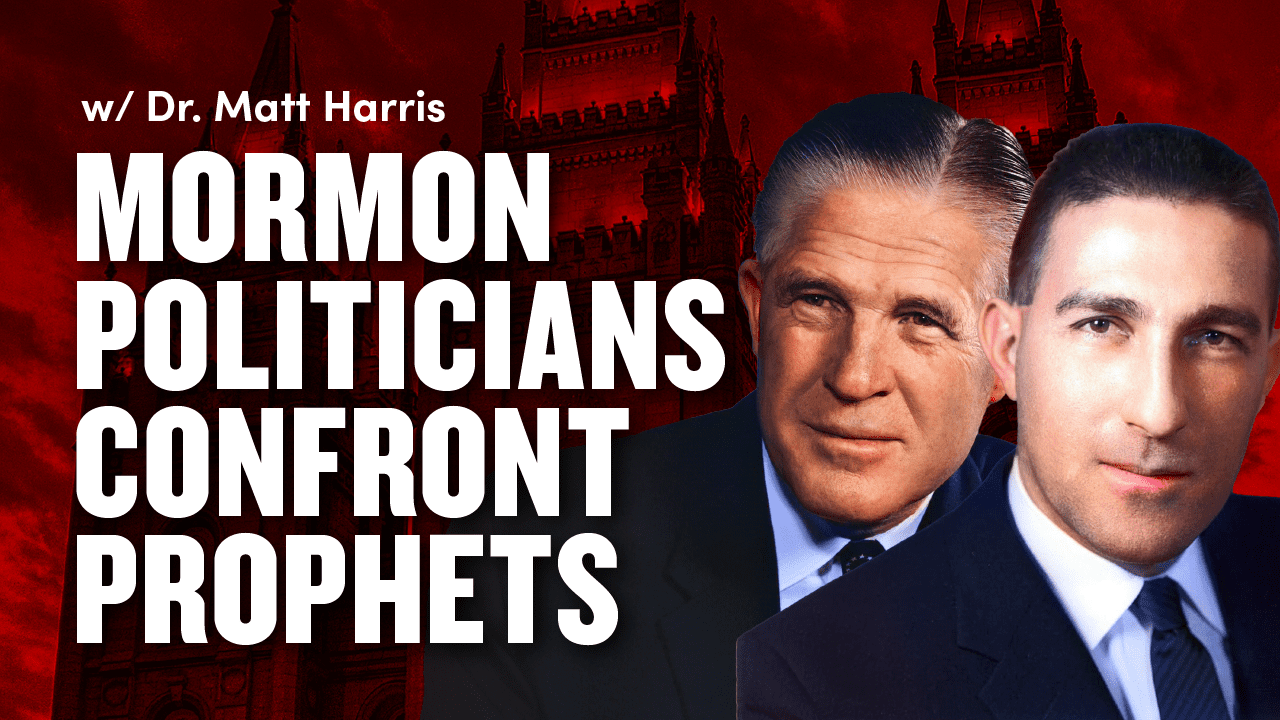
Thumbnail Credits: Image of Stewart Udall from the JFK Library (public domain); Image of George Romney from karsh.org; Background image of the Salt Lake Temple from Unsplash
Originally published on mormonstories.org.
Transcript
Machine-generated and lightly edited. Click any timestamp to jump the audio to that moment. The audio is authoritative; please check it before quoting.
Series Introduction and Episode Overview
John Dehlin Hi everyone, this is Dr. John Dehlin of Mormon Stories podcast. I want to thank you for joining us today on this epic 17 part series featuring Dr. Matthew Harris and his amazing book, Second Class Black Mormons and the Struggle for Racial Equality. This series has been groundbreaking. We've never had the response so far that we've had in terms of people really valuing our in depth coverage of this groundbreaking book that's talking about the Mormon Church's priesthood and temple ban against black people and then the dynamics, the inner workings, the political machinations of how the sausage gets made in terms of lifting the priesthood ban in the aftermath. So we have some good news and bad news about this series. The good news is thanks to the generous donations of those who have been watching it so far, we've been able to, I believe, more than generously compensate Dr. Harris for his contributions. That's the good news. The bad news is, you know, because we made the promise that 100% of the donations would go to Matt, we have not received any compensation for about the $20,000 of production costs that we incurred to produce this series and that that sort of imbalance would make it so we wouldn't be able to produce series like this going forward. So, so if you value this series, if you want to see the Open Stories foundation also be compensated for its production cost for this series and if you want to see series like this with Matt and with other people continue, we kind of need you to step up and donate to cover our production costs. And it's really easy to do that. All you have to do is go to MormonStories.org donate or go to MormonStories.org and click on the donate button and you can do a one time donation, a recurring donation, and if you want to, you can type Second Class Saints or Matt Harris in the description and that will hopefully allow us to cover our production costs for this epic series. Regardless, we want to thank Dr. Matt Harris for his generosity in doing this series. We want to thank all of you who have supported us. Please go buy this book, Second Class Saints, Black Mormons and the Struggle for Racial Equality. And again, if you're wanting, if you're grateful for this series and you haven't donated and you want to see it continue, please, please donate to Mormon Stories Podcast. Thanks again to everyone who donated to make the series possible. Thanks to Matt and we hope you enjoy this next episode in the series. Take care. Hello everyone and welcome to another edition of Mormon Stories Podcast. I'm your host, John Dehlin. It is June 20, 2024. And today we are in part eight of, of what I think is a really important series on Mormon stories podcast covering the new book Second Class Saints, Black Mormons the Struggle for racial equality by Dr. Matthew Harris. Please buy it now. If you don't own it, go to Amazon or Benchmark Books. It's an amazing book, but it basically chronicles the development of the priesthood and temple ban on black Mormons from the 1830s and 40s to its abolishment in 1978. We've done seven really important episodes. We highly recommend that you watch them in sequence. Today's episode covers the second half, the second three quarters of chapter four in the book. And today we're going to be covering at least four really cool topics. We're going to talk about two rogue apostles, one, Hubie Brown, who was a member of the First Presidency and what he did to go rogue to fight for civil rights. And we're going to talk about Ezra Tapped Benson, Mormon apostle, eventual prophet who went rogue trying to oppose civil rights as well. We're also going to be talking about Governor George Romney, father of Mitt Romney, and his attempt at running for president and how that was an inconvenient problem for the church, as well as Stuart Udall, another Mormon, lapsed Mormon congressman, and what they both did to kind of cause headaches for Mormon church leadership. And then also we're just going to talk generally about civil rights, the fight for or against civil rights both in the United States and in Utah specifically, and how the Mormon Church and Mormon apostles got involved. So that's we're going to be covering today and we are super excited to have in studio again Gerardo Sumano. Hey, Gerardo.
Gerardo Sumano Hey, John.
John Dehlin This, this series wouldn't happen without you. So mostly because you introduced me to our other guest, Matt Harris, but also because you care passionately about these topics. So it's great to have you.
Gerardo Sumano Yeah, for sure. For sure, John.
John Dehlin And then we also are so happy to have you back, Dr. Matt Harris. But let me just go ahead and say before we jump in that we, we are really grateful for the 35 of you who have stepped up to fund this series. Mormon Stories is stepping up to contribute to support Matt and his time on this series. But we're looking for additional people to just step up and help pay for Matt's time because he's been super generous with his time. So if we could, you know, we know that tens of thousands of you are watching, enjoying this series. If any of you want to support Matt Harris, his scholarship and his appearance on Mormon Stories. We've made it super easy. You just go to donorbox.org Matt Harris and donate, either in a single donation or as a monthly donor. We're going to hopefully do about 20 of these episodes and, and we want to cover Matt's time, so please become donors. Thanks to everyone who donates to Mormon Stories. But also, another way you can support Matt is by buying this book for all your friends and family and, and sharing it far and wide, as well as subscribing to this episode, liking and sharing this episode as well. Okay, so Matt, you want to start with George Romney, is that right?
George Romney's Civil Rights Advocacy
Matt Harris Yeah, let's start with George Romney. We talked about him last hour and a little bit for the last episode, we had talked about that he was running for the governorship of Michigan, a state with a large African American population. And Romney recognized that his candidacy for the governorship could be controversial for the church. So I mentioned in the last episode that he went to Salt Lake to seek the Brethren's permission, their blessing, and they considered telling him not to run because it would harm the church. But in the end, President McKay changed his mind. And he said, if you decide this is what you feel like you need to do, we won't stop you, we won't stand in the way. You have our blessing, but the brother anew.
John Dehlin And to be clear, this is Mitt Romney's dad. This is Mitt Romney's father, a former auto exec. I've got a photo of him here. Former auto exec, former governor of Michigan. And it's so fascinating that he was being considered for the Republican presidential nod as a Mormon. So anyway, keep going.
Matt Harris Yeah, and the party operatives, you know, let's be, let's be really clear about something, that when the Republican Party operatives pushed his candidacy forward in Michigan for the governorship and then later for the 1964 presidential nomination that he didn't get, he would later run in 68, but they were talking about him in 64. The president, party operatives, they knew there'd be, quote, a Negro problem. His church had discriminatory policies towards African Americans.
John Dehlin And.
Matt Harris But they thought he was such a good candidate because he was a good looking man. He had a position of stature in his employment. He was the CEO of a large automobile corporation. He had a position of significance in his church as the stake president, which is a ecclesiastical position at the local level in which he oversees various ecclesiastical jurisdictions in the church. And so he was a good public speaker. And so they recognized that. And George Romney knew that in order to overcome his church's race teachings that he would have to overcompensate by supporting civil rights. And so in the 1962 campaign for governor, he was out marching with civil rights supporters, he was identifying with African American activists, he was pushing for legislation at the state level for anti discrimination bills in both jobs and housing. So he's really laying the groundwork so that when somebody calls him a racist, he can say, I'm not a racist, look at me, I've done all of this civil rights stuff. You can't call me a racist. And so he asked for the first presidency's blessing. They ultimately give it to him.
John Dehlin And hey, Matt, can I ask you a question? Like, my sense is he wasn't a racist, that he wasn't. That wasn't just posturing. Do you have. And I know that like with Hubie Brown and with Joseph Smith and so many others, even when they said progressive or open things there, there's a lot of correspondence or letters that indicate that they actually were quite racist privately. Do you have any indication about George Romney and the extent to which privately he was non racist or racist? I know it's a complicated term.
Matt Harris Actually, that's a good question because as a historian, I'm always curious, you know, is he just embracing civil rights and racial equality for political expedience, or does it really represent his core values? I haven't found any evidence that he doesn't think that civil rights is the right thing to do. And you're right to point this out that just because you point out something publicly, John, doesn't mean that you're not prejudiced. I mean, Abraham Lincoln's a great example. He's the great liberator of slaves. But yet he held intensely racist views towards black people. And the only limitation I would say with Romney would be with racism. And this is not defending it, of course. I'm just making a statement of fact, which is that Romney would have been, of course, profoundly uncomfortable with interracial marriage. I mean, this is the litmus test for your racism. Do you support, you know, one of your children, let's say, to marry a black person. And for Romney, I'm sure the answer would be no. But he is promoting civil rights. He is a good Latter Day Saint, and the brethren recognize him. He. When there's an opening in the quorum of the 12. So let's jump ahead a decade when there's an opening in the quorum of the 12. In 1974, when Harold B. Lee died, Spencer Kimball, who was then the president, he asked each of the apostles to submit openings or to submit names of three people to be to fill the vacancy. And this is not secret knowledge on my part. This is. The church has talked about this publicly. So when there's an opening in the quorum, the church president asks the apostles to submit three names with justifications as to why they ought to be the one to fill the position. And it's not a democracy. It's not like the president then tallies up who gets the most votes, and then whammo, there's the next apostle. But having the names submitted, it tells the president that, you know, I probably should choose somebody from this list. And it's usually people who are well known to the Brethren. You clearly don't want to choose an outsider, somebody you don't know you can get along with, you want to spend time in core meetings with. And so usually there's an intimacy among the brethren when it comes to new people. They often know them. And when Spencer Kimmel asked for the three names to be submitted, Legrand Richards wrote the longest, most glowing letter nominating George Romney for the vacancy. And I'll just read a couple of lines from his nomination letter. Dear President Kimball, you have asked for names to fill the vacancy in the Quorum of the twelve. This is Apostle of Grand Richards. My first suggestion would be George Romney. I feel the life he has lived and what he has accomplished marks him as one of the great missionaries of the church, for he has touched the lives of many of the great men of the nation. And then Richards goes on to say, you know, I've been to Michigan many times to visit his stake. I've seen him talk, he's loyal, he's a good speaker. He'll command attention from the Saints. He would be a great member. And this is something he says. It's really interesting. He says that in his letter. Apostle Richards writes, I attended his stake conference at Detroit while he was the stake president, at which time he was settling a threatening strike of the workmen of the motor corporation over which Romney was a CEO. And he said, I asked him, I said, how did you settle the strike? And Romney's reply was, I just use good old Mormon principles, whatever that means. So the Brethren like him. He's also the first cousin of Apostle Marion G. Romney. George Romney has roots that go deep into the church. His ancestors are polygamists in the Mormon colonies in Mexico when the government was cracking down on polygamy in the early 20th century. George Romney's relatives fled the United States and they went to Mexico. So the Brethren love him. They, you know, they, they, they didn't obviously call him in as an apostle. I don't know why I can speculate, maybe, but I, It's. He doesn't get the nod. But it does give you a sense that there's a number of people who respect him. Even Harold Lee told him years earlier than before Richards wrote this letter. He said, I consider you one of the finest Mormons in the church. He writes this in a private letter to George Romney. So he's got this really street cred of the Brethren. But things go south pretty quick when Martin Luther King starts to energize the civil rights movement. And George Romney knows intuitively that he has to again overcompensate for his church's race doctrine. And, and so he plunges himself head on into the civil rights movement where he starts to march with some of the civil rights leaders. And maybe, John, if we want to show that picture of Governor Romney marching with civil rights. So this is. You can see Governor Romney on the far left next to the man that says, the freedoms we lose may be your own. And so this is pictures like this where he's marching in Michigan and elsewhere that they're on the front cover of the New York Times, the Washington Post, all of these major newspapers. And the Brethren in Salt Lake. Some of the Brethren, not all, but some of the Brethren, are really uneasy with Governor Romney's activism. And one of the apostles, a man named Delbert Stapley, wrote him a detailed letter in 1964. And if we can pull that letter up, Delbert Stapley had heard, he had heard Governor Romney give an address at the Hotel Utah. And in this address at the Hotel Utah, Governor Romney, who. There were maybe, I think, gosh, there were hundreds of people there. And N. Eldon Tanner was there an apostle. Delbert Stapley, the man that you see on the screen here to the right, a Mormon apostle, was there, and there was another apostle, Richard L. Evans was there. He was the master of ceremonies. And when he gave this address, Governor Romney, he was talking about his support for the Civil Rights act of 1964, which was being discussed at the time in Congress in Washington, D.C. so it hadn't been passed yet. And he's imploring both his church and his party to embrace the Civil Rights act of 1964, which would strike down segregation barriers in school. Not schools. That's already been done with Brown. It would strike down segregation in restaurants, zoos, bus stops, essentially everything that was segregated by 1964 would end and the government would go after them. The Justice Department would go after the businesses that would discriminate simply by saying, you know, if you don't allow black people in, we're going to bring a suit against you. And so Governor Romney is trying to call his political party to seek their better angels. We need to do this. And the party is run by some really hardcore extremists. A man named Barry Goldwater, famous senator from Arizona, who's the party leader. It turns out it'll be Senator Goldwater. Is the Republican Party, their nomination for the 1964 presidential nomination, not George Romney. So Senator Goldwater opposes the Civil Rights Act. A prominent political pundit who's got thousands of readers, guy named Bill Buckley, he opposes it. And then there are moderates within the Republican Party who support the Civil Rights act of 64. And this would be George Romney. This would be Richard Nixon, and also the New York governor, a guy named Nelson Rockefeller. So the party itself is split down the middle and it really makes a lot of people uneasy. In the 1964 election, the Republicans get trounced this, the vice president under Jack Kennedy, a guy named Lyndon Johnson, he'll defeat Senator Goldwater in a landslide because the Democrats will seize the moment and embrace a Civil Rights act where Republicans hold back. And when they get trounced because of their lack of support in 64 for the civil Rights Act, Republican Party operatives will say, we'll never do this again. We're not going to get beat on this single issue. And so by 68, Republicans will announce support for civil rights. But in 64, they weren't there yet. And so here you have Governor Romney giving this high profile speech at the Hotel Utah, and he's imploring his church and his party to embrace civil rights. And let's go back to that letter for a second. So Elder Stapley, Apostle Stapley, is in the audience. He hears the speech and he's irate. He doesn't think this is good for the church. He doesn't think it's good for the country. He argues a state's rights position, that business holders have a right to do business with anyone they want. And if they don't want to serve a black person, that's their prerogative. The moderates will argue that, no, you do have a right to do business with those whom you want to do business with. But when it comes to racial discrimination, you've lost that right. You need to serve them.
John Dehlin And Matt, this is something that I thought of when I was reading your book, just this. I don't know if you consider it a paradox. I do. Nowadays you hear the Mormon church all day long say, religious freedom. Religious freedom. Religions have the right to do what they want, which some interpret as the right to discriminate. It's weird to hear them say that now, but then back then claim that businesses have the right to do what they want. Am I wrong to note that there might be some hypocrisy or some contradiction there?
Religious Liberty and the Right to Discriminate
Matt Harris No, there's all kinds of contradictions. I mean, really, what it comes down to, I teach legal history and I always teach my students that constitutional law is always sort of a teeter totter. You know, you've got state authority here and individual rights over here, and depending on the situation, the teeter totter leans in one direction or the other. And so here you have a business owner who in theory has a right to do business with whomever they want. But then you have people who are either gay or let's say black or brown, and they should be able to show up to a public facility and not be discriminated against. Right. And so back in the day, in the 60s, you know, they were the 50s and 40s, 50s and into the 60s, they would have signs that says negroes are not welcome here, whether it's a restaurant or whatever. So, you know, so if you're a black person, you, you, you're walking by a restaurant that says Negroes are not welcome here. At least you know, you're not welcome there. You don't have to go in and be humiliated. I mean, it's probably, it's humiliated enough to think that you're not welcome. But in Colorado, my state, they had an instance in few years ago where there was a business in the Denver area where it was a Christian baker who didn't want to bake a cake for a gay couple and claimed that, you know, it's my religious right to not want to do this. And you know, my position on that is that this is an unpopular position for people like the baker. But, you know, why don't you put a sign? Gay people aren't welcome here. And of course they're not going to do that because they don't want to lose business. So. But that just shows you what a mockery their bigotry is, their homophobia. And there's some case law on this that if you serve a public, you should offer accommodations. That is, you don't make those distinctions to an adulterous couple that Comes in, oh, you're engaged in an adulterous affair. I'm not going to bake you a cake. You don't do that. But gay people, you single them out. So there are parallels going on here. And so a lot of people today sadly hide behind the First Amendment to justify their bigotry. And it's just as a liberal, I just think that's just morally wrong and inhumane.
Apostle Stapley's Letter Opposing Romney
John Dehlin But anyway, so back to Stapley.
Matt Harris So Stapley writes this letter to Governor Romney after hearing him speech and embrace civil rights. And he says something, a couple things in the letter that are actually quite extraordinary. Maybe John or Gerardo, if you want to read the last paragraph.
John Dehlin Yeah. So this is letterhead January 23, 1964, Church of Jesus Christ, Latter Day Saints letterhood, letterhead, quorum of the 12. And it's Delber Staple. And he writes, when I reflect upon the prophet's statements and remember what happened to three of our nation's presidents who were very active in the Negro cause. And Matt, I'm guessing he's saying John F. Kennedy here because it's 64, so Kennedy would have died in 63. I'm guessing he's talking about Abraham Lincoln who was assassinated. Who's the third that I'm missing? Was it, was it McKinley or probably
Matt Harris William McKinley, but that's just a guess. I'm not sure that Delbert Stapley's that, that conversion.
John Dehlin Okay, so he's named three murdered presidents that, that he thinks supported black people, basically. And he's saying, oh, man, when I. When I think about these nations, nation's presidents who were very active in the Negro cause, I am sobered by, by their demise, they went contrary to the teachings of the prophet Joseph Smith. I'm fighting the urge to be sarcastic that Abraham Lincoln and John F. Kennedy disobeyed Joseph Smith. But I'll continue unwittingly, no doubt. But nevertheless, the prophecy of Joseph Smith, quote, those who are determined to pursue a course which shows an opposition and, and a feverish relentlessness against the decrees of the Lord, will learn when perhaps it is too late for their own good, that God can do his own work without the aid of those who are not dictated by his counsel. That's a quote. And then he says, has and will continue to be fulfilled. So I just have to say I'm reading this as Delbert Stapley telling George, Governor George Romney that if you keep fighting for civil rights, you're going to end up dead. Like three former American presidents. And whatever else do you think is Worth noting there, Matt.
Matt Harris Yeah, in the book I write, this is just irrational. This is not the product of a rational mind vis a vis civil rights. And I don't. I wish I had Governor Romney's response to this. And I'm quite certain I've looked in two collections in the Romney papers on different ends of the country, and I found no response to how Governor Romney responded to the apostle. But, you know, this must be a moral dilemma for Romney because he's a good Latter Day Saint, he's a stake president. The brethren are praising him in private. They will ultimately nominate him for an opening in the quorum. I mean, come on. And he's loyal, but he's also trying to make his way in public life by running for the nation's highest office. And so he's really caught in a very difficult situation that his church opposes civil rights, but yet he knows he has to promote it. And I do think that he believes it at his core. So I don't think it's out of political expedience. And you know, as far as I know, he just ignores Governor or Elder Stapley's letter.
John Dehlin Hey, Matt, is it okay if we read one more passage from Stapley's letter? Julia highlighted this one, or maybe it was Gerardo. So this is like the fourth to the last paragraph or so he writes. This is again a Mormon apostle, sustained as a prophet's here in Revelator. Delbert Stapley, Member of the quorum of the 12. I am not against the Civil Rights Bill if it conforms to the views of the prophet Joseph Smith according to the references above given. I fully agree the Negro, and I'm waiting for a Cadillac quote here. I'm fully agree. I fully agree that the Negro is entitled to considerations also stated above, but not full social benefits nor intermarriage privileges with the whites, nor should the whites be forced to accept them into restricted white areas. So he's basically saying no interracial marriage legally, no integration of whites with blacks. He's saying black people, I should say, in my judgment. Delbert Stapley, Apostle continues, the present proposed Bill of Rights is vicious legislation. So he's calling the Civil Rights act of 1964 vicious legislation. I'm going to want to hear what you think about that, Matt, but let me finish this quote. There needs to be some modification. The position of the church cannot change until the Lord changes it himself. Certainly I am not for exploiting racial or religious prejudices. That's good. But it is the present playup to the Negro voters which is unnecessarily creating problems that by a more firm, sensible approach can be avoided. There will be a few die hard leaders, but then that has always been true with any debatable issue principle, religious or otherwise, cannot be abrogated for political expediency. So basically, Delbert Stapley is saying these Negro voters are trying to push their agendas that conflict with Joseph Smith's vision of the Bill of Rights. I mean, I don't know how else to interpret that.
Matt Harris That's what he's saying. And I think we need a little bit of context here to this, that when the Civil War ended, the country of course was badly divided. Southerners had lost every bit of their identity as slaveholders, culturally, politically, socially. And Even though the 14th and 15th, 13th or 14th and 15th amendments to the Constitution just after the Civil War ended, even though they gave them black rights, including the right to vote, those rights were quickly challenged by the Ku Klux Klan by poll tests, literacy or poll literacy tests and poll taxes, grandfather clauses. And so these bigoted Southerners for decades had tried to work within the loopholes of the Constitution to deny black people their rights. And if Reconstruction had materialized in the way that some of the Reconstruction leaders had envisioned, there wouldn't have been a need for Martin Luther King or Malcolm X or other leaders. But since there was still tremendous pushback to the black community granting them their democratic rights, this is why you get these civil rights leaders from the 50s and 60s and Apostle Stapley, it's clear that his sympathies do not lie with racial injustices. He's from Arizona, a small community in Arizona. He doesn't have a lot of association with black people. He doesn't know their stories. He doesn't seem to care much about voter suppression going on. And so his sympathies lie with, of course, business owners and their ability to be discriminatory if they want. And he's invoking. Think about the audience here, folks. He's invoking Joseph Smith into his vision of what race ought to look like. But this letter is not meant for public consumption. If you look at the very last line of the letter, he tells George, he says, go to the last page. He says that this letter is for your personal use only and also Lenore, your wife, and is not to be used in any other way. It does not require an answer.
John Dehlin And Matt, can I just also add. And don't lose that thought. In the middle page, he tells the story of a friend that supported civil rights too much and he ended up drowning oh, gosh.
Matt Harris I mean, this is just irrational.
Gerardo Sumano This is.
John Dehlin And this is. But this is, I mean, and I
Gerardo Sumano think I get, I, I can't help but also point out the, one of the first paragraphs in the letter where he's quoting just a bunch of church books, Teachings of the prophet Joseph Smith by Joseph Fielding Smith, history of the church.
John Dehlin And also he sends him a copy of Mormonism in the Negro in the third page.
Gerardo Sumano Yeah.
John Dehlin And I, you know, of course, we don't want to hammer these guys too hard, but I am surprised that someone reaches the level of Apostle quorum of the 12 in a global billion dollar organization that is so insensitive to basic human rights. Even in the 60s, I'm going to say even in the 60s. This is shocking insensitivity and lack of sophistication for what was then a million. Still a multimillion member global church. But that's just, you know, go ahead,
Romney's Public Stance on Race in 1963
Gerardo Sumano let me ask one more, one thing. I can't help but also realize that there's in, in the book you mentioned, you mentioned about the December 1963 Romney press conference. And he gives, he gave some statements about what he has been taught in the church about black people. Do you want to talk about that, Matt? And how you point out that obviously he was not being truthful.
Matt Harris Well, just, yeah, we can move on from this letter. But the last part of the letter,
Gerardo Sumano this is before he gets the letter, which is interesting. Right, because he, he will give the press conference and say things and then, and then you have an apostle writing him just a few months later.
Matt Harris Yeah, let me, let me comment a letter because I think we'll probably move on from it then I'll go back to your, your good question, Gerardo. But the letter, he says this is for your private use only. And what's so rich about that letter is that in 2012, when Mitt Romney, his son, was running for the presidency, an enterprising journalist from the Boston Globe had gone to the archives at the University of Michigan and dug that letter up and they published it online, which is where you got it, John. And of course it was meant to embarrass, you know, Mitt Romney. And I'm happy to say I went through Romney's papers before 2012. So I had a copy of the letter already and I was surprised to see it online one day. I'm like, oh, wow. But I remember when the archivist at the University of Michigan sent me a whole stack of Romney documents, that letter was in there. And I thought, oh, this is this is a doozy. So, so, so the line is that he gives Governor Romney when he's pestered about his church's race teachings. And this is to your question, Gerardo, is that he says that he ignores it and he focuses on all the things he's done for racial equality and civil rights. He said, look at what I'm doing. Don't call me a racist. How could I be a racist? I've been supporting civil rights legislation at the state level in Michigan for years. I'm not a racist. And the thing I point out in the book is that Romney is accused of being a racist. Journalists will accuse him, including Clare Boothe Luce, who's probably the most prominent journalist in the early 60s that she wrote really a very tough, aggressive piece calling Governor Romney and his church racist. So he's really sensitive to these criticisms. And when he denies Luce's op ed piece saying that your church, Governor Romney treats that Negroes have inferior souls to white people, he denies that that's the case. And I point out in the book that George Romney was born in 1907. That puts him as a young man in the 1920s and into the early 30s. I mean, he's coming of age when the way to perfection, Joseph Fielding Smith's book, is being taught in Sunday school lessons and manuals. So for him to say simply that his church doesn't teach, that would be erroneous. And rather than he's a liar, I tend to think of it as certainly he's not truthful, but he's running for public office. He can't admit this stuff publicly. If he did, it would doom him. And so as a shrewd political operator, he realizes that he can't talk about his church's race teachings. And I would say that when Mitt Romney runs for the Republican party nomination in 2008, he doesn't get it, but he runs. McCain beats him and then he gets the party's nomination in 2012. He, he's faced with the same things tell us about your church's race teachings. And Mitt doesn't want to talk about it. And one of the things that in fact, Mitt doesn't want to talk about anything to do with the Mormon church, which is really striking. If I were to advise mitt Romney in 2012, be hard for me to do that as a liberal, but if I were to advise him in 2012, I would simply say, you know, Mitt, you certainly don't want to talk about the church's race teachings. It's not going to help your candidacy. But. But I would say, you know, you've been a bishop, Mitt, you've been a stake president, you've been involved with members of the local level. Talk about, you know, counseling the widow, talk about helping young men get into college. Those are all positive stories. But Mitt Romney didn't want to talk about Mormonism at all, but his father, at least would talk about the church, except for race.
John Dehlin Yeah, got it. Okay, cool. So, you know, I guess George Romney was no better or worse than a lot of politicians that just have to be expedient with the truth sometimes. Maybe we shouldn't hold too much against him. Can I.
Gerardo Sumano Can I just read really quick what he said on that conference. Press conference. It's just like a couple lines that the Matt, you quote on the book. He says, I have been taught that every per. I have never been taught the inferiority of Negroes, and I don't believe in it. I have been taught that every person on this earth is a child of God and thus is entitled to full and complete civil rights.
John Dehlin And there's no way that's true.
Matt Harris No. I mean, he's been taught his whole life, growing up at home and at church, that black people are inferior and.
Gerardo Sumano Well, and just a few months later, he'll get a letter from an apostle telling him, like, correcting him. Right.
Matt Harris And so that's exactly what's going on. He's even hearing it in private.
Gerardo Sumano Mm.
Matt Harris So he's in a tough position. And the brethren know he's in a tough position. I'm going to share something from my book. It's. It's a little quote that from Spencer W. Kimball and Joseph Filming Smith. They said something interesting. They said that this is Apostle Kimball. He lamented that nearly every time George Romney is mentioned in the press, the Negro question is tied to him. That's a quote. Apostle Joseph Fielding Smith grumbled, quote, that when Romney became a candidate, enemies will play the Negro question to the very limit to close quote. So they know he's going to bring attention to this.
John Dehlin And I was thinking about this, reading your awesome book, Matt. Like, on the one hand, if you think about the Smoot hearings, what in the 19 aughts, you know, the. The. I mean, Utah was. Many didn't want to make Utah state. You know, they didn't want to seat Reed Smoot. And then you Fast forward, what, 50, 60 years, and this could be a really important marker for progress that a legitimate bonafide Mormon son or grandson of polygamous parents for sure. You know, was being considered as the nominee for one of the major parties. On the one hand, I think the Brethren, the Mormon Church leadership might be patting themselves on the back saying, wow, we've really come far in 60 or 70 years. On the other hand, it just means all the skeletons in the closet are going to come out. So they must have been really conflicted about this moment, I think.
Matt Harris Well, yes, because it's going to put race teachings into the spotlight. And you know, for Latter Day Saints who grew up, of a certain generation who grew up hearing that black people were less valiant, they were fence sitters, they were cursed, you know, all of that, that's hard to help somebody outside of the church understand why your church accords black people a second class status. And you know, it's just really hard and jarring to one's sensibilities that your church teaches that black people did something to offend God in the pre existence. I mean, that just doesn't set right theologically. And so the church recognizes this during civil rights and that's why they start to back off of that. And by 1969, the church will tell members that if anybody asked about the ban or the race teachings, just say, we don't know why the ban. God hasn't revealed it. And that certainly wasn't the case before that because leaders were very clear in their writings. Let me say something else that's really critical to this discussion is with Romney running, he's the first major presidential candidate. Before him, the first major person to be elevated to the, to a cabinet level was Ezra Taft Benson. So they had gone through this a little bit with Ezra taft Benson from 1953 to 1961 when he served two terms as Eisenhower's Secretary of Agriculture. And so Benson was sort of a litmus test to see how well Mormons would fare at the national level. And frankly, Benson didn't fare well. And it was less about the church's teachings, although race was part of it. It was less about the church's teachings and more about Benson's extremely conservative farm policies where essentially he wants to cut off farm subsidies to farmers who need this government income to subsidize their salaries, especially with drought years. So he's cutting all this off and you know, people are upset by that, you know, when you're losing your income. So the church takes some heat because of Ezra Taft Benson's views and they try it with George Romney. And then by the mid-60s, word gets out that Ezra Taft Benson, whom we'll talk about more In a minute. But he decides he wants to run for the presidency. So now you've got two high ranking Latter Day Saint people and the Brethren are don't know what to do. Do we support Benson? Do we support Governor Romney? What do we do?
Ezra Taft Benson's Far-Right Political Entanglements
John Dehlin And correct me if I'm wrong, but doesn't he sign up for kind of a white supremacy ticket with like Strom Thurmond or something like that?
Matt Harris Yeah, Elder Benson. So clearly he couldn't purge himself of the political bug because when he got back to Salt Lake in 1961, he took leave of absence from his apostolic duties. They sent him core minutes, you know, each week. And once in a while they would send him, if he was going overseas to do government business, they would simply say, elder Benson, we know you're going to be in Germany. Any chance that you could preside over the Saints General State Conference there? And he would write back and say, if I, I can do it or I can't do it, I'm busy. So it was understood that he would take a leave of absence and do as do what he could with his church and his calling. And when he got back from D.C. in 61, the brethren told him, you know, we want you to be done with politics. You know, it didn't fare well for the church. It didn't go as the way that they wanted it to go because Benson was taking so much heat from national newspapers. He was taking heat from people within his own party. Republicans told Ike, drop him. He's too controversial. And to Eisenhower's credit, he's loyal. And Ike doesn't drop him. Even President McKay flew to Washington to meet with Ike and say, look, if you want to not retain him for a second term, that's okay. We'll take him out of your hands. And that was McKay's nice way of saying he's bringing some unfavorable publicity to the church. And it was so bad, by 1960, Richard Nixon told Ike, can you get Secretary Benson out of the country? As I run, I don't want to be associated with his foreign policy. Oh, wow, this is one of those times. I'm one of the only times, few times I'm probably going to defend Secretary Benson and not his policies. But the way he was treated, he was doing what Eisenhower wanted him to do. And Eisenhower said that, I'm bringing you in, Mr. Benson, to my cabinet. This is in 53 when he interviewed him. I'm bringing you in because I want you to cut farm subsidies. The government's been way too generous in Expenditures towards farmers. And so Benson's a conservative, of course. He doesn't believe in these government subsidies as a free market person. And so he's doing what the President wants him to do. And when the critics start piling on Benson, Eisenhower watches it and doesn't come to his aid. And so that was an unfair thing that Ike did. And later on, as we'll talk about, Benson will return the fire when he calls Ike a communist. I mean, this is. Can't make this stuff up. So, so with Romney running and now Benson, he can't get politics out of his blood. Even though he'd been warned by church leaders and his colleagues in the quorum of the 12 to leave politics alone, he feels called in to save the country from socialism, liberalism, and what he thinks is America's descent into communism. And so he decides to run. In the mid-60s, as Romney is being courted by the Republican Party, Benson decides that he wants to run the. He's going to run on the independent party ticket, which is problematic. And the Republican Party is too liberal for him because by this point they're starting to move away from their previous position on civil rights. And the party recognizes that if they're going to win in 1968 and reclaim the White House, they have to support civil rights. And that's too liberal for Benson. So he leaves the Republican Party.
Gerardo Sumano Wow.
Matt Harris And so anyway, he decides to the John Birch Society that we'll talk more about in a minute. It's this extreme anti communist organization. Their leader, a guy named Robert Welch, is good, good friends with Benson and he convinces Benson to run as the president with Strom Thurmond, an old segregationist from South Carolina. He'll be your vice president. And Strom Thurman is probably one of the two most virulent segregationists in the United States in the mid to late 20th century. He's a die hard white supremacist. And if you think about this just for a moment, I mean, the fact that a senior apostle is being courted to run on a presidential ticket with a white supremacist, this is not a good look for the church. And when that ticket fails to materialize, Thurmond had just been reelected to the Senate. He wasn't really consulted by the Birch people, and he gave tepid support to see where it would all lead. Well, anyway, they didn't raise enough money. He didn't think that the ticket was serious enough. And so Strom Thurmond, this Republican senator, decides to not really pursue the ticket with Benson. So Benson is asked a year and a half later, by 1967, to join a presidential ticket with George Wallace, another third party ticket. And George Wallace is another virulent white supremacist. In fact, when Wallace runs, the church will not allow Benson to run. McKay will turn it down. Heck no. Because the people who are supporting George Wallace's candidacy are the Ku Klux Klan, the White Citizens Council, the American Nazis, and the Burt society. And President McKay recognizes that. Oh my goodness, if we have a senior apostle running on a ticket that commands the attention of all the fringe groups in the United States, this is going to bring all kinds of bad publicity to the church. It will validate outsider perceptions that we are indeed racist. So McKay says, you can't do it. And Benson doesn't give up. He has. He has Wallace fly from Alabama to Salt Lake to meet with the President in person to implore him, will you reconsider? We need him. And President McKay is getting his head full from Hub Brown and other high ranking leaders saying, Heck no, Mr. President, don't let him run. And so President McKay turns it down. But it would have created a huge issue for the Brethren if Romney and Benson were running simultaneously, because they did. They both had their eyes on the 1968 presidential ticket. And keep in mind that George Romney is openly supporting civil rights and Ezra Taft Benson is openly rejecting it. And it would have put the church leaders in a horrible position because they would have had to go on record to support either George Romney, a man whom they held in high esteem, or they would had to have, you know, supported one of their own who was a right wing extremist. And that was an untenable situation that none of them wanted to be in.
John Dehlin So what? That's beautiful history. I'm really glad you have taken us through that and that's important. What else, what else did you want to say about Romney before we talk about Bring. Bring Hubie Brown back in. Is there anything else you wanted to do to close that thread of the story for this first part of today's episode?
Matt Harris Yeah, yeah, just one last quick thought on that. So Romney is pushing for racial equality. He's getting these nasty letters from Apostle Stapley. The Brethren like him, even though most of them don't support his views on civil rights. They do like him. They do respect him. They know he's loyal and they know that he's a good ambassador for the church. And so with all of those things combined with, they're going to sit back and watch cautiously as the Republican Party operatives Pull him into a presidential ticket. They're really, really nervous about it. And nowhere was that more evidenced by those two quotes I just read a minute ago from Apostle Smith and Apostle Kimball. And so, all right, so let's get to the civil rights in Utah. Let's, if we can just transition and I want to get to Hubie Brown. We're going to pick up a thread with the late great Hubie Brown, a man that I admire immensely.
Hubie Brown and Housing Discrimination in Utah
John Dehlin So here are a couple photos of him for those who are viewing. A couple photos of Hubie Brown.
Matt Harris Yeah, he had last hour. We introduced him. He was grew up in the Utah territory. When he was 13 or 14, he moved to Western Canada. Always identified as a Canadian, became involved in American party politics. When he moved to the United states in the 1920s, he asked General authority, a very popular general authority named BH Roberts, what party should I join? And Roberts said that if you want to be in touch with the common people, be a Democrat. If you want to be in touch with the wealth of the nation, be a Republican. And Brown chose to be a Democrat. And So by the 1930s, he is not just a card carrying Democrat, he becomes the Democratic Party chairman in the state of Utah. And he is a die hard supporter of Franklin Roosevelt's New Deal. One of the things I didn't mention in the last episode is that he does some things in his stake. When he's the stake president, he's incorporating New Deal principles into a stake, he's creating a welfare plan to help out people in his stake. This is unprecedented, this is unknown. And so as the nation's welfare programs are developing with Franklin Roosevelt's administration in the 1930s, Hugh Brown's doing something similar in his stake. And he gets widespread acclaim among church leaders for doing that. So he's a liberal, he's involved in party politics. He's kept out of the apostleship for a number of years. I mentioned last episode because he's involved with a scandal in which some people who are applying, businessmen who are applying for liquor licenses in Utah after Prohibition's repealed, they're applying to get approval to sell liquor. And Brown, who's on the liquor commission that the church President Heber J. Grant had asked him to serve on, he turns them down. And some of the people who get turned down are bitter and they accuse him of taking bribes from the people he does give the liquor licenses to, none of it's true. They investigate. But there's a cloud held over Brown and that episode keeps him out of the quorum of the 12 until 1958. And then by 1958, he proves himself. He's elevated by 1960 into the highest governing body of the church, the First Presidency. And by the early 60s, Brown becomes an activist. And for your listeners who are not lds, one is not supposed to crusade in the highest quorums of the church. You're just supposed to. You can offer your opinion, you can share your beliefs and your life's experiences about what you think the church should do. Indeed, that's what counselors do. They share their views with the president. But you're not supposed to crusade when the president says no. And so Brown will start to crusade on the race issue. One of the biggest issues he crusades on is the race issue. And we talked about last hour how he tried to ordain Nigerians to the aaronic priesthood in 1962, and the Brethren chose not to do it. And then by 1963, he was fed up with it. And he leaks confidential discussions the Brethren had been having with Wally Turner, the New York Times, and of course, that really rattled church headquarters because apostles are not supposed to disclose private deliberations to newspaper people. And so by that point, Brown had been in the first presidency for a few years when he spoke to the New York Times. And now with the Civil Rights act gaining momentum, Brown is really, really at a crossroads. And it comes into high gear when the naacp, this is a civil rights group, the national association for the Advancement of Colored People, they threatened to pick it at the 1963 General Conference when the Brethren decide to remain silent on two civil rights bills that. That are then up for discussion in the Utah state legislature. So now we're switching from a national civil rights bill that we were talking about with Governor Romney that Lyndon Johnson would ultimately sign into law in the summer of 1964. Now we're going backward just for a quick moment, and we're talking about two important bills in Utah. And those two important bills state that it would be illegal to discriminate in housing against a black person. That is, I'm not going to rent to you because of the color of your skin. And that bill would make that illegal. And the other one would make it illegal to do that with employment. I'm not going to hire you because of the color of your skin. And so the church decides to remain silent. They're fearful of interracial marriage. If you have black people living together, working together, that would lead to a relationship that could culminate in marriage. They don't want that. And so the Church decides to remain silent. And the naacp, the two significant chapters in Utah, in Salt Lake and Ogden, they recognize that this bill will never pass unless the church supports it. 90% of the Utah state legislature are Latter Day Saints. And so they recognize the church has to use its influence to convince these lawmakers to do the right thing. And so when the lawmakers recognize that the church is going to remain silent, that is the status quo. It's not going to pass. They decide to pick at General Conference. And when Hugh B. Brown and N. Eldon Tanner, his counselor and his cousin. So Brown's and Tanner are cousins, and they're both counselors to David O. McKay. When they get word from Sterling McMurran, who's a member of the NAACP, that the NAACP will plan to protest. We got to do something. So the NAACP and Brown and Tanner decided to meet. Sterling McMurran, their good friend had arranged it. And the NAACP members, they let him have it right up front. You've got to support civil rights or we're going to march.
John Dehlin You may have already said this, but just to reiterate, we're talking about employment discrimination in the state of Utah and housing and discrimination in the state of Utah. Is that right? And I guess there's the question of interracial marriage in the state of Utah. Are those the three main pieces of legislation that are at play, or am I missing others?
Matt Harris No, it's housing and employment. Those are the two big ones. But interracial marriage is also indirectly an issue, but not because of black people wanting to marry white people or white people wanting to marry black people. It's because of Japanese Americans with Japanese ancestry. They're called Nitzis. And after World War II and the Korean War, Mormon GIs from Utah were marrying Japanese women. And with interracial marriage laws that had been put on the books in Utah in the late 19th century, and they had been refined through the years into the 20th century. But it wasn't just prohibiting marriage between a black and a white person. Japanese people could not marry Anglos. And so there's a Japanese activist in Utah, she's not a Latter Day Saint, and she is seeing all of these marriages between these Mormon white men marrying these Japanese women. And it's illegal. So they got married outside of Utah, then they come back to Utah to live, and the state doesn't want to recognize their union. And so, yeah, her name is Alex Casey, if I said that right, I'm not sure if I pronounced her. But Alex Casey, this Japanese activist, she goes to Gordon. Hinckley who's a young apostle in the church. And she said, hey, your people are marrying my people. And let's get the state to recognize it. Now. This puts the, this puts Elder Hinckley, this young apostle, in a tough position. And he goes back to his colleagues in the 12, and he said, hey, look, this is what's going on. I mean, she's got a point. We want to recognize these unions. We don't want to criminalize something that shouldn't be criminalized. But if you repeal Utah's anti miscegenation laws, you're opening up black people with the possibility of marrying white people. And the brethren are terrified by this, but they recognize that the winds are shifting with interracial marriage in the United states in the 1960s. A number of states had struck down their anti miscegenation laws by that point. And they say in their core meeting that if we don't end it ourselves at the state level, the Supreme Court will do it for us, which is what the court ultimately does in 1967 in a famous case called Loving v. Virginia. So in 1963, the state quietly repeals its antiquated anti miscegenation law. There's not a lot of fanfare behind this. Few people know that Alex Casey, this Japanese American activist, and she's also next door neighbors to J. Reuben Clark of the governing first Presidency. They had a friendship. And so few people know that she's working with the apostles to get rid of this odious law. But the whole ghost of interracial marriage between black and white people hang over this. And David O. McKay says, hey, if we do this, we allow Japanese to marry Anglos, then we're going to have Negroes marrying white people and their seed will be cursed. So, but they take this. They, they take that chance because they know the court, the Supreme Court, is going to do it. All right, so back to the employment in the housing thing.
John Dehlin And you talk about, just really quickly, Matt, you talk in the book about how, and we talked about this in prior episodes, how Utah really was segregated in terms of housing. And I think in your book you mentioned, like Ogden and one other area in Salt Lake is kind of where all the black people were allowed.
Matt Harris Correct?
John Dehlin Is that right, that there was significant employment and housing discrimination in Utah?
Matt Harris Oh, hugely. So, yeah. And black people talked about it all the time. We can't get a job. There's a football player named Richard Jefferson, young man, African American man, at the University of Utah. He was a star. I think it was a running Back, star running back on the football team. And he married a woman. They had a little baby, and they. Nobody would rent to them because of the color of his skin. And so these are the things that are being told to an. Eldon Tanner and Hugh B. Brown. And Eldon Tanner refuses to believe it. He said, I've never heard of any discrimination going on that people won't read to you because you're black. And Eldon Tanner does something too, that might make us really frustrated today those who believe passionately in racial equality. And he said that civil rights is not a moral issue, and therefore the church is not inclined to act. Of course I'm going to be. I try not to be critical. I'm a historian. I offer judgments at the time. But I'm going to go off record here for a moment. If race discrimination in housing and employment is not a moral issue, I don't know what is. Dr. King and his associates, Lyndon Johnson and his associates before him, Jack Kennedy and his associates, they always characterized civil rights as a moral issue. But N. Tanner didn't see it as a moral issue. And therein lay the problem.
John Dehlin I mean, the only. The only way I can interpret that is that sometimes Mormonism and maybe other conservative Christian traditions have this myopic view of, like, basically, morality means sexual indiscretion, you know, and while polygamy somehow gets a pass, like black people, black men having sex with white women, that's a moral issue.
Gerardo Sumano Right?
John Dehlin Right. But housing and discrimination for jobs, that's not moral. That has nothing to do with sex. I don't. I don't know what else to say.
Matt Harris The church was. The church was definitely caught up in a sexual purity movement that coursed throughout Protestant and Evangelical america in the 20th century in which they oftentimes talk about, like you said, John, purity tied to sex, that people had to save themselves until marriage, and that somehow if you were promiscuous before you were married, that you were damaged goods. And even some faith traditions in the 20th century argue that it'd be hard to repent of such sins. So the church is really playing a huge role into this. They discourage. Not to go off topic too much, but they discourage birth control, like other Christian movements at the time, because sex was supposed to be saved for marriage. And obviously a lot of them believed that sex was supposed to be used for procreative purposes and not for pleasure. Stuff the church doesn't teach today. But they taught that in the 50s and 60s, and so they couldn't quite consider that a moral issue could be one in which somebody would be deny the right to provide for your family and employment because you were discriminated against just never crossed their minds.
Gerardo Sumano But it seems on the book that there were also fearing, Matt, that a law like this would force, you know, if it didn't have a very specific and broad religious exemptions, it would force the church to allow black people,
John Dehlin you
Gerardo Sumano know, in church employment, in BYU housing and you know, like other instances where the church would be forced to not segregate or discriminate against black people and then all of that would. Would eventually lead to interracial marriage. Am I, am I right?
Matt Harris No, you're absolutely right. That's, that's what's going on here. That if you support a law, for instance, for example, if you support a law that makes it illegal to discriminate in housing, that means you have to get rid of those segregated corners of Salt Lake and Ogden. And so. And of course the, the fear is that if you get rid of those barriers, that black people are going to come rushing into white neighborhoods. Tom MONSON in the 1950s, this is before Tom Monson became an apostle I think 1963 and years before he would become the church president in the 2000s. But Tom Monson lived in Salt Lake and he noticed one day that there were a couple of Negro families, as he put it, that were moving into his neighborhood, his all white neighborhood. And this is problematic for him. And so he reaches out to Mark Peterson, the guy that gave that famous BYU sermon in 1954, it's about the same time actually. And he said, Elder Peterson, what do I do? I've got these Negroes moving into my neighborhood and I'm afraid they're going to move in by the droves. Should I stay or should I go? And Peterson says leave, because it just, in the 50s, it just was not accepting to have black and white people integrated in Utah just wasn't socially acceptable. And so Monson heated him and left.
John Dehlin If it's okay if I jump in, I actually live a block away right now from where Monson raised his family in Holiday, Utah. And I don't know of a single black family that I've ever seen anywhere in Holiday. I've never Marg and I go walking all the time. I've literally never seen a black family anywhere. So that's interesting that I think Holiday might be more white now than it was in the 50s if, if Monson was concerned about a couple black families moving in, because I've never seen one. The other thing I'LL just say, Matt, and this is just me distilling what I'm learning from your book. It seems like interracial marriage is the, I'm getting the prime driver for the racial ban and for, you know, the Mormon Church's opposition to the civil rights movement because you helped me understand that it was Joseph, that was Brigham Young's fear that a black man would marry and have sex with a white woman. That was what triggered him to institute the ban. And then in all the discourse that we're reading in the 20th century of Mormon prophet seers and revelators leading up to the 60s and the apostolic opposition to the civil rights movement, it's interracial marriage that's interwoven with all of it. I just had no idea that that really was the driving concern. And I'll just add that this is further confirmed to me by the fact that I think up until now there in 2024, there's still Mormon church curriculum that speaks out against interracial marriage or if it has been taken out of church curriculum in 2024, it's only been in the past year or two. Gerardo, can you correct me if I'm wrong there?
Gerardo Sumano I think you're, I think you got it right.
John Dehlin Matt. Matt. So, Matt, did I get that wrong? Is like, is interracial marriage like the bugaboo of this whole. Is, is, you know, of, of this whole conversation?
Matt Harris Yeah. No, I, I've often said in speeches I've given that if the Brethren had a crystal ball and they could have some sort of assurance that there would be no interracial marriage, they would have been full throttle ahead supporting civil rights.
John Dehlin Wow.
Matt Harris But it was just something that terrified them and that's what's driving it. There's, there's no doubt about it. There's, you know, a lot of people, some people support civil rights just because they're just hardcore, a thousand percent bigots and they just a lot of reasons that people could support racial equality. And obviously the church has and its leaders have these anti black theologies that we've been talking about. So I don't want to soften that because that's just. Doesn't need to be softened. But with civil rights, they're trying to make a distinction between the church's theology and civil rights. This is going to be a really difficult thread needle for them to thread as they move along because the church or the critics of the church, including even insiders in the church, they don't make that distinction. Racial equality is racial equality. Whether it's in the church and it's priesthood rights and temple rights and in political purposes. But the brethren, as we'll talk about, maybe this is a good segue here to Hugh Brown, what he does, because I want to make a point about civil rights here.
The Church's Civil Rights Statement and Local Protests
John Dehlin Yeah, let's do it.
Matt Harris And so Hugh Brown, if you want to put that slide up. Hugh Brown, when he learns in the fall of 63, he's been told that.
John Dehlin Do you mean the photo of Hubie Brown?
Matt Harris No, the. The civil rights statement. I'm sorry.
John Dehlin Okay.
Matt Harris Yeah. So he's been told in 63 that the NAACP, they're going to protest. He meets with the NAACP leaders, he and Ellen Tanner. When they meet, Tanner confesses that civil rights is not a moral issue, and therefore the church is not inclined to act. The civil rights people from Ogden and Salt Lake branches, there's like a handful of them. They're just absolutely incredulous that he could say that. And he tells them at that meeting, I know of no instances and where people have been Negroes have been discriminated against because of housing. And so Brown recognizes, and Tanner, that this is a public relations disaster. If there's a march, it will disrupt the conference. Journalists will come pouring in by the dozens from around the country, and obviously the message that they want to share about Mormon theology will be diluted. And so Brown and Tanner go Back to President McKay, who himself is a segregationist, but he's not as hardcore as Joseph Feeling Smith and some others. And they tell President McKay said, Look, there's only one way out of this. We have to announce a statement in general conference suggesting that the church supports civil rights. And McKay ponders the matter, and he says, I suppose you're right, but I want you, President Brown, to read the statement at the beginning when you're conducting the meeting and present it as though you are speaking for yourself and not the church. If you want to go to that
John Dehlin statement, John, and just to understand this. So. So basically, Hubie Brown decides that he's. This is when we talked to the beginning of the episode about, like an apostle or member of the first presidency going rogue. What we're about to hear is Hubie Brown making a general conference statement. That really is his statement. And it's his statement trying to protect the church for. From a pending, embarrassing NAACP protest. But he's certainly not voicing the true feelings of the leadership of the church. Is that right?
Matt Harris That's correct. And let's be clear on something that the New York Times letter or journalist that he spoke to, talking about all of these private deliberations with Nigeria. We're prepared to give black people the priesthood. All of that. That was In June of 63, just a handful of months before this October conference. So man, he's already, he already got chastised for leaking that information to the New York Times and now he's going to go rogue again. So he has his good friend Sterling McMurran, whom we've met in earlier episodes, this liberal University of Utah philosopher, this one time teacher in the church education system and a huge critic of the Church's race doctrine. He has Sterling McMurran write the statement for him. And so the President tells him that you are to give it as your own statement. And so Brown gets up there and he welcomes people because he's conducting and I'm gonna, I'll put it up.
John Dehlin I just wanted to make sure we had the background.
Gerardo Sumano Matt?
Matt Harris Yeah.
John Dehlin You want me to read it? Do you want me to read the statement? Gerardo? Go ahead.
Gerardo Sumano Just A reminder, Sterling McMuran, he's, he's an agnostic, right?
Matt Harris Like he, yeah. He doesn't believe in the First Vision, he doesn't believe in the Trinity, he doesn't believe in any of this.
Gerardo Sumano He's writing a statement that a First Presidency member is going to reach general conflict.
John Dehlin He said he doesn't believe in the Church's truth claims about the position of the Church. He's writing a conference talk basically for a member of the First Presidency.
Matt Harris He's a good dude. He's a good dude.
John Dehlin Yeah.
Matt Harris Even, even President McKay always talked about his incredible integrity. And even McMurran, I mean I don't want your listeners to get the wrong thing. He is, he's only a critic of the, the nonsense like the race doctrine as he puts it. But for every time that McMurran criticized the church, he also defended it. He would today we would use parlance that I'm sure he would have been comfortable with, but he's a cultural Mormon. He loves his cultural roots, he loves his Mormon identity. But when it comes to the truth claims, he's not a believer. And he was very transparent about his heresies. So the brethren knew always where he stood. And he was close friends with the two highest ranking leaders in the church, David O. McKay and Hugh Brown. I mean I can't imagine today that there'd be an agnostic today who's close friends with know Russell Nelson and Dallin.
Gerardo Sumano Hi.
John Dehlin Their conference talks. Okay, so I'll read. So should I read now the statement Matt.
Matt Harris Yeah, why don't you do that? Start where it says McKay instructed.
John Dehlin Okay, so David O. McKay instructed Hubie Brown to present the statement as his own, not an official pronouncement of the church. Brown, however, ignored the President's instructions, and as he stood at the podium, he paused, read the statement that began his address, quote, giving the impression, closed. McMurran later explained, quote, that this was an official statement of the church policy from the First Presidency. And then, Matt, you write, by Mormon standards, it was a bold statement. And now I'll read the critical statement. And this was which General conference? This is 63. Fall. Fall of 63. So would have been probably October of 1963.
Matt Harris Yeah.
John Dehlin Which is right before Kennedy was assassinated, by the way. Okay, so this is Hubie Brown going rogue. During recent months, both in Salt Lake City and across the nation, considerable interest has been expressed in the position of the Church of Jesus Christ of Latter Day Saints in the matter of civil rights. We would like it to be known that there is in this church no doctrine, belief or practice that is intended to deny the enjoyment of full civil rights by any person, regardless of race, color or creed. We again say, as we have said many times before, that we believe that all men are the children of the same God, and that it is a moral evil for any person or group of persons to deny to any human being the right to gainful employment, to full educational opportunity, and to every privilege of citizenship, just as it is a moral evil to deny him the right to worship according to the dictates of his own conscience. We have consistently and persistently upheld the Constitution of the United States. And as far as we are concerned, that means upholding the constitutional rights of every citizen of the United States. We call upon all men everywhere, both within and outside the church, to commit themselves to the establishment of full civil equality for all of God's children. Anything less than this defeats our high ideal of the brotherhood of man. And, Matt, I'm just going to say just my quick reaction to that statement. I mean, there are parts that seem pretty significant, like this idea of full civil equality. I don't know if he meant interracial marriage, you know, when he said that, Hubie Brown. I'll also say that there's a lot of words here that aren't necessarily saying a lot, and that overall, I'm a little bit surprised because if McMurran wrote this, it seems to be giving the impression that the Mormon Church is way more supportive of civil rights than it really is. But that's just my Immediate reaction.
Gerardo Sumano I mean, that was the point
John Dehlin for the church through General Conference. I guess I'm surprised McMurran and even Brown would be complicit in such obvious, you know, foolery. I don't know the right word to say misleading the public, but, Matt, I'll let you interpret this.
Matt Harris Well, I think you. You probably know by now how I'm going to respond to this. I don't look at it as misleading. I look at this as what's realistic.
Gerardo Sumano Right.
Matt Harris And keep in mind the context. If. If I were to talk about this statement with my class at Colorado State, where I teach, we'd be talking about context, and I would ask them, you know, did this. What do you guys think? You know, I would probably say, did this? Was this enough to get the NAACP off their back? That's the context. Right. And probably my. My students, the intelligent people that they are, they would say something like, oh, this just looks like a lot of word salad. Does. It's not saying anything. Right. Keep in mind the context. They're trying to get naacp. They're trying to get the church leadership to support two bills. Housing and Discrimination and Jobs. Notice what's missing. There's nothing about Housing and jobs. There's nothing about the Civil Rights act in 1964 that would be passed a year later. That's being now debated. So total missed opportunity. But Sterling McMurran, he knows this. Can you imagine if he wrote a draft talking about the church's support for those two bills and then the third bill at the national level, it never would have passed muster with the president. And that's one of the reasons why he told Brown, his counselor, to read this statement as your own. Because he knew that there were so many people in the 12 who did not support racial equality, one of whom we just talked about, Delbert Stapley. So the President's trying to walk a tightrope, doesn't want to offend members in the 12, but on the other hand, needs to get the NAACP off their backs. And when I was going through some oral histories of these NAACP members who had met with Brown at that meeting, I mean, they were divided. So they didn't march. They called off the march when he read the statement. So in that sense, it's a success. But they were really upset. One person called it tepid. One person called the statement weak because it doesn't address any stand on any bill. And Brown knows this, but he's also pragmatic. And so he initially announces a statement. And by the way, this is the first time in Mormon history that anyone is going public with this, with the church's statement for civil rights. They've never done this before. And that's why I put, by Mormon standards, it was a bold statement. By other standards, it was not a bold statement. It was weak because it doesn't address any particular bill. And so when that happens, they call it off, but they let them know, the NAACP knows, hey, look, you didn't do what we needed you to do. The whole purpose is we want you to use your authority to. To get the state legislator to pass those two big bills. And so they didn't do it. And so the naacp, they went back to the first presidency, to Brown and Tanner, and they said, we're going to come after you again. This has got to change. And in the meantime, I wanted to say something. What's going on nationally? Sometimes we, you know, we write Mormon history like it happens in a vacuum, and that's just not the case. And in the fall of 1963, the spring of 63, and into the summer, into the fall, there are a lot of things happening nationally. Some of your listeners, if you recall from history, maybe growing up in high school or college or maybe just watching a documentary on tv, you'll recall the racist governor, Eugene Bull o'. Connor. Actually, he's the Commissioner of public safety in Alabama. He leashes dogs on protesters, including children. The civil rights activists had used children to advance their cause. And anyway, so lots of visuals on TV where it shows this racist commissioner in Alabama, Bull o', Connor, unleashing dogs and fire hydrants on these peaceable marchers. You've got the Martin Luther King famous speech in Washington in which a quarter of a million people were there. His famous I have a Dream speech. You've got In September of 1963, you've got four little African American girls who were bombed in a church as they were preparing for a musical recital that evening. The Klan had bombed them. You've got all of this stoic stuff going on. And their brethren are worried that if this violence can happen nationally, it can happen to us. And they start to talk among themselves that some people who they talk, they're talking about African American activists. They could turn their ire on us just as the Klan is turning their ire on black children. And so they're really worried about where all this might lead. And when Kennedy died In November of 1963, Hugh Brown calls it a shocking tragedy. This is the president that started the conversation in earnest about civil rights. And Ezra Taft Benson, his Nemesis that we'll be talking about shortly, he calls it. It's just a ruse that the Communists had killed Kennedy because he wasn't doing enough to help their civil rights cause. So they thought that civil rights was a communist plot and that Kennedy was a little bit too tepid. So a lot of weird stuff going on. And the. So by 1965, the NAACP, they're going to come back at the church and they want the church to support these two civil rights bills that in 1963, Brown's statement was weak, it was tepid, it was non specific. And so in 65, they come back after them again and this time it'll be more intense because by 65, most of the churches in Salt Lake, in that area, are in support of these two civil rights bills in Utah, housing and jobs. And I just, on page 112 of my book, I talk about. I'll just mention the churches. It's the Methodists, the Presbyterians, the Baptists, the United Church of Christ, the Episcopal churches, along with, quote, the Utah Council of United Church Women. So the majority of churches are in support of these two bills, except the Mormons. And so the civil rights group, they decide to picket Temple Square this time around. And it's not at general conference where they picket for whatever reason. They didn't wait till general conference. They pick it in March of 65. So just a few weeks before conference. And what's interesting about that is that the Brethren are watching from their offices in this high rise building. They're watching these picketers from the naacp. They're also something that really, really scares them. It's not just black people picketing, it's their white allies, some of whom, many of whom are students at the University of Utah. And what really concerns the Brethren is these are white Mormon kids who are bucking their church on civil rights and supporting their black brothers and sisters. It's a remarkable moment of solidarity. And the Brethren are really, really worried about that because they're losing one of their own. All right, so what do they do? Let me just read a couple of things. What they do is they pick it up, they have a prayer, they sing We Shall Overcome, this old Negro ballad, as Dr. King once put it. And so they sing and they pray. They ask God for racial justice and civil rights, which triggers a rapturous amen of the marchers. And then one of the leaders, a guy named Albert Fritz, a member of the naacp, he gives a speech in which he says that most. He says that. Let me get it right here. Much of the difficulty in which Negroes face in gaining access to decent housing and securing adequate employment in Utah exists because of the official LDS Church doctrine of exclusion of Negroes from the priesthood. A large poster adorned the backdrop as Fritz spoke. It read simply, LDS Church leaders should speak out for moral justice. And so this is kind of an interesting play because this NAACP member, who is not a Latter Day Saint, he's recognizing that the church's doctrine, or the ban that prevents black Mormon men and families from going to the temple and holding the priesthood, it's also a barrier to getting people jobs where they won't be discriminated against. If you think somebody's cursed or less valiant, that's not somebody you want to work next to. And so Fritz recognizes he ties civil rights into Mormon racial theology. And as far as I know, he's the first civil rights leader to do this. And let me pause right there if you guys have any comments or. Or questions before I move on.
Gerardo Sumano Yeah, I. I put a picture up there, John, on. On the slides of what Matt just described. This is the image, right? Of. Yeah, protest. Yeah, just really, really interesting. I mean, I think it will be really interesting what the Brethren end up doing, which is, I think, spoiler alert, supporting the bill, but adding some exceptions. Exceptions. Is that right?
Matt Harris Yeah, let's get there. That's good. So this young man here that you see with the glasses on, if you go back to that images for a minute, I like to talk about people. These are real people. And this young man here is named Johnny Driver. He's in his early 20s, and he would later become more involved in the NAACP as he got older. But here he is as a young man doing what so many young African American men did in the United States is they're speaking out for racial justice. And they're doing so at great peril to their own lives. Not necessarily in Utah, but certainly in the South. And what I love about this image is you see the woman to his over his right shoulder, and the young man over his right shoulder, and then there's another young man over his left shoulder. Those are students of the University of Utah.
Black Protesters Confront the Church
Gerardo Sumano Wow.
Matt Harris And they're. They're engaged in the cause. And I want to just say one last thing. There's. There's a young man at the University of Utah named Stephen Holbrooke. And he decides that this is wrong, and he leaves Utah for a while and he goes to the most dangerous place he could possibly find. In the summer of 1964, he goes to Mississippi to Help register African Americans in their voting rights. And legally by this point, they have the right to vote. But Mississippi, full of white supremacists, governed by the Klan, they are terrorizing both black and white allies who are trying to get black Mississippians the right to vote. So these are black and white activists coming into the state of Mississippi to get the locals there the right to vote. And they do so at great, great peril because the Klan, they're violent. And Holbrook, you know it, it, I've read an interview of him by him, it defines his entire life. This young man in his early 20s going there in that brutal, violent summer and he comes, he survives it, comes back to Utah and starts speaking out about it. So the church is getting a lot of heat from a lot of different people about this. And how do you, how do you get the NAACP off your back?
Gerardo Sumano Yeah. So is, what are the conversation, what are some of the conversations that you can tell us about, Matt, that the Brethren are having about these or what, what's making them nervous about this protest? I, I think later in the book you mentioned that they even become paranoid a little bit with expecting riots to
John Dehlin be happening and they hire a sniper. The Brethren hire a sniper to protect the, the white people in Salt Lake City.
Matt Harris It's, it's, it's, you know, it's, it's not just Utah. There are, there are rumors that black activists will come to Utah. Those darn Mormons and their racist theologies, their white centered theologies. We've got to push back. They're, they post civil rights and. But yet we haven't got there yet. But by 1967, the entire country is on fire. I'm exaggerating a tiny bit, but there are lots of activists from the black community who are pushing back on racial injustices in urban areas with the poverty is just overwhelming. The government's neglected them. They don't have hospitals, they don't have good schools. They're pushing back. If you don't have hospitals and good schools, it's hard to advance and rise up and have good businesses and make a living for your family and have safe neighborhoods. So, and then you get by jumping ahead just a quick second and then By April of 68, you know, Dr. King gets murdered and there are riots all across the country. Enough is enough. And the church is going to be forced to deal with these kinds of things. All right, let's go back in time now. Back in 65. And so they're writing, they're picketing. What do they do they recognize right away this is not sustainable? I mean, you know, this is in March, the second week in March. General conference is three weeks away. If they don't do something, they're going to disrupt the conference proceedings and they've already tried something. Hugh Brown read that tepid statement in the fall of 63 that didn't work. And in the midst of these riots that last three days, they republish Hugh Brown's statement that he gave in conference. They publish it in the Deseret News, the church owned newspaper. This would be march. And you know the civil rights leaders, they're not stupid. They read the statement, they're like, you've got to be kidding me. You guys are tone deaf. All you did is just, is just republish the statement by Brown. That's the problem. We want you to support these two specific civil rights bills. We're being hammered when it comes to jobs and housing. Help us. Oh, so they're not fooled by it at all. And they continue marching and getting more exuberant with each passing day. And so anyway, they don't know what to do. They just. Let me just read you a little statement by from Spencer Kimball's diary. It's a great moment and it says that at five o' clock I went down to deliver a letter to President and Eldon Tanner and saw through the doorway the picketing of the Negroes and their associates. There was about 60 of them walking back and forth in a circle in front of the church office building, picketing the church. This is the third day they had done it on Sunday and on Monday and again today. Their chief complaint was that the church was silent on civil rights. They said that we were not well treated in Utah and that we were discriminated against in housing and jobs and that the church discriminated against Negroes because they would not give them the priesthood. I jokingly said to Brother Tanner, your friends are still marching? And he said, yes, what would you have me do with them? And I said I would ignore them. And as I went to the door, quite a large group of our own people, these are church bureaucrats, church employees. As I went to the door, a large group of our own people were inside the building watching them. And I said to them, your rapt attention is exactly what the Negroes appreciate. This is really an inside sort of insider response to all this because Kimball is kind of being a little flippant, you know, he tells Tanner, his associate, he says, your friends are still marching. And by friends he meant these are some of the people that you and Brown have been meeting with in private. So he calls them friends. There's a little tongue in sheep here. They're not friends. And then Tanner's response is revealing. What would you have me do? I don't know what to do. But there's only one thing to do to call up the march, and that is to have the church support these two critical civil rights bills. And as I talk about in the book, they're getting pressure from Sterling McMurran. He's a member of the NAACP. He doesn't like the church's race teachings and their apathy to civil rights. So he writes a scathing editorial in the Salt Lake Tribune, and he says that the time is running out. Mormon church leadership, when the church will be able to exert any kind of leadership for even positive influence in this great moral struggle of our time, the biggest struggle of the 20th century. Civil rights, racial equality, voting rights. You guys are irrelevant. And so what happens next is they decide to support a bill that would make it illegal to discriminate in employment, and they don't support the housing bill. I don't know why that is. I looked, I looked, I looked. I couldn't find it. But they also negotiated, the church negotiated with the lawmakers an exemption to the bill. So what that meant was that the church could claim exemption if it needed to. In other words, make the bill apply to everybody else except us. And that's what the bill did.
Gerardo Sumano That sound familiar, John?
John Dehlin Yeah, it totally does. But tell us, tell our viewers and listeners what you mean, Gerardo.
Gerardo Sumano Well, right before the Supreme Court passed same sex marriage in, in 2015 as, as the law of the land, or recognized as the law of the land, Utah became one of the first states to pass an anti discrimination laws against LGBT people. But it includes very, very broad religious exemptions. And the church was praised because of it at the time because it was, you know, one of a kind bill. But what, what most people don't know or the media doesn't focus on is that basically it exempts the church and its members from having to comply with anti discrimination laws. And when you have a state like Utah where most people or a lot of a lot of the population are Mormons and the LDS Church is, you know, pretty prominent. And like, what, what does a bill like that really do when they're all. Except from following the discrimination, when the people that are discriminating are the ones that are exempt from discriminating. But it's kind of interesting how this is happening at this time as well.
John Dehlin History does tend to repeat itself. I'll also say, like, I never got this. I don't mean to change the subject per se, but I'll just say, like, I remember when ordained women started, you know, talking about protesting General Conference and just, you know, it ends with her Kate Kelly's excommunication. How could the brother not have been thinking back to NCAA CP threats to protest General Conference in the 60s? I mean, all of the apostles who were serving at the Mormon church in 2014, 13 would have been alive in the 60s and probably remembered that. So I think it's important to just remind people, number two things, that within Mormonism and within history generally, history tends to repeat itself. And secondly, when we're dealing with nonogenarians, we need to understand that they're heavily influenced by stuff that happens in the 40s, 50s and 60s. Is that fair, Matt?
Matt Harris Well, I would caveat your comments put a caveat a little bit is that in my experience with church leaders running a global church today, in my experience over the years at professional conferences and elsewhere, their knowledge of church history is not deep. They don't read scholarship. And so I would question you or push back a little bit that they're aware of the NAACP in 1963 and five, probably most aren't. They would have been Today's leadership would have been, you know, young, obviously. Russell Nelson would have been older because he's almost 100, I think. But Dallin Oak certainly would, would know about it as a lawyer.
Gerardo Sumano Yeah.
Matt Harris But Most of the 12 today, they, they have no idea what's going on with naacp. And that's, you know, and when they, some of them will read this book. I know they will know for a fact. They will. And I know a couple of general authorities are reading this book as we speak, which makes me happy because they want to be informed. They want to know what's going on. And, and, but yeah, they, they get their history, their church history from LDS manuals and desert book publications and, you know, they're not reading scholarship, most of them.
John Dehlin Okay. All right. Well, thanks for that. All right, Matt, so where, where do we go next in, in the stuff we wanted to cover today? Because this is all great stuff.
The Fight Over Utah's Civil Rights Legislation
Matt Harris Yeah. So let's, let's dive into Ezra Taft Benson, who becomes a foil in this process.
Gerardo Sumano Just a question really quick. So was, was the, I don't think this is covered in the book. And I wonder, I don't know if you have information about it, but was there, you know, after the bill is passed in Utah, was there any criticism towards the church of, like, well, yeah, you supported it or you gave the green light for it to pass, but then you and your members and BYU are all exempt from following discrimination law, so what good does it do? Like, was there any kind of criticism? Or. Or were. Was the NAACP just happy that it had passed? Do we know?
Matt Harris Yeah, I'm glad you asked. We do know. In the Utah State Archives in Salt Lake, we have all kinds of letters from people in Utah, most of whom are Latter Day Saints. They write the governor and the lawmakers, and they identify themselves as Latter Day Saints and their level of religious commitment. Sometimes it's hard to tell from a letter, but they do say they're a Mormon. And I'm thinking of one instance from a lawyer in Salt Lake City who's a Latter Day Saint. He's articulate, he follows politics, and he writes the governor this lengthy letter. How could you sign this bill? It's going to jeopardize our LDS Church teachings on race. And I don't think he has any idea, probably, what's going on behind the scenes with the NAACP pressuring, you know, some of the leaders. I mean, he sees the protests, of course, downtown, but he doesn't know that there is a dialogue going on between Hugh Brown, Nathan Tanner and the NAACP leaders. And so he's worried that it will open up this idea that the government may intervene and require black and white people to mix, including BYU. And the reason why they wanted the exemption, of course, is that BYU didn't want to be told that you have to hire black people because segregation is the norm for the day. And so they carve out that influence. And that'll change, by the way, the Supreme Court will. The Justice Department in the mid to late 60s will go after BYU. That'll be for another episode. But they're going to go after BYU because they're not in accordance with the Civil Rights act of 64. And I want to be clear on something. The Civil Rights act of 64 doesn't just desegregate restaurants and zoos. It says that restaurants that discriminate on the basis of race, the government will prosecute them. And there's some case law. I'm going to be professorial for 30 seconds. There's some case law that emerges in the 60s in which some restaurant owners in the south, they claim that they have the right to do business with anyone they want. And if they don't want to do business with Negroes, they won't. The government Sues them. And it goes all the way to the United States Supreme Court. And the government interprets the Commerce clause very broadly. They asked this Southern bigoted restaurant owner, you know, where do you get your silverware from? I get it from New York. Where do you get your meat from? I ship it in from Montana. And the idea would be that if you're bringing in all of these things to support your restaurant from out of state, that's something that the federal government can regulate through the Interstate Commerce clause.
John Dehlin Oh, wow.
Matt Harris So they use the Commerce clause. I mean, obviously a broad interpretation, reputation. But they use the Commerce clause to target these people and to shut them down if they don't play nice. And that's what happens. And BYU is, you know, we're going to learn, especially next episode when we get into the federal government going after byu, they're going to try to claim more exemptions with civil rights. And they're swimming uphill because there's now a mounting body of case law working against them. And they know that.
Gerardo Sumano Yeah, yeah. Interesting. So where do we. Where do we go next?
Matt Harris All right, let's put Elder Benson. Elder Benson on the screen.
John Dehlin All right, here we go. Someone just switched it. Okay, there we go. There is him with the book.
Matt Harris Yeah. So Elder Benson, we've referred to him off and on over the last few episodes. I want to give him a more full introduction. He's from Idaho, a small little town called Whitney, Idaho. He's a farmer. Most people in Utah, of course, were. Idaho were farmers. He makes his way in public life by farming. He was a member of several farm cooperatives in Utah and also in Washington, D.C. at the National Farm Cooperative Letter level. He was his master's degree, went to BYU. Lowry Nelson had taught him back in the 1920s. Finished his degree at BYU. Then he did his master's in agricultural economics at Iowa State. And then from there he went to University of California at Berkeley to pursue a PhD in agricultural economics. But because of his young family growing, he needed income. So he didn't finish his program. And that's where he got into these farm cooperatives and in 1943, was called into the Twelve as an apostle. And then by 1953, he's recruited to be Eisenhower's Secretary of agriculture with President McKay's blessing. And in that blessing, this is critical, in that Blessing that President McKay and J. Reuben Clark give him before he goes to Washington, D.C. to join Eisenhower's cabinet, they tell him that he is to guard against communism, to watch for communists within the government and that he is to fight against essentially big government. And this becomes Ezra Taft Benson's apostolic marching orders. He has purpose now as a member of the quorum of the 12. He's going to spend the rest of his church ministry fighting against big government, fighting against liberalism, socialism and communism. And he takes it to another whole level that the church has never, ever seen before. He becomes the most partisan apostle that we've ever had then and now in the history of the Church of Jesus Christ of Latter Day Saints. And so he's in Washington, D.C. and.
John Dehlin Matt, Matt, if I can jump in and just say, matt, you have an incredible book on Ezra Taft Benson. Tell us the name of the book and the title of the book.
Matt Harris Yeah, it's called Looking at My Bookshelf. Over here. It's called. I've done two books on Ezra Taft Benson. Let me grab them real quick.
John Dehlin Sorry.
Matt Harris It's okay. So sometimes it gets confusing. So the first book I did on Ezra Taft Benson was in 19 or 2019. It's called thunder from the Right.
John Dehlin That's right.
Matt Harris This is a collection of essays that various scholars had participated, scholars at byu, scholars from essentially across the United States. And it looks at his presidency, his farm policies. It's sort of a deep dive. His views on gender. And I wrote a piece on civil rights. And then in 2020, I wrote another book. This is not a biography. Sometimes you might hear it as a biography. It's not a biography. It's looking at Benson's life and how the church became essentially the strong right wing partisans that the church is today, at least domestically in the United States. Most Mormons have voted the Republican Party ticket since the early 70s. And before that, people in Utah were voting for Franklin Roosevelt, Lyndon Johnson. But now since the early 70s, there's been essentially a voting bloc. So Mormons are the most significant right wing voting bloc. They're also the second biggest supporters of Donald J. Trump, second only to evangelicals. And so I wanted to look at how all of this changed. And so I call it Watchmen on the Tower, Ezra Taft Benson in the Making of the Mormon Rite.
John Dehlin And we'll have Julia include a link to those books. But also I want to have Julia include a link to our epic Mormon Stories podcast series. Because as far as history podcast series goes on Mormon Stories, Matt, that's historically, up until now, been one of the most popular series in our 2000 plus, you know, episodes. People just love your work and they loved our discussion about Ezra Tap Benson, who is my cousin. So we won't be able to go into all of that, but we do highly recommend you check out both by Matt's book and then also check out our podcast conversation about Ezra Tap Benson. Okay, so go ahead. I just wanted to.
Matt Harris Yeah, yeah. So Benson. So I'm going to just give Broad shadows. I would for your, your listeners who want to know more about Benson by look at my two books but also go back to the podcast that I did with John in 2020 and we go into some deep dives into his views. But I want to give you just a broad overview and it'll be broad and brief but. So Benson is in the Secretary of Agriculture, serves for two terms. Told you a minute ago, he was controversial. He's cutting farm subsidies. Farmers don't like it, including Mormon farmers. And when he got back from Washington, he, he became acquainted with the most extreme right wing organization in the country called the John Burt Society. And if we want to put the, the politician up as a slide, I want to show people. I'll come back to this picture. I want to show people the politician. If you could.
Benson's Crusade Against Civil Rights Leaders
John Dehlin Which, which politician?
Matt Harris It's right there. Go back. This one?
Gerardo Sumano Yep.
John Dehlin Okay. Oh, right. Got it.
Matt Harris Yeah. So he meets this guy here, a guy named Robert Welch. He's a retired candy manufacturer and he made millions of dollars selling chocolate. What a business to have. He got bored with it and it's part of the Mars Candy Corporation. And so he got bored with it, retires in the late 50s and turns his attention to politics. And like so many young conservatives of that generation, he didn't like Franklin Roosevelt's New Deal. And so he wrote this book called the politician that you see on the screen writes it in 1958, he circulates it among a handful of close friends and he decides to found an organization called the John Birch Society, named after a fallen soldier in World War II named John Birch. And by the early 1960s, the politician will leak. Not sure who leaks it, but it leaks to the media and it is explosive. And the reason why it's explosive is because he calls Dwight Eisenhower a five star general, a communist. He calls Alan Keys, the head of the or Alan Kynes, the head of the CIA, a communist. He calls his Secretary of State John Foster. I said kinds. I'm sorry. It's Alan Dulles, the CIA director. He calls him a communist. He calls Allen Dulles brother, the Secretary of State John Foster Dulles, a communist. He calls Milton Eisenhower, a close advisor and confidant to his brother Dwight, a communist. So he's going after the highest Ranking leaders in the government, men of impeccable integrity. And he's calling them all communists. And Benson reads this in 1961 when it's released and he is absolutely mesmerized by it, that he worked for a communist and that men with whom he was associated for eight years were communists. And more than that, that there's a communist plot to turn the country into a Negro Soviet republic. And this is what Robert Welch is saying in this book. Benson is so enamored with these conspiracy theories, he sends copies of the Politician to each member of the Quorum of the twelve and the First Presidency. And one of the people that he sends it to is Hubie Brown. This liberal Canadian, bad move. Brown does not like this. And he tells Benson, in the summer of 63 read when he received his copy, Benson sent it out to everybody. All he did was he used the same letter to send it out to each of the apostles. I have a number of these letters, same letter, just changes their names. And so he blasts the, his, his colleagues in the leadership with this book and this letter introducing the book. And he tells him in the letter, this may be the most important book you'll ever read outside of the scriptures because it's a book that will allegedly alarm them to the conspiracies within the federal government and also that our highest leaders, men that we should trust and respect, like Eisenhower, well, you really can't trust and respect him. And so Brown reads this and he writes Benson this fiery letter. He said, how could you? You're being, you're a traitor. You're being disloyal. This is, Brown says, I'm a liberal Democrat. You know that and I know that. But you've got to defend this president with whom you worked, who was loyal to you for two terms. How could you do this to him? And the other counselor, Henry D. Moyle, who's also a Democrat, calls in Benson, calls him tapped and he said, tapped. This is about the most despicable thing that anybody could ever do. And so the brethren are, you know, the politician is, it's just, it's just awful stuff. And Benson's just mesmerized by it. He also. Let's go back to that slide. He also sends the politician to the man on the right here in the screen, the FBI director, a guy named J. Edgar Hoover, who was also a virulent anti communist person who was often speaking out against anti communism. He wrote a best selling book in 1958 called Masters of Deceit. He didn't write it. His Team wrote it, but he put his name on it because he's popular. And so that becomes a best selling book. And in that book he talks about Hoover, that there are Communists everywhere. He calls them communist front groups. That means these are legitimate groups that are really actually not legitimate. They're affiliated with the Communist Party. So Benson reads Masters of Deceit. He reads the Politician. And now all of a sudden he turns his views towards this, this, this conspiracist worldview. And he seeks to indoctrinate his fellow members of the 12 with these two books. He sends Masters of Deceit to his fellow colleagues too, and urges them to read it. He tries to get J. Rubin or J. Edgar Hoover to BYU to speak on multiple occasions. He implores President McKay, let's have J. Edgar Hoover speak in General Conference. Oh gosh, I mean, just pause for a minute. I don't think that President Nelson would be inviting the FBI Director Christopher Wray to come to Salt Lake anytime soon to speak to the Saints in General Conference. But what it is, is both Welch and Hoover are advancing something we call White Christian nationalism. That this is a Christian nation, it's to be governed by white people, and that if we're to save ourselves from godless Communism, we have to revert back to our Christian roots. And so if we can go to the slide with Skousen, it's not just Benson preaching White Christian nationalism. It's also his close friend and neighbor, a guy named W. Cleon Skousen who worked for the FBI back in the mid-1930s. He then was there for about 16 years, became close friends, not close friends, but became acquainted with J. Edgar Hoover. Skousen called him a close friend, but that was far from the truth. And anyway, he wrote this book himself called the Naked Communist that came out within weeks of Masters of deceit in 1958. They both became national bestsellers. And here you have this obscure Utah man writing the coattails of the most prominent public figure in the mid 20th century United States. So Skousen's watching his book sales just climb. And of course he's making a lot of money off of this. And in the Naked Communist, Skousen introduces a whole number of conspiracy theories that are not supported by any facts. But yet he and Hoover are taking advantage of Cold War hysteria and Americans are buying up the Naked Communist and Masters of Deceit in Toto. And Skousen is peddling this stuff on the John Birch Society speakers circuit, which is the same circuit that Elder Benson will also speak on. And so they're getting their conspiracy theories out. I want to come back to the civil rights movement now. So with their conspiracy theories, part of the. The conspiracy that they are promoting both Skousen and Benson and also Hoover, is that Martin Luther King is a communist agent. And they start to preach this. Hoover is talking about it all over the place. He calls in 1964, he calls Martin Luther King the world's most notorious liar, a line that Benson would later pick up on a year later and use that very same language or line to BYU students in a devotional assembly. Calls Dr. King the world's most notorious liar. He's quoting the FBI director. And so word gets out that the civil rights movement, at least from Benson and Skousen's perspective, is communist inspired. And as one can imagine, this makes people like Hugh Brown really, really upset. It makes liberals in the church really upset. And strangely enough, There's a young BYU economics professor in the 1960s named Larry Wimmer. He's been retired now from BYU for a number of years. But Larry Wimmer's an assistant professor. He doesn't have tenure. And Wimmer did not believe that Dr. King was a communist. And so Wimmer decides to write Dr. King a letter. And now he's not badmouthing Elder Benson. I mean, you're not supposed to do that, especially if you're a BYU employee. That would not be good. But he does say that in my faith community, the Mormon community, in my faith community, Dr. King, I am being told relentlessly that the civil rights movement is being fomented by communists like you. Please help me to know how to rebut such nonsense. And I'm sad to say that I have Wimmer's letter that I found in the Martin Luther King archives in Atlanta, Georgia. But I didn't get Dr. King's response. I don't even know if Dr. King did respond. I don't think that he did. He was quite busy by 1964, traveling the world. And this obscure BYU professor in Provo, Utah, was not high on his list.
John Dehlin Can I just say that I took a class as a freshman or sophomore at byu. I took a class from Larry Wimmer. It was honors economics, and he was a great, great professor. I have no idea what his. I don't know what his relationship was with the church at that time, but great guy. Anyway, I just. It was fun to see a professor. I took a BYU show up in your book, along with Lou Midgley. I also took classes from Lou Midgley as a political science major. Okay. Keep going.
Gerardo Sumano Nice, nice.
Matt Harris I'm going to crack. What I said a minute ago, I said I didn't know if King responded. Wimmer told me he did not respond. So.
John Dehlin Okay.
Matt Harris Also a woman named Idris Head, I don't know anything about her. She was from southern Utah and grew up a little community in southern Utah. And she also wrote King a letter saying, can you help me rebut, quote, questions of communist involvement in the civil rights movement? So Edris King, Latter Day Saint woman in Southern Utah, and BYU Professor Larry Wimmer of Provo, Utah, they're both writing Dr. King within weeks of each other. And they're asking King, what do we do about right wing extremism in our church? What they're really talking about is Apostle Benson and his friend Cleon Skousen. I want to pause for a minute. I have family members who were members of the Burt Society, my uncles who are now in their 80s and 90s. They're not active anymore, but back in the day they were in the 60s. And I've had conversations with them over the years. You know, Dr. King's a communist. And you know, it's just, it's just indoctrination when you, when you hear this all the time from people with whom you associate, when you watch right wing news media and things of that nature, I mean, you just don't question it. You inherit this stuff uncritically. But one of the things I point out in my book is the King is hearing this sort of nonsense from a lot of different quarters, not just from Benson and Skousen, but also right wing people in general who are trying to smear his good name, including J. Edgar Hoover, who targets Dr. King relentlessly because he's an effective public speaker and because Hoover, being the racist that he is, is afraid of the support in the black community that King is engendering. Well, let me say a couple things about King in this idea of communism, that he's a communist and why people would think that. So one of the reasons is because if you support racial equality, which is what Dr. King does, then somehow you must support economic equality, that is that people receive the same income, that there shouldn't be sort of advancement in the American dream, that everybody should have a guaranteed equal amount of money. And so racial equality automatically equals economic equality. And that, of course, is fallacious for King. Also, King's a Baptist minister. People lose sight of this fact. They see him as sort of a political leader or an activist. But King never made a distinction between his ministerial responsibilities and his activism, he thought the gospel had called him to be active in the cause for helping racial equality. And so he oftentimes did talk about money and poverty and, and things of that nature. But he was, as a black Baptist minister, he would oppose wholeheartedly the material and the secular aims of communism. He believes in Jesus Christ in the cross and him crucified. This is something that Communists would not agree with. Karl Marx, one of the great founders of communism, talked about religion being an opiate of the masses. And the reason why he called it a drug is because if you believe in a God, then you don't have to do anything to make conditions better. That somehow God will sort all this out. And so it removes agency from people. All right, so. And King does something too that. A couple things I want to just comment before we move on. King hires a couple of people in his inner circle who used to be a member of the Communist Party in the mid 20th century or the early 1930s, rather around the time of the Great depression, when nearly 25% of Americans are out of work, sometimes as high as 50% in certain urban areas. They think that capitalism has failed them. And so they join, they become Communists. And so that's kind of a big. There's a big push in the Communist party in the 30s because again, they think capitalism has failed them. And so they move to a different economic order. And so King employs a couple of these two guys who used to be members of the Communist Party, and by the time they work with King, they're no longer active in the party. And J. Edgar Hoover knows this, but uses their former affiliation with the Communist Party to stay in the entire movement as communist inspired. The other thing that King does is sometimes he wasn't always politically judicious. He would hold conversations and befriend high level intellectuals and artists and poets, including Langston Hughes and W.E.B. du Bois, Ralph Ellison, Richard Wright. These are high profile African American artists and poets and intellectuals. And some of them are members of the Communist Party or they have sympathies in line with the Communist Party. And so King politically probably should have distanced himself from those people because he's already getting, you know, this charge that he's a Communist, but yet they're his friends. And so the Birchers, including Benson and Skousen, they see all of this. They're reading Robert Wells, they're reading J. Edgar Hoover, and they're adopting those conspiracy theories uncritically. And it will harm the church because a lot of Latter Day Saints will write in and not just ask the governing leadership about their lack of support for civil rights. But they'll say, how could we have an apostle spreading these vicious lies about Eisenhower and about Jack Kennedy and about Dr. King? What about just learning the gospel when he speaks at State conference? We're tired of the politics and the partisan issues to which he brings to our services. So the brethren are hearing this stuff and they have one of their own going rogue. What do you do?
John Dehlin Yeah.
Gerardo Sumano Wow, that's a lot, John.
Matt Harris There's a lot.
John Dehlin Yeah, yeah. So Ezra Benson's going rogue in the other direction. And you know, and then, and then this intersects obviously with the narrative we've been talking about with Hubie Brown. Right. And. And the church trying to figure out what to do in the 60s with all the protests, the NAACP and all the adversity. Right.
Matt Harris Yeah, yeah. And maybe next we should talk about how Benson responds to the civil rights stuff that Brown's doing. Oh, yeah, let's do it. Yeah. And so just to set the stage, here we've got President Brown, the first counselor in the governing first presidency. He's reading a statement of civil rights in General Conference. And then he's got an associate, this very outspoken apostle, this apostle, who has political gravitas because he had served for eight years in a political cabinet, the first apostle to do so. So he's not just an apostle, he's got cachet. And Benson oftentimes uses cachet. You know, I know what's going on in Washington. Trust me, I was there. And his friend Skousen would do the same thing. I work for, for the FBI for 16 years. It's not good. There are conspiracies. They're hiding it, they're covering it up. So they're using their personal connections in Washington to advance this right wing cause. And when Brown.
Gerardo Sumano And just. Sorry, Matt, just to remind our listeners, something that Ezra Taft Benson would be doing at this time also is intermingling this. Ideas about this conspiratorial ideas with the Book of Mormon and prophecy and Mormonism. Is that right?
Matt Harris Yes. Yeah. Okay. And so, and so as he's promoting the Birch conspiracy theories to the church and to civic groups, he'll draw on Mormon scripture, at least in the Mormon community, to bolster his cause.
John Dehlin Right.
Matt Harris So as people are criticizing him. When I say people, I want to be clear on this that these are just outspoken Mormons in the minority. Most of the people in the church in the United States would support Elder Benson. He's got a huge following. It's massive. Particularly in Utah. And so it's, it's clearly, it's Benson who, who's the more popular figure in his ideas than, than, say, Brown the liberal. Brown. And Brown would oftentimes comment, you know, it's lonely being in a church leader. I'm the only Democrat. And he said that after Henry Moyle died in the fall of 1963.
Gerardo Sumano Yeah.
Benson's Conspiracy Theories and General Conference Sermon
Matt Harris So anyway, so Benson, in 1963, December of 63, the church publishes a General Conference sermon that he had given two months earlier. And it's the most conspiratorial, one of the most conspiratorial sermons that you'll read from him in which he talks about Gadian robbers and secret combinations. These are two popular phrases in the Book of Mormon for your listeners who may not know the Book of Mormon. And what he does is he reads secret combinations. There are people in the government making these private agreements, these private promises that they're going to introduce communism to the country and they want to jettison capitalism and get rid of Christianity. And those are part of the secret combinations. So essentially nefarious government leaders at all levels that are in on this plot. And so what he's, what he, what he does is he starts to read conspiracy into Mormon scripture and he's using this sacred book of scripture to justify his conspiracy theories. Nobody had ever done this before. And as a historian, you know, this is how I teach the methodology. Right. You want to look at context. And he, he gave that sermon in the fall of 1960. I said 63. It was 62, the fall of 62. He gave that sermon only months after he had read Welch's the Politician in which Dwight Eisenhower and his cabinet are all a bunch of secret commies. And so the politician is really, really informing that, that sermon that he gave in conference in which he reads his conspiracy theories into sacred scripture. And when he first does that, he, that'll be the case for the rest of his career, up until his church presidency in the 1980s. So to go back to Brown. So Benson's giving these sermons in General Conference. He's speaking to BYU devotionals. He's calling King a communist. The entire movements of a communist plot to create a, quote, negro Soviet republic, end quote. That's a Birch line that Benson latches on to. Benson is knee deep in Birch literature. He's reading this conspiracy stuff. He's listening to right wing talk radio, which becomes, this is hard for maybe us to hear today because there's a lot of radio stuff. But in the early in the 1950s, and into the 60s. Cold War. The Cold war has spawned a whole bunch of right wing talk radio in which they just vilify, you know, Russians and all of that on a daily basis. And they talk about the communist conspiracy, that communists from Russia are going to overtake the country, the United States. There are people aiding and abetting them in the highest echelons of government. There are people even in Christian ministries who are doing it and including the Mormon Church. Wow. And so Benson's listening to this and one of the things that these right wing talk radio people tell him is that the conspiracy is further along and better planned than you ever imagined. And Benson is just, I mean, this is how we consume. This is how we, our views of the world are shaped. Right. We're listening to this stuff daily.
Gerardo Sumano Yeah.
Matt Harris We're reading the literature and you know, just let your listeners draw the appropriate conclusions about. When we surround ourselves with, you know, people like this and ideas like this, you know, you're going to adopt it. So. But Benson's not just listening to these people. He invites them to General conference, invites him to speak in the tabernacle in Salt Lake. And they have names. Billy Hargis, Clarence Manion and a guy named Dan Smoot, all three Birchers, who are the nation's leading right wing talk radio hosts. And so I cite this all in my book. You can look at the notes. But in the first presidency minutes, he Benson goes to the first Presidency. We want to bring Manion and Smoot and Hargis to Salt Lake. And David O. McKay, who's elderly at this point, he's like, oh, they're against communism. Well, yeah, present they are. Well, so are we. They can come. He has no idea that they're a bunch of conspiracists.
Gerardo Sumano Yeah.
Matt Harris And when Brown finds out, founds out what the President had agreed to, he was of course angry because Brown is a astute person of politics. He knows who these guys are. And he gets angry at President McKay for giving the green light for these conspiracists to give their sermons in the tabernacle. Anyway. All right, so let's get to that civil rights thing. Benson.
Hubie Brown Challenges Benson on Civil Rights
Gerardo Sumano We were going to talk about how Brown and the interactions between Brown and, and Benson.
Matt Harris Right.
Gerardo Sumano About.
Matt Harris Yeah, all this stuff. Yeah. So Brown gives the still the right sermon in the fall of. Reads the statement in the fall of 1963. Benson, just shortly after that, gives his own general conference sermon and which he says that the civil rights movement has been fomented by communists and there'll be an eventual takeover. And of course, this sends mixed messages to the membership of the church. We just heard the church in the previous conference endorsing civil rights. And now all of a sudden in the subsequent conference, we have Elder Benson saying that it's really communist inspired.
John Dehlin Yeah.
Gerardo Sumano Wow.
Matt Harris And moreover, it was the national news media. They pick up on it too. There's a reporter from the Salt Lake. Not the Salt Lake, the San Francisco Chronicle, when they heard Elder Benson's sermon castigating the civil rights movement. And also Dr. King, this is, I'm going to read it to you. It says that a reporter from the San Francisco Chronicle observed that there were sharp and bitter differences over civil rights among top LDS leaders. Asked which position on civil rights represented the churches, Brown, quote, hugh Brown, quote, tartly said that Benson speaks strictly for himself. My statement is the official church statement. Brown's brush report to the reporter's question demonstrated his anger. And he had good reason to be angry. I write Benson's extremism undermined everything Brown was trying to achieve. Quote. I think the stand of the church on the civil rights issue is clear and definite. Brown told his friend Sterling McMurran. Although some of our associates still lead the attack in the opposite direction. He's talking about Benson.
Gerardo Sumano Yeah. Wow.
John Dehlin I can see why the brethren have focused so much on unanimity in the quorum and, and control of the media and even disciplining outspoken critics. Because look at the mayhem that was caused in the 40s, 50s and 60s that erupted in apostles arguing with each other in national publications like this. Helps me understand why in 20, the 20 in the 1990s, you know, and in the, and in the 2000s, Mormon church leaders are so paranoid about media and so quick to excommunicate critics and dissenters and so hesitant to talk to the media, honestly.
Matt Harris Well, you know, I, I, this is just a little theory that I have. It's, take it for what it's worth, but I think I have some basis to say this, but the church would never call somebody like Benson or Brown today. They're just headstrong men with their own opinions and views. And obviously neither of them could keep their opinions and views to themselves. And so they go public. And Brown admittedly had more church support on his side for civil rights than Benson had for his anti position. But when push came to shove, Most of the 12 viewed or agreed with Benson's views over that of Brown.
John Dehlin Right.
Matt Harris And I mean, you know, it's a problem. And now you have national journalists commenting on the schisms at the highest levels of the church leadership. Not a good look at the church.
John Dehlin No, no.
Gerardo Sumano And all right, Brown telling the journalists, my. My position is the official position. He's just talking for himself.
John Dehlin Yeah, it's a disaster.
Matt Harris When I went through the Brown papers, I was curious. You know, you can't put everything in a book. It's just the way this book would be 2000 pages if I put everything I knew. But. But I was curious, though, that how did other people in church leadership look at this San Francisco Chronicle article? And a number of general authorities sent letters to Brown. These are mostly. These are lower level authorities, not the 12. They would have been members of the first column of the 70. And they sent Brown the San Francisco Chronicle and they circled the part where Brown said, mine is the official position. And they're like drawing little things on the side like, yay, they're giving him the thumbs up. Now, this is just a private communique, right? The general authorities at the lower level, they can't go on. They can't offend Elder Benson, who outranks them in seniority. But they're telling just this, this venerable first presidency counselor, that, look, at least a few of us have your back. Just want you to know that.
Gerardo Sumano Yeah, that's awesome.
Matt Harris All right, let's go ahead. If you guys are okay with this. Let's move ahead to 1965 in our narrative and talk about the Reed Benson and what he does, if that's okay.
John Dehlin Yeah, please.
Matt Harris I think this is a nice segue to where we need to go next. So just to recap, in 63, the NAACP protests or threatened to. Threatens to protest. It gets called off when Brown reads that tepid statement. By 1965, they're really angry. They want the church to support these two bills. And so they do protest over a three day period the church agrees to reluctantly. They agree to support an employment bill with exemptions for themselves and their properties at byu, but they don't support the housing bill. Not sure why that's the case, but they don't. And. And then by 1965, you've got elder Benson, who is. Is really upping his game, criticizing the civil rights movement. This is the time in which he calls Dr. King, the world's most notorious liar. He's quoting J. Edgar Hoover. This is the time where he's trying to get Jagger Hoover to come to General Conference. He's also trying to get some of Hoover's writings on white Christian nationalism to be published by the Improvement Era, the official church publication. And I Should tell you that Hoover declines a lot of the invitations. And the reason he declines is because Benson and Skousen are heavily involved with the Birch Society. And even though Hoover has his own extreme views, the Birch people are just taking it to another whole level. In fact, Hoover said, quote, anybody who thinks General Eisenhower is a communist has something seriously wrong with him. And that's a, that's a direct quote. So here you have this, this really intense, conservative FBI director who even thinks the Birchers have gone too far. So they, he distanced themselves from Cleon, Skousen and Benson and refuses their overtures to come to Utah to speak in general conference and also to speak at byu. All right, so Benson decides to retaliate against Councilor Brown by using his son, Reed Benson, who had become an employee of the John Birch Society in 1964. He was the regional director over several states in the west, including Utah. And Reed Benson. I don't have any direct evidence for this, but I know how these things work. Reed Benson never would have done the following without his father's support. I can't document that Ezra knew what Reed was about to do, but I would stake bet the farm on it that Ezra was right there planning it with him. Reed Benson decides he wants to shake things up at the fall 1965 General Conference. And he writes this memo. Reed Benson writes this memoir to the Utah chapters of the Burt Society. And he says that we're going to start a rumor that black militants are going to come to Salt Lake to disrupt the conference. And I should tell you that there was a massive riot in South Central Los Angeles just a couple of months earlier called Watts. That was. Some of your listeners may remember the Watts riots from things you've read or history, things that you've seen. And so Watts was essentially police and the black community clashing. And it resulted in some people getting killed in the black community. It resulted in tens of thousands of dollars worth of property damage when property was burned, result of protests from black activists. And so Reid decides that he wants to capitalize on the Watts issue. And he tells his Birch people, this is a private memo. We're going to start a whispering campaign in Utah. And in this whispering campaign, black militants, the same that we saw in Watts, they're going to come to solic to disrupt the conference. This is what Reed Benson writes in the memo. A few well placed comments will soon mushroom out of control. And before the conference begins, there will be such a feeling of unrest and distrust and the populace will hardly know who to believe. The news media will play it to the very hilt. No matter what the civil rights leaders may say, to deny it. Excuse me, no matter what the civil rights leaders may try to say to deny it, the seed will have been sown. And again, the civil rights movement will suffer a telling blow. And Reed Benson's just beside himself that his church seems to be moving in the direction of racial equality. And this is about the most dastardly thing one could do because the Bensons are putting right wing extremism above unity in the church. And so they, they send out this message. It's, it's effective. People in Utah think that there's going to be carloads of African American activists coming to Salt Lake with guns to disrupt the conference. And Benson, Reed Benson wants to equate, of course, Civil Rights and Dr. King and all of that with militant activism and violence. And so what do the Brethren do? Well, they take it seriously. They take it seriously and they're really worried about doesn't happen. There is no. There aren't carloads of activists coming to disrupt the conference. But a month after the conference, In November of 65, the Brethren are absolutely terrified. And they have this lengthy meeting in the Salt Lake Temple in which they talk about the NAACP and how they're treating them. And they had, just a couple of years before that, they had sent letters to various countries overseas saying the Mormons are racist, don't let their missionaries in. So they talk about that at the letter or at the meeting. They talk about the violence that the black community may commit to the church and its leaders if they don't embrace racial equality and civil rights. At that meeting, they decide to end the Nigerian mission. They realize it's still out there. It's still drawing the gaze of the media. And one of the people that helps him to realize they shouldn't be over there anymore is Ezra Taft Benson. He's in the meeting. At this meeting, he calls Martin Luther King an agent, if not a power, of the Communist party. Those are exact quotes. An agent, if not a party in the Communist party. Then he takes issue with the naacp. He says that they are largely made up of men who are affiliated with one of the communist front organizations. So here's Benson using communist front organization, the same language that Diego Hoover been using in his Masters of Deceit book. And then they decide to end the Nigerian mission after that meeting because they just can't keep it afloat.
John Dehlin But to be clear, the NAACP is like. Is like contacting the Nigerian government or encouraging what letter writing campaigns to kind of embarrass the church and to make Nigeria want to reject the Mormon missionary effort. Something to that effect. I read in your book, right?
Matt Harris Yeah. No, they're putting direct pressure on the Nigerian government and other governments, too. And one of the things they do. I didn't talk about this in my book. It got cut from the book, unfortunately. But one of the things they do is there's a Nigerian college student who spends some time in California, I believe at a university in California. So he's not a Latter Day Saint. And when he's in California, he comes across John J. Stewart's apologetic book called the Mormonism and the Negro. And so this is a book that was published in 1960. It just defends biblically and otherwise all of the rationales for the priesthood ban. It's just. I mean, it's really racist stuff. And so this black Nigerian student is reading this book and he's like, you've got to be kidding me. We want to establish churches, a church that believes in this stuff. We want to have missionaries who are going to preach this stuff. No way. So he goes back to Nigeria and he'll share that book with some of the Nigerian leaders. And I don't have their response to the book, but one can imagine it didn't go well because they listened to the NAACP and shut the missionaries out.
Stuart Udall Confronts the Church Over Racial Policy
Gerardo Sumano Wow.
John Dehlin I can see why Mormon church is mad at the naacp. They're threatening to march and disturb general conference. They're embarrassing them publicly. They're right. They're tampering with their missionary efforts, all with probably good reason. But I can see why there was animosity there.
Matt Harris Oh, yeah. No, there's no question. And we'll talk about in another episode how the NAACP will and the church will mend fences. But that won't come until the 1990s, with Ford and Hinckley in the 60s. Boy, they're adversarial. There's no doubt about it. The NAACP, they can't stand the church. And frankly, Apostle Benson can't stand the naacp, calls him communist. So. All right, all right. So we've got all this stuff going on. We've got Elder Benson feuding with President Brown. And I want to get to the last thing that we'll probably talk about today, and that's Stuart Udall and what's going on with Udall. And I want to talk about 1967. That's a pivotal moment in this story. We began today talking about 63, 1963. And we're going to conclude with 1967, there's a lot going on in that little four year span. And in 1967, there's a government official. His name is Stuart Udall. He's from Arizona. He's friends with Delbert Stapley, the Mormon apostle from Arizona. He's friends with Spencer W. Kimball, the other Mormon apostle from Arizona. There were two apostles in the church leadership who hail from Arizona. And Stuart Udall grew up in a Rock Rib Mormon family. He went to church as a young man and, oh, about the time of World War II, he starts to drift away from the church. And it becomes pretty obvious when in the early 60s, when he, Stuart Udall is in John F. Kennedy's administration as the Secretary of Interior.
John Dehlin And isn't there a Morris Udall as well? Like there's. The Udalls are a prominent political family in Arizona.
Matt Harris They're one of our senators a handful of years ago was at Udall. They're everywhere. Okay, we'll talk about Mo Udall later. His brother, his older brother. Mo Udall becomes a presidential candidate. 1976. He runs against Jimmy Carter for the Democratic Party nomination. Doesn't get it, but he runs anyway. Stuart Udall starts to drift away from the church during World War II, when he's a younger man and drifts away because of the race issue. Doesn't think it's. It's against his conscience. He writes in private that the church could espouse its Negro teachings as he writes. And so he gets called into the John Kennedy administration as the Secretary of Interior. This is the secretarial position that oversees the nation's parks and public lands. And so he's an environmentalist long before environmentalism is really a thing. And Stuart Udall is really a liberal when it comes to protecting the environment. And then when Kennedy's murdered in 1963, Lyndon Johnson, Kennedy's successor, will retain him in his cabinet as a Secretary of the Interior. And so Udall is now a. Has this national position. And of course, even though he's not a practicing Latter Day Saint, the media will target the church's race teachings at him. And Udall's a little upset by this because he's like, I'm not even active. It's the, it's that precisely those teachings that led me out of the church. And here you want to call me a racist for belonging to a racist church. So he's not happy about this. And I want to stop the story here for a quick moment. There are people, some people who don't realize that he's Inactive and how liberal he is, because in 1960, 61, just after Kennedy appointed him to his cabinet, somebody in the BYU administration, they want to bring him into BYU to give him an honorary degree. And. And there's a couple of problems with this. One, he's not active. And two, he's a liberal. And this is a university run by Ernest Wilkinson, who's an ultra conservative. So Wilkinson and Benson get word that Secretary Udall has been, or Udall has been nominated for an honorary degree at a BYU commencement ceremony. And Wilkinson and Elder Benson write these fiery letters to the board who's chaired by the president, David O. McKay. And they say, this guy's not even active and he's a liberal. And so McKay knew a little bit about it, and he wrote a letter back and he said, oh, yeah, we can't give him an award. So they scotched that idea. But by 1967, he is tired of the barbs of racism towards him personally and frankly, towards the church. Like Sterling McMurran, one of his friends, he identifies as a cultural Mormon. He never renounced his Mormon roots. He just made it a point of telling people, I don't believe in the church's tenants, but I was raised a good Mormon boy. My neighbors, my loved ones, my relatives are Mormons. And so Udall decides to put pressure on the Brethren to lift the ban. And he this is something that cut out of my book. I wish it wasn't the case. But he tells McMurran, his friend, what he wants to do. He said, I'm going to do this and I'm going to write a draft. And can you. Can you edit it? And he reaches out to Lowell Bennion, this other crusader, and he says, brother Bennion. He calls him brother. Brother Bennion, can you critique the draft? And so Bennion and McMurran both mark up the draft because they're supportive of what he's doing. And Bennion works, or used to work for the church. So by this point, he's been fired, but he's still in good with the church, and he doesn't want to add himself as this activist. McMurray doesn't care, but Bennion does. So both of these men, McMurran and Bennion, they work with Udall to polish the draft. And the draft is really interesting. He couches it, his thoughts, within this framework of Christian brotherhood. How can we believe that we care about the fellowship with the Negro if we deny him the right to the priesthood when no other racial or ethnic group is denied that. And he closes this little piece by saying every Mormon knows that his church teaches that the day will come when the Negro will be given full fellowship. Surely that day has come. I mean, it was published in Dialogue
John Dehlin and can I just add dallinate jokes, currently the number two in line to be prophet. He was on the founding board of Dialogue at the time. And you know, so Dialogue now is considered edgy or problematic, but at the time, you know, it was really trying to be a scholarly but faithful journal. Right?
Matt Harris It was always edgy and problematic, John, always from the very get go.
John Dehlin Well, what I mean is Eugene England, its founder, was a devout, faithful Mormon.
Matt Harris Yeah, no, true, true, but.
John Dehlin And most of the contributors in those first few decades were faithful, devout members.
Matt Harris Yes, but they had liberal voices that were contrary to the Church's narrative.
John Dehlin Right.
Matt Harris I'll give you a couple of examples. So Leonard Arrington, who would later go on to be the church historian and kind of a sad story with him, he was a little too open and honest in his scholarship and they would ultimately fire him in that position. He's the only, to this day, he's the only PhD who was the church historian. But Arrington was intimately involved in the early years of Dialogue. And Eugene England, as you mentioned, John, this young college student at Stanford, we'll talk about him later. In another episode, he factors into the story these. They wanted an outlet for liberal thinkers in the church. And most of them, you're absolutely right, most of these people are practicing Latter Day Saints. They're not, you know, apostates or heretics or whatever. But they, they don't like the Skousen and Benson stuff. And they want to be able to have a form in which they can develop these liberal ideas. I mean, they're going, they're in graduate school, right? Another guy that founds it with Gene England. So Gene England's studying English literature and a PhD program at Stanford. Another person is a recently minted PhD in African history from Columbia University named Wes Johnson. And so they want this liberal form. And the Brethren are terrified that there would be an alternative form over which they would have no control. And one of the early pieces will have profound consequences. Leonard Arrington was being nominated or talked about for a mission president position back in 66. This is the inaugural year of dialogue. And that same year, J.D. williams, a liberal Mormon bishop, a member of the NAACP, a Democrat, a person who had criticized elder Markey Peterson's 1954 address at BYU, a person who had no compunction about criticizing Elder Benson well, in 1966, J.D. williams is liberal professor at the University of Utah. He publishes a piece of. And he takes some jabs at Elder Benson. And because he took jabs at Elder Benson and because they would publish it and because Arrington had submitted an article to the Dialogue Journal, they decided that the brethren were not going to call him to be a mission president. All because of what J.D. williams had published in this liberal journal, and all because that Arrington had submitted an article. And in private, Harold B. Lee is calling saying all kinds of bad things in the 1960s about dialogue. And Hubie Brown was an ardent reader of Dialogue. He loved Dialogue. He always made it a point to have dialogue on his office desk at church headquarters so that when people came in, including his colleagues, he wanted them to know I'm reading Dialogue. And Harold B. Lee was furious by it. He called it an apostate journal. So anyway, that was from the 60s, and, you know, the antipathy and the anxiety over this liberal magazine or journal would only intensify in the coming years. So that was from the very get go. And when Eugene England, Just one last little thing on this. When Eugene England was appointed to the BYU faculty in 1974, he had tried earlier and they wouldn't hire him. And the reason why they wouldn't hire him is because of Dialogue. And so he had to quit his Dialogue position. At that point, Eugene England called on some general authority acquaintances to go to bat for him and say, look what I've done. I've done. Yes, it's true, I did some things with Dialogue. I'm no longer associated with Dialogue. Please tell the board of directors to approve me. I've sort of washed my hands clean of it. So dialogue was a big shibboleth in the early years of its existence. All right, so let's go back to Udal. So he writes this, this article with the help of Sterling McMurran and Lil Bennion. Somebody asked him late in life, why'd you do it? And he said something really, this is like 1999. I mean, really late in his life. And as an older person, you sometimes, you know, you don't really care about diplomacy. Maybe, maybe that's not always true of some people. But as he got older in years, he just decided to speak out more about race issues. And in 1999, he gave an oral history interview. And he said, why did I do it? Because I held a national office. I knew they would have to listen. And boy, did they listen. And as a courtesy, he sent President McKay and Elders Stapley and Kimball, copies of his draft. And the brethren are, you know, you can imagine they're furious because this is right in the midst of George Romney's campaign. That's starting to heat up now. At this point, Romney had been just sort of bandied about in the Republican press as being a nominee. And by 1967, the time we're talking about now, it becomes a reality. He announces in 67 that he's going to run for the 68 nomination. It's official. And now you have a high ranking government leader in a presidential cabinet writing this piece. And so Romney or Stuart Udall, he gets hate mail. I've been through it, I've read it and I, I just can't believe how vicious the saints can be. And so they write him, you know, they call him a Judas, they call him a traitor, they call him an apostate. They tell him he doesn't understand the church's race teachings. He's not following the prophet and its leaders.
John Dehlin And I'm just showing, here's a photo of him with John F. Kennedy. Want to see him?
Matt Harris Yeah, that's a good photo. When he's in the Kennedy administration.
John Dehlin And, and I'm pretty sure Utah. Did Utah vote for Kennedy? Kennedy in 1960.
Matt Harris And they did, yeah.
John Dehlin So it's not like Kennedy was evil back then. So an association with Kennedy would have been a positive one for Stuart Udall within Utah.
Matt Harris Well, here's one for your listeners. The conservative church President David O. McKay was good friends of Lyndon Johnson, the most, probably the second most liberal president in the history of the American presidency. Lyndon Johnson makes, I mean he's the one that really expands the modern welfare state, Medicaid, Medicare, all of that stuff that we know today, Head Start, federal student loan programs, all of these things that we tend to think of with liberals. It's Lyndon Johnson doing this and he forges a friendship with David O. McKay and Lyndon Johnson for if you read about his life, he's got some demons in the closet. There's no doubt about it, he's including the crass band. But President McKay always recognized instinctively that the church needed to be on good terms with either a Republican or Democratic president. But with Lyndon Johnson, David O. Went one step further and invited him frequently to come to Salt Lake. And Lyndon Johnson always appreciated President McKay's generosity and would frequently tell President McKay, you know, I really think that you are inspired religious leader. I mean, he would praise him up to the hilt. And Lyndon Johnson would return the favor by inviting President McKay to Washington to be a special guest at government events. And by the 60s, of course, President McKay was in poor health. And so he would send Hubie Brown or a young up and coming Democratic operative, guy named James Faust, who would later become a general authority. And so there's a closeness with those and the Saints, they would publish Pictures of President McKay and Lyndon Johnson in the church news. And so when the Saints are seeing this, that the President. President is chummy with this liberal Democratic president. Yeah, they voted for him. So. All right, so we've got Udall. There's, there's going to be pushback. The Brethren, they've got to respond to this. It's, it's his, his. This address and dialogue, by the way, is published in the nation's newspapers, biggest newspapers. So it's not just a little obscure Mormon journal where it's published. It's New York Times, Washington Post, the LA Times. They pick up on this and they run stories about Secretary Udall chastising his church for not lifting the ban. So the Brethren talk among themselves, what do we do? And they decide to have Elder Stapley and Elder Kimball, the two apostles with whom he knows and has a long history with. He has them write letters to Udal and express their displeasure. Going to read just part of it. Kimball, Spencer Kimball chastised Udall for daring to make a command of a prophet of God. How dare you tell the church president what to do. Stapley told Udall, quote, that his statement has done the church a great disservice and predicted that it would be a stumbling block to George Romney as he runs for the presidency. And so it turned some heads, it got some attention and obviously it didn't work. But when this goes national, there's a young, I think, 40 year old, 41 year old Mormon sociologist who watches what's going on. This is a man who has devoted his professional life to sociology, to race. And I'm talking about Armin Moss. A shout out to my late, great good friend Armand Moss, who passed away a few years ago. Just want to go off record for a moment. Love that man. One of the last things he read before he died a few years ago was chapters in this book. Literally, he gave me a critique on Friday, the last chapter, and he died on Saturday. And anyway, Armin Moss was an early apologist for the church. And so with Udall's statement with criticisms from civil rights groups, Moss took to the same pages as Udall and published a piece in dialogue defending the church. And he said, quote, my plea to civil Rights organizations and to all the critics of the Mormon Church is to get off our backs, exclamation point. And Armin, I want you to know that before he died he said, I want you to put in a footnote that I don't believe that today. I'm not an apologist.
John Dehlin Oh.
Matt Harris And I said, I know you're not Armin, but thank you for admitting that. And so he was kind of embarrassed in his later years that he felt that way and that he wrote that. And I told him, I said, armin, you realize I have to use that quote. It's so good, I wish you wouldn't. Well, Armand, I'm going to be prepared because I'm a historian. I want to capture, you know, things in real time and this is how you felt and I'll honor your commitment and I'll put in my footnote that this is no longer your belief in which I did. It's in the footnote, something I refused to cut when I had to edit my manuscript. So Armand Moss is defending the church, other leaders are defending the church. And I want to maybe end wrap this up today with an event in 1967 that happens with a couple of things. Two things I want to wrap up, and this is on page 123. This deals with the paranoia that the leaders are feeling at this point as national events and unrest and turmoil come to Salt Lake. So a couple of years earlier, there were rumors as we talked about that Reed Benson said that black activists would come with their machine guns and some other weapons to Salt Lake to disrupt conference. Now those rumors escalate so that by October of 1967, they're going to send the brother into a spiral. And what they do, this is against the backdrop of racial unrest in the United States. Dozens of American cities are burning. There's looting, there's rioting, there's protesting. This is not from Dr. King. He would never condone this. He didn't believe in violence, didn't believe in destruction. These are from a younger generation of black activists who think that Dr. King's peaceful non resistance is bunk. It's not working and it won't work. And in order to make our presence felt and heard, we have to be more aggressive. And so that's what these young black power advocates are doing. They're sort of taking some attention away from Dr. King. And so the rumor is these black activists, these black power advocates are going to come to Salt LAKE and President McKay gets word of it, Hubie Brown gets word of it, and they commission Snipers to be placed around Temple Square, including even on the roof of the church's property, which includes the Temple and the Tabernacle. So you've got snipers on the Temple, you've got snipers on the Tabernacle, and they're worried that these activists will show up and create bedlam. They're working. Hugh Brown is meeting with the sheriff, the local police. They're plotting strategy. What will happen if they do come? They're absolutely terrified. And to make matters worse, there's a prophecy that it may be bogus. I don't know. I can't confirm the authenticity of it. I tend to think it's bogus. But there's a prophecy by the third church president, John Taylor. Taylor's been dead for decades at this point. But there's a prophecy that begins to circulate in the fall of 1967 that deals with Negroes coming to Salt Lake who will tear down the gates of the Temple, ravage the women therein, and destroy and desecrate the temple. Then the Mormon boys will pick up their deer rifles and destroy the Negroes, and that's when blood will run down the street. I mean, talk about anxiety to fever pitch. You've got this. This alleged prophecy from this former president. You've got burning in cities, and they think it's coming to Salt Lake terrified,
Right-Wing Extremism and Paranoia Inside the Church
John Dehlin and they're going to rape our white
Matt Harris women, and they're going to rape our white.
John Dehlin We always got to get that in there, right? That's the driving theme of this whole narrative, man.
Matt Harris So Elder Benson, in that context, will give the most controversial, scandalous, aggressive sermon he's ever given in the history of his ministry. And I don't say that lightly. He's given a couple of really controversial sermons, including one we talked about earlier with using sacred Scripture to justify his conspiracy theories. So this sermon, he recognizes that it's going to be controversial. So he goes to President McKay, he says, President McKay, I'm going to talk about civil rights in conference. And now the church has. We've talked about this. They. They have not wanted to talk publicly about civil rights. The less we say, the better. But this time, Elder Benson says, we're going to talk about it. We have to look at what's going on in the country. Detroit, Chicago, New York City, Philadelphia, all these major cities are burning. We've got to talk about this. This our people expect us to talk about it. And Benson says something, sadly, that is not true. He tells the President that I'm going to address the Topic in a calm and peaceful way for the subject of bringing peace to our country.
John Dehlin Yeah.
Matt Harris He titles his address Trust not the Arm of Flesh. But then he proceeds to give the church's most dystopian address that's ever been given. From the pulpit and general conference, he talks about black Marxists masquerading as civil rights groups. Remember those communist front terms we've been talking about? They're not really civil rights people. They're actually black Marxists who want to destroy capitalism. So he talks about black Marxists coming to destroy capitalism. He says they'll create hatred and trigger violence and they'll overthrow the established government. He then provides gruesome details about how these black revolutionaries will sabotage power grids, take over government buildings, and murder law enforcement officials. All throughout his sermon, he's referring to Burt Society literature. This political extremism we've been talking about. And Reed Benson is absolutely thrilled with his father's address. When he finishes it, he sends the address to Robert Welch, the Burt Society. And he said, I just thought you'd like to know what my father just delivered to our people. And, you know, he's obviously saying this approvingly. Well, the. The address is so popular, it gets published in three places. It gets published in the improvement era two months after Ezra Taft Benson gave it, which is common. They would typically take them a couple of months to prepare it for publication. So they publish it in the improvement era, and then they publish it in two other mediums. One is called civil rights. A tool of communist deception that the civil rights or that the church press will publish Deseret book, and then they'll also reprint it in a conspiracy themed book called An Enemy have done this, if you want to show that slide, John.
John Dehlin All right, one sec.
Matt Harris And so they're republishing this. And Benson. Elder Benson's getting his ideas out about the civil rights movement. It's fomented by conspiracies, conspiracists and black revolutionaries. And President McKay and President Brown are upset. They're really upset when. When President Brown in particular and his fellow counselor, N Eldon Tanner learned that Elder Benson would be publishing An Enemy have Done this. It was a guy named Gerald Newquist, a fellow Mormon, Bircher, and a friend of Benson's is the one that compiled the book. The various sermons and addresses that Benson had given. But when they learned that he was going to publish this book, they were furious. Brown and Tanner tried to intervene at the 11th hour to stop its publication because they didn't want this Conspiracy filled book to be circulating among the saints. They didn't think it was good for the church. They didn't think it was good for missionary efforts proselytizing. It wasn't good for the relationships that they sought with government leaders. Because Benson's talking about a number of these leaders being communists in the book.
Gerardo Sumano Yeah.
Matt Harris And. But it's too late. It was already in production when Brown and Tanner intervened and they were upset. They tell President McKay, why were we not consulted about this? And of course Benson didn't want to consult with him because he knew how they would respond.
Gerardo Sumano Oh God.
Matt Harris So, oh my goodness. There's a lot of stuff going on. There's two biographies of Ezra to have Benson. One was published in 1987 by Sherry Dew and one was published in I think 1995 by Francis Gibbons who wrote a. A series of LDS Church presidents up until I think Howard Hunter.
Gerardo Sumano How accurate is Sherry Deuce are not accurate. But how, how well does she do in portraying.
Matt Harris That's why I bring this up.
Gerardo Sumano Communist ideas.
Matt Harris Yeah, that's why I bring this up. So neither Francis Gibbons nor Sherry Dew talk about this aggressive address. They leave it out completely. And to go one step further, Sherry Dew, when she published her book in 87, doesn't even talk about the John Burt Society or Robert Welch at all. Leaves it out completely, I'm told. Can't prove this, but I'm told by a couple of good sources that she was told not to talk about the Burt Society in the book. And this would have been 1987. President Benson is now the church president. So he's alive and you know, it's easy to get critical. I think there's a lot of good things that Sherry Dew does in this book. Sort of laying out his life in a timeline. I think she does some good things and I'm not going to falter too much for leaving out Bert stuff if you know that's what she was told to do. But France, Frank Gibbons, he does talk about the Birch Society a little bit. But I didn't realize how close Ezra Taft Benson was to Robert Welch, the Birch founder, until I went through the Birch archive in Appleton, Wisconsin. And it's a big old thick archive of documents and the. I mean it was dear Bob and dear Ezra. That's how close they were. In fact, they were so close that Ezra Daft Benson wrote Robert Welch a letter in 1967. He said, Dear Bob, I've been thinking about this. I've been praying about it. I want you to move the John Burt Society from Belmont. It was in Belmont, Massachusetts before they moved to Wisconsin. I want you to move the Burt Society from Massachusetts to Midway, Utah, right next to my cottage that I just purchased. And so Benson wanted this conspiracy organization right next door to him. And Welch wrote back, you know, dear Ezra, I'm flattered that you want me to do this. It means a lot to our friendship, but it would be a hardship for me to relocate. And so he politely declined.
Gerardo Sumano Yeah. Wow. Yeah, that's so interesting, Matt. So John had to leave to take care of some family issues. But, but yeah, where do you think we should leave our listeners with as a segue for our next episode, if you want to give some snippets of what we're going to talk about next? And
Matt Harris yeah, so where we'll leave next as we finish today, we're concluding with 1967. And there's right wing extremism is running throughout the church. Elder Benson's publishing some of his aggressive sermons in church magazines and church publications. Hubie Brown's beside himself. He doesn't like the right wing extremism, thinks it's harming the church, as I mentioned earlier also too, the church is not wanting to fully support civil rights. They do it tepidly with those two bills we mentioned earlier. But by 1968, all of this will be turned on its head when the federal government will go after BYU for violating, for allegedly violating the Civil Rights act of 1964. There will be an intense federal investigation into BYU's hiring practice. This is, and it puts the church and Ernest Wilkinson, the president of BYU under, in a very difficult position because on the one hand, they want to keep black people away from BYU because of interracial marriage. But on the other hand, the federal government's breathing down their necks. And the second thing we'll talk about next hour is something that's happening in parallel with the federal investigation into BYU's practices. And that is that by 1968 the church will experience a level of bad publicity they've frankly never experienced before. And that's when dozens and dozens and dozens of athletic teams will boycott BYU athletic teams in a massive show of defiance against BYU racial policies and indirectly the policies of the church. And with the federal investigation coming down on BYU and the church and also the athletic protests getting just waves of bad publicity, Ernest Wilkinson is caught in an extremely difficult position, as is the board.
Gerardo Sumano Yeah, and I think that's some of my favorite part of the books because you were able to get some insight into the meetings that the Brethren are having with the board of Trustees of byu right where they're trying to decide how to deal with the federal government, what to tell them how to how to or if to change the policies, the hiring policies or recruiting policies and how to soften their the image of what they're actually intending to do with recruiting students. You know, and, and, and whitewashing a little bit what they were actually intending to do to the federal government is really, really interesting.
Matt Harris Yeah, we're going to get into I mean we're starting to go fast track into the events leading up to the program Priesthood Revelation. There's just so much going on and I mean it's, we're starting to pick up in full steam in the next couple of episodes.
Gerardo Sumano Yeah, for sure. Well, thanks Matt. Thanks so much for for today's episode. It was was definitely really interesting and I'm just gonna just tell reminder listeners that you can go to the description of of this episode for the links for the Matt's book Second Class Saints and you can also find the link for donations in in the description as well for this series that we're doing with Dr. Matt Harris. And we thank you for being with us on this episode and we are excited to see you next on on on our next episode with with Matt Harris. Thank you very much.
Matt Harris Thanks Gerardo. And thanks to John for this discussion today.
Gerardo Sumano Yeah, thank you Matt. Goodbye everybody.
Transcript © 2026 John P. Dehlin. All rights reserved. Brief quotations are welcome with attribution and a link to mormonstories.org; all other use requires written permission.