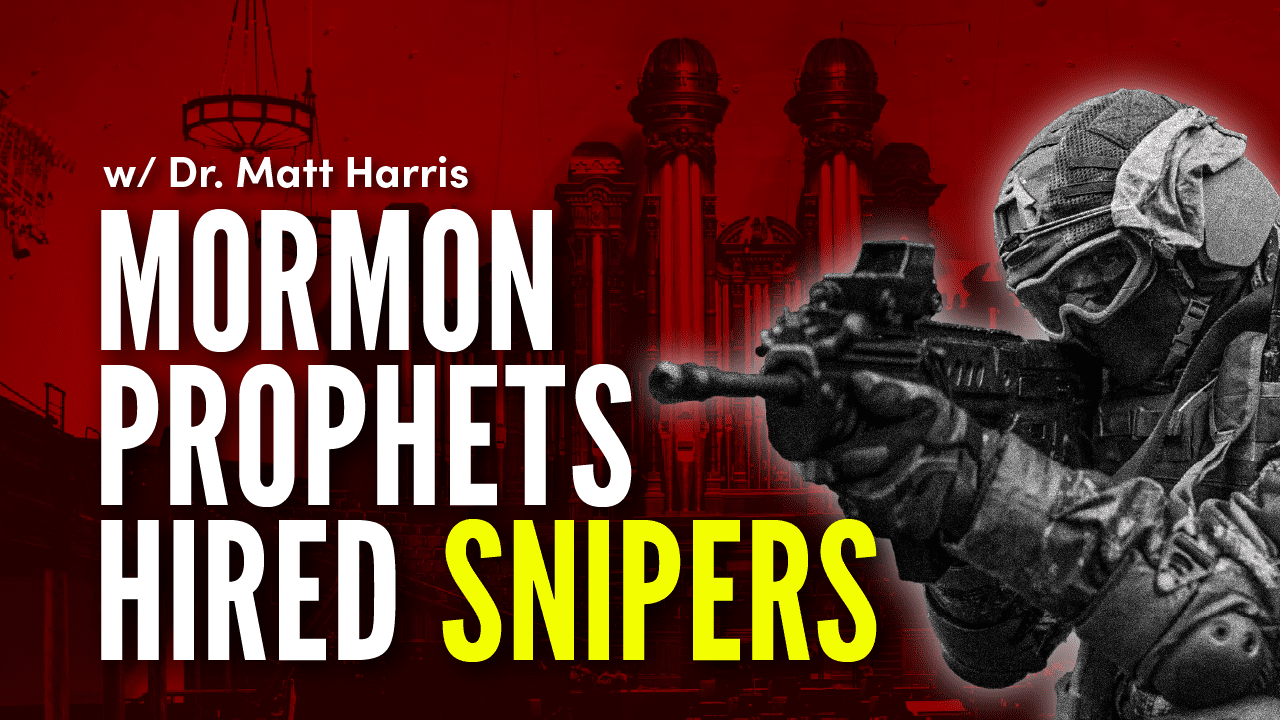
Mormon Prophets Hired Snipers for the 1967 General Conference
Listen on Apple Podcasts Spotify YouTube Download MP3
About this episode
In today’s video, we dive into the protests at BYU during the 1970s, including threats from black activists and government pressure to increase diversity in hiring and recruitment. We’ll also discuss a shocking incident during a basketball game where a Molotov cocktail was thrown into the crowd, narrowly missing the BYU sports announcer. The church’s response to these threats (mostly fabricated by the Birch Society) included heightened security measures, with snipers stationed on the Mormon Tabernacle during General Conference. Joining us is Dr. Darron Smith to discuss Matt Harris’ new book, Second Class Saints. Don’t miss this thought-provoking conversation!
We are thrilled to announce that we have reached our donation goal to compensate Dr. Matt Harris for his contributions to this series. We sincerely thank everyone who supported this effort. While the goal to pay Matt has been met, producing this series incurred significant costs for the Open Stories Foundation. If you find value in this content and want to help cover these expenses and support future productions, we encourage you to donate at mormonstories.org/donate. Your generosity makes a difference—thank you!
Purchase Matt Harris’ book, Second-Class Saints: Black Mormons and the Struggle for Racial Equality
Thumbnail Credits: Background image of the Tabernacle from Tiraspolsky
Originally published on mormonstories.org.
Transcript
Machine-generated and lightly edited. Click any timestamp to jump the audio to that moment. The audio is authoritative; please check it before quoting.
Introduction and Series Overview
John Dehlin Hi everyone, this is Dr. John Dehlin of Mormon Stories podcast. I want to thank you for joining us today on this epic 17 part series featuring Dr. Matthew Harris and his amazing book, Second Class Black Mormons and the Struggle for Racial Equality. This series has been groundbreaking. We've never had the response so far that we've had in terms of people really valuing our in depth coverage of this groundbreaking book that's talking about the Mormon Church's priesthood and temple ban against black people and then the dynamics, the inner workings, the political machinations of how the sausage gets made in terms of lifting the priesthood ban in the aftermath. So we have some good news and bad news about this series. The good news is thanks to the generous donations of those who have been watching it so far, we've been able to, I believe, more than generously compensate Dr. Harris for his contributions. That's the good news. The bad news is, you know, because we made the promise that 100% of the donations would go to Matt, we have not received any compensation for about the $20,000 of production costs that we incurred to produce this series and that that sort of imbalance would make it so we wouldn't be able to produce series like this going forward. So, so if you value this series, if you want to see the Open Stories foundation also be compensated for its production cost for this series and if you want to see series like this with Matt and with other people continue, we kind of need you to step up and donate to cover our production costs. And it's really easy to do that. All you have to do is go to MormonStories.org donate or go to MormonStories.org and click on the donate button and you can do a one time donation, a recurring donation, and if you want to, you can type Second Class Saints or Matt Harris in the description and that will hopefully allow us to cover our production costs for this epic series. Regardless, we want to thank Dr. Matt Harris for his generosity in doing this series. We want to thank all of you who have supported us. Please go buy this book, Second Class Saints, Black Mormons and the Struggle for Racial Equality. And again, if you're wanting, if you're grateful for this series and you haven't donated and you want to see it continue, please, please donate to Mormon Stories Podcast. Thanks again to everyone who donated to make the series possible. Thanks to Matt and we hope you enjoy this next episode in the series. Take care. Hello everyone and welcome to another edition of Mormon Stories Podcast. I'm your host, John Dehlin. It's June 26, 2024. And we are here in part 11 of our coverage of this epic new book in Mormon history, 2nd class Black Mormons and the Struggle for racial equality by Dr. Matthew Harris. Today we're going to be covering the 1970-1973 period after David O. McKay dies. We're going to be covering Joseph E. Smith and Harold B. Lee eras of the church, plus a bit more. And we're excited to be joined today by a longtime friend and one of the original interviewees of Mormon Stories podcast. We welcome back Darren Smith. Dr. Darren Smith. Hey, Darren Smith, welcome back to Mormon Stories.
Darren Smith Hello. It's always good to be here, John. You know, I'm a big, huge fan of the series and so however I can contribute. So thank you for inviting me, Matt. Thank you for having me here.
Matt Harris Yeah, it's a pleasure.
John Dehlin So great to have you, Darren. So just to remind everyone, we're trying to do a 20 part series on this book because in my opinion, there is no book that gives us a better insider view into how the sausage gets made, how decisions get made, how crises are managed, how the quorum, what the quorum of the 12 and the first presidency dynamics are than this brand new book. Please buy it now. Let's make this the bestselling book in Mormonism for 2024. Let's beat John Krakauer in the Book of Mormon. Go buy this book. And also we have about 60 of you who have donated to this series while tens of thousands of you are watching it. So if just 50 more of you can donate@donorbox.org Matt Harris, we can make sure Matt gets fully paid for his time and his efforts in this series. So please, again, donorbox.org Matt Harris, please contribute to the series. All right, so we've covered 10 episodes so far, Matt. We have Darren here with us. We're so glad to have him. Matt, where should we begin?
Late 1960s Church Opposition to Civil Rights
Matt Harris Well, let's just have a quick review for Darren and for other people. So the last episode we talked about the late 1960s, the church's opposition to civil rights, the Civil Rights Act. We talked about the federal government opening up an investigation at BYU for alleged violations of the Civil Rights Act. We talked about Ernest Wilkinson, who had admitted in private to the board of trustees that they were in violation of the Civil Rights act, that they were lying to federal authorities, that they recruited black student athletes, but they didn't. And we talked about how the government had or how they, BYU had decided to admit black student athletes at BYU so that they could get the government off their back and also not get kicked out of the Western Athletic Conference, which is a real thing. And finally, we talked about Hugh Brown's last effort. After many unsuccessful attempts to ordain a black man to the priesthood named Monroe Fleming. This is during the fall of 1969, and President McKay agreed to it, but then changed his mind when Harold Lee and other apostles got wind of it and forced him to stop. And that plunged Hugh Brown into a deep depression because he thought that President McKay was his only chance at lifting the ban. And When David O. McKay died in January of 1970, Hugh Brown was dropped from the first presidency, which rarely, rarely happens. Brown is bitter because of his treatment. And now the new church president who's ordained in April of 1970 is a 93 year old hardliner named Joseph Fielding Smith. We've talked about him in previous episodes, particularly his famous book called the Way to Perfection, in which he systematizes the Church's racial theology. He becomes the church's expert. And now he has the daunting task of ending these athletic protests as they seem to intensify today. What we want to talk about is how the Church responds to these increasingly intense athletic protests by creating the public relations arm of the church, a department that would feed positive stories to the news. We'll talk about Colorado State and the University of Washington. Those are two among many protests. The Washington one, as we'll learn this hour, is significant because the folks at the University of Washington student activists will use Mormon scripture against BYU to suggest that they do indeed harbor discriminatory policies and that each student at BYU has to take courses in Mormon scriptures in which they learn these racist beliefs. So that's what's going on this hour. There's a lot happening and the Brethren are trying to navigate this public relations crisis, and they call it the most intense crisis of the 20th century.
John Dehlin And as a moment of important serendipity, Darren Smith, as I understand it, you're joining us from Seattle, where you recently took up a position at the University of Washington, which is fun, but also you've published a book on BYU athletics. So take a minute, Darren. Just introduce yourself, if you don't mind, to our audience and the ways in which your academic interests actually very much apply to today's episode of this entire topic.
Darren Smith Yeah, of course.
John Dehlin Yeah.
Darren Smith I've always been interested in byu, you know, as a, as a, you know, a recovering Mormon and practicing Mormon. I'm trying to, you know, make sense of the squirrely history of the Church. The Church is, you know, ducking and dodging of these issues. And so, yeah, I mean, Black and Mormon, which is a book that you're referring to, John, was really an exercise into trying to sort of unpack the processes that led up to some of these protests that we're discussing in this particular episode. And so Seattle was one of the epicenters, of course, University of Washington, the bastion of liberalism, if you will, and their outspokenness toward or opposition to BYU and their NCAA teams playing against BYU because of its history of racism and denial of black folks into the priesthood and among other things. And so, yeah, so this is really interesting to see this come full circle here in 2024. And so, yeah, Seattle has. I don't know how much you want me to get into the actual meat and bones of this stuff, but yeah, so the protest that took place in the late 60s and early 70s really was a tinderbox for BYU. Really brought national attention to BYU's racist position against black folk to begin with. And so. And I think, you know, in my opinion, I think that some of the schools that did what they did was actually the right move. Don't know if it had much impact on byu, you know, in terms of their ability to play, because most teams continue to play BYU except for those that opted out, such as University of Washington. So, yeah, this is a really interesting time in BYU's history. The sort of culmination of the racist folklore that sort of was generated, I would say 130 something odd years before the time that we're talking about in 1970. So, yeah, so it's interesting when you see an organization double down on its racial rhetoric one and then of course, double down on its policies that govern folks who are the object or target of marginal, like African Americans have been for the majority of Mormonism's history. So, yeah, we have lots to discuss. I think Matt's handling of this era and history was superb and certainly adds. Puts more additional meat on the bone, if you will, in terms of the work that I did looking at this a couple of years back.
John Dehlin So, yeah, is it worth mentioning your book, When Race, Religion and Sports.
Matt Harris Yeah, John, if you want to me, I've got it up.
John Dehlin Oh, there it is. When Race, Religion.
Matt Harris I've got two books I'll promote. This is Darren's wonderful book. Sorry, I'm trying to get it right here. This is Darren's wonderful book about athletics and sports with some great coverage of byu.
John Dehlin It's called for our listeners who don't just view. It's called When Race Religion and Sport Collide Black athletes at BYU and beyond.
Matt Harris And then, so that was published in 2016. And then Darren did a book with our mutual friend Newell Bringhurst that was published in 2004, I believe, called Black and Mormon that Darren referenced a minute ago. So these, Darren's. His humility probably won't allow him to say this, but Darren is one of the foremost scholars of Mormons and race, and those two pieces of scholarship are examples of his handiwork.
Darren Smith Thank you. Thank you, Matt. And I might add a ton of articles that have been published on Mormonism in the last probably five years as well. Looking into this, particularly the political, the influence of Donald Trump's ascendancy to the presidency, I think is another flashpoint for me in terms of Mormonism. So, yeah, this is a topic that's very important to me. I've been looking at this for years now, and I've had the good fortune to meet fol like Matt along the way who have just sort of added to the growing body of literature regarding this topic. And so there's been some outstanding works that have come out over the last, I'd say probably last five years or so. And Matt Harris has been at the top of that. So I think this is a good time in Mormon history to be able to have these incredible scholars who are doing this work and who are giving us some deep insight into how the brethren were conceptualizing race and thinking about race during. And so it also, I think it also sets the stage too, for recognizing and understanding how racial rhetoric and racial epistemology gets kind of recreated and handed down to different generations within the church. You can kind of see the evolution of that evolve as we discuss these important topics about Mormonism and everybody's favorite pastime, of course, athletics. And so BYU is just as competitive as most in any other NCAA team, but it's been sorely limited in its ability to recruit top athletes to byu because, of course, because of the culture and climate of Provo and BYU and some of the history of athletes who've kind of black athletes in particular, who've had the revolving door at byu, they come in, they get, you know, it's interesting during the Black and Mormon Book, interviewing some of these athletes who played at BYU and hearing what they had to say, you know, oftentimes the church often vill these, these men as being predators. That's the term that was used to me to describe these young men. Predators. And, and who, and who are they? You know, who is the, who are the objects of their Gaze white women is what, you know, the church would, these church officials would have you believe. And of course, Matt, you covered this as well. This is big part of the, big part of the animus, I think, that drove a lot of these discriminatory exclusionary policies that took place at byu. But nevertheless, in order for the BYU to be competitive, they have to recruit, recruit athletes who are non Mormon to be able to compete and be able to get them where they are in the national stage. And so it's important to have folks who are non Mormon now. I think we're in an age now, I would argue we're in an age now where we're seeing Mormon athletes, primarily biracial Mormon athletes emerge from 10, 20 years, 30 years of being a member of the church who have had children now, who are raising their own families now. So you're starting to see a lot more homegrown biracial Mormon athletes coming to the fore. But still, the big issue for BYU moving forward is their ability to recruit top athletes from the. I think they're Big 12 now. I think Big 12 or even Big 10, one of the big conferences they're in now. So, you know, the verdict's out still. And I think some of the history of BYU continues to dog them in their ability to recruit top athletes. If I were an athlete who was non Mormon, I'd be very, very concerned about going to BYU simply because we know what happens when athletes want to file the honor code. That still happens. And so there's a, you know, there's a revolving door for those folks. And so they have to be willing to sign, you know, at 20 years old or 19 years old or 18, however, you know, the ages that they come in, that they will be, you know, behave themselves at BYU in terms of sexually as well as, you know, illicit substance use, such as marijuana use. And so I don't know, you guys can tell me this, but I don't know if marijuana use has suddenly stopped or if, you know, sexual, you know, you know, contact with, with between college age kids is, is no longer a thing.
John Dehlin I think that's pretty much, pretty much stopped. Darren, I think that's, I think that ended in the 70s.
Darren Smith Oh, it's over now. Okay, well that's good to know. You know, my sources tell me that it's still alive and well. And so these are issues that BYU still contend with even today. So it makes sense then for them to home grow their own athletes. And this is what they've been doing at a large, at a rapidly accelerating rate. I would also add that in the absence of black athletes that BYU has historically recruited, now the emphasis is primarily on, I would say, Polynesian athletes
Matt Harris who
Darren Smith would be proxy for black athletes. So we see a lot more of that too. And so anyway, it's interesting. It's been a long history with BYU athletics and their journey toward relevance in the NCAA game of competitive athletics. So, yeah, that's kind of some of the things that I discuss in that book as well as some of the policies that were generated as a result of it. I think Matt covers it much more in depthly in his work. But I think some of the same kinds of things that Matt was seeing in his research on BYU and particularly athletics is some of the same things I found in my work. So. Yeah, so you have two references, two major works to refer to when thinking about BYU athletics and BYU race politics moving forward.
John Dehlin Thank you, Darren. It's so great to have you. Please jump in at any time you want. All right, Matt, where do we go?
New Church Leadership and the Racial Climate
Matt Harris Well, let's set the stage. David o. Just died. January 1970. There's a new sheriff in town. The prophet will be Joseph fielding Smith, age 93. He's been sleeping through most of his meetings at this point. And there is this loud whisper among the highest leaders of the church that they're worried that he's, because he's sleeping, he won't be a good image for the church. And there is this rumor that circulates between January and April, that little interim period before Smith is ordained the prophet. There's this rumor that, that seeps out that the Latter Day Saints want Ezra Taft Benson to be their next church president. And it's. They circulate a document in and around Salt Lake that they do want this, this apostle rather than Joseph Fielding Smith. And the brethren take it seriously. Harold B. Lee will denounce it in General Conference. This is not the order of the church. We follow a succession pattern of seniority. But what that means is it's not just that they're worried about Smith being old. They're worried right wing extremism is really starting to crescendo by the late 60s, early 70s. And that's really what it is. Benson's followers are extremists. Many of them are members of the John Burt Society. And this is posing an image for the church. And By January of 1970, I want to start out and read just a little passage from Spencer Kimball, who's an apostle. So he's not the church president yet. And this is what I write. On a chilly winter day in January 1970, as David O. McKay lay dying in his apartment at the Hotel Utah, Spencer W. Kimball told his son Andrew about a prophecy that the elder Kimball's grandfather had made many years earlier. Grandfather said the apostle explained that a test would be coming and that Latter Day Saints had to be prepared. Spencer told his son that he believed that the test was the Negro. Our enemies will increase and present a formidable opposition, Spencer Kimball wrote. I expect that numerous of the spiritually weak will fall by the wayside, and some of them will even join the enemy. And so he has this dream, Spencer Kimball, and he's building off of something that his grandfather, Hebe Kimball, had mentioned, that this test would be the church's race ban and that there would be people who would leave the church over this very issue. And of course, Kimball was prophetic in that pronouncement. So that spring, the church was faced with more athletic protests. The difference now, at least in the spring of 1970, is that the protests will spread from football to basketball. And Sports Illustrated is covering this. There's a Sports Illustrated journalist who writes, as much as the BYU Cougars would like to ignore them, the protests have grown in intensity to the point where they have almost transcended all else, in my opinion. The protests. There's one university in particular, and Darren Williams will know this from his research. There's one university in particular that really sets itself apart from the rest of the university protests, and that's Colorado State University in Fort Collins, not far from where I live. I teach at a sister school in the Colorado State system. And the reason why Colorado State is different is because there's violence. It's the first time that student students and outside community members show up to protest a BYU athletic team, and they resort to violence to make their opinions heard. And I want to just share a couple things to sort of set the stage that even before it happened, the Black Student association at csu, they were pestering the CSU leadership that we don't want to play against byu. They're a bunch of racist, and we want permission. This is strange. They have to ask for it, or they felt the need to ask for it. But we want permission to make a statement about BYU and to even say a prayer beforehand. And the president, guy named Adrian Chamberlain, he grants them permission to say a prayer before the game and also to stage a peaceful demonstration. And when Ernest Wilkinson learns about this from Chamberlain, he's beside himself, because Wilkinson fears the worst, that it's not just going to be A peaceful demonstration. It's not just going to be a, a simple prayer. It's going to devolve into something that neither side wants. And Wilkinson is not wrong in, in that belief. So anyway, they say a prayer. And according to Wilkinson, and admittedly he's a biased source, but they say a special indication, and according to Wilkinson, they launched into a tirade against BYU and the Mormon Church. Wilkinson called the prayer quote, a very inflammatory speech. And as the basketball team started to warm up, there were signs everywhere that said Bigot Young University. And they were yelling obscenities as they were warming up at the school. And then finally as they played the first half, that's where it got ugly. At halftime, the BYU pom pom girls were doing a routine and some student activists came out and started screaming at the girls, screaming at the team. And then one of the young men exposed himself, dropped his trousers, exposes himself to the BYU cheerleaders. And that's when they realized they had to leave the floor. And so just shortly after that, that's when there was a loud crowd of students and community members in the the stands. And they their fights that broke out because some of the people in the stands wanted to watch the game. And then there were student activists who use this as a vehicle to express themselves against racism. So there were fistfights breaking out at halftime in the stands. And then somebody in the upper level of the basketball arena hurled a maltel cocktail to the floor, narrowly missing BYU sports announcer Paul James.
John Dehlin Can you tell our audience what a Molotov cocktail is, Matt?
Matt Harris Yeah, it's just as far as I know, I'm not an expert in homemade bombs. Maybe somebody else on this panel is, but I'm not. Anyway, it's just a concoction of it's gasoline and something else. And it's just basically meant to throw
John Dehlin gasoline in a bottle. In a bottle with a rag poked in the bottle.
Matt Harris Yes.
John Dehlin You light the edge of the rag and you throw it and it creates a firebomb, basically.
Matt Harris Yeah. Thank you, John. Well said.
Darren Smith Yeah, John, you must have experience with that. So it sounds really good.
Violence and Protests at BYU Athletic Events
Matt Harris I'm a little nervous there. And he knows a little bit too much about this. All right, so they throw a Molotov cocktail, hoping that it will explode, but it doesn't. But it narrowly misses Paul James's head by just a few inches. And he writes about this account. And Paul James is a long standing BYU sports announcer, this iconic voice who called BYU games. Anyway, he writes about this in his memoir. He said that he ducked at the last minute. He didn't see it coming, and so he had to duck and it just missed him by inches. And then it hit the ground. And then just moments later, somebody threw a tire iron. Threw a tire iron from the same upper stands. They hit a reporter from the Rocky Mountain News in the head, leaving him unconscious, lying motionless in a pool of his own blood. I don't know who brings a tire iron to a basketball game. Clearly, this is well thought out and they want to make their presence felt. I don't know. Dara, do you want to add anything to the violence?
Darren Smith No. I think that violence underscored the deep divisions that occurred that were occurring around that time. How these protests became a lightning rod, really. I would say the incidences that played out at BYU and Colorado State and other places where they traveled was really a flashpoint for the tensions that were occurring in the nation at the time, just embodied in sport. And the athletic venue was a perfect venue to bring these kinds of things to the attention of the American community in public. Because, of course, Americans love and venerate sports. We're crazy about sports. Sports is essentially a religion. And some of my colleagues who've written about this in sports marketing research. And so when this happens on a basketball court, everybody's going to know about it. And as all eyes were on BYU during this time. So I think that this event was really a turning point for the controversies that were brewing regarding BYU athletics and some of these universities that were continually playing against byu. And I would say this too, mat we talk a lot about how embarrassing this was and how troubling this was for people of color. And we're going to talk about Sharon's work here maybe later on in this session. But I would also argue this is incredibly hard for student athletes. I mean, these are white athletes, many of whom were not even Mormon, who were playing for BYU at the time and who were experiencing these tensions and really didn't have the wherewithal to know how to respond to them. And so I think the damage and the harm that was potentially done to white players, white athletes who were playing for BYU at the time, who weren't even Mormon, I think is significant and not very much. We don't discuss a lot of that. We focus a lot of our attention on the harms that were done to African Americans at the time. But I would argue that there were similar harms done to white folks as well, Although not really. Although white folks are not that aware of the harms that were done in them. But it certainly was as well. And so I think this violence sort of really captures the tensions regarding, you know, the lightning rod topics of race and ethnicity that continued till this day. So I would add that piece to it as well.
John Dehlin And, Matt, I'm gonna go ahead and share a photo from the book just to give people a sense of kind of what this looked like. There's just a picture of some student protesters, black student protesters raising their. Raising their fists, which is the Black power salute, according to your book. And Again, this was February 5, 1970. Courtesy of Colorado State University Library. So that's. Those are some powerful images.
Matt Harris Yeah, I. Unfortunately, I had to cut some material from this chapter just to keep the book manageable. The first draft was over 600 pages. So, anyway. But one of the things I had to cut was I wanted to get voices of students who were there. And so I interviewed some students at Colorado State who attended the game that day. And weirdly enough, one of them sought me out. When he heard I was doing this research, he said, I want to tell you what I experienced. And so I was thrilled that he sought me out, and I was thrilled to interview him. And I said, what was it like being in the stands on that February 1970 day? He said, it was surreal. He said, we knew that the student. Some of the members of the Black Student association were upset about racism, and it wasn't just about BYU and the Mormons. It was about a lot of things going on in the 60s that were sort of reaching a climax. And they were using, in some cases, some instances, as they would later admit, BYU is just sort of as a vehicle to. To announce their frustrations about poverty, racism, all of that stuff. And so this white guy that I interviewed, he said, we knew that the BSA students were upset, but we knew that they were going to protest, but we had no idea we'd resort to violence. And I said, what was it like? Where were you at? He said, I wasn't very far away when they were throwing things on the ground. We were in the student section. And he said. He said, I couldn't even process it. My friends and I took us several minutes to process in real time what was going on. I mean, they're throwing tire irons on the floor in Molotov cocktails. And so he thought about that experience, and he said, for me, as a white person, he said, it led me to really delve into more deeply about racial injustices and why my fellow classmates felt the way they did. So it was a learning experience for him. But like you said, Darren, it was, it was traumatic for him and others like him. So for BYU's perspective, though, this is the. They've had plenty of protests by this point. They've been called, you know, bigots and racists and all of this for a long time that we've talked about in a previous episode that the, the protests started in April of 1968. Here we are in February of 1970. Things are still going strong and. But this has never happened before. There's never been violence. And so Ernest Wilkinson is just beside himself. He doesn't know what to do.
John Dehlin Hey, Matt Cass, you a quick question? Yeah, I don't know if you know this, and I think I asked this in a previous episode. I'm curious when these universities like Stanford and University of Washington and Colorado State University got religion. And what I mean by that is how many years prior to 1970 did they integrate their sports teams and allow black athletes? Because if it was 20 or 30 or even 10 years prior, then I would see them having some sort of moral claim or authority. But if it was just a matter of a handful of years prior, I would, I. It would seem a little bit weird that they would be so vociferous and forceful if, if they, if they hadn't have made these changes just a few years prior. Do you know?
Matt Harris Yeah. And Darren, Darren's gonna add to. Darren's the expert on this. But definitely by the late 50s and into the 60s, you start to see athletic teams integrating. We talked about Don Haskins recently. But John, what's driving people like places like Stanford and other places that cut off ties to BYU is their student body. They're getting pressure. They're not just sitting around a board meeting one day thinking for the hell of it, we're going to just sever our relationships with byu. They're doing it because they don't want the pressure from the students. And if folks don't think that students have collective power, man, you've never been on a university campus before. And so that's why Stanford's doing it. And when Stanford cut off ties In November of 1969, just a few months before this Colorado State debacle, the students are forcing the change. And Ken Pitzer, the president of Stanford, he recognized that they would get pushback from both Mormon alumni and also non Mormon alumni who didn't think it was right. And also they knew they would get pushback from some of their faculty members who didn't think it was right to do what they were doing. But it's clear that the Pfitzer administration, they were far more concerned about student activism, which by that point in American history was roaring throughout the 1960s. So it was a huge problem on university campuses. All right, so. Yeah. Darren, do you want to add anything to that about integration and sports teams and the 60s and.
Darren Smith No, I just, I just, just one point I want to make there is that, you know, we talked about integrating African American athletes into mainstream college athletics. Interestingly enough, it seems that that was the first route whereby African Americans first entered into pwi. Predominantly white institutions is through this, is through athletics. I mean, it was, you know,
John Dehlin I
Darren Smith would imagine that in 1970s, during this event that took place at Colorado State, white folks at that time were probably hearing about these protests on tv. It was all over the place, newspapers and what have you. And so for many of them was the first time that they have ever witnessed racial violence being done. And I would imagine that would have a very transforming experience for these folks who are, who are for the first time witnessing these things. I want to come back to talk about. I think this is important to come back at some point in time and talk about, you know, we talked about harm, psychological harms or trauma or what's called complex trauma or complex cpsd. I know you know about this in your work, John, but. And the importance of that in the story. We don't talk enough about that in the story. In the story, but hopefully we'll come back to that at some point in time.
Matt Harris Yeah, yeah.
Darren Smith So far. So far. So, Matt, this is the book that I'm eagerly waiting for, by the way, this is the work that you and I were talking about several years ago. If I'm not mistaken, you were working on this book and this has finally come out. So I want to just say to the audience who was listening to this interview, I know I've known Matt for several years and I know Matt was telling me about this work that he's. This particular book he's working on. I would say that it's probably one of the most well researched books on the market, looking at black, Mormon, racial, you know, deficive issues that took place during this time period. And Matt is bringing in really key points and issues that people don't really know much about, sort of the underbelly of what was going on in the BYU machinery. So I would argue that, that, you know, I think that this particular volume gives us a really, a lot of great details about things that we don't otherwise. We wouldn't otherwise know about. And So I would argue that that was an important. What you've done with this particular work at this juncture is a really important contribution, Man. I just wanted to make that point. These little details you're adding are just absolutely, you know, incredible and important to the overall story.
Writing the Book and Personal Reflections
Matt Harris Awesome, man. Thank you. I, you know, I've noted. I've probably shared this with you, John. I'm not sure if I've shared this publicly, but to write this book, I got access to countless restricted collections at the church archives in Salt Lake at byu. And these are collections that will. I hope I'm wrong on this, but I don't think they'll ever be seen again. And a lot of them are institutional records. And I got accessed. I remember years ago applying to BYU to get access to civil rights material, and it had to go all the way up to the university president to get approval. And that's all the request was. I'm writing a book. I'm going to look at BYU and race, and I want to look at civil rights and BYU's, you know, part of this. And that's. That's what I put in the request form. And, well, I got approval and I got into the material and I thought, oh, my. Wow, this is some pretty intense stuff. And a lot of the stuff we talked about last episode that Darren wasn't here for, but we talked about the federal government going after byu, threatening to shut BYU down because they were violating the Civil Rights act of 1964. That was all part of this restricted collection. So Colorado State, with the violence, is forcing Wilkinson and the board of trustees to really think about the racial policies, to think about the public image of the school, which, of course, indirectly leads to the church. And Wilkinson, who's not really skilled in Mormon theology, doesn't really know what to make of it all. He reaches out to the BYU religion dean, guy named Daniel Ludlow, and he said, quote, do you know of any revelations that are specific so as to what we might expect by way of orders in the near future? Anything you can give me would be helpful in this time of crisis. So he's turning to his religion. Is there any revelations that the prophets, Mormon prophets, have received that would help us to make sense of this really, really difficult time in our history? At the basketball coach Stan Watts, he bitterly complained that these people, these people, these are the BSA students. I like how he demonizes them. These people aren't after us, they're after America. And then Dean Ludlow lashed out the demonstrators as well. And he asserted, quote, they are not really demonstrations against the racial policies of the university, but against the Church of Jesus Christ of Latter Day Saints. That's probably partly true. They're using at BYU to get to the church, no doubt about it. I think he's right about that. And then that fall, the fall of 1970, just a few months after the violence at Colorado State, Apostle Harold B. Lee gives a devotional assembly at byu. And he says, this is a time of testing the likes of which the church has never gone through. So he's unconsciously echoing Kimball's statement that he. That dream that Kimball had that he shared with his bro, his son, and for. I'm going to read that again. This is a critical line. This is a time of testing the likes of which the church has never gone through. The church has gone through a lot over polygamy, over the Reed Smoot hearings seven decades earlier. And for Lee to acknowledge that the unflattering publicity in the news that's essentially there daily, the brethren don't know what to do about it and they're quite frustrated. All right, so in the meantime, as this is going on, adding fuel to the fire, there's an anti Vietnam War activist named Jerry Rubin. He's part of the Youth International Party, which is a radical offshoot of the anti war movement. He went to the University of Utah and he gave this fiery speech and he said, if the Mormon Church doesn't integrate with Negroes, we will destroy it. This is only a few miles away from church headquarters and you have this well known activist threatening to destroy the church unless it integrates. And in the meantime, one of Ezra Taft Benson and Cleon Skousen, their devotee, guy named William Corner, he's a convert to the church, he's a Vietnam War veteran and he's a follower of Skousen and Benson's conspiracy theories. He's going around the Salt Lake Valley making a huge nuisance, saying that we've got to fight against these radicals, we've got to fight back. And he's rousing members up to a fever pitch. And Harold Lee is not in any mood to deal with people like Coroner. And so Harold Lee contacted his stake president, his bishop, and said, excommunicate him, cut him off. And that's what they do. And so when they excommunicate Corner for his radical views, kind of stir people up to a fever pitch. This is going to be World War three, Armageddon. You know, that's the kind of language Coroner was using. They excommunicate him, which denies him access to Mormon pulpits. And so the Brethren are really having to struggle, much as the larger society is, with the Black power movement that's now coming into full flowering by 1970. It's one thing to have Dr. King and to have some fringy views that, you know, King's a communist, but now we've got these young African American men who are just fed up with the racism, the poverty in inner cities. And so they're making their voices known. And so the. The protests continue to convulse the church into the new year and around the same time. This is all happening the spring and summer of 1970. The church recognizes that it needs to do something drastically different. And so they decide to meet in New York City, some apostles, with LDS businessmen. And at that meeting in New York City, they want to talk about how to mitigate the bad publicity that they're getting daily. And this would later become the. The origins of the Immoral Church's public relations department. So Richard L. Evans, the Apostle, Spencer W. Kimball, the Apostle Ezra Taft Benson and Gordon Hinckley, and also Harold B. Lee, who's a counselor in the First Presidency. They meet with Jay Willard Marriott, Lee Bickmore of the Nabisco Corporation, and Robert Sears of the Sears Corporation. Also George Mortimer and Robert Barker, two attorneys. Barker, this is the same Barker who Wilkinson hired to deal with the federal investigation, BYU's hiring practices. They meet in New York City, and what they decide is that they had a long discussion about all of the persecution that was beginning to pile up, as Apostle Kimball put it, and they decided that they wanted to feed the news media with positive stories that the church was doing with minorities in particular. I want to just say something too about all of this that's lost. We're talking about adults and leaders and how this affects the church and the image. Darren, you said something insightful a minute ago about how white people are caught up in this, too. At byu, there was a journalist from the New Yorker magazine who went to BYU to interview students and also administrators to see how the BYU student campus, the student body would respond to this. And so the reporter writes a story about it, and he came away feeling that the BYU students were hurt and angry. There was a feeling of victimization among the student body. Were the victims here, which is interesting. We're the victims here. And they said that, you know, why are we being targets of all this hate? Our campus is squeaky and clean. Our student body. One administrator says they're clean cut, well groomed, and intensely patriotic. When the other students at other universities burn the flag, ours are patriotic. They stand and salute it. And so there's just, you know, and Darren, I'd love to get your thoughts on this, but this is a quintessential case of a predominantly white student body. They're just so removed from the racial injustices going on in the 1960s. They just seem to, they're incapable of understanding the suffering in so many black communities by the late 1960s. And that's why they turn themselves into the victims.
Victimization Narratives in Conservative LDS Circles
Darren Smith Yeah, I think that narrative of victimization is alive and well, particularly in ultra right wing conservative circles. And so, you know, and I think we're seeing a lot of the sentiment that took place regarding white students. Understandings of race back then are still alive and well today. We haven't done, we haven't done a very good job of, in fact, we've not done a job, any job, to any substantial degree of sort of changing these narratives or at least giving white folks, you know, a reality based understanding of race relations then and you all, for all the reasons that we all know today. And so I don't think this is no different than the church. I think this idea of cocooning white students, white parents, the sort of absence of sort of acknowledgement of what's happening on the national scene with these students, they have no clue about any of this because BYU doesn't offer any courses. I mean, I know we have the introduction of a key figure that comes into play here, but. But that's only one person in terms of trying to make a difference with BYU students there and sort of reversing their understanding about race. So there's really no process in place whereby these folks have an alternative narrative that's in the church to reverse these positions that have been laid forth for, at this point, 100 years or so. And so the innuendos, the lies, the misinformation continues. And so I think that's very much the case today. I'll say this about white students. So when I taught at BYU several years there, and so being at byu, it was never the students that were the issue. It was always the administration that was the issue. The administration making assertions about material content taught in the class which might potentially talked about one of the sort of, the outcome measures, if you will, for the Colorado State University protest that took place in the 70s would be this idea of creating an image whereby the church can sort of escape the negativity surrounding race relations and so on. And so they're always looking for a Negro to do that, you know, somebody that can. That looks like me, but that speaks like white folks, that will make white folks comfortable, but also that will reinforce the narrative that the church is trying to put forward. It's always been odd to me as a member of the church, y', all, looking from it, looking from it, from the outside, as an insider, outsider. This idea of this narrative. You want to proselytize, or you want to say that you're proselytizing black Americans, yet at the same time veiling this history from them. I remember when I was converted to the church. I remember none of this came up in these conversations when I was being converted to the church. But then again, I was too young to really appreciate what it was all about anyway, at 15 years old. But it became an issue for me as time went on because the narrative continued to come up, continued to emerge even as I served a mission. These stories would come up. And I have to admit, I was not very well versed in any of this stuff. And so it took me time to kind of learn this stuff, but it was. It came. But it came to crashing down on me during my mission when many people asked me about, you know, how can you, particularly black Americans, how can you serve this church, bro, when they, you know, they think you're, you know, the devil, you know, and me not having any responses to it, it seems very odd that a black person would want to be party to his or her own marginalization in an organization that way. So, you know, there's been a lot of. Man, there's been so much, you know, healing work to sort of overcome much of that in my own personal life. But, yeah, so I think, you know, Matt. Yeah, this has been very harmful for the, you know, for, I would say, domestic African Americans, people whose ancestors were enslaved in this country. I think it's different for other black populations, other black. Other members of the diaspora, Africans in, you know, who are joining the church in record numbers, or folks from the Caribbean islands as well, who have a different understanding and orientation history of their relationships with whites and colonization and so on. So it's, you know, the church, it's just a. It's just a nasty. You know, who would ever thought that I would be tied up with some. Some of this stuff? But, you know, but, you know, what did I know then? And I would also add, this doesn't mean that all the white folks that I encountered who were members of the church back then were mean to me or nasty to me. You know, to the quite contrary, you Know, some of my best friends are white who are members of the church. That's supposed to be a joke, by the way. Y' all supposed to be laughing at that because we hear that so often. You know, white people say that about, you know, some of my best friends are black as a way to kind of deny the fact that they don't have any black friends. And we know you don't have black friends, white folks. We know that. We can look at your. We can look at, look at your Facebook friends, your Snapchat friends, your Instagram and see who your friends are. We know you ain't got no friends, so quit lying that you have some. You know that one or two people that you have is your best friend, and they're a proxy for all black people. Come on now. This shows you the disconnect that we have in this country between race, the race reality of race on the ground and the reality of race in people's heads.
John Dehlin Yeah, beautifully said, Darren.
Matt Harris Yeah, Darren, I was going to say something about. So white folk, they're not around. Black students in the 19 or black people in general in the 1960s. They, I mean, many. Most of BYU student population, they come from Utah, Arizona, Idaho. There's some from California. So the California Mormons would have been exposed to African Americans and, and other people of color. But, but Utah, Idaho and Arizona, I mean, these are not predominantly black cities. I mean, Phoenix would have some. Some color, of course, but. Yeah, but Idaho and Utah, not so much.
Guest And let me, Let me ask you this. I mean, we're. I mean, I think you're right.
Matt Harris This.
Guest Students generally do not have an understanding or, or have been in contact with a lot of black people. However, isn't the criticism that their religious beliefs teach that black people are cursed, and that's the criticism that that their, Their religious beliefs are bigoted and they don't need to know black people to kind of figure out that, that, you know, believing that some people are cursed is. Is not morally correct.
Matt Harris Well, you know, I mean, Darren knows this really well. Anybody who's done racial justice work, you know that it all starts with relationships, right? And, you know, if you have, if you live in a black community or go to a black school and you're around black kids, or we can say LBGTQ too, right? Yeah, you're on lbtq. You know, when someone says something that's harmful or hurtful towards the LBGTQ community or the black community, and you could say, that's crazy, man. I'm around these folks they're not what you say. They're not what you think. I don't think black people are cursed. Right. They're my friends. And Anyway, so these BYU kids are sheltered. They're not just like the general 40s we've talked about. They haven't grown up with black people. And so their understandings about black people in general derive from their church, the church's theology, and also, of course, from the predominantly all white media. And also, I want to say something that you guys might find interesting that I wish could have made it into the book. But in the 1960s, there was an awareness in the history department. This is the department where I took two degrees, bachelor's and master's degrees. And one of the history faculty said, you know, our. Our students, they don't know anything about black culture. They don't know about black people. They don't know about black history. I guess they were using the word Negro in those days, but. So they proposed a class. This is BYU in the early 60s. James Allen, a professor, wonderful guy, knew him personally. He's now, I think he's passed. He might be in his 90s, I don't remember. But he proposed a class on Negro history and shot it down. It will call attention to the church's race teachings. That's what the higher ups told him. And he's a liberal guy. And he pushed back. Our students need to know this. They said, nope, we foresee too many issues. And it wasn't until. Somebody will correct me on this. It wasn't until, I think, the 1970s, wherebyu started offering classes in African American history. There's a wonderful scholar today at BYU teaches African American history. But back in the day, it just wasn't accepted because there was just this really skittishness towards black people, black culture. We talked about the last episode that Ernest Wilkinson and the board of trustees did not want these white students to do the Negro twist at dances.
Black Students and Racial Tensions at BYU
Guest Right?
Matt Harris Yeah. I mean, this has nothing to do.
Darren Smith Negro twist.
Matt Harris The Negro twist, man, I even had to look that up. You know, I googled it once, and it was.
Darren Smith It was interesting. I got some clever names for this thing. Negro twist.
Matt Harris Negro twist. But, you know, this, this doesn't have anything to do with the priesthood ban. Right. It just has everything to do with black culture. And it just shows you that Ernest Wilkinson and his associates running the school, they. They just, you know, they fear the unknown. That's really what it is.
Darren Smith You know, I would say. I would say add to that too, and say that part of Their concern was interracial, interracial marriage, interracial dating. 100 was a big part of their fear is that these Negro twisting people will come to BYU and, and beguile these white women and, and, you know, and then, you know, then that's, you know, we don't want that. We don't want that. So a large part of it was fear of, of race mixing. That, that, that seemed to, in fact, it. In my work, that seemed to be the big, huge elephant in the room for many of these folks, Wilkinson and many of his acolytes and of course church officials. And it's obvious in the way that BYU wants to walk this educational excellence tightrope while at the same time excluding and marginalizing members or folks who were coming to byu. And I guess the early part of byu, the largest, the earlier part of black people who came to BYU were athletes. I mean, you have a group of Africans that came, I think, in the 60s or late 50s and 60s, and they were eventually shipped out. And then after that, it was a slow, sort of a slow, steady roll of athletes that would come in and actually sort of, I wouldn't say integrate byu, but would at least expose many of the white students to black faces that they didn't otherwise have ever saw. And so, but imagine what that. Imagine that being the first black person in the 70s to go to BYU. I mean, that's just. I can only imagine what that was like. So, you know, you also mentioned the fact that, you know, BYU offered its first African American studies course somewhere around the 70s. We'll talk a little bit about that. But I want to add too, that, you know, I was one of the first ones to teach in the honors in the honors College at byu, a course on African American studies. I was shocked that they wanted to have a course, you know, and that. I don't know how they got my name, but somehow they got my name and I was able to go down there and teach. I had a wonderful dean that was in that college at the time that I was teaching who was very supportive. And then we had one instance where we had a student who complained. We were reading a book called the Bluest Eye by Toni Morrison, and there was a rape scene in that book. And I think some of the students were, you know, didn't want to read the book or didn't want to and all that, and so they complained. And so the dean came to me and talked to me about it, and he says, this is a book that you can. That you need them to read. I said, this is a book. I wouldn't have put it in there if it wasn't something that I thought they should understand. And that was the end of it. So, you know, so he was extremely supportive. I forgot the brother's name, but he was one of these, you know, he was a fly in the buttermilk, if you will, in terms of his ideas and understandings about liberalism and the need for, for inclusion. So I give him credit for, for, you know, for doing that. And I taught that course in the, maybe the early 90s, that I taught that course for several years, actually maybe six years.
John Dehlin Wow.
Darren Smith So it was a. You know, and so. And what's funny about that, when I said earlier about the students are not the problem, it's the administration. So. And I want to say, I will say this. Over the years, I have had students email me from BYU from years ago who have told me, you know, how the courses, the coursework that we. That they took for me really changed the way that they see race relations. And they really have been on a crusade since then to sort of make things better for African Americans in particular in the church, in their respective wards and branches across the country. I find that, I find that as one of the highest compliments, you know, if I can lead BYU and implant in the minds of these very bright students, you know, the need for inclusivity. I feel I've done my. I've done my, you know, I've done the job thing, you know, that I was intended to do. I was talking to my friend about this last night. I'll say one last point, point about this. It took me moving to Utah and that experience, you know, if the church did anything for me, it produced a black radical, if anything, a black progressive man who is, you know, deeply committed to social justice. I don't think I ever would have been developed that potential had I not been exposed to racial ignorance, enormous racial ignorance in Utah and amongst white LDS folks. But in saying that, I want to say this about that. I don't think these people are malicious in the way that they feel. I don't think they're mean spirited, essentially. But it goes back to what you said earlier, Matt. They just been inculcated. They've been essentially brainwashed to believe these things and act on these things. And I'll end that with a story about a black athlete who was at BYU who told me that when he first got there, he didn't date much because no one wanted to date him, because he was, of course, non Mormon and African American. And so he said as soon as they start winning games, he had to fight off the Mormon girls with a stick. And he said that eventually he fell in love with a Mormon girl and that he was all up into her, schooling all over her. And then apparently the parents, you know, came down and basically told the toll young lady that she was not to date this guy, you know, and gave it and gave her all the reasons for the Mormon, you know, the Mormon racial folklore that we all know so well. And that was the excuse for why this young lady was told that she should not date this young man. And so, so that was one story he told me. It broke his heart. So there's several stories like that that I can, that I've encountered over the years, even my own experiences there on campus. So I will tell you that black athletes at byu, they're like any other athletes anywhere else. They get a lot of attention, they get a lot of, you know, a lot of. What's the word I'm looking for? There's a word, there's a term for this exotic. They get, you know, exoticism is the word I'm looking for. They get exoticized on campus. And so these girls, you know, so I don't say so I would say that the predators on campus are not the black athletes, it's the white women who are interested in black men for curiosity's sake or whatever the issue is. And so black race and sexuality is a really interesting topic that we haven't even talked about in Mormonism as well.
Matt Harris Darren, you're not the first person. Our mutual friend Cameron McCoy has said something similar to me when he was at byu. So yeah.
John Dehlin Hey Matt, is it okay if I asked Aaron a question and then you going back to the text, of course. Aaron, can we get your quick reaction to this, this reaction by church leaders in the early 70s that like we're kind of the victims here, our white students are patriotic and they, they salute the flag while other universities are burning the flag and protesting like woe is us. Why are you picking on us good, well behaved white people in response to this race stuff, whenever there's kind of a choice to kind of retreat as being victimized and persecuted when you're actually the aggressor in the persecution. Do you have a quick response to that?
Darren Smith I mean, other than, you know, these stories I would argue are part of the larger narrative of controlling white folks beliefs and thinking about race and difference. If you can keep white folks distracted on things that are. Shouldn't really Be that relevant. It scores a lot of political points. It also scores a lot of, you know, compliance with what the church is trying to do. I don't know. I don't know, John. I think that. I say this, I say that racism in the church has been as harmful to white folks as it has been to African Americans, but in different way. In different ways. And I think church leaders are aware of that. I think they know that and I think that they use that to their advantage in many instances when they're doubling down on their lies about why African Americans are deserving a different treatment in their theological, you know, understandings of the gospel that they, you know, preach from the pulpit on any given Sunday. So, man, I think this, is, this, is this part, this idea. Victims is a part of the nationalism, the nationalist movement that was so much a part of right wing ideological frameworks during that time and of course today. So the idea that we're the ones who are the victims and everyone else is against us is not nothing new. I think it's part of a nationalistic movement that you would generally see in conservative frameworks such as the LDS Church.
John Dehlin That's helpful.
Darren Smith That's my take on it.
John Dehlin Thank you, Darren. Matt, the other question I wanted to ask you and Gerardo called my attention to this. We kind of mentioned briefly the creation of the public relations committee in the early 70s in the LDS Church in response to dealing with the priesthood ban and all the controversy. And I wanted to kind of call everyone's attention to the bottom of page 163 of your book where it says, and I'll just read from says. They developed a two pronged approach with both BYU administrators and church officials playing a role. Black and white students would sing together at halftime of the BYU basketball games to give the impression of brotherhood. Heber Woolsey, the assistant to the President for communications, would write in a public relations piece and distribute it to newspapers. Wilkinson instructed him to stress three critical points. And Darren, I want to get your reaction to these three critical points and I'm going to just put them up on the screen just to kind of like reinforce what we're talking about here. Point one, that the Mormon priesthood is merely a particular assignment, not involving civil rights. And I'm thinking of the way they talk about women not receiving the priesthood today seems to, you know, also the rhetoric seems to be borrowing from that idea. So it's merely an assignment. It's not a matter of civil rights. Two, that the priesthood ban could be lifted, but only through a revelation to the church president, in other words, the way I'm interpreting that is that it's God's fault.
Darren Smith Fault.
John Dehlin It's not the leader's fault. And a lot of evangelical Christians and just general Christians are mad that sometimes Mormonism is fatal to a belief in God because God at the end gets assigned sometimes the worst behaviors. And then third, finally that BYU was sensitive to the needs of minority groups, including blacks. So we're not racist, we're sensitive to the needs of minority groups. Darren, I'm curious if you have any reaction to that PR approach and if you want to comment on any of those three points that we just read.
Darren Smith So John, I would say this is an attempt to control the narrative. This is an attempt to make a difficult situation more manageable from the church's perspective. So when you have political heat on you or when you are trying to score political points, the easiest way to do that is to invoke race or to invoke LGTBQ related issues, or to invoke some other hot button issue that can really light conservatives butt on fire, which would be race and these kinds of things. And so I would say that this is a part, this, this idea or this effort to dumb down and to downplay the racism in the church to me is a part of the larger right wing conservative agenda in general.
John Dehlin Matt, anything you want to add to that?
Matt Harris Yeah, if you want to put it just back up for a quick second. John, this is interesting. The church, I mean, the context is critical with this statement, this public relations campaign. Of course the government is still pestering BYU to recruit black faculty. They've sort of resolved the student issue because they agreed to recruit black student athletes to get the feds off their back. But the whole black faculty thing is still an issue because the Church is saying on the one hand that's fine, we can recruit black faculty, but we don't really have people in the church with black men and women in the church with PhDs. So the feds are going to say, well, that's fine, recruit people outside of the church. And there ends the sticky point, right? Byu, they want to hire faculty, Mormon faculty, and they just don't have faculty of color with the credentials to teach the classes they want taught. So what you see with this especially point number two, this is a critical point because the church is going to try to create this idea that civil rights and Mormon racial theology are two separate matters. And the government is, is of course not going to buy that because as Darren pointed out earlier and as I pointed out in my book over and over and over again. Black sexuality, interracial marriage, interracial intimacy and dating and all of that. That's really what's driving this. And that's Mormon theology. And so they're linked together. But Wilkinson and his PR team, they're trying to separate the two. In other words, the government, you can have control over civil rights, that's fine. That's a federal issue. But Mormon racial theology, that's our purview. That's protected by the First Amendment. And the feds won't buy this. The civil rights and the Mormon theology, they're tied up. It's Mormon theology that allows Mormons to interpret civil rights and racial equality in a particular way. And so. But this is a strategy that they're going to employ well into the 1970s. And I might add that they're going to do this well, I should say, in the 21st century, because a couple of years ago, when BYU was under fire for LBGTQ issues, President Kevin Worthen, who was then the president of byu, when the feds were investigating BYU for these violations, he wrote back and he tried to separate the two. You know, that the church's theology is the church's theology which opposes LBGTQ rights. And then, of course, civil rights is civil rights. And for reasons that we probably don't need to go into. But the. The Federal investigation into BYU's treatment of gay students didn't go anywhere. The government decided not to pursue it. But, you know, there's always that fear that the government's going to step in and force BYU to do something that they don't want to do. And it's probably attention that will always be there as long as BYU doesn't support gay students. And as long as they continue to, you know, dig their heels in with certain hiring practices, like hiring women. That's gotten better, I should add. But that wasn't always the case.
Guest Yeah.
Darren Smith Oh, I was add to this. I was always. Matt, I know you know this, but I think they're also looking at Oral Roberts. They were. They were looking at what was going on legally with the Oral Roberts issue as part of the, you know.
Matt Harris Bob Jones.
Darren Smith Yeah, yeah. Excuse me. Was it Oral Roberts or Bob Jones? I can't remember. Bob Jones. Bob Jones. Excuse me. Yes, Bob Jones University. They were paying. They were paying close attention to that. And so I think that, you know, the BYU attorneys are not smart. They're not stupid. They're very. These are very learned people, and they know how to keep BYU out of Hot water. And so. But yeah, if there was any a time to be able to bring rein in some of the race stuff at byu, it would have been using. It would have been the stuff as you bring it up, the civil rights, civil rights issues that were going on as well as the, you know, the tax issues. I'm sure you talked about that as well at some point. So, yeah, this is. Yeah. So, you know, all this back flipping and bending and Negro twisting to deny to, you know, to justify why the church's position on blacks, you know, was religious one versus A, you know, civil rights, one civil rights issue. You know, Matt, you mentioned that. That just didn't hold up water. And I would say I would, I would agree with that. Particularly when you consider, you know, Bob Jones and I think there was another couple other high school issues that had made the, the US Court dockets at that time too, was progressing through the courts as well. So this is something that they were paying very, very close attention to.
BYU Legal Strategy and Discrimination Allegations
Matt Harris Yeah, when you see there, when I went through Wilkinson's private papers, Wilkinson's a lawyer, we've mentioned this in the past, but the legal team, they're sending Wilkinson all kinds of, of issues in the national media about what's happening at Bob Jones, what's happening at other universities, universities that are private, that have discriminatory policies. They're sending him stuff. And he's keeping up on all of this stuff. He's reading it, he's marking it up. And the reason is, is because he wants to be able to keep the board of trustees abreast in terms of potential legal action that might be committed against BYU in the future, the government might go after BYU in the future. So he's always trying to keep the board apprised of these pitfalls. And whatever one wants to say about Ernest Wilkinson, the guy was a meticulous record keeper. And when he went into the board meetings, he would always have these lengthy memos, sort of lawyer like briefs, laying out the issues that BYU was having, not just about race, but other things as well. And I'm telling you from a researcher's perspective, it's remarkable because it's just all right there in front of you in these lengthy memos that he would write to the board. So race was front and center in all of this. And in the late 60s and into the early 70s, a lot of the race stuff dealt with the IRS. It dealt with, with the Department of Justice, the investigations that BYU was under for civil rights violations and also for their refusal to recruit black faculty so, all right. I wonder, John, if we want to. I'm going to introduce a public relations document in just a few minutes called Minority Civil Rights and byu. But before we get there, I wonder if we ought to talk about kind of keep the chronology pure. And that is, it's not just in the spring of 1970. It's not just Colorado State under fire. It's making BYU's life difficult. It's also the church itself is going to come under heat at General Conference when some activists decide that they want to. They indicate that there's going to be bomb threats. They call in bomb threats to the. When the Mormon Tabernacle Choir is rehearsing for the General Conference, the Utah Symphony Orchestra was using the, the. What's it called? The building next to the temple. I'm losing it for a minute.
Security Measures and Activism at General Conference
John Dehlin Tabernacle.
Matt Harris Yeah, the Mormon Tabernacle. Thank you. The Utah Symphony was using it to rehearse and there was a couple of bomb threats there over a two day period. And as the brethren went into the April 1970 General Conference, this is the time when they're going to ordain Joseph Fielding Smith to the President to be president Prophet. They're worried that there may be bomb threats. They talk about what to do if there is a bomb threat. How do we present this orderly image to the church and then have to leave hastily if there is a bomb threat? And so they spend a lot of time talking about this. They go to the temple, they fast, they pray about it, they work with church security, they work with local officials, the police department, and they're worried about black activists coming to Salt Lake. We've talked about in previous episodes that this is not the first time. 1965 and again in 1967, they have the threat of, of black activists. Some of it was nonsense. It was just, it was just rumors by the Burt Society. But this time, I mean, there might be some teeth to it, they believe. And so during the General Conference, the first day of the conference, Spencer W. Kimball writes in his diary, he said that the conference went off without any untoward incidents. He writes in his diary, and he's pleased that nothing happened. Just the conference went on unabated. Like, like it's supposed to. Well, the second day of conference.
Guest But didn't they prepare somehow with. Is this where they prepare with some snipers?
Matt Harris Yeah, they have, they, they. Yeah, they've had snipers on the roof of the temple of the Mormon Tabernacle. Yeah, I mean, there were, there were. They have snipers. They have snipers and my friend Darius Gray told me an interesting tragic story. He was meeting with the police department official that. I don't know if it was a police chief. I think it was the police chief. And he looked at Darius, who's a black man, and he said, we're putting snipers on the roof. And he looks at dry and he gives him this cold stare. And he said, if those negroes come and disrupt our conference, they're gonna get it. I mean, it's just like he's just saying this so callously to Dry as like he's part of the problem. Right? It just, just goes to show you how much they fear.
Guest And the snipers were on top of the Salt Lake Temple.
Matt Harris Salt Lake Temple and the Tabernacle.
Darren Smith Okay? I think they were hiding behind the, the, the Moroni statue. Were hiding behind Moroni statue.
Matt Harris They're hiding behind Moroni.
John Dehlin Yeah.
Matt Harris So they've got.
Darren Smith Dressed in gold. Dressed in gold. You couldn't see them. They were dressed in gold. They had a gold rifle scope. You know, you couldn't, you didn't, you didn't know. But they were there, there watching for those, those disruly Negroes that are going to come and disrupt their meeting.
Matt Harris Man, a lot of smoke, man, a lot of smoke. And so, so that's the fear. And at the conference the second day, there's this lower level general authority named Theodore Tuttle. He's giving a sermon of all things on the end times. And he says in the middle of a sermon, if you are prepared, ye shall not fear. And as he's uttering those words, Harold B. Lee, who is the first counselor in the first presidency, who's conducting the proceedings, he receives a note from a security guard and it says that there is a bomb that is about to go off. This is in the middle of the proceedings. And according to Harold Lee's biographer, Lee just brushes it aside and says, relax, there was no bomb. And so the conference went on. And you know, you got to give the brethren credit, I suppose, that they were able to keep focused and sort of block out the outside noise. But there are just, you know, the paranoia is just so intense. And Joseph Fielding Smith was just, after the conference when he was ordained, the president, he was supposed to go rededicate or dedicate the Los Angeles temple. And rumors were thick around the LA area that black activists, which was in the central LA area, that was sort of a big hub for a lot of them anyway, the rumors were that they would attack the temple and church leaders when President Smith was Coming or would come to dedicate it. And so they built a temple around the solar. Excuse me, a big fence around the LA temple to keep these black activists out. I mean, this is what's dominating their council meetings in the spring of 1970. They're absolutely terrified of black activists forcing them to do something they don't want to do, which is to integrate black people into the church's liturgical rights.
Guest And was there. Was there anything real to those fears? Were there actually black people trying to protest outside of the Yellow Temple? Do we know?
Matt Harris Yeah. Yeah, there was. So, as I put in my book, that these fears are real and imagined. I mean, there was just absolutely no evidence whatsoever that. That. That black folk activists from California were coming to Salt Lake to protest the conference. There was no evidence for that. It's usually a birth society thing because these folks don't like civil rights. But in la, there was some truth to it. They were protesting outside the temple that it didn't turn violent, but they were protesting Washington, D.C. there was an LDS Chapel that was damaged, and some black activists took credit for that. So it's not entirely illusory. I mean, this is going on and they fear that. That it may go on further unless the church changes race policies. And this is all going on in the midst of these athletic protests that people are reading about daily in the newspapers.
Darren Smith Yeah.
Matt Harris So, you know, this is all just not, you know, unjustified paranoia. Some of it is real.
Guest I see.
John Dehlin I just can't imagine what would have happened if that Molotov cocktail had actually lit and a fire burst out with people on the floor. That could have changed things in ways we can't even can imagine, you know?
Matt Harris Well, I tried to track down the. The reporter. I didn't get his name. I couldn't find it from the news story, but I wanted to track down the reporter from the Rocky Mountain News to see how a tire iron that. That knocked him out, left him unconscious, if there was any permanent damage. And I don't know, the guy. Who knows, maybe.
John Dehlin Yeah.
Matt Harris Your skull's not supposed to be hit by tire irons.
John Dehlin Yeah.
Darren Smith In basketball games.
John Dehlin Yeah.
Matt Harris So this is. This is a period of history that just hasn't been told at least some of the details. I mean, some great people, including Darren and others, have written about this.
John Dehlin But I'm just gonna say that I. I've been paying attention to Mormon history. I. In my mind, there was the Wyoming stuff and maybe Stanford. I had no idea until reading your book how extensive these protests were and how some got Violent. Had no idea.
Matt Harris The Wyoming one is the most written about. And I think Darren would agree with me. Some. Some scholars have really paid attention to the Wyoming one, which is a great story. The church has made nice with these black athletes from Wyoming who were kicked off their team because they wanted to protest BYU and not play against them. And so their racist coach just simply removed them from the team. And obviously that created a lot of ill will. And it's a human interest story because some of the black student athletes on the University of Wyoming football team who were kicked off, they later, I think one or two of them joined the church. And so that became a story. There's been some photo ops with some of these former black athletes. They're now, of course, in their 70s, but in the last, say, 10 years, 15 years, let's say that they've gone to. To Temple Square in Salt Lake to meet with some church authorities, and the church has done some nice photo ops with all of this. So there's a human interest story in all of this. But I didn't want to recreate the University of Wyoming story. I talk about it, but what I want to do is to really focus on some other aspects, like the violence at Colorado State that hasn't really been explored. And then we're going to get to the University of Washington in a minute, which takes it to another whole level, because at the University of Washington, when these student protesters make their voices heard, they're going to use Mormon scripture as part of their justification for not playing against byu. And that really, that's. The church has never had that happen before where they've used their own scriptures against them.
Guest Wow.
John Dehlin Why don't you take us there, Matt? Whatever you want to get there.
Matt Harris Yeah, let's do it, man. So. So just around the same time, not too far after the Colorado State violence, there's going to be more violence at the University of Washington campus where Darren now works in Seattle, Washington. And this is a little bit different in Washington because it's a combination of black student, the bsa, Black Student association at University of Washington with outside community members. As far as I can tell, at Colorado State, it was just in house. They were just students themselves. But the University of Washington is going to be a combination of student activists and community activists merging together. And that's a powerful combination. And so the student activists, they're not very happy about what's going on. And the president of University of Washington was away on vacation. I'm not sure how that happens. You're the president of University, you just take off in the middle of the semester and go on vacation, usually during the summer. But a lot of the student activity protesting BYU occurred when the president was away on vacation. And so they had an interim president. He was like the vice president who was going to keep things going while the main president was away. Well, the interim president decides on his own accord that byu, that Washington would just sever ties with byu. They would violate a contract. And, you know, I mean, most people who know anything about leadership, if you're the interim guy holding down the fort for a week or two, you don't make any catastrophic changes while the boss is away, but that's what he does. And Wilkinson, when the protests begin, Wilkinson and his staff, they're riding the president, a guy named Charles Orgard, and they have no ideas on vacation. So they're angry that he's not responding to their letters. And so they're sending their, you know, letters to the wrong place. Let me read you just one. One incident about what's going on at the University of Washington. And so they had been protesting for a long time, and they had. Had. They met at the student commons area on campus. And they had that one placard that they had hoisted up. It said off byu. And it depicted a black power salute. And after that that, when they were protesting for a series of weeks with signs, they decided that they would up the ante. And. And In January of 1970, students, activists from the community and also the campus, they smeared oil all over the University of Washington's gym mats and turned over tables and chairs and dumped heaps of garbage everywhere, infuriating the gymnastics coach. They're about ready to play against byu, the gymnastics team. BYU is coming to Seattle, and that's what they're doing. They're defacing the gym mats and dumping trash everywhere. They threw a bucket of water in the face of the coach when the coach confronted the protesters. Within days, African American gymnast, University of Washington gymnast Lynn hall circulated a petition to sever all athletic contests with BYU amassing over 1500 signatures. One report said that the community activists convinced a majority of the UW athletes to sign a pledge to not compete against byu. At least three athletes said later they signed the statement under threat. And so John Hogness, the interim vice president, he's witnessing all of this. There's the off BYU picture. He's with the picture of the three Olympian athletes that we've talked about at the Mexico city Olympics in 1968. But John Hogness severs all ties, and he has no authority to do that. When the. The Orgard, the president comes back from vacation, he witnesses what had happened with his vice president. He's angry at his vice president. And Ogard apologizes to Wilkinson. I'm so sorry I was away on vacation. I didn't get your. Your letter. And he said, these activists and community activists, they're going to use the courts and they're going to. They're going to press this in court.
Darren Smith Court.
Matt Harris And we're going to seek on our end an injunction against them that they don't have the right to ask us to sever ties to BYU because we'd be violating a contract. And also, it's not really clear that they're racist. I mean, they have their own racial views. That's fine, but that shouldn't affect our contract. And so he asked Wilkinson, he said, can you send me any ammunition that I can use in court? And also against the activists to suggest you're not racist now. I mean, oh, boy, this is, you know, asking the. The fox to guard the hen house, right?
Guest Yeah.
Matt Harris And so what they do is in the midst of this, the Washington University of Washington embrolio they BYU people they decide to create through their public relations team, guy named Heber Woolsey, who's a main PR guy at the university. Wilkinson asked Woolsey to write a statement that could be published in Oregon, Washington and Utah suggesting that the church is not hostile to civil rights and the school. And they call it minorities, civil rights and byu. I think we have a screen of that if you want to put it up. And I want to read a couple of statements from minority civil rights and byu. This is again published in newspapers in Oregon, Utah and Idaho in the spring of 1970.
Guest And Matt, just to make it. Just to make it really clear, this is a statement in response to lawyers asking Wilkinson to give them some evidence to use in court to prove that the church is not racist. Is this.
Matt Harris That's that. Well, not this one here. This is the Hogness statement.
Guest I'm sorry.
Matt Harris Yeah, yeah, that's okay. This is the vice president making a statement while the president is away on vacation. Hogness is making a statement saying we're going to sever ties with BYU because they're raised.
Guest It's the next slide, John.
Matt Harris Yeah, if we can go the next slide. So, yeah, so this is the statement that Heber Woolsey, the BYU PR guy wrote, and he's trying to convince people that the BYU is not racist. And I want to just share a couple of things that's really instructive here. He said, this is in the statement. There is a religious belief confirmed by each prophet of the church, the LDS Church, that blacks of African lineage may not at the present time hold the priesthood, but that the time will come when they will be given the right to hold the priesthood. This is a typical line in LDS theology, that black people can have the priesthood, but just be patient, they'll be able to get it in the future. And then the line says, historically, sorry,
Guest Matt, I gotta ask you there. Do we have a sense if Wolseley would have known that, That the promise for, for black people to receive the priesthood had a date? Basically Brian Young and others had said that it would be after all white people had received the priesthood and they would be leaving that out.
Matt Harris Yeah, it, it's hard to know because the leaders don't always agree on this. And so Brigham Young taught that black people would get the priesthood after all the white people in the cursed lineages or the non cursed lineages got the priesthood first. I mean, that's kind of a bold statement. Basically you've got black people and everybody else, they can have the priesthood, they get it first and then black people, you know, get it. And so what he's, what that really means is you've got to proselytize the world, the, the non cursed population of the world. And once we give it to everybody else, then black people can get it. Is that going to be before the resurrection or, or before the second coming or after the second coming or during the second coming? I mean, you know, who knows? But that's the, the brethren differ on all of this stuff.
Darren Smith Okay.
Matt Harris And so the next line he says, this is really, really a critical line because this, this line that I'm about to read is, it's a, it's a, it's a powerful justification of black priesthood denial well into the 21st century. The line says, historically there have been many instances when the Lord has given the priesthood only to certain people. The earliest reference appears in the Old Testament where Moses was instructed to give the priesthood only to the tribe of Levi. Members of the other 11 tribes, whether righteous or not, could not officiate in the priesthood translation. Just as some biblical groups were denied privileges, so it is with Negroes. That's what he's talking about, about. And obviously if you just stop and process that for a moment, what it's suggesting is that God's responsible for this ban. And that's not. There's, we're going to talk about that later. That is a hugely offensive statement to some members of the black community today who don't want to pin racism on God. All right, there's a couple of other lines I just want to share. It says that we at byu. We also have at BYU what is nationally recognized as one of the superior lecture and concert series in the country. Outstanding persons of all colors have appeared in this program. Blacks for many years have spoken to our student body, from the great educator Booker T. Washington to the Reverend Leon Sullivan, Philadelphia minister who appeared during this school year in the days when Marian Anderson was barred from singing the Constitution.
Darren Smith Excuse me.
Matt Harris When Marian Anderson was barred from singing in Constitutional hall in Philadelphia because of her race. She's saying to our student body, so they're trying to give this idea that they're racially inclusive. And of course, what's missing from all of this is BYU is fighting tooth and nail against the federal government to have to admit black student athletes, to admit black faculty. What's also missing is that they've had dozens of black entertainers and academics that they wanted to bring to campus. But as Darren said earlier, they weren't the right kind of black person. They weren't somebody who would toe the line. And when they brought in Booker T. Washington, I mean, if anybody knows African American history, I teach this and I love this. This is incredible stuff. Booker T. Washington, WB D boys. They had two black leaders in the early 20th century. They had different visions for the black community. And let's just say for time today that Booker T. Washington's vision was the conservative division. So when the leaders brought Booker T. Washington into Salt Lake in the early 20th century, I mean, they weren't worried about him. He was not a Rebel Rouser like W.E.B. du Bois and some other black leaders. So he was the right kind of black person that wasn't going to, you know, raise waves or cause any trouble for the brethren. And so BYU is trying to give this idea that they've always had black people on campus. And that is simply not true.
Darren Smith I was going to say, you know, with, with Booker T. Washington's, you know, his position on blacks was always in subservience to whites. And so which is part of the reason why him and Du Bois did not see things eye to eye much of the time. So, yeah, so in some of these earlier instances, yeah, they would bring. They would trump in black folks who would speak, who would sort of toe the line or not be in opposition to church theology or church politics in the way that Booker T. Was brought in. So was the fact with Darius, they Would, you know, during this period of time they, they would bring in again.
John Dehlin He was one of the early interviewees on Mormon Stories podcast, Darius Gray. And I was surprised to see him come up as sort of an apologist that would. The church would take. Send the University of Washington to help deal with this PR mess. So Darren, please, and, or Matt, give a little, you know, description of Darius, if you don't mind.
The Genesis Group and Black Mormon Leadership
Darren Smith Well, Darius is. And you can speak to it as well, Matt, but Darius is probably one of the more prolific founders or kind of, you know, spiritual leaders, if you will, you know, in the church amongst black folks. And so he was one of the founders of the genocide group, I think, Matt, you may have talked about that or we'll talk about that at some point in time. And they're sort of as a group, as a, as a. Not really a church or war, excuse me, or a branch, but more of a symbolic ward or a branch where black folks could come together and sort of worship and fellowship. And so Darius was one of the earlier founders of that. So he was often brought in for a lot of these kinds of things as an apologist, essentially, to see, see, look, he's okay with it. This guy's okay with it. So why. Why aren't you guys okay with it? And so it just backfired. You know, people can see through that. I mean, black folks.
John Dehlin Did it backfire at the time, Matt, or did it. Did it not backfire?
Matt Harris Well, I guess it depends on what we mean by backfire.
John Dehlin Really quick, Matt, would Darius agree with the characterization that he was put in the role of an apologist and, or do you know if later he regretted being used in that way? I would love to just understand that a little.
Matt Harris Yeah, that's a, that's a million dollar question, John. I bet. Let's. Before I answer that, let's just get the, a quick fact out that's important is that during the University of Washington when all of this, these negotiations are going on between BYU and the University of Washington, how do we get these activists off our backs? And we haven't even talked about the scripture stuff yet. We'll get to. In just a minute. But during the midst of all this, BYU decides to send Darius Gray, who was a graduate at BYU by this point, he worked for the church's. I think it was. He was working for ksl, the church's radio station and TV station.
Darren Smith I think it was his thing.
Matt Harris Communications is his background. And as I wrote, Darren knows Darius. I know Darius, John. You've interviewed him and I wrote that Darius. So they send out Darius and Heber Woolsey, the PR guy to Washington to meet with some of the student activists. And I write that Gray was a right choice. He was charming and witty, mensely likable and noticeably confident, but not overbearing. Most important, he was black and a BYU graduate. And just like Darren said, the idea was if we can have a black BYU graduate go meet with the activists that maybe we can quell some of the tension. I don't think that Darius ever thought that he was an apologist for the church. Maybe the church felt sort of, you know, they were using him with that. But when we get to the Genesis group, the next episode, I'm going to take you through Darius's views and he wants the priesthood, you know, and, but I, you know, he's a public relations guy. He knows that he needs to kind of quell tensions at the University of Washington, but he wants the priesthood. And he's not, you know, he's not content to just sit back and absorb the racism. He, he's upset. He is upset. And, and I've got lots of documents from the early 70s where Darius is a, you know, wearing a big old afro at the time. And he, I mean he's making his, his presence felt. The difference between Darius and some other black Latter Day Saint men is to the extent to which they will pester the Brethren to give them the priesthood. That's where the, the breakdown comes. Some of the black saints, they want the priesthood. They're going to use any tool necessary to get the Brethren to lift the ban. Darius and one of his partners, Ruffin Bridgeforth, is far more cautious. But they want the priesthood and they're talking about it and they're working to get it behind the scenes. They're not actively, you know, agitating for it. They're not writing angry op ed pieces in the newspaper to shame the Church. So I don't think that Darius would agree that he's an apologist for it because he doesn't agree with the Church's race teachings. He doesn't think he's cursed. He doesn't think black people screwed up in the pre existence. I mean he's on Record in 1971 saying all this stuff, stuff. And I've told Darius over the years, kind of, you know, tongue in cheek, but there's truth to it. And I've said this to actually other people I've interviewed because this is a book, some of the people in my book are still alive. And I told Darius I said, you know, Darius, this is when I first interviewed him in 20, I think 14. I said, Darius, I'm going to hear from you today. And that's all good. And I'm. I want to get your views and your memory of all of this stuff, but you should know something. I have documents when you were a younger man from 1971, and if you say something today that is not in accordance with 1971, and the document, the letters and the oral histories I have from that period, you should know that the stuff in real time trumps your memory. And, you know, he laughed and. Okay, I agree. So that's the per. That's the great thing about, about all of this. And, and I'm happy to say Darius's memory was sharp when I interviewed him, and he remembered the details from 1971 that align nicely from the letters and the oral histories that I had had from that era. So that was good. I didn't have any contradictions. All right, I hope that answers it. I don't. I don't think Darius is an apologist at all, but he's definitely been an ambassador for the church, as Darren said. There's no question about it. But you can be an ambassador for the church and not defend the ban because I, I don't have any evidence that Darius Gray is defending the priesthood ban.
Darren Smith Well, you know, I, I would agree with you there. The conversations I've had with him, he's been, you know, very adamant about the fact that the priesthood ban was bogus and. But yet, what do you call it when you bring some. A black person to University of Washington in the 70s as your PR person, your pitch person. What does that, what does that say? I mean, what, what messages is. I mean, you're saying that, listen, the church is, okay, look, we got this black guy here, he's in the church. He's here to tell you that they aren't racist. Then what do you call that? Do you call that being an ambassador? Do you call that an apologist? How would you, how does you. How do you square that from a. From a historical standpoint? I mean, it looks like to me that that's exactly what was going on and that has been sort of the church's MO since then, is to bring in people like, you know, Alan Cherry or Darius Gray or some other, you know, you know, church apologists, black apologist, who behind the scenes is telling people one thing, but in the foreground is doing another. It looks like apology to me because I know, I know that because I was put in similar positions. And then how do you, you know, you know, how do you square that? So if you're honest with yourself, you
Matt Harris being apologized, I'm not gonna, yeah, I'm not gonna push back on you, Darren. I mean there's definitely a public and a private going on here. What you're saying publicly to sort of ease tensions and what you believe privately and are saying privately could be at odds.
Darren Smith I would say this. So I'll say this about it. So from an institutional standpoint, the church is absolutely racist. You know, during the 70s or what have you in the heyday of all of this. Absolutely undeniable. But does that mean that the people themselves act in racist ways? And I would say it depends on the people you are interacting with as a member of the church. Members of the church by default are racist because they've been taught these racist narratives about people of color and not just African Americans, but other so called Lamanites as well. So the discourse in the church was absolutely racist. They used racial metaphors and race based stories to, to sort of embed their theology or to sort of underscore their theology in ways that we know, we know well today. And so if you put somebody up in front to say that this is the church is not racist in the ways that you may think it's racist, then what do you call that? That's all I'm saying.
Matt Harris Yeah, no, those are really.
Darren Smith And I know has struggled with this for a long time and he has struggled with, you know, this. How do you. In fact, I had, in fact Dryes gave me some good advice back in the day with all of this, he says, and not just him, but the late great Armand Moss who passed. Armand said once you start down this road, Darren, of criticism to the church, right. I can tell you right now, it's not going to go anywhere. It's not going to lead to any substantial change other than branding you as a radical and as someone who's outside the step, outside the bounds of what the church should be know with the church culture and what have you. And so he was right. Armand was absolutely right. And but what I think that the conversations that Dry and I had about this early on was essentially the same. You know, if you want to do this, you need to do it in a way that doesn't, you know, rankle the ire of church authorities. And so I was not really very good at doing that. I mean, I usually say what I mean and mean what I say. And so I love you, Darren. I wasn't very good at doing that. Being the. Being the. Being detained Negro. And so one of the reasons why I think I had a hard time with. With the Genesis group now, I. I think Genesis is a great group. I think it's needed. But I think for me personally, it was a hard. Kind of a hard pill to swallow.
Matt Harris Yeah. No, there's. Man. Where to start? I. Yes, when you. When you're a lone critic, it's easy for the brethren to sort of shoo you away and ignore you, demonize you, label you a radical. But there's power in numbers. And, you know, I don't want to say a whole lot more about Darius because we'll devote more time to him, but I would say that Darius has been working with church leaders for years to confront institutional and systemic racism in the church, whether it's church literature, church manuals, just curriculum, all of that. And, you know, I think that he has done more good for the church than a lot of people could imagine because he doesn't broadcast what he's doing. He's working behind the scenes. And anyway, there's been. My book is all about black Latter Day Saint activists, at least. I mean, it's a significant part of this book about black Latter Day Saint activists who are reaching out to leaders. And like you, Darren, they just spoke their mind and. And they got burned for it. And guy that we talk about, I talk about later on in the book is a guy named David Jackson who just passed away a few years ago, but.
Darren Smith Oh, David. David in California.
Matt Harris In California. Oh, my goodness. Talk about, boy, his whole story and how he pressured Gordon Hinckley to repudiate the church's racist teachings and Mormon doctrine and all of that. It was. Was something else. And I'm looking forward to share David's story because he's. This has special significance to me since I've interviewed him many times and he turned over all of his private papers to me, so.
Darren Smith Nice.
Matt Harris Yeah. All right. So. So let's get to. If it's okay. If you guys. Well, let me finish one thing and then we'll get to the scriptures, if that's okay. John.
John Dehlin Yeah, please.
The University of Washington Visit and Its Fallout
Matt Harris So. So it doesn't go well. Darius Gray and Hebrew Wolves, they go to the University of Washington. They're treated with. With absolute contempt. And I think, Darren, your point is, you know, one of your points would be that Dress is supposed to be there defending the church. And, you know, they don't give him a chance to talk. They're just so repulsed that a black guy would be there representing BYU in the church. And so they call him an Uncle Tom. They scream obscenities at him. There's this white journalist in the corner seeing the black community interact with, with these black activists, I should say interact with Gray and Woolsey and this white reporters just observing all of this. And he's just disgusted by it. He said he wrote a story that was published in a paper, and he said that Gray should have been subjected to such an inquisitive, inquisitorial form of abuse by such shallow, small persons under the banner of dialogue is a disgrace. And I talked to Darius about this too, and he just said it wasn't a positive experience by the way they were treated. And anyway, so they want to shut down BYU or shut down the relationship of Washington to byu. And the President said, you can't do that. We have a. We have a contract in place. And the activists, they said, look, we could sever the contract if there's racism involved. And so there's the hub here. The activists are arguing there's racism involved, and then the President saying, there's no racism involved. Yes, BYU has a priesthood ban, but he's getting stuff from Ernest Wilkinson. They've been cleared of civil rights violations. Here's the document. There's no racism involved. And so the activists, you know, they were, they were asked, you know, prove it. And so somebody in the community, they came across the fact that BYU students had to take religion classes, and somebody among the activists had come across the Book of Mormon and they saw this racialized framework in there where it talks about skins of blackness and white and delightsome and this notion of racial fluidity. If you're righteous of your sins and you've been cursed, that somehow God will lift the curse. And they're. So they come across those scriptures in the Book of Mormon and they let it be known to their attorney that we're going to use this when it goes to court. We're going to prove that BYU is racist because A, they have their students that are required to take religion classes, and B, the religion classes they're taking are full of racism. And so when word gets out that they're going to use Mormon scripture to justify the racism, Ernest Wilkinson panics. And he turned to the religion dean, David Yarn, and he said, I need a list of all the scriptures they could use. And if this goes to court, we're going to have to rebut it in court. Now, I want to pause for a moment. This would be really interesting because Ernest Wilkinson had hired A local attorney from Seattle, a guy named Alfred Schwepp or Schweppy Schwepp, who had been practicing law in Seattle for a very long time. He was very well respected. He knew the judges, the judges knew him. And so they chose a local guy to make nice with the courts. And Schwepp is not lds, and so all of this structural racism in the scriptures would be difficult for him to explain in court because he's not from this culture. And so they create a list, Ludlow creates a list of all of the potential verses that could pose a problem in court to byu. And also Wilkinson asked, give me a list of all the religion classes that teach these racialized verses. And are, or do the faculty test them on it? That is, will they ask a question on a midterm or final exam about the church's race theology? And so Ludlow issues the report in like three days. He tells his faculty, this is urgent. This deals with a federal or an investigation, we need you to comply, answer the survey. And so in record time they get back to him and there's, there are some people that the faculty, they said, yeah, we, we talk about race in the Negro ban. We, it's on the test. And a couple of them even wrote the question, you know, why did God deny Negroes the priesthood? And the answer of course is supposed to be because they were less valiantly pre existence is because God cursed them. And this is the kind of, you know, high level intellectual activity going on in the BYU religion department the early 1970s. And the, the other professor said that we don't test them on the Negro doctrine, but we certainly talk about it when it comes up in our classes or in our, in private consultations during office hours. And so Wilkinson goes to Alfred Schwepp and he writes him a memo and he says, our faculty don't talk about this much. They don't test the students on it, but it's true, they do have to take scriptures religion classes that deal with scriptures. So Wilkinson lies to him and says that none of our faculty are testing on, on this, when in fact some of them are. And so they're using the Scriptures. And it reaches a stalemate where ultimately the courts will, will throw it out when the university is trying to get out of its lawsuit. So it doesn't really materialize, but it's planting a seed that other activist groups may use scriptures against byu and that could pose a problem in the future.
John Dehlin All right, well, I, I, I had marked in my copy of your book, does this report exist and can we see it? And I'm guessing we're gonna have a similar answer as. As we've had in other protected documents, right?
Matt Harris Yeah. I'm sorry to say, Darren, I've told John before, he's asked for me to share some of the material from my book, the primary documents. And I. I've some things I can share if they're public, in the public domain, but I've told. Restricted stuff I can't share just would compromise my. My integrity. So
John Dehlin I, I was also bummed, I don't know if I expected it or was bummed to see that Wilkinson lies. You know, when he gives his report, I guess to, to the First Presidency or to the board, he lies and, and says that none of this stuff is being taught. Is that right? Did I get that right?
Matt Harris Well, the board knows it's being taught. It's to the attorney where he lies. Yeah, I mean, the board. That's another whole issue that BYU didn't always require that the students take Book of Mormon classes. That's not until the mid 20th century where they start to emphasize this important book of Scripture to their students. But the whole, you know, the whole racial framework that probably most of your listeners and all of us on this panel are familiar with, with, you know that the Book of Mormon, of course, it presents a racialized framework for Lamanites or Native Americans. It says nothing about black people, but it. It doesn't take a genius to figure out. If you're investigating the church and you're reading about curses among the Lamanites and you're black. You know, Darius Gray once told me, he said, when I read the Book of Mormon for the first time, I wanted to know how these curses applied to me. And in all the work I've done on race over the years, I found that Darius is one of many African Americans who read that racialized framework in wanting to know how it connected to his life. And so the idea would be that everybody was white at one point. God cursed certain people with black and brown skin and that depending on your righteousness and after you joined the church and you were filled with the Holy Ghost, then God would gradually, over time, lighten your skin so that you would become white and delightsome. Whether that would happen in mortality or in the resurrection was yet to be determined. But the whole idea was that black and brown skin was a sign of. Of divine disfavor, and that one had to aspire to whiteness in order to inherit God's presence in the celestial Kingdom that was a long standing church teaching for a long time, many, many years. It fell out of favor in the 1960s with the civil rights movement. But the church taught in its magazines, general authority sermons that black and brown people would lose the curse one day predicated upon their righteousness and they would have white skin, which of course was a symbol of purity.
Darren Smith Of course, personally, I've been told that as well, in my experience as well, when I was first coming in, I was told to me by a couple of members, you know, you'll become white, you'll become as white as snow, you
Matt Harris know, so, yeah, yeah, it's, I mean, I mean, oh my goodness, I'm not letting you know.
Darren Smith I mean, it's quite the opposite actually. You know, that the origin story really centers on Africa. The fact that most of us, all of us, our first mother was, you know, five foot two African woman and you know, they called her Lucy, but we all share her DNA. MTDNA is the, is a genetic properties that we all carry. So everybody looked like me before they left Africa and went elsewhere. So let's get the story straight. Yeah, you know, you know, this, the idea of science, the idea of science and religion are just, you know, and these folklore, these, these religious stories that have just, you know, propagated over the, over the, you know, you know, over the, over the centuries since Christianity became a, you know, became a thing in the world. So. Yeah, so the story, the story is not correct. The story is completely not correct. And you know, as I listen to you talk about the book and the details of the book, Matt, the verbal gymnastics that the church went through to avoid these things, you know, to double down on these process to make themselves appear to be normal, you know, compared to, as opposed to being a racist organization. It's just incredible, you know. Yeah. And then of course, you know, for me, the, you know, the idea that, you know, our biggest supporters, our biggest, you know, proponents of the things that we do in the church are, would be by members of the church who are, you know, of African descent. They could be the ones that could really be the sort of mouthpieces of explaining, you know, why the church isn't racist. You know, so, and again, I want to be clear about when we talk about racism, we're talking about the differences between institutional structural racism versus interpersonal racism.
Matt Harris Yes, right.
Darren Smith There are enormous differences between those two. And I think if I'm not mistaken, largely Matt's work is talking about the institutional structural processes in the church that sort of gave it, gave it, gave this whole idea shape and form, of course, you've got the individual iterations of people's beliefs as they have taken these narratives and have they accepted them in their own life, and they've used them in different ways. And so. And I can say that, you know, a lot of LDS people that I've encountered over the years, you know, are not racist in the sense that they're burning crosses on people's lawns and calling people names, but rather that they. That the understandings of racism and what it means to be white, what it means to be pure and delightsome and so on, are all kind of embodied in this world of whiteness story about America in general and how these stories get sort of how these stories are laid bare in religious organizations like the LDS Church and so on.
Matt Harris Yeah, no, there's no question that much of my book deals with structural racism and how it was created and how it affected people. Not just black people, of course. I mean, black saints are the central part of my story, but brown and white people who are conditioned to see black people as inferior, how does it affect them? And. And then, you know, the latter part of the book, it comes full circle when the church is trying to deal with years of system systemic racism, and they produce a statement in which they poke a gaping. Bulldoze a gaping hole in the theological infrastructure for black priesthood denial when they essentially repudiate this idea that black people are cursed. All right, so I wonder if. A couple thoughts that in the. Where we should turn to next is a couple thoughts. So the University of Washington thing dies down, and now we've got the IRS to talk about. And also I want to talk about BYU's first black faculty member. And that's how they hire a black faculty member. And they're worried about government pressure because they had resolved the issue with black student athletes in the fall of 1969, when the board had finally permitted the BYU coaches to recruit black athletes. And the government said that it's no good just to recruit them. We want to see results. We want you to send us the list of people you're recruiting, where they're from and how many actually come to byu. I mean, the feds are playing hardball with byu. And. But the faculty issue is unresolved because on the one hand, BYU administrators, they say to the feds, look, we've got to have our own faculty with our own, who are Mormons. They know the theology. Because part of our mission is to build testimonies in our students. And it's hard to do that if you don't know the faith and you're not a member of the faith. And also, we don't have black PhDs in the church. We. They just. There's just. They're not there in abundance. And so what do we do? And the feds will say, well, fine, go outside of the Mormon community and hire people of color who aren't of the faith. And that's the sticky point. BYU, they don't want to do that. And so in 1970. In 1970, they'll hire their first black faculty member, a woman named Wynetta Martin. And if we have Wynetta Martin's picture there, she was born in 1938, and she joined the church in 1967. She was introduced to Mormonism in the most unlikeliest of places. She was in a hospital bed recovering from knee surgery, sharing a room with a white LDS woman named Barbara Weston, who was also recovering from surgery. And. And these women, these two women, Weston and Martin, they struck up a friendship. Martin had never heard. She came from the Baptist community, and she was a religious seeker, we would call her. She was constantly going to different churches. Her Baptist tradition apparently didn't hold weight for her, didn't satisfy her. So she was constantly searching for different religions. And she came across Barbara Weston. She had never heard of the Mormons before. And Barbara Weston started telling her about her beliefs, telling her about that Mormons believe that you can be together as a family with these deep ties in the afterlife. Talk about family, home, evening. Weston focused it on all about family, family, family. Nothing about, of course, the church's race, teachings, and the fact that Barbara Weston was gregarious. She was funny. She had a keen sense of humor. These women just sort of. And Martin does, too. They hit it off. And they tell the nurses that they're not. Neither of them want their pain meds because it would knock them out. They wanted to stay up talking, and so that's what they do. They stay up talking to the wee hours in the morning, probably in pain because they didn't take their meds. They were afraid it would make them sleepy. So they talk, and Weston introduces Martin to the church. She gets baptized, and then she decides to try out for the Mormon Tabernacle Choir. And the Mormon Tabernacle Choir. They had had at least two or three instances in the previous five years of black Mormons who wanted to join the choir. But David O. McKay didn't want them in the choir. And the rationale that he used was that you have to hold a temple Recommend in order to be a member of the choir. That was a nice way of saying, well, you're black. You can't go to the temple. We know that's not going to happen. So you just can't be a member of the choir now. I mean, this has nothing to do with the priesthood ban or interracial marriage or anything, but again, it's just this fear of black people. So they deny these earlier black Saints entry into the choir because they didn't have recommends. And by 1970, with all of the bad publicity, they decide to change course and to allow Wynetta Martin. And there's another black woman who tries out at about the same time, they allow them entry into the choir. And so she becomes a member of the church. Four years later, she moves to Salt Lake City and joins the choir. And her first public singing occurs at David O. McKay's funeral in January of 1970. And that's the. She looks around and she notices that she's the only person of color in the choir. The rest are white faces. And so she. About the same time that she's singing for the choir, she gets hired at byu. They found somebody who's qualified to teach. Junetta Martin was a nurse, and they hired her to train nurses at byu. And I'm sad to say that she passed away in 2000 as a younger woman. She was in early 60s, and so I didn't have a chance to interview her. And all that we know about why not? A Martin story is from this autobiography she wrote in 1972 called a black Mormon Tells Her Story the Truth. How's it go? It says the truth. Let me read it right here.
BYU's First Black Faculty and Racial Progress
John Dehlin The Truth Song sang louder than my position.
Matt Harris Yeah, sorry, the font's too small. A black Mormon tells her story, the truth song louder, saying, louder than my position. And so she talks about her time at byu, she talks about her time in the choir. And I want to read just a couple of very brief passages that didn't make it into my book. The final cut, unfortunately. And this comes from her autobiography. Black Mormon Tells Her Story. And you can imagine a black faculty member. The first one, this all white student body, mostly white student body. There are Polynesians at byu, so there's some brown students from South America and Polynesian, but for the most part, it's a predominantly white student body. Now they have a black woman who's going to be an instructor. And one can imagine this is going to be a learning experience for these kids from, you know, Utah and Idaho and Arizona and Martin talks about a student who came up to her and she said the student asked her, what shall I call you? Black, Negro or colored? Martin says with a big smile on her face. She said, you can call me anything as long as you spell my name right. And then, I mean, that's sort of innocuous, right? Here's another one. Darren, this speaks to your comment a minute ago. Juanetta Martin writes in her diary. She said, or memoir. I can remember a fireside in 1969 during which someone asked me if I would change my skin to white if I had the chance. My, it's a good question when one is led by the spirit. Because I was not confronted by this type of question before. And this is how Martin answered this white person who asked her that. With a smile on my face. I said that Mr. Clean, Ajax and Comet served the purpose for many things. I don't care how much I rubbed with those chemicals, nothing would take my built in tan away. I then said, no, I would not change my color from black to white because it wasn't meant to be. Each race should be proud of their color. One thing sure, I have the advantage since I don't have to sit in the sun all day to get a tan. I have a built in tan which cannot be removed unless our Father in heaven takes part in the transformation. I don't, I mean, it's just, you know, I just can't understand how. Well, I can't understand it. It's part of the theology. But a white student going up to a black woman saying, you know, do you want to be white? And it really speaks to a larger issue in American culture where black people who are living below the color line, they're in segregated communities, they're in segregated schools and they realize that in order to enjoy the full privileges of American citizenship, the rights that they should have had all along but were denied them that it's whiteness that gives them a privilege into democracy. It's whiteness that allows them to vote because white people are not denied those rights like people in black communities are. And so this is a white kid who's grown up in this sort of environment and believing that whiteness is what the color that God favors and he has the audacity, without even knowing it to ask this good natured woman is. She prefers to change, change colors and I mean offensive to say the least. Darren, do you want to comment on that?
Darren Smith Well, I, I mean, I mean, I'm gonna go back to when you were reading about her story. I've Read her story, some of her stuff before. But, you know, when I was looking at, you know, the things that black people have to do to be in the church, and one of the things I talk about is some, to some extent, folks like, you know, Ms. Martin and others that I know. I'm thinking about Alan Sherry's work. I'm thinking about Keith Hamilton's work, even tamu, you know, tamu's work that she's done with her colleague. It has all been about, well, this idea that if you're a member of the church, a black member of the church, you have to compromise yourself in order to survive in that space. And in some respects, you have to sort of adopt these narratives that Mormonism has sort of created about the disposition of black people in terms of their spiritual potential or religious potential. And so I see her as having to make those compromises. I mean, that's. I mean, there's no other way to survive it other than that. You have to. You have to take a position. I'm just. I'm just thinking about this quote that I. That. That Keith Hamilton wrote in his book 11th hour. Was it last hour, last labor. 11th hour, laborers. Yeah, yeah, Last labor. Thoughts, Reflection on Black Mormon. He talks about withholding the priesthood from blacks was part of God's unfolding plan. Is what, what Keith says. This is a black man. Despite the band's existence through a century and a half of racism in American history, you know, Hamilton, Keith maintains that, you know, no man made policy nor a policy instituted because some white LDS Church leaders had concerns about black relations. In other words, this was something that came from God and not necessarily from white men. And so that speaks to me, her story speaks to me in a similar way of the compromises that black people have to make to belong, to join the church one and then stay a member, a lifelong member, like someone like Keith Hamilton or Darius Gray, for instance. So, yeah, it's a really tenuous position to put people in because at some point, at least in terms of before 1978, blacks that were converted to the Mormon Church, and I wouldn't say even after that that, you know, had to make this compromise, you know, and so anyways, very, very unfortunate.
Matt Harris Yeah, yeah, all good points, man. Well, in later chapters, Darren, I talk about how the members of the black community, lds, black community, they struggle to make sense of the ban, particularly when the church has this line, you know, we don't know why they existed. And one of the points I note in the book that I know we'll talk about in this episode or later episode is that Latter Day Saints, like Keith Hamilton and Darius Gray and other black members, they move into the void and create their own narratives. And Darius Gray has an experience with the band. It's absolutely 180 degrees different than Keith Hamilton's. And that's because the church, they just want to sort of forget about it and move on. Darren, if we can, or John, if we can. If we can. Now, talk about. There's two things I want to talk about is the IRS and Sharon Pugsley. And Sharon Pugsley is the woman that will go public with a white woman who tries to shame the church by talking about the psychological damage and the trauma that the band creates for black families. And. And that's okay. It's where I want to go.
John Dehlin Yeah, let's do it. Yeah.
Matt Harris Okay. So let's do the IRS first, and then I want to move to Sharon Pugsley.
IRS Scrutiny of BYU and Racially Discriminatory Schools
John Dehlin Okay.
Matt Harris So all of this stuff, bomb scares and protests and legal injunctions and racism in scripture, against the backdrop is the Internal Revenue Service and the Lyndon Johnson administration. They were going to use the Justice Department to go after private institutions like BYU that harbor discriminatory policies. And so theirs was the Justice Department. And they were going to penalize people by withholding, telling these institutions like byu, unless you change and become racially inclusive, we're going to withhold federal funds from you, that your faculty who apply for science grants, they won't be funded. And most critically, your students who need the GI Bill to go to the university. We won't let them use the GI Bill there. And the Nixon administration, when Richard Nixon was elected in 1968, Nixon decides to use the Department of Treasury, which oversees the irs, to target discrimination. So just to be clear, Johnson uses the Justice Department to go after institutions that discriminate. Nixon's going to use the irs. And there's a really interesting story about this, is that the person who's over the IRS is a Mormon guy named David Kennedy. And I mean, when I learned that Nixon was going, I teach legal history. And so we talk about these kinds of things in my class. But when I knew that a priority for the Nixon administration was to use the IRS to go after places like BYU and Bob Jones universities that private universities that discriminated against black people, I thought, how does this play out with David Kennedy, who's a very, very practicing latter day saint man? David Kennedy was in Washington, D.C. he was in government circles for many years before he came into Nixon's cabinet. And David Kennedy was was a mover and a shaker. He was friends with Cleon Skousen. They were in the same stake as Ezra Taft Benson was in the 1930s. They also. Ernest Wilkinson, when he practiced law, was in that stake. So here you have Ernest Wilkinson, Cleon Skousen, Ezra Taft Benson, and now David Kennedy in the same stake together. These are all people of positions of both religious and civil authority. And so the question I had was, I wonder if David Kennedy knows that he's in charge of an institution that could penalize his church. And so I got access to see his papers, at least a chunk of his papers at byu. And I didn't find any evidence that he knew that the IRS could target his church. But I knew it must have been on his mind because he was over the IRS in the early 70s when they targeted Bob Jones University and Bob Jones University, I think we've mentioned this on a previous episode. They had a discriminatory policy on their catalog, their promotion of literature. And it said that Negroes are not allowed here. And we also talked about that Wilkinson was too clever for that to put it on its promotion literature. What Wilkinson did, and Darren knows this because Darren and I have had conversations about this over the years, that Wilkinson did not put it on his promotional literature because he knew that it would draw the attention of federal authorities. But what Wilkinson would do is he would have his administration send Negro students, prospective Negro students, a letter suggesting that, you know, we can't, we have to admit you if you meet our ecclesiastical and academic standards. But you should know that you won't be welcome here because you can't date white girls. There are. There are very few Negroes on campus and there are no Negroes in the community. And so obviously hard to say that you're welcome here if you're sending out this nasty letter suggesting that we really don't want you. And so that's what Wilkinson did. And the. The Nixon administration or the. The brethren, they watched this thing with Bob Jones very, very carefully. They had the. The church's legal team of Kirk and McConkey. This is Bruce McConkey's relatives. It's a legal firm in Salt Lake City that does much of its legal work for the LDS Church. That was true then. Now I think it's still true today. And so Curtin and McConkey, they wrote a friend of the court brief to Bob Jones. And what they said was that we support Bob Jones, who claims they have a right to deny black people admittance into their university because it's against their theology. In other words, the First Amendment allows them to practice their religion in the way they see fit and the government shouldn't intervene. And so that's the. That's the legal brief that BYU rights there, or, excuse me, the Curtin McConkey lawyers write in support of Bob Jones. And so the brethren are watching this very, very carefully. This is going on across the United States. They're running magazine articles in Time and Newsweek and Life that the Nixon administration is going to take away the tax exemption of. Of religious institutions that discriminate. There's a California lawmaker named Fern Ellery who makes a lot of attention in the early 1970s. He proposes a bill in California that would strip the Elks Club of their tax exemption. I didn't know they had tax exemption, but that they were going to strip the Elks Club of their tax exemption in California because they refused to admit Negroes. And. And as Ellery introduced that bill to the state legislature, he added an addendum. And he said, and I'm going to go after the Mormons, too, because they deny black men or Negroes from their priesthood. And so the person who lived in that area when this was all going down is Joseph Fielding Smith's nephew, who's a stake president. And this nephew, who's a stake president, decides to keep his uncle in the loop. This is Joseph Fielding Smith, who's the church president. So he writes his uncle, the church president, a letter, and he said, I want you to know that this is what's going on in California. He said some bad things about the Mormons. Be aware that this could happen and affect the church. And so the brethren, they're really, really talking about this. They're worried about it. And Wilkinson told the brother, and he writes them this memo. He said, you know, I think we're going to be able to avoid the IRS on this one because we've already made it nice with the Justice Department. We've admitted Negro students. We've now hired our first Negro faculty. I think they'll leave us alone. And that's. They do. They leave BYU alone. But their brethren are really, really worried that the IRS will take away their tax exemption. All right, so this is always in the back of their mind. And we're going to pick up that IRS thread later, because when the bans lifted and later, we're going to talk about the BYU law School, when it gets up and going in the early 70s, they're going to use that sort of thing, discrimination against them as well.
John Dehlin And, Matt, I Can't I just have to throw in? I was shocked to see that the church would file an amicus brief in support of Bob Jones University. Just given that's a truly racist white supremacist university. But then understanding how we were not too dissimilar. It shouldn't surprise me now after reading your book, but I didn't grow up thinking that we were on any level the same sort of category as Bob Jones University. But here we are in the early 70s writing an amicus brief in support of them. I'm guessing that amicus brief is public, publicly available, and that.
Matt Harris Oh yeah, yeah. That's not secret. It could, that's in the government record.
John Dehlin Okay.
Matt Harris Yeah. You know, it doesn't surprise me, John, because I teach legal history, so I think about the law a lot and how it works. And I've written about the law and legal issues. It's not unlike the, the briefs that the church has produced in the past with Jehovah's Witnesses and also the Hoover vacuum salesman people years ago. The Hoover door to door vacuum salesman. There's a lawsuit I think in, I don't remember where it was, Ohio maybe, where they were trying to keep the Hoover people from going door to door violating people's rights. And on the face of it, you would say, why does the Mormon Church give a darn about the vacuum people? Well, they really don't. But it's obvious why they have a vested interest in the outcome of the case. Because if, if the, if the local community is passing an ordinance that would prevent them from going door too and making a living, then it may affect Mormon missionaries going door to door. So I, I, you know, there's no question that they, the byu share some of these same beliefs and the church that Bob Jones has about black people and they, they, they just feel that this is going to come back and bite them unless they go on record and support. Bob Jones doesn't to want work. 1976, the Carter administration. So it starts with Nixon, then moves into the Carter administration and it's Carter who will strip them of their tax exemption in 1976.
John Dehlin Bob Jones. Not, not.
Matt Harris Excuse me, Bob Jones. Yes, Bob Jones loses its tax exemption in 1976. They felt like that the Carter administration Democrats didn't really weren't supportive of their claims to religious freedom. And it wasn't until 1981 during the Reagan administration where that tax exemption is restored by a president who's deemed to be more cozy with a Christian right wing organization.
John Dehlin Got it. Okay.
Matt Harris Yeah. Okay. So let's turn to, I think, something that's really, really critical here. And I'm John and. And Darren. You guys both have backgrounds in psychology and trauma work. And. And I want to read just to sort of set the stage before you guys can talk about this. So I talk about a graduate student white woman named Jaron Pugsley. And she grew up in a liberal household. She's friends with some liberal church education employees, including a teacher or former teacher at Utah State named Heber Snell, who at this point is no longer in the church education system. He had been fired because he was too liberal on many issues, including the race issue. And so Pugglety was friends with Heber Snell. She was friends with Lowell Bennion. So that's the crowd she's in, people who oppose the ban. And so she decided that she wanted to publicly shame the brethren because of the ban. And so she placed an ad in the Salt Lake Tribune calling for Latter Day Saints to donate money to black charities to account for, quote, the psychological hurt, end quote, that black children, quote, had suffered while growing up among people who believe and teach that black people have been cursed by God, end quote. So she's obviously talking about LDS racial policies. And then she, she. On the. The newspaper thing, she put attention lds, so she wanted to grab Latter Day Saints and their attention. She puts the. The charities by which she. She recommends that people donate. One is the Coretta Scott King Educational fund in Washington, D.C. she puts the form that they put out to donate money and the address and then where to mail it. She put the McCary Medical Fund in Nashville, Tennessee, and that was. Serves a black community. And then she sent a copy of her letter to the Salt Lake Tribune asking Mormons to donate their money to these two black charities to account for the psychological trauma that the ban had wrought in black communities. So she sent it to the general authorities. She sends it to every general authority of the top 15, the 12 apostles and the members of the first presidency. And I wish I had, you know, a record of how they respond to this, because it's the first time that I can. Well, it's not the first time. It's one of the few times where Latter Day Saints who are bothered by the ban are talking about the psychological trauma that is wrought by it and to correct myself, because it's not the first time. In 1960, there was a psychology professor at Utah State who responded to one of his colleagues racist books. So John J. Stewart was a professor of communications at Utah State in 1960, and he wrote this racist apologetic book called Negroes in the Priesthood. And his psychology colleague, who was lds, he read it and he wrote this scathing critique, talking about how damaging this was to the black community, to the psychological trauma that this book and these related teachings would cause. And. And Stuart just didn't know how to even respond to it because he wasn't used to people describing LDS racial doctrine as, you know, something that could be traumatic. So. But that's what's going on with Pugsley and Heber C. Snell and Lowell Banion. They both write her letters. Congratulations. We're so proud of what you're doing. The brother need to know that this does cause trauma among our Negro brothers and sisters.
Book Bans, Fawn Brody, and Institutional Suppression
John Dehlin Wow. Wow. I love these profiles. Encouraged that we see. I also notice, you know, that Fawn Brody makes a reappearance in your book with a really important talk that she gives at the University of Utah, which I actually went and downloaded once. I thought it was a really powerful talk that Fawn Brody gave Matt.
Matt Harris Yeah, Fawn Brody. So she'd been out of. Out of the LDS church scene for a while. She had been burned by no Man Knows My History, her famous book on. On the prophet Joseph Smith. It was published in 1946. She got excommunicated from the church over it. And she decided to leave Mormon things alone after that book because she had been beat up in her own family over it. Her father didn't speak to her. Her uncle was David O. McKay, gave her the cold shoulder at family reunions. So she was Persona non grata in her own family for a while, at least most members of her family. So she left Mormon stuff behind and decided to write on American historical figures like Thaddeus Stevens and Thomas Jefferson and Richard Nixon, of all people. So she's writing a bunch of books, joins the history department at UCLA, and then by the late 1960s, she plunges herself back into the Mormon scene when
John Dehlin the
Matt Harris some scrolls from the Book of Abraham was discovered in Chicago. And that became a big hubbub in the church because the scrolls, to remind your listeners, these Egyptian scrolls are called papyra. They were the basis for the Book of Abraham that Joseph Smith had allegedly translated in 1834 and 5. And now that they have the scrolls, the idea was that you can compare the text that had been canonized in Mormon scripture with these scrolls. And almost immediately there were scholars who started to look at the scrolls and they. He claimed that the scrolls didn't match the text that the church published and counted as scripture. And so Fawn Brody was intrigued by all of this, and so she decides to give a talk in 1970 at the hotel. Not the Hotel Utah. Where was it at? It's downtown Salt. Yeah, I guess it was a hotel Utah before a packed crowd of over 500 people. So this Brody has a reputation because of her. No man knows my history book. And I would imagine of the 500 people there, a lot of these people are very liberal Mormons. They're probably. Some are former Mormons, I would imagine. I can't prove this, but I would imagine that there were some general authorities there to keep an eye on her. I mean, she was a brilliant writer and she wrote this big book and now she's going to give a talk on race. And so she, she gives the talk and she, she basically chastises the church for reinventing its racial history. She is saying that there's nothing divine about the ban. God's not behind this. Quit saying that it is. It's nothing more than, quote, Jim Crowism, she calls it. It's just blatant racism. Latter Day Saints. Quit calling it God inspired, divinely inspired. It's just not. And so when she finishes the talk, there's a number of people in the liberal Mormon underground community, they write her letters and they praise her for the talk, for the message. The Salt Lake Tribune, which is very liberal, very critical of the LDS Church in those days, they publish a big write up about the address. They're praising it, and then, not surprisingly, the Deseret News, owned by the church, ignores it altogether. So by the 1970s, the, the church, they're, they're really worried because of all the protests that sort of popped up now with the Egyptian scrolls that are now made public and being discussed. Latter Day Saints themselves are more than they've ever done in the history of the church. They're writing letters into the First Presidency and they're asking about the church's race teachings. Some of them are bitter and critical. They're sending, they're, they're, we would say today they're mass emailing everybody, right? They're blasting these letters to each member of the church leadership. And Pugsley did it. And I'm thinking of another young man who did it. The reason why I know they did it is sometimes they don't always put, you know, copy to each member of the 12. But the reason why I know I did it or they did it because I go through their collections and I see the same letter, they just change the name. And so some members are being Very critical about the church's race teachings. And then some members are not critical, but they just have genuine questions. They want to know, this is embarrassing. When is it going to end? And the Brethren are just. They just don't know what to do with all the bad pr. And it's worse when it comes from your own members.
John Dehlin Absolutely. All right, Matt. Well, what do you think. What do you think of the final parts of this chapter that we want to tackle today?
Title IX, Final Reflections, and Book Conclusion
Matt Harris I think, you know, we've covered it all pretty well. There's, I guess, one other thing I would want to say is that byu, they thought they were out of the woods by hiring Winetta Martin. And I'm just kind of smiling at that. Right. We hire one black person and somehow we're racially inclusive. But jokes aside, it does speak to an issue which is they just don't have qualified black faculty. And so Ernest Wilkinson exalts for a very brief moment thinking that they got the feds off their back, the IRS will leave them alone because they've hired one at a Martin. But the truth is, they didn't get the feds off their back is that In March of 1971, BYU, the federal government writes BYU a letter. And they tell him, they tell BYU that you need to hire more black faculty. And then they introduce another wrinkle into the equation. It deals with the newly passed provision of the Civil Rights act of 1964. It's called Title 9. They're going to go after BYU for not hiring women. So now they have a twin crisis. They're being targeted for not hiring black faculty and now women. And it creates a huge issue because the government says, we want you to create a. A quota system that you can designate how many black faculty and how many women. And I might add just quickly that the Supreme Court had not yet declared quotas unconstitutional. So when the government said, we want to see a quota system, it was legal. It wasn't until, I think, 1978, in a famous case called Bakke Vus, when the Supreme Court struck down quotas. But right now, quotas deal with numbers. How many black faculty and how many women? And so give us the numbers and give us the timeline by which you will accomplish those ends. And so BYU's struggling with the federal government because with women, it's really interesting is that they respond. They say, we don't want to hire women because their purpose is to be in the home as homemakers. That's part of our theology. And the government's saying, look, you can't discriminate against LDS women because they're married and have children. And the government did something that really, really made it difficult for the new president. So Wilkinson had been pushed out by this point. When David O. McKay died, Wilkinson knew his days were over as the BYU's president because he did not get along with Harold Lee. And with Harold Lee being in charge of the Smith administration. Smith was old, and his entire presidency was run by essentially Harold Lee and the other counselor, Eldon Tanner, mostly Lee. And Lee told Wilkinson, you know, you're out, you're done. So Wilkinson, they. They gave him the chance to either retire or be fired. So he retired. And this young law professor from the University of Chicago would be selected as their next. Next president. And people in the church know him today. His name is Dallin H. Oaks. He's the first counselor in the First Presidency. He's, I think, 90 years of age. He'll probably be the next church president soon enough. But in the early 70s, he was called to be Wilkinson's successor. And so Oakes had to deal with these Title 9 issues. And one of the reasons, arguably, they chose Oakes, who was really relatively unknown in legal circles at this point. He was a fairly young Lopez, top faculty member at the University of Chicago, which is where he received his law degree. But they called him in to be the president because they had these legal issues they had to navigate. And so Oakes was the right guy to do it. And Oakes was asked by the federal investigators, you say that women, that you won't recruit women because of the church's theology that they need to be home as wives and mothers and all of that with young children. But why do you hire secretaries? Aren't your secretaries married? Don't they have children? And that was a dagger to the heart. How do you deal with that double standard that somehow it's okay to take young married women out of the home and make them a secretary, but they're not good enough to be a faculty member. And so what happens is that that is a tussle that byu, that Oaks and his administration will have to contend with through much of the 1970s. And without going into all the specifics, they come to a compromise. BYU and the federal government come to a compromise with Title IX issues that they'll adopt. BYU will adopt some of the government's recommendations toward the recruitment of women, but not others. And that's how it's resolved by the late 1970s. And the government, at least for a time, leaves them alone.
John Dehlin All right, that's that's important. That's really important.
Matt Harris Yeah. The gender stuff. The whole Title 9 stuff is. That's another whole book, man. That's. I'd love to write it. Those papers are under lock and key, though. I don't think anybody will get access to Title 9 stuff at BYU. That's what the holdup would be there. I have some scholar friends, one of whom works at byu, and this scholar friend of mine has been wanting to write about Title IX for a long time, but the sources aren't available. I've received some of the sources because my title line is stuff that I have is from the Wilkinson papers that. That I got access to. There's a lot of Title IX stuff because President Oaks would write former President Wilkinson, and they would share ideas and strategies about how to deal with the government. And so all the title line stuff I have, especially the letters between Oaks and Wilkinson, comes from Wilkinson's private restricted collection. And the Oakes collection is not available at byu. That's where probably the vast majority of the Title IX stuff is.
John Dehlin Yeah, well, I mean, no one would deny that once Oakes becomes an apostle, I believe in the early 80s, he becomes the architect for so much of what the church does legally with the LGBTQ community and others. And so. So it's fascinating to see that he cut his teeth in, at least in some degree, on this very issue.
Matt Harris Yeah, no, he's. He'll. He's going to give speeches at byu, and he. He does the same thing that Heber Woolsey did in his minority Civil rights and BYU poster that they published. And Oakes is going to try to make the claim that civil rights and religious theology are two separate things, and the government ought to stay in its lane and let BYU and religious institutions stay in their lane. And again, you know, it's hard to make that distinction because it's the church's theology that's driving issues that deal with Title ix. Right. If you believe that God wants women to stay home as homemakers and nurture and raise their children as opposed to working in public, I don't know how you separate, you know, that from the theology.
John Dehlin Yeah. Well, Darren, it's been such a pleasure to have you on this episode. We want to give you at least a shot at the last word for what, you know, for all that Matt shared with us today and for any other reactions you want to share about this chapter in the book and your experiences and insight as a scholar.
Darren Smith Well, I just want to say that I want to congratulate, again, Matt for his fastidious, detailed work in this book. The details are incredible. The backstory wrangling that was going on behind the scenes, and many of us, even my own work, just really not aware of these kinds of details. So I want to congratulate him for doing such fine work here and giving us really some deep insights into the brethren and their thinking at the time. And so this just adds another. So Matt's book is another testament to the things that have been said, you know, from years over years now with regard to people who are doing incredible work in this area. So, yeah, I mean, I don't have anything to dispute because Matt is extraordinarily detailed in his analysis. And so I think he's produced a fine work. And so. And I think this will add another important piece of literature to the continually growing, you know, since I've been doing this, I mean, the amazing work that's been doing by newer scholars in the field, not necessarily Matt's newer. Newer scholar, but certainly that this work that he's been engaged in lately with Mormonism has really helping to sort of shape the contours of new scholars that are coming forth who are taking on these banners. So my congratulations to my colleague and my friend for his work. And I highly encourage the audience who was listening to the sounds of our voices here today to purchase it, particularly if you want to know the sort of nuances and not really known backstories to a lot of these very important crisis that took place in the Mormon Church. So thank you so much, Matt, for your work you've done. And as always, John, thank you for inviting me to be here during this conversation, which is so cool. Is that with. With Matt, I don't have to do a whole lot of talking. Matt can handle it on his own. And so, yeah, I appreciate it. Thank you so much for letting me be involved in this and participate with you in this.
Matt Harris Thanks. My friend. Darren, you made the panel what it is today. I really appreciate your voice and your scholarship.
Guest Yeah.
John Dehlin And I'll just say one more time, please buy this book, Second Class Saints, Black Mormons and the Struggle for Racial Equality by Matthew Harris. Please, please donate to this series@donorbox.org Matt Harris, about 60 of you out of the tens of thousands who have been watching have actually donated. We promise 100 of those donations will go to Matt and support this important work. So please support us and Matt, if people will step up and support the rest of this series. The. The completion of the series, there's still some cool things to go Am I
Matt Harris wrong, boy, where we haven't gotten to the priesthood ban yet. We're getting there. And. And then. So that's a huge. That's the pivotal point of this book, is how the band's lifted, particularly when you have, you know, some very, very strong views about the role of black people in the church among core members. And Spencer Kimball has to overcome all that. And then we also have yet to come about how the church deals with the racial residue, as I put it, the debris in the street that's left from years of teaching that black people are cursed. And when the church lifts the ban in 1978, they don't repudiate the church's theology. And so it continues to circulate in the Mormon community. And it poses insurmountable obstacles to both attract and retain black and biracial Latter Day Saints in the church.
John Dehlin Beautiful. All right, well, yeah, please know that this series is available on Spotify. It's available on Apple podcasts. There's a YouTube playlist on the Mormon Stories Podcast channel dedicated to this series, and you can also see it integrated into the Mormon Stories podcast features. So, yeah, thanks so much again, Matt. Thanks so much, Darren. Huge thanks to Gerardo and to Julia and Maven and Brooklyn and all those the Open Stories foundation who helped make all this possible. And thanks to the donors who donate monthly. We couldn't do it without you. So again, stay tuned for more goodness on Mormon Stories. Please buy this book and we'll see you all again soon on another episode of Mormon Stories Podcast. Take care, everybody.
Transcript © 2026 John P. Dehlin. All rights reserved. Brief quotations are welcome with attribution and a link to mormonstories.org; all other use requires written permission.