The Lasting Legacy of the LDS Priesthood Ban
Listen on Apple Podcasts Spotify YouTube Download MP3
About this episode
Today we are discussing pivotal moments, from the Church’s “Race and the Priesthood” essay to public statements on racism, and the ongoing struggle for meaningful engagement on these issues. Highlights include racial inequities, discussions on the lack of diverse representation in leadership, and the emotional impact of past and present racism on Black members. We are also covering controversial events like the fake apology prank, the “Be One” celebration, and Elder Oaks’ and President Nelson’s statements on race. Conversations extend to BYU’s Race Equity and Belonging Report, Brad Wilcox’s remarks, and efforts to make the Church and its institutions more inclusive. Join us as we examine how the Church addresses racism, the call for accountability, and the path forward for healing and equity.
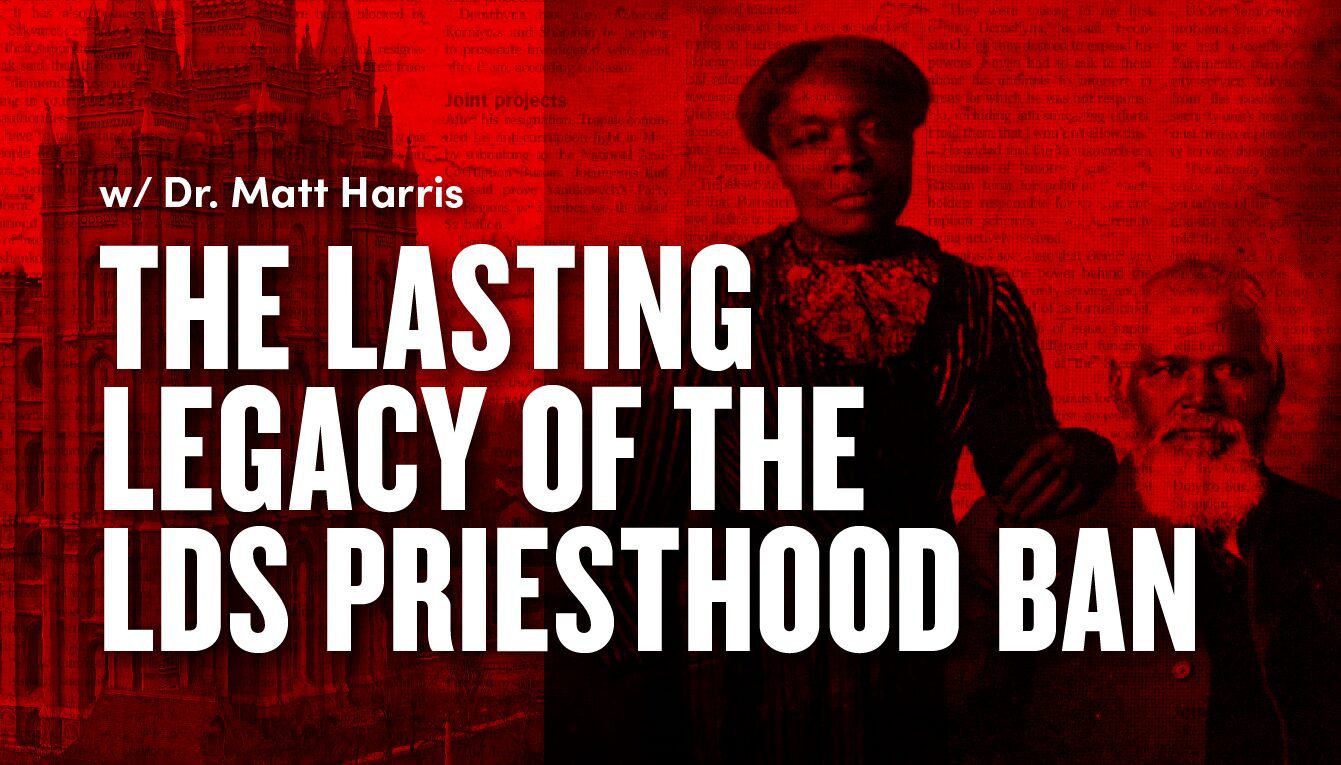
Thumbnail Credits: Portrait of Samuel Chambers and Amanda Leggroan from the public domain; Image of the Salt Lake Temple from William Henry Jackson from the public domain.
Originally published on mormonstories.org.
Transcript
Machine-generated and lightly edited. Click any timestamp to jump the audio to that moment. The audio is authoritative; please check it before quoting.
Introduction and Guest Welcome
Guest Hi everyone.
John Dehlin This is Dr. John Dehlin of Mormon Stories podcast. I want to thank you for joining us today on this epic 17 part series featuring Dr. Matthew Harris and his amazing book, Second Class Black Mormons and the Struggle for Racial Equality. This series has been groundbreaking. We've never had the response so far that we've had in terms of people really valuing our in depth coverage of this groundbreaking book that's talking about the Mormon Church's priesthood and temple ban against black people and then the dynamics, the inner workings, the political machinations of how the sausage gets made in terms of lifting the priesthood ban in the aftermath. So we have some good news and bad news about this series. The good news is thanks to the generous donations of those who have been watching it so far, we've been able to, I believe, more than generously compensate Dr. Harris for his contributions. That's the good news. The bad news is, you know, because we made the promise that 100% of the donations would go to Matt, we have not received any compensation for about the $20,000 of production costs that we incurred to produce this series and that that sort of imbalance would make it so we wouldn't be able to produce series like this going forward. So if you value this series, if you want to see the Open Stories foundation also be compensated for its production cost for this series, and if you want to see series like this with Matt and with other people continue, we kind of need you to step up and donate to cover our production costs. And it's really easy to do that. All you have to do is go to MormonStories.org donate or go to MormonStories.org and click on the donate button and you can do a one time donation, a recurring donation, and if you want to, you can type Second Class Saints or Matt Harris in the description and that will hopefully allow us to cover our production costs for this epic series. Regardless, we want to thank Dr. Matt Harris for his generosity in doing this series. We want to thank all of you who have supported us. Please go buy this book, Second Class Black Mormons and the Struggle for Racial Equality. And again, if you're wanting, if you're grateful for this series and you haven't donated and you want to see it continue, please please donate to Mormon Stories Podcast. Thanks again to everyone who donated to make this series possible. Thanks to Matt and we hope you enjoy this next episode in the series. Take care. Hello everyone and welcome to another edition of Mormon Stories Podcast. I'm your host, John Dehlin. It is 7-25-2024. And today we are. We are featuring the last episode 17 of our discussions with Dr. Matthew Harris about his groundbreaking sold out book, Second Class Saints. Black Mormons and the Struggle for Racial Equality. By the time you hear this, they'll probably have gone through their second printing. But this book for me is one of the top two most important books I think you can read about Mormonism along with Fawn Brody's no Man Knows My History. That's just my opinion. But this book talks about the Mormon Church's priesthood and temple ban against black members for over 150 years. And we have done 16 episodes. Today is episode 17 where we talk about the epilogue, which comes after chapter 10. We want to remind all of you that this series is a standalone series you can watch or listen to on Spotify under the name Second Class Saints. You can also consume it on Apple Podcasts and you can view this in a playlist on the Mormon Stories Podcast YouTube channel. And then finally, we'll just remind you that we're seeking a final set of donations to pay Matt for his generous time that he spent with us on this series. We've had about 100 of you donate and we, we need to fund, I don't know, five or ten more episodes. 100% of your donations go to Matt. Please go to donorbox.org math harris and please, please contribute. We're also paying all the participants, so we would really appreciate your support. All right, so we've done 10 chapters now, really quickly, we've got an amazing panel today. Of course, we have Matt back. Hey, Matt, thanks for joining us.
Matt Harris Hey, John.
John Dehlin Gerardo couldn't join us today. He is on vacation with his amazing partner. But we are very fortunate to have Julia back. Hey, Julia.
Julia Hi.
John Dehlin That was great to have you. You can check out Julia's work at analyzing Mormonism on TikTok and Instagram. Right, Julia?
Matt Harris Yep.
Julia Yeah.
John Dehlin And Julia does our shorts and, and time codes and show notes and she also helps produce our episodes. And then finally, we're really happy to have back Nate Bird, one of the founding members of Black Menaces and just a great friend. Hey, Nate.
Nate Bird Hey, John. Thanks for having me on again.
John Dehlin Thanks for coming back.
Nate Bird Of course.
Why Race Is So Difficult to Discuss in the Church
John Dehlin All right, Matt, take it away. Where should we, where should we start today?
Matt Harris So we're going to finish out the episode series today by talking about the episode in my book, which covers the years from 2013 to 2023. And I wrote this episode during the Black Lives Matter protests. And so just occurred to me when we were living through this that I ought to name the epilogue Black Mormon Lives Matter. And so I'm thrilled to have Nate on today in particular, because Nate lived or was at BYU when some of the systemic issues dealing with racism came to a head. And so Nate's going to share some of his experiences as a student there and also his interactions with the administration and how they dealt with some of the racism that came to light in the last handful of years there. We've been talking about in previous episodes, the churches coming to grips with systemic racism. It led them to remove Mormon doctrine from print after years and years of protests from Latter Day Saints. And it also led them in 2013 to produce a document called Race and the Priesthood, which is the first time in church history where the leaders will repudiate specific anti black teachings. Prior to the church leaders addressing racism, it was done in a broad way. We condemn racism, we condemn just sort of broad statements about racism. And consequently, Latter Day Saints continued to teach some of the old anti black teachings that had sustained the ban, the less valiant positions, the curse position, the favored lineage position, all of that. And so when Randy Bott, the BYU professor, gave that interview to the Washington Post in February of 2012 and he talked about these specific teachings during Mitt Romney's presidential campaign, it cast a a, it posed a problem for the church because a high ranking professor in the religion department at BYU was teaching these old teachings that the church was trying to move away from. So in 2013, they repudiated them. And it's the first time the church, in my opinion, the first time the church has come to grips with the systemic racism of its racial theology. So that leads us to today. Where are we at in the church today? Where's the church made strides? Where are they still needing to, to make strides? What is it like being a black person in the church? What is the state of race relations? What does the literature look like in the church today? What did the leaders say about the Black Lives Movement and the surge in white Christian nationalism? These are all the things I want to cover today. And John and Julia and Nate and myself will have a conversation about these questions. But we're going to begin today with a famous prediction that a sociologist at Baylor university made in 1984. This prediction set the church on fire, at least those who follow such things, including church headquarters and Baylor University sociologist Roddy Stark, who is not a Latter Day Saint. He claimed that based on current church growth rates, so this is 1984, based on current church growth rates, that the Church of Jesus Christ of Latter Day Saints, its membership would swell to 260 million members by the year 2087, making the Utah based church one of the largest world religions. And so for a church that really emphasizes its missionary activities, to have an outsider predict that Mormonism would be a major world religion by 2087, I mean, it was exciting. And as I write in my epilogue that by in 2021, the church's membership was a mere 16 million. Today it's 17 million. But it was 16 million members in 2021, and the church's growth rate was less than 2%, which mirrored Catholics and evangelicals and Protestants. And so there's been a tremendous decline in organized religion over the years. It's, frankly outside of the scope of our discussion today why that is. But Mormons are caught up in that. And so they have not been able to convert black and biracial members to the extent that they had hoped. But it's not just because of flagging growth rates in organized religions that's bringing the church down. There's this notion that the church has not done enough in the past to create or to confront and frankly condemn its racial past. And so black people that I've interviewed continually tell me that the church is not a safe place for them and their children today in the 21st century. And that's kind of where I want to start today with the panel is why is it maybe that the church doesn't want to deal with race and its pews, they're lessons that deal with the priesthood ban. And, you know, the members are taught very specifically not to talk about, you know, the curse of Cain, the past teachings. Just forget about all that stuff. Just focus on the positive, you know, that, that black and biracial families can go to the temple and hold the priesthood. So there's not a meaningful engagement in race in the church. And I just want to see if, you know, the panel has any comments about that,
Nate Bird just to kind of start things off. I think one of the biggest reasons that, that there's so there's so much difficulty when talking about race, especially in predominantly white groups, is because the idea of racism is very terrifying to a lot of people or the idea of being racist. And I think that goes back a lot. I believe it was. I don't remember the author that wrote about it, but they talked about, like, the good, bad binary being applied to racism during the civil rights movement. You know, when those, when those different images of, you know, German shepherds chasing down children or like, you know, the police and Firemen spraying kids and adults with fire hoses and things like that. When those things were nationally televised, it showed just some of the atrocities of the Jim Crow south and the things that were going on there. But it also painted this picture of those people are racist. I would never do something like that, therefore I'm not a racist. And that's just kind of been exacerbated and, like, enhanced as the decades have gone on, where there's kind of become this idea of if you are racist, you're a bad person, you're an evil person, you're someone who is part of the kkk, you lynch people, that kind of thing. And so there's not a lot of nuance when talking about issues of race. And there's a lot of fear of being branded as a racist if you say something wrong, if you do something wrong. And so, you know, the civil rights movement obviously made a lot of steps forward with the, you know, the Civil Rights act of 1964 and things like that. But I feel like psychologically it may have set some people back or it may have set people back in preventing conversations around that. And also the fear mongering that tends to happen a lot, you know, with like, war on drugs or, you know, terms like super predators, which, you know, paint black people in these very negative lights and kind of create like a fear around discussing, you know, black issues or black people. I think all of those things kind of generated this society now that we live in where talking about race has become a highly politicized thing instead of just being something that we discuss as, you know, these are human rights, Everyone should be treated equally. I mean, I think a lot of times when people start talking about race, there's this idea of, oh, why can't we all just get along? Which is great. That's ideal. But there's a lot of things that need to be addressed before that, before we can just get to the. Oh, I don't, you know, I. I see you as a person, not as a black person, because, you know, I want to be seen as a black person, but I also want to be treated just like you would treat a white person or an Asian person or a Native American person. Like, so there's a lot of difficulty surrounding that conversation that I think just kind of makes it hard to talk about it, especially in a religious setting.
Matt Harris Well said, Nate. I wonder. This is an observation I'll throw out to the group that today when I read things from Desert Book or things that the church puts out about race, I'm obviously sensitive and attuned to these things since I've invested a lot of my adult life into writing about anti black racism. And what I've known is, or what I've seen is there's an attempt to acknowledge the racism. You see it in the three volume history of the Church and soon to be a fourth and final volume coming out this year. And so they do acknowledge racist episodes in the volumes. I have a friend who wrote a book published with Desert Book and he was excited to tell me that. Look, I didn't skirt the racism, he tells me. And so I read the book and I, I looked at it and I thought, okay, you covered it in a sentence and you just moved on. And that's what I call the Christopher Columbus effect. There was a Harvard scholar named Samuel Elliot Morrison who was writing in the mid 20th century and he won two Pulitzer prizes. One or both of those derived from, I can't remember, certainly one, but I don't remember if it was the second one too. But anyway, he wrote, I think, four volumes on Christopher Columbus. And what I call the Christopher Columbus effect is Morrison mentioning Columbus's racism and harsh treatment towards the indigenous populations. And so Morrison mentions it in a sentence or two so that if somebody were to say, hey, you overlook the horrible things that Columbus did to the natives, he could say, that's not true. Look, on page, you know, 373, I mention it, you know, one sentence. So the, the Morrison effect is just mention it for, for plausible deniability and then just move on. Don't talk about it, don't analyze it, don't dwell on its effects or why he may have done it. Right? That's what I see happening in the church today, is to sort of acknowledge it in one or two sentences and move on. And clearly, you know, scholars like me, we're not just mentioning it, moving on, we're devoting entire works to it. And so I mean, you know, acknowledging it's, it's, it's a step in the right direction, but it's not really coming full head with these difficult questions that as you point out, Nate, derive from the Civil Rights movement in particular. And I think Latter Day Saints, frankly, just don't know how to deal with race in the 20th and 21st centuries. They're uncomfortable and they just to deal with their, their discomfort, they just simply decide to ignore it. And the leaders too, I might add. I think that that applies to the leaders in the Brethren in Salt Lake, that the Brethren don't have extensive views or extensive experiences with these kinds of things. And so they don't feel comfortable dealing with it. And the last thing I would say about this is that it goes back to prophetic authority, too. They don't want the saints to talk about the church's history with the ban and all of that because it could cheapen their predecessor's authority. And they just don't want to dwell on that. And so they want to look forward as they. The church continues to open up missions around the world, particularly in majority black countries, but yet you've got this racial undercurrent that's still there. And that racial undercurrent, as we'll talk in this episode, is exacerbated by American cultural and social issues today that engulf the United States.
John Dehlin Yeah, that's great stuff, Matt.
White Members, Racial Conversations, and Church Leadership
Matt Harris Well, all right, so I want to share a story with you guys that Julie.
John Dehlin Did you want to add anything? I just want to give Julie a chance.
Matt Harris Oh, please.
Julia No, I just think that, like, it's really hard, I think, just for members in general. First of all, I think a lot of white members of the church need to learn more about other races and how to hand. How to handle these topics. But I think it's also really holding. Hard to hold. And I think, Matt, you mentioned this, too, where it's hard to hold that. That my leaders made mistakes in the past, and my leaders speak to God and are. Are like, communicate with God and are receiving the Holy Ghost. Like, it's just hard to hold those two at the same time. And I think that's just really uncomfortable for members. And so they just don't. They just don't. And so I think that needs to be addressed and that needs to be talked about. Like you were saying, Nate and Matt. So. Yeah.
Guest Yeah.
Matt Harris Wondering. I don't know. What did you guys think? So this is where I want to go next, and I'd love to hear from each of you on this. What were your impressions in 2013 when President Uchtdorf. This is when Dieter Uchtdorf was in the first presidency. He's now in the quorum of the 12. But what did you think when President Uchtdorf said in general Conference that there had. I'll read it. It says, to be frank. Perfectly frank.
Guest Should we.
John Dehlin Should we play the clip, Matt?
Nate Bird Yeah.
Matt Harris Yeah. That's better than me reading it. Sure.
John Dehlin Okay. Okay. So, yeah, Julie prepared some good slides. So. So let's just start with. With one right before, if that's okay. Julie, do you want to tell us what. What made you want to share this?
Julia Yeah, so. So in his, in your book, Matt, you talk about how the leadership has always been white. Like we've never had any dark skinned leadership. And the. In the top 15 specifically, like there are some in the 70. And that's really good. It's just, it's just a really sort of striking that, that Even now in 2024, we just see a bunch of white, old white men. And so I just wanted to point that out because you talked about that a little bit. I don't know if you have anything more to say on that, Matt.
Matt Harris Yeah, I think, you know, in 2015 there were three openings in the quorum of the 12. And there are a lot of people that I know of in the black community. It wasn't just black Latter Day Saints, but other folks too that really wanted some color. To be frank, in the quorum of the 12. And I shared this on a previous episode, I think, but Don Harwell, who's, who's now deceased, but Don Harwell was the president of the Genesis Group. He succeeded Darius gray. And in 2015, Don Harwell of the Genesis Group, he. Or maybe he was out of the Genesis group by then. I don't remember. I think he was actually. But anyway, in 2015, he saw Elder Holland at, at Home Depot and he rushed over to Elder Holland on a, this is on a Saturday when Elder Holland's buying a, you know, hoe for his garden, you know, and darn Harwell saw him and walked over and there's Elder Holland in his blue jeans buying some garden equipment. And he just said, when are we going to have a black apostle? And Elder Holland, to his credit, didn't give him a pie in the sky response. Well, it depends on what God tells us. I mean, it wasn't any like thing like that at all. He gave him a very honest response. And he said, well, when black people get enough, you know, when they get the numbers, when there are more black Latter Day Saints in the church, then that could be a possibility. So we, when I heard this experience from Harwell's own lips, I thought, man, that's a candid response. Because that response that Elder Holland gave is really how these things work. And numbers in the church drive these things. And that's when they start to consider it. Oh, gee, we've got a number of black Latter Day Saints. Maybe there's a person that we should consider for, you know, the quorum of the 12 or something. That's how these things work. And it's not a surprise, you know, when some of the men that they bring into the 12, they. They know them like Elder Holland and Elder Cook were very close, and they were, I think, missionary companions in England back in the day. That's not a surprise. And if you look at, you know, the leadership over the years, you see the sons of church presidents being called into the quorum of the 12. You see brothers and cousins and missionary companions and all of that, because you will choose to be in leadership with people that you feel comfortable with. And so. So that's what Elder Holland told Don Harwell. And. And so since then, so what they. They didn't obviously call a black an apostle, but they. They called, I think, Elder Renlund and they, you know, touted up his international experience. He was overseas doing this and that as a physician. And to people who follow these things in the church, that wasn't good enough. They want somebody from a different walk of life. And in the 1970s, there was an opening in the Quorum of the Twelve when President Kimball was the president. And I know this because I have his diaries. I've seen them, and I've seen the inside, how this works. And when there was an opening, the brethren had proposed three names, and they gave justifications for each of the three. But one of the names that caught me, caught my attention was if I say his name right, someone correct me. But Enzio Bushe, if I said that
John Dehlin right, something like that. Bushe. Yeah.
Matt Harris Okay, Enzio Bushe. And I. I forget where he's from. Eastern Europe.
John Dehlin Germany. Germany.
Matt Harris Okay, okay, Germany. So anyway, but I think it was Boyd Packer, of all people, Elder Packer, who's not known to be, you know, progressive on these kinds of things. But Packer was one of the ones who recommended Elder Boucher for an opening, the quorum of the 12. And at the time, Elder Boucher, I think, was in the first quorum of the 70. And Packer said that he ought to come into the quorum of the 12 because we're trying to globalize the church, and he'll give us a different perspective, a different experience. And I was blown away that that Packer would say that because it's really on their minds, even as early as the 1970s, that if you're going to globalize the church, you ought to have somebody who doesn't live in Idaho and Utah on a pig farm. And I'm being facetious. I shouldn't be facetious. But anyway, I just use the pig farm. You know, a lot of these The Brotherhood in the 20th century grew up on farms in from Utah and Idaho. So they recognized it. Elder Boucher, for whatever reason didn't get the call into the 12, but they were talking about this and by Elder Renlund and others into the 21st century. Elder Gong would be another one. Dieter Uchtdorf from Germany would be another one. They're starting to recognize that if the church is going to be global, some of its members have to see representation other than, you know, Utah and Idaho and the quorum of the 12. And they haven't made it as far as calling a, a black apostle yet, but it'll happen probably in my lifetime. That's what I predict.
Julia That is really cool. Also I want to just note too, I really admire the community of Christ Church and how with their 12 apostles, they have just as the women had the held the priesthood in the early days of the church, they have allowed women to hold office. And so there's a lot of women in the 12 and then there's even there's a Polynesian who's the head of the twelve apostles. And then they have a black woman and a black man. And they just are really diverse in who they have in their 12 apostles. And I just really admire them for that. And I wish that our church or that the mainstream church would adopt these as well. And I really hope that you're correct in that and that that in your, in your lifetime that they will call somebody who is, who is a person of color.
Representation of Black Members in Church Leadership
John Dehlin Really quickly I just did a little bit of back of the envelope analysis and I just wanted to share. So this is a photo that the church puts out, this was put out in March 2024 of like all their top leadership, including women. And, and so what you can see if you drill down a little bit more in depth, just say of the top 20 or so leaders, that's the graphic on the left, that's the first presidency, the quorum of the 12 and the presidency of the 70 and the presiding bishopric. So that's something like 15. Yeah, about 20 positions, 0% of them right now appear to be, you know, of African descent in any way, shape or form. Of course we know skin isn't always a good indicator of that from this book. But then if you go to the right, you get the general authority 70s which are actually, as I understand it, full time paid positions with benefits, which is different from area authorities that as I understand it, are more volunteer positions that aren't salaried or get benefits. And you know, by my back of the envelope count of the general authority 70s, about 10 of the 92%, 10 of the 92 appear to be of African ancestry in any significant way. And again, I'm just guessing here. And so my back of the envelope estimate was about 89%. And then of course, of the general officers amongst the women, there is one out of six, sorry, one out of nine that appears to be of African descent. And then, you know, in the young men's presidency and in the Sunday school presidency at 0%. So I just thought that. I just thought that was an interesting statistic to show. And that's 2024. Let's. Should we go ahead and play the Uchtdorf clip? Did you want to comment on that, Matt?
Matt Harris Yeah, it's just one quick comment that I think bears instruction, and that is that we've only had one African American general authority. The rest are, are black men from South America or elsewhere. So that's. I think that's the first point I want to make. We've only had one African American and that matters.
Guest Yeah.
John Dehlin Nate, can you tell us why? Because, Because I think us white folk just think of what white people is white and black people as black. But there is a significant difference between being African American and African. Can you, can you just. Would you mind sharing about why that's important, just from your perspective?
Nate Bird Yeah, absolutely. You know, for starters, looking at that image, I do want to give the church a little bit of credit there. I remember I used to love looking at the General Conference edition of the Ensign when it came out as a kid. And I would always go, and I don't know why, I just was fascinated with looking at all the, the leaders and things like that. And so I haven't looked at one in a while, but seeing that it's definitely a lot more diverse than it used to be. So I will give them some credit there. That's good to see. And, you know, knowing how things work, you know, once you get called to the general authority 70, you know, when they become openings up higher, then a lot of times they're going to be chosen from those areas. And so, you know, that that increases the, the chances or the likelihood of, of, you know, someone of color being called into the quorum of the 12. But as far as, you know, why it's important that there's not a lot of black represent or black American representation as opposed to black representation from, you know, from someone from South America, from the country of Africa. The reason that it's different is because here in the United States, the Black American experience is extremely different from the experience of a black person elsewhere anywhere else. For the most part, they're going to be surrounded by people who look, or majority of them look like themselves. In Africa, the church is trying to do a lot of expansion throughout different countries. And when those people go to their wards or their branches, they're surrounded by other African people, you know, whoever lives in that country, they're surrounded by people who look like them. A lot of times, the leaders that are called, not all of the time, there is a sort of an issue with calling a lot of white leaders to be in higher leadership positions in Africa. But a lot of times, you know, the leadership positions will look like those people who are. Who are in the congregation. And so because of that, they're able to have a more. A more whole experience. It's not quite the word I'm looking for, but they're able to have a more complete experience and, and feel more fellowshiped and feel more welcome, feel more at home. Whereas here in the United States, because of the race teachings that have been perpetuated throughout the church, and also because of the extreme minority that black Americans fall into within the church, there can just be a feeling of incompleteness or a feeling of being left out or overlooked. And so you kind of see that same thing with, with leadership positions where a lot of times black Americans are overlooked for those positions because, oh, there's not enough representation. Right. That's kind of the. The reason that, that Elder Holland gave, which I take umbrage with, because if you're trying to globalize, it seems like you would want to get ahead of that and call people, you know, so that you have, I guess, kind of like a reason, like, hey, we are trying to increase our representation. We would love for you to come and join this church as opposed to being like, oh, well, if you join the church, then, you know, then we'll get somebody to represent you. I think it should go the other way around. But, yeah, that's why it's more important. It's so important for. For black American representation within the church. And also because this is an American church, it was started in the United States. And so you would think that efforts to. To expand diversity would happen here first.
John Dehlin Beautiful. Thanks for sharing that, Nate. Makes perfect sense. Should we. Should we play the Luke Dorf clip really quick?
Leadership Acknowledgments of Past Mistakes
Matt Harris Yeah.
John Dehlin Okay, let's play that. Sometimes questions arise because we simply don't have all the information, and we just need a bit more patience when the entire truth is eventually known. Things that didn't make sense to us before will be resolved to our satisfaction. Sometimes there is a difference of opinion as to what the facts really mean. A question that creates doubt in some can, after careful investigation, build faith in others. And to be perfectly frank, there have been times when members or leaders in the church have simply made mistakes. There may have been things said or done that were not in harmony with our values, principles, or doctrine. I suppose the church would only be perfect if it were run by perfect beings. God is perfect and his doctrine is pure, but he works through us. His imperfect children. And imperfect people make mistakes. All right. Yeah. Matt.
Matt Harris Oh, my goodness. You know, so, Nate, you mentioned something about, you know, needing to praise and recognize when it's due. And I. I agree with you. Sometimes it's easy to say, ah, wish they were doing more. And that's certainly part of the human experience. Right? You're always wanting more. But I think we have to recognize that that statement is historic. I mean, President Uchtdorf is acknowledging that the brethren have made mistakes. And I have in my mind's eye that when he said that, that Elder Packer, who's not far from him, is probably a little uncomfortable in his chair because Elder Packer's modus operandi is, you don't confess weakness. You don't. Just don't do that. So President Uchtdorf, you know, made those comments and also said something about, you know, there are times when we general authorities have caused people to question the things we've taught. And that's. Those are. Those are extraordinary statements. When I visited Mike Otterson in 2013, it was about a couple of three weeks after President Uchtdor gave this really a lovely talk. It was. There's more to this talk. I would encourage your listeners to hear it all. It's. It's really nice. It's just not something you hear all the time from a senior church leader. But I was in Mike Otterson's office and I said, can you tell me about that talk? What did he mean when he said that the leaders had sometimes made mistakes? What were those mistakes? And Brother Otterson looked at me and he said, I don't know, let me call him. And he turned around when I was in the office, and he picks up the phone and hits speed dial. And I hear this, you know, German accent on the other line. I could hear it all is right there. And he said, president Nukedorf, I was just curious. I've had a number of people ask me. No, he didn't refer to me in the room. You know, I got somebody in the room right now. But he said, I've had a number of people ask me what you mean when you said mistakes. Can you elaborate? And I could hear this long, uncomfortable pause on the phone. And President Uchtdorf said, it's whatever they need those mistakes to be. And so I'm thinking to myself, oh, come on. I wanted to be the peanut gallery in the back and say something, but I didn't. And so Brother Otterson was polite and said, okay, thank you. And they hung up. And Otterson turns to me and he says, he means race and polygamy. And I said to him, to Mike Otterson, I said, yeah, that's kind of how I interpret it, too. But I think that, jokes aside, I think that President Uchtdorf didn't want to say anything specific because he'd already gone pretty far by acknowledging that the brethren had made mistakes. And now let's be clear on something in private. The general authorities have said for a long time that, yeah, we're not perfect. Okay, fine, big deal. I mean, tell us something we don't know, right? We're all imperfect human beings. But he's being specific. We have made mistakes, caused problems within the Church. I mean, he's acknowledging that. And the next step would have been, you know, we messed up here, here, and here, but didn't want to go that far. And so he was playing it safe because there are political dynamics at play with even saying something that we've made mistakes. And I don't have any proof for this, but I could speculate, knowing you know, how I know these things work, that not all of President Uchtdorf's colleagues in Church leadership would have been comfortable with that statement. That's just something you don't acknowledge. And I'm certain that Elder Packer would not have supported that statement. So it is something that's extraordinary. But notice what he didn't say. He said, we made mistakes, but he never said for which we are sorry. And that also would have been an extraordinary statement that his colleagues in the 12 would not have appreciated, because as Elder, as President Oaks once said that we don't seek apologies, nor do we give them. I know, Julie, you have that tape, and we can talk about, you know, the lack of apology for maybe the priesthood band after we view this tape clip from President Oaks.
Nate Bird I also wanted to say, you know, I think it's. It's good that that other. I remember when he gave that talk, and I think it's good that he admitted that they made Mistakes. And I agree. You know, for, for the LDS Church, that is historic, but also the fact that admitting that you make mistakes is historic is, Is kind of wild. You know, I, I think when you go into the bishop's office, you know, and you're, you're confessing, you can't just go in and say, hey, Bishop, I made a mistake. And the bishop would be like, oh, great. Well, you know, you're good to go. You know, that's, that's not how that works. Right. You have to go in there. A lot of times bishops will ask you for details. Whether that's right or not, you know, I can't really say. But like, you have to give details about the mistakes that you made, and you have to go through that repentance process. And so, you know, him admitting, you know, some leaders in the past have made mistakes, so not even taking accountability for the now, but just kind of saying, you know, throwing it back on past prophets and apostles, which is something that the church has done quite a bit. Right. They'll just say, oh, no, this was, you know, even reading some of the book they just caught and called it folklore. I think Elder Holland specifically labeled the race teachings as folklore and said that it was never a doctrine of the church. You know, so admitting that they made a mistake is, is a good start, but it's, it's definitely not. It's not enough. And it's not, it's not really something that I don't think should be commended necessarily. So I just wanted to point that out.
Matt Harris No, well said, Nate. I'm glad you point that out because. Because there's a. There is a different standard, right, for members. If you go into your bishop and, you know, I just made mistakes giving my temple recommend. I mean, what's the bishop going to ask, Right? Well, what were those mistakes? And then the bishop has to judge if those mistakes are grievous enough to keep it.
Nate Bird Whatever you need those mistakes to be Bishop.
Matt Harris I should have been that clever, Nate. I just wasn't. Where were you when I was with Brother Rodison?
What Happened After Uchtdorf's Talk on Race
John Dehlin I think it's worth letting our never Mormon audience know, and probably a lot of Mormons as well. What happened Uchtdorf, after he gave that talk? Right.
Matt Harris Yeah. So President Uchtdorf, he was dropped from the First Presidency.
John Dehlin Like human.
Matt Harris When. Yeah, when Thomas Monson died, Uchtdorf was dropped from the first presidency, where he resumed his place in the quorum of the 12. And then the next president, Russell Nelson, has the liberty to choose his two counselors that's how it should be. Right. You want to work with men that you trust and like and feel comfortable with. And. But the issue is, is that when you don't, Mormonism doesn't drop its counselors, even if they don't have a strong relationship with the next president. Gordon Hinckley was not close with Ezra Taft Benson, but he had been running the church since 1981. And so Benson felt compelled to retain President Hinckley in the First Presidency, even though they were not close. And so for President Nelson to drop Uchtdorf and to call in his friend Alan Oaks, that really is something. And there's always a public line and a private line. The public line with Hugh Brown, when they dropped him from the governing First Presidency was his health. The. The real line was that he was an activist and we didn't want him. This is our way of rebuking him. And with President Nelson. Now, I'm going to speculate for a moment. I don't. I don't believe for a moment they dropped President Uchtdorf because of what they said publicly, which was that, you know, President Oaks has never been in the First Presidency. He needs this experience. And I think I'm just speculating. So that's all this. Is that certain? I'm certain that President Uchtdor's views were a little bit too liberal for most of the brethren. And President Nelson didn't feel comfortable with Uchtdorf and the things he'd been saying publicly about not just acknowledging past leaders mistakes, as Nate pointed out, which also implies that the current leaders are making mistakes. But also President Uchtdorf was pushed back on some things that Elder Packer had said about the LGBTQ Mormon community. And so those are just two that I know of. I'm sure there are others. And it was a blow to the progressive Mormon community because they saw in President Uchtdorf some of their values. And when President Oaks was put in that position, they didn't see those values. And so that's a very real thing with how the leadership works.
John Dehlin Yeah. And so, Matt, I think it's a good segue for this clip that we have coming from, you know, the winter of 2015, where D. Todd Christofferson and Elder Oaks are doing a trip talk with the Salt Lake Tribune. And I believe it has to do with. With someone suggesting that maybe the church should apologize for its rhetoric around LGBT individuals. Go ahead and play that clip and hear what Oaks has to say and sort of compare that with what. With how candid Uchtdorf was right in his General Conference Talk
Elder Oaks and the Question of Apology
Matt Harris Tribune story that we published on Tuesday, Elder Oaks, you were quoted as saying that the church doesn't seek apologies and we don't give them. And, of course, this sparked a whole storm on social media about those who wonder how this view compares with Christian theology.
Julia Again, wanted to give you an opportunity
Matt Harris to respond to that.
Guest I'm not aware that the word apology appears anywhere in the Scriptures, Bible, or Book of Mormon. The word apology contains a lot of connotations in it and a lot of significance. We do not seek apologies. When our temple was desecrated in California, when people were fired and intimidated, when a lot of other coercive measures were used, we sought no apology. That's what I meant by saying we don't seek apology. We think that the best way to solve these problems is not a formal statement of words that an apology consists of.
John Dehlin Can somebody tell me what Christofferson's smile meant there? Anyone want to theorize? Because D. Todd Christofferson has this very strong smile throughout that.
Julia Well, because they're talking about specifically LGBTQ issues, and Christofferson has a brother who is out. Yeah. And so I'm wondering if he just feels really uncomfortable. That's kind of what I was seeing. And I also want to point out that Oakes had a sore throat that day, and that's why he sounds a little bit raspy. But I don't know if you guys have other comments.
John Dehlin Nate, what was your reaction to that video?
Nate Bird You know, obviously just speculation, but that smile when I'm, you know, talking with friends, when I've done an interview, things like that, and a subject that we've talked about a lot comes up, and we kind of know what the other person is going to say. Usually we'll get that smile on our face of, I already know what he's about to say about this. And so it seemed like Elder Christopherson was used to hearing whatever it was the Elder Oaks was going to say. That's just kind of what I got from it.
John Dehlin So I don't know, I may be projecting, but it almost looks like he's blushing, like he's embarrassed. Matt, Matt, do you. Do you have a sense? Because, I mean, it shouldn't be lost on anyone that a Christian church, a top Christian church leader saying, we don't apologize. We don't see a value in that, especially when you think about the church's formal teachings on the steps of repentance. And every bishop in. In the Mormon Church is expecting its members to apologize and for, you know, confess and forsake their sins and acknowledge it. That's basic repentance and Christianity 101. Matt, what are you thinking about. About that exchange?
Matt Harris Well, to build off of what Nate said, I think that there's some familiarity with that statement that Christofferson showing by smiling. But to go one step further, this is something they had been talking about, I'm certain, in their quorum meetings about should we apologize for this or for that? This is not something that was just randomly discussed in this newspaper exchange interview that we're seeing. And I also. This is me maybe projecting, but I also see Christopherson smiling because, yeah, I know what he's going to say. And I don't think that's a strong position to say that we're not going to apologize because it's not in the Bible. There's a lot of things not in the Bible.
Nate Bird I was going to say I was going to use a word that was in the scriptures. That is an exceedingly weak argument.
Julia Well, and then, Matt, you point out like there is a precedent for apologizing for these leaders to apologize. Like three years earlier, they had apologized. And then back in 2007, they had again apologized.
John Dehlin Yeah. So we're showing the headline article from the Salt Lake Tribune, which was no apology. Really. Mormons question leader Dallin H. Oaks stance. And then, you know, like you said, Julia, in 2007, I believe it was Henry B. Eyring that.
Julia Yeah.
John Dehlin Do you want to talk about that, Matt? Just talk about this.
Matt Harris Yeah. Yeah. So a little backstory to this is when this came out years ago, there were a lot of people in the Mormon studies community that, that I'm in. And we're, you know, it's a small community. So we scholars know each other. We go to conferences together. We have breakfast and dinner and lunches together at these conferences. And some cases, if we're really close, we know about each other's families and, you know, talk about our research. That's really what brings us together. And there was some conversations about this over the years. And it was Henry Eyring meeting at a monument at Mountain Meadows in southern Utah with the descendants of the people from Arkansas who. Whose forebears were murdered. And the question was when this came. When President Eyring of the governing first presidency, he said something about, we acknowledge our mistake. And some of the scholars parsed it. That's not an apology. They're just saying there's a mistake. And then it just went off into a whole different stratosphere about they use the word mistake. Because of legal things. Now I do legal history. So it's true, I do study the law and follow it, but I'm not a lawyer. And I'm thinking to myself, okay, there's going to be some legal liability for a murder that happened in mid 19th century. Come on. But anyway, so that was the thing in the Mormon studies community that they purposely avoided apologizing and said something about a mistake. And the people that I run in circles with didn't think that that was adequate. And one of the people who wrote or co wrote a recent book on the Mountain Meadows massacre was Rick Nelson, or excuse me, Rick Turley. And Rick Turley used to be a high ranking official in the church historians department. He was also the head of the church's PR department after Mike Otterson. And he was also a personal traveling companion to President Nelson. And so I asked Rick Turley once, I said, rick, tell me about this, the apology stuff, what do you think? And he said, you know, it's in our book, the Mountain Meadows book, and it's an apology. It's not a mistake. It's not the church trying to weasel out. It is an apology. And I was happy that he said that because. Because it proves my point that there is precedent for the church apologizing. And here they're refusing to apologize for, you know, the ban and lbgtq. Not that they feel the need to apologize for LBGTQ at this point, but they refute to refuse to apologize for the ban. There's also a precedent to apologize for doing vicarious baptismal ordinances for Jewish folks. When the church, when these Jewish Jewish organization reached out to the church, when it made the news that the Mormons were doing this and they were upset that they were being baptized posthumously. And so the church said, okay, we understand you're upset and offended, we'll stop. Turns out they didn't stop. And I'm not saying that there is anything nefarious from the church archive. I can't imagine the church president saying, hey, we told him we would stop and we're not keep doing it. We won't let them know. That's not how this works. It was the church leadership telling, oh, we'll get him to stop. And they probably sent some directive. And in my version of it, I could be wrong, but in my version of it and how I know how the church works, this massively large and complex organization, somebody in the genealogical department didn't get the memo and they just kept doing it. And so, and then when it was called to Their attention another time, that's when the church apologized. So the point I'm trying to make in this book is for. For President Oaks to say that, you know, we don't seek apologies, nor do we give them, and the apologies are not scriptural. I mean, you know, there's precedent for the church to apologize when the church has done something wrong. And maybe, I suppose if Elder Oaks. I don't want to presume to speak for him, but. But I wonder if he would make a distinction by saying that, hey, the two things that we apologize for, Mountain Meadows and the Jewish baptisms, those were not theological issues. Those are people issues. And the thing that we refuse to apologize for is a doctrine that we had once taught. I think he might make that distinction, I suppose, if pressed.
John Dehlin Makes sense. All right, well, is there anything else we want to say about apologies? I have a slide I wanted to show, but, you know, I. I guess. I guess since we're talking about apologies, Nate, can you maybe. Do you mind sharing what an apology might mean to Latter Day Saints? You know, if Oaks is basically saying, you know, just watch what we do, watch what we do, it's about our actions.
Guest Words.
John Dehlin Talk is cheap. But if we're having black members of the Mormon Tabernacle Choir, if we're starting to add black general authorities, if we're baptizing like crazy in Africa, if we're making general conference talks that are condemning racism, that's worth 50,000 times more than some empty words that we might say about an apology. Something in the past. And they probably think, hey, I'm not. I'm not Hubie Brown. I'm sorry, I'm not Harold B. Lee. I'm not Marky Peterson. I'm not Joseph Feeling Smith. I didn't say those things. They're the ones that need to apologize for what they said. None of us said those awful things. Nate, can you just maybe cap off this conversation about apologies to help people understand why an apology might either be useful or even essential?
Why a Genuine Apology Matters to Black Members
Nate Bird Yeah. So I want to. The reason that an apology would be essential here is because the church is claiming to be led by divine leadership. All right? And now they're saying, oh, well, we make mistakes. Well, if you're claiming that God told you to do this, and then you're trying to change the narrative and say, oh, no, this is just people making mistakes, and you need to apologize for those mistakes were made, for those mistakes that were made, and also need to apologize for not listening to God when he told you not to do this, or you have to. You have to pick one side or the other. You can't say, well, this was, this was God's idea, or it wasn't God's idea, it was man's idea. So, you know, the idea of an apology within the church would be huge because it would set a precedent moving forward for, you know, for people in the church to be able to begin healing, to begin to be able to talk about race in a healthy way, to be able to start dismissing some of those, those race teachings that are still perpetuated throughout the church, that are still taught at byu, that are still taught in Sunday school lessons when black people are there and when they're not there. So having an apology directly from the top, and because of the way that the church leadership works, if it comes from the top and works its way down, it's going to be a lot more effective than, you know, than someone trying to do it in their ward or, you know, than one person trying to make a difference, you know, in some small part of the church. It needs to come from the top and come all the way down. Especially because that's how the church does everything right. Everything is supposed to come from God down to the brethren, down to the people. And so they need to do the same thing here with an apology.
John Dehlin Got it. Anything else you want to say about apologies, Matt, or should we go to the next.
Matt Harris Yeah, just maybe one thing and then we'll talk about the fake apology in just a minute. But just an experience I had at a conference, my goodness, six or seven years ago, and I delivered a paper. And after the papers were the panel I was on, we delivered our papers. There was a Q and A from the audience. And in the audience was one of the most prominent, long standing members in the black Mormon community. Her name is Catherine Stokes. She'd been a member for a long time at that point. The brethren like her, they trust her. She's done some community outreach on behalf of the church over the years. So she's been a stalwart Latter Day Saint for a number of years. I even heard somebody once refer to her as a black pioneer. And so Catherine Stokes, Kathy Stokes was in the audience, and I noticed her when she walked in. I'd never met her. I was thrilled that she was there. Been reading about her for years. And during the Q and A, she raised her hand and the moderator called on her. And I should tell you, the panel was about race. And she raised her hand and she said that racism today is more intense than it was when I joined the church 40 plus years ago, she said. And I think that you could hear a pin drop in the room because, you know, for her to acknowledge that, to say that because she joined the church before the priesthood ban, she joined the church probably around the civil rights era. And for her to say that, it was just extraordinary. And so I think a lot of us were just crushed to hear this. Maybe not surprised, perhaps, but crushed in her perspective that we just hadn't made enough of a stride. I got home. I returned home to Colorado, where I live, and I called up my friend Darius Gray, told him what had happened. And Darius said that initially I didn't think we needed an apology. We, meaning the black Mormon community. I didn't think we needed an apology, but now we do. And so Darius had changed his views on this. And Darius said something striking that I put in my book. He said that I'm going to repeat the exact quote he said. He said, for the good of the church, we need an apology. The church can't heal until there's an apology. And anybody who knows Darius Gray know that, knows that he's not some radical voice, right? He's not, you know, trying to embarrass the brother. And he's not out there agitating for change in some very vocal and public way. He's certainly agitated for change in private. But for him to say that is. Is remarkable. And I really. I took a double take on the phone because he was very emphatic about it. And then I saw him later on at another conference a few months later, and he said the same thing to me in private at the conference. We need an apology, and we can't heal as a church until there's an apology. And so I think that's really important for the church. And that's why I think President Oaks words are so shocking. You know, we don't seek apologies, nor do we give them. And, you know, President Oaks is trying to move on into the future with the church, but he's not hearing from folks like Darius Gray that we really can't move on and heal until we deal with some of the injustices of the past.
The Fake Church Apology Examined
John Dehlin Thank you. Let's go ahead and. And bump up the. The little discussion of the fake apology, because I think it fits nicely just. Just following immediately. Do you want to set this up, Matt?
Matt Harris Yeah. So I was at a conference talking about conferences. I was at a conference with Darren Smith, my good friend who's been on this panel, and Nate, he's been on a panel with you in Summer Rain. And Darren Smith, just to remind your listeners, he's an African American scholar. He's specialty of sociology and race, among other things. He's written lots. I was on a panel with Darren when news broke that the church had allegedly apologized for its past racism. And do you have that statement up, John, or do you want me to read it from my book?
John Dehlin Go ahead and read it. I mean, what I do have, I do have a slide, but I don't think it. The statement. So just really quickly, here's the website. Can we show it? Is that okay?
Matt Harris Yeah, and I'll read it. So it looks.
John Dehlin Let me just set it up. So this is a website that, you know, it. Basically it's got the logo of the church. And that for those who just listen, it's got the logo of the church in the top left. It says newsroom, the official, you know, source for. For LDS news. And then the headline says, President Nelson meets with NAACP offers apology for history of Racism. It's in May of. Is that 2018? Is that right?
Julia Yeah, that's what it looks like.
John Dehlin Yeah, 2018. And what we did, what Julie did is she put the. A screenshot of Jonathan Streeter's website right next to the official church newsroom. And it was clearly made to look identical, even though it came from a totally different URL. But even the URL that they chose was, was. Was kind of, you know, could lead lots of people to think it was an official website.
Julia I think the only difference was the little dash in the URL.
John Dehlin Yeah.
Matt Harris So the punchline. I don't think we've divulged the punchline yet. The punchline is a white Latter Day Saint, disaffected Latter Day Saint man named Jonathan Streeter had created a fake apology. And as John pointed out, he not just wrote the apology, but he created a website and a URL that was supposed to match the churches. And the President Nelson was meeting with the NAACP around this same time. And so allegedly, President Nelson had made this to the naacp. And this is what the comment said. We, the church leadership have previously acknowledged that the false and racist explanations for the priesthood and temple restriction were wrong and disavowed them. Today I am declaring that the ban itself was wrong. It was not of God, but of fallible men born of ignorance, pride and sin. On behalf of the Church of Jesus Christ of Latter Day Saints, its current and past leaders and members, I offer this humble apology and plead for forgiveness in the merciful name of Jesus Christ. Amen. I mean, I knew this is bogus. The minute I heard it, because this is not what church leaders do. And they would have been far more circumspect if they announced a comment about apologizing. It wouldn't have been this, this graphic when it says that, you know, the band was not of God, but of fallible men born of ignorance, pride and sin. There's no way that a senior church officer would talk about one of his predecessors that way. No way. And so, so I knew it was bogus, but I didn't know who did it. And Darren Smith knew it was bogus just by the way that it read. And so he and I talked about this. And then in the meantime, some members of the black American community, they were jumping for joy. You know, this isn't. This is the apology we've long wanted.
John Dehlin Hey, Matt, is it okay if we asked Nate how he heard about it and what his immediate reactions were? Was this even happening in your awareness?
Nate Bird Oh, yeah. I remember when it came out, I. It was interesting when I heard that there was an apology. I remember hearing about it and I didn't have much, much of a desire to go and look at it right away. I almost thought it was, like, too good to be true. And then by the time I did get around to looking at it, I had already found out that it was fake.
John Dehlin Were you a believing, faithful member at the time?
Nate Bird Oh, yeah, I was for sure. I was. I was actually singing in the choir for the B1. The B1 event. So I was, you know, in practices for that. And I was very gung ho about that at the time. Yeah, when this apology came out, I remember hearing about it and thinking, ah, that sounds too good to be true. And I didn't really want to go and read it yet. And then by the time I did get around to reading it, I had already found out that. That it was, you know, fake, had been put out by Jonathan Streeter. And I just remember being like, ah, that checks. That makes sense.
Matt Harris Did anyone at the choir, when you're going through rehearsals and all that, did anyone talk about this apology?
Nate Bird There were people who talked about being brokenhearted that it wasn't real. There was, you know, there was definitely some sentiment about that. People talked about how it, like, really affected the. Them in a negative way. You know, finding out that it. That it wasn't a real apology because, you know, it gave them hope for a moment. It gave them hope and a. A sense of the future and healing. And it was a very optimistic time because it was the 40th anniversary of the the priesthood ban being lifted, which is why that B1 event was being held. And so it, it all seemed to kind of fit into place and fall into place for a moment. And then it really seemed like an opportunity for progress. But then to find out that, no, the church is still not apologizing. They still don't care enough to apologize. That was definitely heartbreaking for a lot of people.
John Dehlin And I'll just show really quickly before you continue, you know, the news coverage after it was discovered. This is Slate and the headline is a fake site. Posted an apology for the Mormon Church's history of racism. Black Mormons wish it was real. And then your book goes on to talk about several people's expressions of disappointment. Right. Or heartbroken, some even trauma. Right, Matt?
Matt Harris Yeah, that's the word that at least one black American woman said was that there was. It was traumatic. That's the word they used. I also want to just talk about the person who did this. And I don't know this person, but I mean, to think that you could do this as a prank, which is what he later said, and not understand what was at stake here and not understand how sensitive and raw and emotional this could be. I mean, that's another whole commentary to just clearly miss the mark about a prank that would hurt so many people. That, to me was part of the story too, is how could you not know this? So anyway, but it makes the church look bad because there are so many people in the black Mormon community who want an apology, including these long standing stalwarts, Kathy Stokes and Darius Gray and others. And then when there's a fake apology, it just really shines a bright spotlight on the fact that, hey, church, you need to give an authentic apology. You can't just acknowledge that mistakes were made and, you know, passive voice. Let's have an apology here. And honestly, the B1 event that Nate, you just referenced, President Oaks gave an address there that I think we'll view in just a minute. But President Oaks, he's very clear about this. Not only does he not think that apologies are scriptural, but which I think is just sort of a throwaway line. I think the real issue is they just want to look forward. That's what President Hinckley wanted to do and that's what President Oaks and President Nelson want to do. They want to look forward and just focus on the good the church is doing in Africa and also the good the church is doing in the black community today. Black American community today, with the NAACP that we'll talk about in Just a second. So. But yet there are still members who, in order to heal, they need an apology, and the church just hasn't gotten there yet.
Julia So can I ask, I can't recall this in your book, but in the fake apology, it's dated 5-6-17th. And then the story broke from Slate, May the next day. Did the church. Did the church even have to address that it was fake, or did the news just break already and they didn't have to do anything? Like, did they make a formal statement saying that Jonathan Streeter's apology was not from them?
Matt Harris I don't remember. I think I'm just going on my memory here. I think that the church came out and said, oh, we didn't do that. I mean, which is not a good thing either, right? Oh, we would never apologize.
Nate Bird I was going to say, I feel like I remember seeing something on Mormon Newsroom that was like the church saying, no, that wasn't our apology. We didn't make that, or something like that.
Matt Harris So when the church went on record saying, that's not us, that's. That's when Slate got involved. And that's when the Latter Day Saints, for whom I quote in my book, when they went on social media, one woman was crying. I mean, it's just very moving how traumatic this was, watching her cry. And she's posting a message about how wrong that prank was. And so. But all of that occurred after the church had denied that they wrote the
Julia apology like they had a chance. They had another chance to. To right wrongs and say, hey, this wasn't us apologizing, but we are sorry. Like, they kind of skip that.
John Dehlin I mean, that's the. Yeah, the, the church isn't going to apologize in response to a fake apology. They're just it. So I think part of why people are so angry at Jonathan might have been that he didn't think this through. My guess is it was a prank, but it was a prank that was trying to provide social commentary. But probably the way he didn't fully think it through is that certainly if an apology was ever going to be forthcoming, this was going to delay it or make it less likely, if not possibly kill the chance of an actual apology. I don't know.
Matt Harris I agree with that 100%. The church doesn't work that way. I think that the way that the church would work if they were to apologize, they would have done it in the race in the priesthood essay when they never want to give the chance or the opportunity to think that X happened, Y immediately followed. Even with the Randy Bot thing, they had the Race and Priesthood essay already done, and so they waited a while before they released it. There's no question the Bot thing hastened the release, but even then, it was still a little bit of a gap. It wasn't like it was released the following week because that would have been seen as a direct response to what happened with Randy Bot in 2012. And so the prime opportunity would have been in the Race and Priesthood essay to acknowledge the pain this has caused, to apologize for it, and then it becomes a standalone document on the church's webpage. But I'm still hopeful, for whatever it's worth, I'm still hopeful that the church might apologize for the ban one day. It's not inconceivable to me. I mean, President Oaks, we've heard what he's had to say, but that doesn't mean that the rest of his colleagues feel the same way.
Julia Well, and you pointed out Mountain Meadows happened like 150 years ago, and it took them, you know, a while before they said anything. So maybe it's just a matter of time.
Matt Harris Yeah.
John Dehlin I should note that there's a 2018, May 23, 2018, trip article that says, Creator of fake LDS apology does his own apologizing, acknowledges causing tremendous pain for black Mormons. And the quote from Streeter is, I caused tremendous pain for black Mormons who have patiently waited for so long. I am deeply sorry. So that's good. Jonathan apologized and he was on, I
Julia think Mormon Discussion or Mormonism Live a couple weeks ago or just really shortly ago. I haven't seen the episode, but I think he does say similar things in that one as well.
Guest Yeah.
John Dehlin All right. So, Matt, if it's. If it's okay, I just. Since we talked about black, black potential leaders in the church, this is something that, Matt, I don't think you're expecting. Nate, it's something I know you're familiar with. What I wanted to talk about briefly. I don't know if tokenism makes sense, if that's the way to introduce this topic, but there was something that happened that I don't think was addressed in your book, because maybe it happened maybe even after the book went to print, or maybe it wasn't quite relevant. But, Nate, I just want to give you a quick chance to talk about Ahmad Corbett, because some say that if. If there is going to be a black apostle, that Ahmad Corbett might be even African American apostle, Ahmad Corbett might be the most likely to fill those shoes. And there was an article that came out just two years ago, year and a half ago, November 2022. Brother Ahmad Corbett, who's a general authority for the church, and the article says how. How activism against the church can blind, miss or mislead valiant souls. And I'm just going to play for a quick clip from. From this talk, and then, Nate, I want to give you a chance to comment on it. And then, Matt, you can, too.
Black Activism and Loyalty Within the Church
▶ Video Clip 1Video Clip 1 What do I mean by activism toward the church? Activism has been defined as the policy or action of using, campaigning or vigorous
Video Clip 1 campaigning to bring about political or social
Video Clip 1 change, especially in support of or opposition to one side of a controversial issue. Thus, activism or advocacy directed toward or against the Church of Jesus Christ of Latter Day Saints is a secular, worldly device misapplied in a spiritual, otherworldly context.
John Dehlin So I guess the question, Nate, is, does appointing a black apostle necessarily denote something positive or progress? Can that backfire and just any other. Any other reactions you might have to Ahmad Corbett, Ahmad Corbett's comments here and what that might mean if someone hit. If he or someone like him were made an apostle?
Nate Bird Yeah, so I'm very aware or very familiar with that talk. I remember listening to it. It was. It was given not too long after black menaces started going viral. So I don't know if it was necessarily a direct response to that, but I don't think that, or. But I think that maybe black menaces contributed to that, that topic being discussed. I, you know, with Ahmad, I've. I've known him for a number of years. The first time that I met him was at an NAACP luncheon. It was when the church actually, you know, sat down and had a luncheon with, you know, top officials from the naacp. And, you know, kind of, I guess the idea was supposed to be to kind of discuss some race issues. And that was in that same year of 2018. And I remember going to that luncheon, and race issues were not discussed at all, all of the presentations that were given. And I thought it was really odd. All the presentations given were about LGBTQ issues, which, obviously, those are things that need to be addressed, but I thought it was really, really odd that they decided to address it at a luncheon with members of the naacp. And it didn't have anything to do with race. They didn't even. I don't even know if they said the word race or talked about it at all. And so I remember meeting him there, and I asked him, because at the time, he was the public relations official for the church. And I asked him, I was like, why didn't they talk about race at this luncheon with the naacp? And, you know, he gave me an answer that was a very. He's a lawyer. And so he gave me a very public relations lawyer answer, you know, saying, oh, well, the church, you know, lead. You basically just kind of defending the church in that moment. And that was my first interaction with him. And I've had, you know, I had a few since then. We had, you know, had lunch a couple times and tried to talk about things. And. And with Ahmad, what I've come to realize is that he's a very good man. He's very devoted to the church, and, you know, he definitely cares a lot about the church, but he did not represent me as. As a black American in the church. You know, his ideas and his opinions and were more centered around protecting the integrity of the church and protecting the good name of the church than they were about protecting me as a black American in the church or protecting, you know, other people like myself. And so, you know, with him, if. If he was to be the. The first black apostle called, I think that would still be good in terms of being a step forward, and it gives people, you know, something to look forward to, but at the same time, his priority. And not. Not necessarily to say that he needs to be focusing on only black people, only black Americans. But I don't think that if he were in a room with the brethren, I don't think his priority would be on making my church experience a better one or, you know, making the experience for, let's say, you know, a black American who's. Who's converting to the church. I don't think his focus would be on that. I think it would be more similarly focused on. On what all of the other brethren are focused on, which is protecting the good name of the church. And so that's really, you know, the only thing that I have to say about Ahmad. I think he's a good man, and I think that his priorities are more focused on protecting the church and serving the church than they would be about representing, you know, his. His black American culture. And that's. That's just the.
Matt Harris The.
Nate Bird From my interactions with him and the things that we've talked about, that's the vibe that I've gotten. I, you know, I don't know him super well, so I could be completely wrong. But, you know, just based off the interactions that I've had where his. His goal has always been to protect the church, lift up the church, it hasn't been to, you know, protect Me as a black American within the church.
Guest Yeah.
John Dehlin Thank you. Thank you, Nate. I mean, I guess to see for children, let's just say black Mormon children, to see a black photo in the quorum of the 12, there's going to be face value just in that. Is that fair to say, Nate?
Nate Bird Absolutely. And also I want to point out, like, I don't think that any of the Brethren would even be comfortable having someone who was outspoken about race issues in the quorum of the 12. I don't think that's even a remote possibility. They're not going to call a Don Harwell or Darius Gray, even though Darius Gray is not super, super outspoken. He's still a little bit too progressive, I think, for what the Brethren are looking for. So the only type of people that they're going to call into positions like that would be people like Ahmad, who put the church for first. And so. But you know, that also creates stepping stones for, for more opportunities in the future.
John Dehlin Got it. All right. And, and Matt, we're not asking you to comment on, on Brother Corbett specifically. Is there anything you would want to say about maybe the point he was making around activism in the church or anything else?
Matt Harris Yeah, just two quick points. One is I agree with 110% of what Nate said that Ahmad Corbett is seen in the black community as someone who puts the church first. You put it so nicely, Nate and the black community second. And so at least for some liberal black Latter Day Saints, he's not well liked and well thought of just because of that issue. They also say the same thing that Nate said, which is that he's a very nice person. And they also say, again, the same thing that Nate said. It'd be nice to have someone like him in the upper leadership. And I could tell you, just my speculation is that of course the senior brethren are looking at someone like Ahmad Corbett and evaluating him. You know, I'm certain I can't prove this, but I think my speculation could be pretty viable. I'm certain that his name is coming up every time there's an opening in the 12 in the last handful of years. And whether he's the first black American apostle, we'll see. But I bet he's getting a lot of discussion because he is around the Brethren. They know him, they've been in meetings with him. And so that's really an important point. You call people that you're familiar with. And also when there's a black state president where my mother lives, there's a black state president in Atlanta. And you know, when the general authorities visit, they're taking note. You know, is this a guy that would do well in the general authority ranks? Is he liked, is he well respected? And, you know, the essential things. Now, Corbett's sub comment about activism, I mean, that's how the church works. They don't want to be seen as given into pressure, and that's why they didn't lift the ban in the 1960s, or at least one of the reasons why. The hardliners that I've written about extensively in my book and that we've talked about in these episodes would be obviously a big part of it too. But they don't want to be seen as giving into pressure and public pressure. But in private, it's a different matter. If you get a lot of people who are, with their hearts, are in the right place, they're faithful, tithe paying, temple going, Latter Day Saints, and they have an issue with the doctrine or something like that, and they express their grievances privately. They're more likely to make traction and headway. And so what I think he's talking about there is Nate. I can't speak to, you know, him following you guys on TikTok, but he's probably heard about it. I'm certain that he has. Right. And it's just something as simple as maybe his daughter or somebody he knows in his water stake is saying, hey, have you heard this on Tick Tock? These are what some students at BYU are doing. And so, you know, he's letting people know that all the public pressure in the world is not going to force the change. And I think he's right on that, because that's how the church, in my experience, usually works.
John Dehlin Got it. All right, Well, I think. I think where at least the slides want us to go next is to talk about Brother Oaks's comments at the. At the B1 celebration. Is. Is that where you want to go next, Matt, or do you want to go somewhere else?
Elder Oaks Speaks at the 1978 Revelation Celebration
Matt Harris Yeah, that's. That's fine. We can. Let's show that.
John Dehlin Okay, so I just. I grabbed a little. This is the Sally Tribune article that. That kind of covers it. This is from June of 2018, and the headline is B1 Celebration Thrills the audience with stories of trailblazing black Mormons and songs of rejoicing and reflection from Gladys Knight, multiracial choirs and others. And then. And then, Nate, you said you were in the choir for this event, right? And you're muted, Nate?
Nate Bird Yes, I was.
John Dehlin Okay. And do either. Do either of you want to kind of give a background of kind of what this event was trying to do and kind of what the anticipation was of what it might be. Do you want to start, Matt? And then maybe, Nate, you can share how your perspective differed. Matt can do historical, you can do personal. Is that okay? Okay, you go first, Matt.
Matt Harris Yeah. So some black Latter Day Saints in Utah, I think most of them lived in Utah, if not all. They decided they wanted to do a musical event to showcase the great talents that the Saints have with music. And what a better way to produce harmony in the church than to do it through music. And some of these organizers, they were searching for a venue and they approached the church and the leaders, that is, can you co sponsor this with us? In other words, can we use the conference center? And the church was a little reluctant at first, I'm told, because they had some other things planned and they didn't want to plan too many, you know, church sponsored events in a big year. They were planning something for the celebration of the. The first vision in 18, the anniversary of the church, I guess. And so anyway, without going into the details that, as I understand them, the church changed its mind and decided to partner with these organizers. And of course, when the church partners with an organization, that means that they become part of the program. And that's why you see President Oaks speaking. And it was just a way to really put a public face to where so many people want the church to go, which is to produce racial harmony and something that many of these organizers felt was lacking in the church for. For so many years.
John Dehlin And personally, I remember some anticipation that apology, an apology or something like it might be given at this event once I heard it was going to happen. But Nate, why don't you share, you know, anything you want to share about it?
Nate Bird Yeah. So, you know, with that event, it was celebrating the 40th anniversary of the priesthood and temple ban being lifted, you know, from over the church. There was anticipation of, you know, progress and healing, moving forward, hoping for an apology before. And that's why, you know, Jonathan Shooter's apology also hit so hard at that time, because it was around the same time that this was going to happen and people were kind of anticipating that. I also remember, you know, because I was involved in the Genesis group and doing some activism of my own at the time. I remember, you know, talking with some of the people who were kind of behind organizing that. I remember them expressing that they didn't want Elder Oaks to speak at it. It was actually they had requested, I want to say, Elder Holland or Elder Udorf or something like that. But it was determined that Elder Oaks was going to be one of the speakers, which kind of led to some interesting remarks being made by him, which I guess we'll talk about. But yeah, there was a lot of anticipation of just like healing and progress moving forward. And instead after that event, you know, it was a, it was a very spiritual high at the time. Like remember the Genesis group right after that was, was full of joy. There's actually a praise break in the chapel which actually led to some, some other issues, but there's just a lot of joy in the air and a lot of, you know, time of happiness for black saints. And that kind of was short lived not too long after them.
John Dehlin Okay, well, let's go ahead and play the clip, a clip from Oaks and then we can talk about the aftermath.
Guest When we consider what has happened in the Church of Jesus Christ of Latter Day Saints and in the lives of its members since 1970, 78, we all have cause for celebration. Institutionally, the church reacted swiftly to the revelation on the priesthood. Ordinations and temple recommends came immediately. The reasons that had been given to try to explain the prior restrictions on members of African ancestry, even those previously voiced by, by revered church leaders, were promptly and publicly disavowed. Institutional policies or practices that could have inhibited the full integration of members of African ancestry, such as the separate congregations common in many Christian churches, were prevented by the continuation of the long standing LDS population policy of ward membership being determined geographically. Similarly, membership records continued to make no mention of race or ethnicity. The Lord had spoken through his prophet and his church obeyed. In contrast, changes in the hearts and practices of individual members did not come suddenly and universally. Some accepted the effects of the revelation immediately and gracefully. Some accepted gradually. But some in their personal lives continued the attitudes of racism that had been so painful to so many throughout the world, including the past 40 years. Others have wanted to look back, concentrating attention on reexamining the past, including seeking reasons for the now outdated restrictions. However, most in the church, including its senior leadership, have concentrated on the opportunities of the future rather than the disappointments of the past.
John Dehlin All right, well, Nate, let me ask what your reaction was since you were in the audience and then I want to hear, you know, Matt's analysis as well.
Nate Bird Yeah, there were. He took a lot of subtle digs at, at black Latter Day Saints there, trying to say, oh, like basically stop looking at the past, forget about what's already happened and focus on the future. Which is fine to say, except that, you know, you can't really focus on the future without addressing the past in a proper manner. And so, you know, hearing that during the time, I just remember there was. There was kind of an uncomfortable feeling in, in the. In the conference center when he was speaking. You know, during. During President Nelson's talk. You know, there were some. Some. There was applause, there were some murmurs of agreement, people saying, oh, yes, you know, I agree with that, or amen. You know, when he said we need to build, was it bridges of, you know, the quote I'm talking about, he said, not something about, you know, becoming unified in the future and leaving segregation in the past. I don't remember exactly what was said, but, you know, when he talked about those things, there was, you know, members of agreement. There was kind of this, you know, joy in the air. And when Elder Oak spoke, it was more of an uncomfortable feeling. But not a lot of people were very happy about the things, things that he had to say.
John Dehlin Matt, what would you like to add?
Matt Harris Well, there's a lot to unpack and what he said. So he's clearly saying, we're not going to apologize. We're just not going to do that. We're looking at the future, not the past. He's also saying that. That the. He doesn't acknowledge the pain that the past teachings have caused. It's the Samuel Elliot Morrison effect. Let's acknowledge the racism, but let's just move on as quickly as possible. And that's what he does. So he acknowledges that there is some racism, but we're going to move on. And then to undermine his own statement, he then mischaracterizes the church's teachings. And as a scholar, this is where I think it's tragic, because you need to own it as doctrine. And he just owned it as the opinions of prior leaders. And for so many years, it was never taught as the opinion or a theory. It was doctrine. When Joseph Hilling Smith wrote Doctrines of Salvation, talking about the band, I mean, doctrine was in the title. When Bruce McConkey, his son in law, published his magnum opus in 1958, doctrine was in the title Mormon Doctrine. So Elder Oaks hasn't acknowledged that this was doctrine. And for the reasons that we explained in the last episode was Elder Packer was a big believer that doctrines don't change, but policies do. So they have to mischaracterize it as a policy or a theory or opinion, because those can change, but these eternal, immovable, unfixed doctrines can't. And that's, again, theologically, that's not a Good position because of the Church's belief in modern day revelation.
John Dehlin So when he says reasons that had been given to explain the ban were promptly and publicly disavowed, is that true? And what do you think he meant by that?
Matt Harris That's where I'm going next. That's another statement that's sadly erroneous is that the church had never. Well, at that point, let's see, hold on just a second. This is 2018. So I think he said that they were promptly repudiated or disavowed. That's not true. The church has been. The church finally disavowed these teachings in 2013 when the race and the Priesthood essay came out. But I think President Oaks led people to believe that when the ban was lifted, the rationales for the the ban were properly reputed. And that's just not true. I mean think about this 1978-2013. I don't consider that prompt.
John Dehlin Over 30 years, right?
Matt Harris It's over 30 years.
John Dehlin Do you think he's referring to that one Bruce Armani talk that you've referred to several times in this series where to church educators. He basically said that the timing, the explanation about timing was in error. Do you think that's what he was trying to invoke there?
Matt Harris Probably because he's, he's invoked Elder McCocki before. When Elder McKi said forget everything I said, this is a new day. And as I mentioned in a previous episode, when Elder McConkie said forget everything I said, he wasn't talking about the curse and the less valiant stuff. He was talking about the timing of when the ban would be lifted. And McConkie said that it would never happen in his lifetime. And so that's what he meant. It was just simply the timing. And Elder Oaks, like so many other apostles had quoted Elder McConkie over the years on that. So that's probably the context in which he made that statement at the B1 event. But that's just not true. Also, elder Oaks in 1988 with Elder Maxwell, at the 10 year anniversary of the priesthood revelation, the Associated Press reporter asked Oakes and Maxwell about the ban. And they both said that there were reasons for the ban that that were. Were somebody's opinion, right. Our predecessors opinions, but they didn't go into details. And what's interesting is, you know, people who know how the church works, I mean these two apostles just talking about the ban, forget the reasons we're given. I mean they don't speak for the church in that capacity in terms of creating new doctrine or new significant position. Admittedly, they try to follow what the church, they think the church leaders want, including the church president. But they spoke temporaneously when they said that in 1988 and that was not an accepted position in 1988. And then as I mentioned, it's not until 2006 when Apostle Geoffrey Holland interviewed with Helen Whitney of PBS for her documentary on the Mormons where he said extemporaneously that he wished that we would no longer teach the fact that black people were less valiant and that sort of thing. And that was remarkable because it's to PBS this will be shown around the world. And then so that's 2006, 2013, we get a church sponsored statement that goes all the way up to the 12 and to the first presidency. So the top 15 leaders of the church sign off on this and indeed participated in its construction. And that's the race and priesthood essay in which they disavow these specific anti black teachings. And so, you know, it's just not true that the church had promptly renounced these teachings because it wasn't until 2013 when they go on record, although you do get some apostles in private or at least speaking for themselves, like Oaks and Maxwell where they're just saying things like, you know, these opinions and theories that our predecessors taught, you know, they're just opinions and theories. So that's what's going on here, people speaking for themselves. And I guarantee you in 1988, Boyd Packer would not have agreed with that because he thought that, you know, the race teachings were doctrine. And to the day he died, I'm told by one of his friends, to the day he died, he believed that black people were cursed and that. But yet the church should no longer teach this because it makes people uncomfortable. So you know, there's that
John Dehlin got it. When, when he talks about maintaining word boundaries and that's a sign of goodwill or, or anti racism. I my thought was couldn't ward boundaries just be drawn around heavily black populations to, to keep whites and blacks generally segregated? Is that a flex or not? Like what do we make of that?
Ward Boundaries, the Genesis Group, and Black Community
Matt Harris Nate, do you want to handle that one
John Dehlin and make sure I meet yourself? Nate?
Nate Bird Yep. Could you repeat that question for me?
John Dehlin Yeah, yeah. So when, when, when basically Oaks says that, you know, one of the ways they reacted to the lifting of the priesthood ban was to not segregate congregations, but to maintain the practice of just having geographical boundaries that would, that are not based on that, that are not sort of like formally segregated. Is that a flex or, or could they just have always drawn war boundaries around heavily white or heavily black populations and just maintained segregation by. By drawing the boundaries in a way that would keep. Keep them heavily concentrated as either white or black?
Nate Bird You know, that's an interesting one, because church membership, I mean, church membership, I wouldn't say has ever been diverse enough, at least not in the United States, to really justify segregation. You know, most wards, even in areas where, you know, the. The population is predominantly black, at least in my experience, and I serve a mission in Houston, we would go into areas where, you know, we'd be very close to. To areas where there are high concentrations of black and Latino people. But then you go to the ward in that area, and it would be 80, 90% white, right. With just, you know, a few faces of color sprinkled in there. So to say that, you know, lifting the ban was, like, part of a reason for doing that, it just doesn't make a lot of sense given the. The racial makeup of the church. So I know I definitely wouldn't say that it was a flex.
John Dehlin Okay.
Guest All right.
Matt Harris Let me say a quick word to that. I don't. I don't have any, you know, deep insight here, but I just. A couple thoughts, though. Elder Oaks has been one of the church leaders pushing to get rid of these specialized wards, you know, the Polynesian ward or Polynesian branch or. Or the. Anyway, those. And the idea would be it's not so much for segregation, like, we don't want the saints to worship together. It's that it's about activity. And now I. I might be wrong on this, but this is my memory. And so years ago, Elder Oaks tried to get rid of these. These specialized wards that includes even singles branches. It's in wards, as I'm told, and to integrate them into wards, because this is how he wanted to see the church family. You know, he wanted to see a black person sitting next to a white person sitting next to a Polynesian person, you know, that sort of thing. And they did this in one of the Spanish branches, I think, in Utah. And I'm hearing this from the former branch president of that branch that he was told one day they were going to dissolve it. And the branch president said, that's not a good idea. Some of my people, you know, people in my. My branch here don't even speak English. And you're going to put them in a, you know, predominantly white ward where English, of course, is spoken, you're going to lose them. They won't go to church. Whereas if they come here they can hear, you know, the gospel in their native tongue and all of that. And so as I remember the story, they decided to try it. And the branch president's words proved prophetic. They lost, like, don't quote me on this, but with something like 45% of the branch members refused to integrate for a variety of reasons. It wasn't just the language barrier. And they recognized right away, oh, this is a bad idea. And so they had re established the Spanish branch. And then I think most of the saints came back to worship because it just stands to reason when you go to a place where you can. You feel comfortable, you know the language, and it's a place that you want to be. And so. But that was the idea. It wasn't. It was about integrating the saints. But when they realized that they couldn't integrate, there's a variety of, you know, barriers, then they went back to these. I hate to use the word segregated because that connotes such bad connotations from the 50s where the belief was just the opposite. We don't want white and black people worshiping together. And that wasn't the case here. It was just simply a function of how do we keep these folks active. And the best way they determined to do that was to have these specialized wards and branches where they could be around some of their own cultural influences.
Nate Bird I wanted to add to that. I may have misunderstood the question earlier, so if I did, I apologize. But in regards to those specialized wards, I actually tried on a couple different occasions to start a ward for black Americans or just black people, because I remember, you know, I had left Utah for a period of time, and then I came back in 2021, and I remember looking up the ward that was closest to us. I remember seeing there was a Tagalog war. There was. And this is, you know, I was living in an area where, you know, the concentration of LDS people was pretty high. I remember there was a Tagalog ward. There was a Native American war. There was a Korean War. There were multiple Polynesians war, Polynesian wars. There was a Spanish. I remember thinking, okay, if we can have awards specifically for these, you know, very small subsets within LDS culture, then we should be able to have one for black Americans, because there's a decent number of us at byu. There's at least enough to establish one ward. And then if you add UVU into that, then you have that, and you got the University of Utah. Then you've got all of these, like, transracial adoptees within this, the Salt Lake Valley. There should absolutely be enough of us. And I put out a survey. I had hundreds of people respond to that survey, talking about their activity rates in the church, how they didn't participate as often in their regular wards. But they, you know, they said that they would absolutely participate in a war that was predominantly black. And, you know, there were adults who had black children that they had adopted who were willing to drive, you know, dozens of miles to attend a ward like that. And I took all this data. I went and met with a few different stake presidents to try and find someone who would be willing to do that. I did find a stake president who was willing to. To help me get that process started. They reached out to area authorities, and it was immediately shut down. You know, they said that it would be divisive, that it wouldn't be good for black saints, that it would be a form of segregation. And, you know, my argument to that was, well, you have all these other wars that are specialized, and I guess I didn't realize at the time that, you know, they were in the process of trying to get rid of those things. But I understood the importance of culture, and being around people who look like you in a religious setting would be. Would be monumental to people's spiritual and mental health. Right. And so in trying to do that, I met a lot of resistance from a lot of different people. And I thought it was interesting that, you know, there were. There was rooms for, you know, Polynesian people. They had a Tongan ward and a Samoan ward, which are, you know, they're both part of Polynesian culture, but. But two different groups. They had one for each group. They had a Native American ward. They had a word for people who spoke Tagalog, for who spoke Spanish, or people who spoke Korean. But they weren't willing to have that for black Americans. I thought that was a very telling, you know, feature about that. It's just. It just speaks to the discomfort that people have when it comes to talking about race, specifically when it deals with black Americans.
Matt Harris Hey, Nate, can I ask you a question? Did anybody tell you that, you know, we already have a Genesis group? Nate, what are you worried about?
Nate Bird No, so I didn't get that. What I found is that a lot of. A lot of people, even in Utah, don't know what the Genesis group is. Unless you are a black person in Utah or unless you, you know, have black children, you don't generally hear about the Genesis group. It's not something that's very widely known. And so I actually didn't get that. Really, I talked about. I talked briefly about how they. They did have a Genesis group, but that it only met one Sunday a month, and that was just for. For one hour.
Guest And.
Nate Bird But that wasn't enough to, you know, to provide that spiritual growth and that spiritual healing that was needed on a weekly basis.
Matt Harris You know, just for whatever it's worth, I've probably talked to, I don't know, at least a dozen members of the Genesis group in Salt Lake over the years. And at least of the dozen I've talked to, maybe half of them, expressed frustration about a growing trend in the Genesis group, which is that white people are moving into it, and it's not the. The space that they had hoped it would be, which would be majority black or majority biracial. And. And I'm not talking about, you know, a biracial family moving in and worshiping. I think that the people that I talked to, that was all great, you know, but it was. It was just. Usually it were just progressive white people who wanted to worship, didn't like their home ward, and wanted to go worship with the Genesis group. And so at least some of the people that I interviewed, you know, they weren't keen on that. And I thought that was an interesting statement.
Nate Bird Yeah, I can actually, you know, in regards to the Genesis group, I was intending to mention it earlier. I can actually pinpoint when that change started to happen. It was actually right after the BE one event. You know, like, I mentioned that the Genesis meeting that happened right after that event was. Was full of joy. There was a lot of happiness. You know, we had just finished singing that choir, and Gladys Knight had been the director, and the. The Bonner family had sung that beautiful version of I Am a Child of God. And they came and performed that. That same version at. At the Genesis group. There were. There were. There was a gentleman who got up and he was leading the. The. The. The congregation in a praise song, which was, you know, different black gospel songs, right? So gospel hymns that were sung in. In predominantly black churches. He would come and lead. Lead the. The congregation in one of those every week. And during the song that he was singing that week, he led into what's called a praise break. And in. In black church, a praise break is when the music kind of swells to this crescendo. And, you know, you're so full of, like, emotion and zeal and love for God that you start to dance. Right? And so he was up there dancing, and they had a. In every Genesis meeting, there's a. I guess you can Call them a chaperone, but it was. It would be a white general authority who would come and just kind of oversee the meeting. And I remember sitting in the audience and seeing this man up there doing the praise break. And the members of the audience were. Were just happy and joyous. We were standing up, we were dancing, we were clapping. And this is all in a chapel, in an LDS chapel. And I just remember looking at him, and his wife was there as well, and they looked extremely uncomfortable. And not too long after that, the entire Genesis Presidency was released, and they replaced them with three black men who virtually had never been to Genesis before. And once they moved in, that is when the quality of the Genesis Group started to decline. It started becoming less of a welcoming place for black Latter Day Saints. A lot of the people that I knew and the family that had started to feel there, it started to shift, and there started to be a lot more white people coming into those spaces. And it almost kind of felt like we were being ogled, like they were coming to, oh, let's look at what the black people are doing at Genesis Group. A lot of the people that had come to Genesis before, who've been coming for years and years, they stopped coming. They were coming less and less. And it was a very messy situation because the same way that there is succession with. With the Brethren. And, you know, they say that it's revelation that chooses, but it's generally always the senior apostle, you know, with the Genesis Group. And I believe the Genesis Group was actually a compromise. It was originally supposed to be a black ward, but the compromise was the Genesis Group, which was the. A group of black Latter Day Saints that met once a month. And they would, you know, basically just have, like, a fireside sacrament. Wasn't. Wasn't distributed or anything like that. But Reuben Bridgeforth, I can't. I don't remember this. His first name, but Rough and Rough and Rough. And Bridgeforth was the first president, and then after him, it was Darius Gray. Is that. Is that right, Matt?
Matt Harris Yeah. Ruffin was the first. The.
Guest It.
Matt Harris The Genesis Group disbanded for a while, and then it reconvened in the 1990s, and that's when Darius Gray became the president. So he didn't immediately succeed Bridgeforth.
Nate Bird Okay, so I didn't. I didn't know that, but thank you. So he. He didn't immediately succeed him, but he was in the original Genesis Presidency with President Bridgeforth, is that right?
Matt Harris That's correct. He and a guy named Eugene Orr.
Nate Bird Yes. So they were in that presidency together, then when it was, you know, when it was brought back together, reconvened, then Darius Grave became the president. Then after he was done, Don Harwell, who had been in the presidency with him, became the president after that. And he was the one who was the president. When I started going to Genesis Group, and I believe, what, 2014, and then there was a gentleman in that group with him, there was Brother Wayne Myers, and then there was Eddie Gist, and Eddie Gist was supposed to be the next one to, you know, become the president of Genesis. And he was next in line, but they released him. They released President Harwell, and they released President Myers and replaced it with these three men who were, you know, good men, but same thing where the. The church was probably more of a priority than. Than black culture. And, you know, for. For Genesis Group to be a space where you could come and enjoy kind of like some of the benefits of. Of black religious culture and. And be able to worship as black people traditionally did, that. That vibe definitely changed. And that. That chaperone that they had up there on the stand started taking more of a hand in things, and there were no more praise breaks, you know, everything was much more mellow. There was no more clapping, you know, in the chapel, things like that, it just kind of started to decline from there. And I haven't. I had stopped going even a while before I stopped going to church, just because it didn't feel like a place where I was welcome. It didn't feel like a place that I could, you know, enjoy that. That element of my culture anymore. I definitely felt more of a place where I was coming to be spectated at. And I was a member of the choir for a number of years as well. And, yeah, that's just kind of what it turned into, unfortunately.
Matt Harris I want to just say a quick word. I teach. I teach civil rights. I teach African American history. And we. We talk a lot about black music. We talk about praise breaks. We talk about all of these things, Nate. So, gosh, I really appreciate you talking about your experience there. And I've often thought that, you know, in. In the church's doctrine, the doctrines could be rooted in revelations. They could be rooted in, of course, scripture. But a lot of these things are just cultural. There's nothing doctrinal about a, you know, break where you can clap or dance. This is just cultural. There's nothing sacrosanct about a pipe organ any more than there would be about drums. Right? But yet the church has elevated some of these cultural practices. And in my opinion, in my opinion, it's really tragic because when you've got a group of black saints, many of whom are converts and they come from black church tradition and they want to show their worship and their praise to God by dancing and sometimes even shouting, that's not the experience of the church leaders, many of whom come from Utah and Idaho and all white, you know, congregations. And so, gosh, if there's anything I can impart to people, the powers that be would be, why not let people be themselves? There's nothing doctrinal about dancing or, or singing in the way that it's, that could be different from somebody growing up in Utah or Idaho or elsewhere. And so is this idea that there's a one size fits all and it's really, it's one of the reasons why, in my opinion, the church hasn't experienced better growth in some international areas is because they're trying to impose values from Salt Lake on, you know, values overseas or on countries and cultures overseas. And so anyway, I've always thought that that's sort of an oddity, you know, because the people running the church, they're bringing their own life's experiences when they make these kinds of decisions. And this is one of the frustrations that one could see when you don't have a diverse church leadership.
John Dehlin Excellent. Matt. Would it be okay if we now move to the discussion that that's on, I don't know, page 314ish of your book? About the the excerpt that came out in the Come Follow Me manual, the church's Sunday school curriculum around 2020. And specifically I'll just go ahead and share the, the, the article that came out in the Sally Tribune is error in printed LDS Church manual could revive racial criticisms. That was, I think, January 18, 2020. And what it was referring to is a quote that was included in the manual. And I believe I have the quote here and I'll just go ahead and read the quote. It says, it said in the 2020 Mormon Church Sunday School Come follow me, Emanuel. The dark skin was placed upon the Lamanites so that they could be distinguished. Let's talk about the Book of Mormon here. The dark skin was placed upon the Lamanites so that they could be distinguished from their Nephites. From the Nephites and to keep the two peoples from mixing. So there's the anti interracial marriage sort of message coming through. Also associating dark skin with cursings. It goes on to say the dark skin was the sign of the curse. The curse was the withdrawal of the spirit of the Lord. And then it's got a bunch of ellipses. And then it says dark skin ellipses, you know, is no longer to be considered a sign of the curse. And then it quotes Joseph Fielding Smith answers to gospel questions from 1960. And what Gerardo did is he actually has below the full quotes that these excerpts were taken from. And the quotes are kind of quite horrific. And, you know, I think we've covered them quite extensively in past episodes where basically it's. It's just pretty. Pretty racist, awful stuff. But they're using excerpts and elix ellipses in a way to try and soften it. But still, it's a. It's problematic. Do you want to talk about that and what happened after, Matt?
Race and the Come Follow Me Curriculum
Matt Harris Yeah, so this is one of the perils about writing, you know, modern history. You're living through it. And so when this happened in 2020, I wasn't aware of it at the time, at least at first. And I had a friend who sent me an email with the printed version of the manual, or maybe it was a screenshot of the published one, I can't remember. But the friend who's a member of the. He's a fellow scholar. And so he sent me the link to what you just essentially put on the screen here, John. And all he said in the email was, 2020, question mark. In other words, how could the church be publishing stuff like this in 2020? This is remarkable, especially since it's coming from a hardliner like Joseph Fielding Smith. And so I reached out to one of my contacts at church headquarters, and I said, you know, man, what's going on here? Because there was a groundswell of opposition. I mean, there. The Saints. I've said this before. Latter Day Saints are not quiet people. And so social media. I saw this on social media in several different places. I saw it from my friend first, but I also saw it on social media later where Latter Day Saints were complaining, you know, this is racist. This is offensive. This is from Joseph Hilling Smith, who lived in an entirely different era. And why are we doing this? And so I reached out to my friend at church headquarters and I said, what is going on? How is it possible that we're two decades into the 21st century and you're still quoting something like this, associating dark skin with a sign of a curse. The church is globalizing. They're moving into majority black and brown communities. What do you think this is going to do to these folks? Anyway, so my friend, who's a Good friend. He said, well, let me do some checking. And he did some checking. And what he found was that the correlation committee, who's responsible for these manuals, they're the ones that produce them. And they're also the ones that review other things that church members write under the church employment to make sure it's doctrinally pure and acceptable. So they're like the gatekeepers of all of this. And so my friend wanted to figure out, how is it that the correlation committee could include this racist quote? And so what he discovered was that the committee was borrowing some instructions from that Elder Oaks had written. I think it was Elder Oaks back in the 1990s about things that. Guidelines on race and other issues that the correlation committee would have to follow. And so when they were putting this Kampala Me manual together, they were using the guidelines that Elder Oaks had put together back in the day. And so back in the day, the 1990s, it was okay to quote Joseph Fielding Smith, but in the 21st century, it's not okay. And so to the church's credit, I think it's always important to praise when praise is due. They heard the complaints, and I'm told that the online version of the manual, they changed instantly. They took it out. And it was such a problem that even Elder Gary Stevenson of the twelve Apostles publicly apologized to the NAACP when he spoke at their convention. And I've said this before, I wish I could interview Elder Stevenson, but, you know, I probably would ask him, you know, why would you do this to the naacp? They don't give a fig about church manuals, not lds. But what I can deduce from that experience is that Elder Stevenson, it was in the news and the Tribune had published it.
John Dehlin Let me go ahead and show that. So the, the clip is we are all part of the same divine family. Elder Stevenson tells Salt Lake NAACP now that's January 20, 2022. My question, Matt, is was that speech already planned or was it. Was it scheduled as damage control? Do you know?
Matt Harris Oh, damage control. Damage control.
John Dehlin Oh, wow.
Matt Harris Yeah. And I. I think I'm glad he did it. I'm glad he did it, you know, because again, the audience is interesting, right? Why did you choose to do it to the naacp? These folks are not Latter Day Saints, at least the vast, vast majority of them would not be. Why would you do that? This is just a little, you know, it's a racist quote that got put into a manual. And, and I think Elder Stevenson, I don't know this speculating, but I think that Elder Stevenson just sees the moment that I'm talking to a civil rights organization. They have clout in this country. They have, they've had clout for decades. And this will be great media coverage for me to go on and front of a group when I know that there's the media in the room and I'm going to apologize for this and the media is going to cover it and that'll be good for the church. And that's what he did. And I'm glad he did it.
Julia I also like that you pointed out that the church's spokesman, Irene, is a caso. So the same day the Tribune released their story about the, the racism in the, this manual, she apologized for the church and said that that's not the position of the church. And so I like that you shared that as well, that there are other apologies coming out for this racism.
Matt Harris Yeah. And I want to be clear on something. I, I'm going to tell you a pet peeve that I have. The pet peeve is, is that when sometimes the church PR department says something, some Latter Day Saints will go online. Oh, they're just speaking, they're speaking for themselves. They don't speak for the brethren. And my favorite was they're going rogue. I'm like, oh, give me a break. The church PR people do not go rogue. And as I said in the previous episode that because I asked Mike Otterson how it works, I said, when can you produce a statement that only that you don't need approval from, from your apostolic advisors. He said, when it's low level things, we can just produce a statement that we know needs to, you know, be said. But when it's something sensitive, maybe with dealing with race or something else, lbgtq, we always have our two apostolic advisors look it over and if it's something really significant, like a BYU religion faculty giving an interview with the Washington Post saying offensive things, man, that had to go all the way up to the top 15. And so I don't know when Irene Casto said those words, I don't know the level of approval. I doubt it went all the way up to the top 15. Maybe it did. But I can tell you that because it deals with race, I'm certain that her apostolic advisors had to approve it. It because now, you know, when we, she's speaking for the church. Right. And, and it's just a matter of the two apostles looking over her shoulder saying, okay, that, that verbiage is, is fine. We're comfortable with that. Or if the two apostles aren't comfortable, then what they'll do is I think we need to have a discussion with the 12 itself. And maybe it could wait when they reconvene at their next temple meeting, or maybe it's urgent, like some PR matters are, and it requires a statement within 24 hours. And so I don't know the level of approval, but I'm quite certain that Irene Casso would not have just produced that statement on her own. I'm her two apostle apostolic advisors would have read it over and approved it.
Julia Right. And then with Stevenson speaking so quickly after, it seems like she was getting this from up higher too. So, yeah, I think that's. Those are very good things that the church is doing in response to that.
Matt Harris I mean, they're listening. I mean, I've said this before, that they have people paid who work for the church who read blogs. So they're reading blogs and Nate, I don't know if this makes you happy or not, but they're watching the tiktoks on the Black menaces. They really are.
John Dehlin Wait, are they listening to podcasts?
Matt Harris They're listening to John Dehlin. They're listening to the stuff I say. And you know, they do, and they get paid to, to listen and follow, and then they turn and they report it to their superiors. And so, you know, they do know what's going on in the church. And the last, you know, 15 years where everyone seems to have a podcast now, I'd be curious to know if they've had to double their payroll. But
George Floyd, Russell Nelson, and Church Statements on Racism
John Dehlin so following on this 2020 timeline, I guess, George Floyd is killed on May 25, 2020, same year. And then what, what. What we see in October of 2022 is two pretty, I don't know, would you say groundbreaking statements from Mormon church prophet president Russell M. Nelson? And down a chokes. Do you want to set these up or just play them real quick, Matt?
Matt Harris Yeah, go ahead and play them and then I'll comment.
John Dehlin Okay, so here's Russell M. Nelson in the talk. Let God prevail, October 2020.
▶ Video Clip 2Video Clip 2 I grieve that our black brothers and
Video Clip 2 sisters during the world over are enduring
Video Clip 2 the pains of racism and prejudice.
Video Clip 2 Today.
Video Clip 2 I call upon our members everywhere to lead out in abandoning attitudes and actions of prejudice.
Video Clip 2 I plead with you to promote respect
Video Clip 2 for all of God's children.
John Dehlin Okay, so that is Russell M. Nelson. And then also same general conference, our. Our dear friend D jokes in a talk oddly called love your enemies, which I don't love the title of that talk. If you're going to be talking about Racism because you don't want to frame black people as enemies. Maybe. And I don't know if that's what he did, but anyway, that association seemed odd to me. But here's what he said in that talk.
Guest Same conference, as citizens and as members of the Church of Jesus Christ of Latter Day Saints, we must do better to help root out racism. At the other extreme, a minority of participants and supporters of these protests and the illegal acts that followed them seem to have forgotten that the protests protected by the Constitution are peaceful protests. Protesters have no right to destroy, deface or steal property or to undermine the government's legitimate police powers. The Constitution and laws contain no invitation to revolution or anarchy.
John Dehlin Really quick before Matt, we have you comment. Nate, I'm sure you watched or heard about those two statements during that very volatile year. Is there, are there any reflections you want to share about that?
Nate Bird Yeah, I used, I used the term root out racism for years as a, you know, as a way to, to try and encourage change. I did it, you know, when talking to President Worthen about things that were going on at byu. I did it with the Brad Wilcox situation. And so that was definitely like, kind of like one of the final rallying cries for me when I was trying to, you know, to work on racism within the church. As far as Elder Oak's comments, I think it was interesting that they chose him to be the one to, to kind of speak on those things. It was the same, the same, the same lineup from the B1 celebration, if you will. But again, he chose to focus on things that I don't think really needed to be focused on. You know, he. They show a picture of some protesters burning up, you know, a car. And he talked about, you know, we don't need anarchy and things like that.
John Dehlin It's just the antifa allegations. Like I don't. Or like people rioting. Is that what he was trying to talk address there or, you know, I'm
Nate Bird not sure, but I just, I don't think that anyone in, in the church was, was participating in those things. You know, like, I don't think there were many LDS members out there burning up cars and things like that. I think it would have made a lot more sense to focus on the peaceful protests because I think 95% of the protests were peaceful. But of course the media was going to focus on, you know, the, the negative aspects of that. And not to mention that all the people who were rioting and things like that were not. I don't remember seeing any of them being like people of African descent. Majority of those protests were people peacefully protesting, exercising their right, their constitutional rights to do that. And so I think it would have made more sense to focus on that rather than referencing anarchy, referencing those kinds of things. And I think it just was kind of like a, again, one of those subtle digs that he likes to throw in there and also kind of like to the, you know, maybe some, some far right people who, who had negative views of those protests, you know, another one of those, like, underhanded things. And I could just be speculating here, but given his track record for just kind of putting in those subtle digs and including things that don't really need to be included, that's definitely what it felt like to me at the time.
John Dehlin Matt, your thoughts?
Matt Harris Oh, my goodness, Nate, you nailed it. There's a mixed message here. On the one hand, President Oaks is. Is implying that the vast majority of protests were not lawful, they were destructive. And this is of course, antifa and groups like that. When Nate said it beautifully, the vast majority of the protests are peaceful, law abiding. I remember in my community, just a quick story, when my kids and I went to march in our community for Black Lives Matter. And I loved it because there were black people there, there were brown people, there were white people. And when I was marching with my kids, you know, the person marching with us behind me were two police officers with the sign. Now, I'm not trying to tell you that everybody is like my community, where the cops were marching with us in solidarity. I realize that's not the case, but I'm just. But what is the case is that most of these protests were like the ones that I experienced in terms of it being peaceful. And yet Elder Oaks gave the mistaken and tragic impression that a lot of these protests were destructive. And the reason why he did that, I'm certain, is because there is a large contingent of Latter Day Saints in the church who have some very far right opinions that they glean from talk radio and right wing news and so forth, who are being taught that most of this is destructive and that it's black people doing it. And Elder Oaks knew that when you deal with things like race, particularly as it derives from a political culture, he knows that there's people in the church who'll be offended by it. So he threw him a. Threw him a bone. I hate to say that, but that's what was going on here. And it's tragic. It bothered me when I, when I saw this address and I saw the pictures that you just showed of you know, car on fire, brick through a window. Yeah, that happened. I'm not saying it didn't happen, but that was not the norm. And he presented it as though it were. And he was pandering to an audience, unfortunately, of right wing Latter Day Saints. And then in the next breath, then he talked about racism. And one of the things that I point out in this book is that the church still has some issues with theological racism. That's true. But the church also has huge issues with political racism, where people use race as a cudgel to divide Americans. Now, I want to just pause for a moment. After President Oaks and Nelson gave those two General Conference addresses, President Oaks went to BYU a week or two later and gave essentially a very similar address. And I remember watching the address, and I don't think we have a screenshot of it, but when it was on KBYU TV during the address, it's somebody. Whoever ran the TV station, I'm sure it wasn't President Oaks, but they put Black Lives Matter under the. As a banner when President Oaks was talking. And I was thrilled at that because those are the words that President Oaks had carefully avoided a week or two before when he gave his General Conference address. So he's sensitive to audiences, he's trying to say the right things to address racism. And I. I don't think that they're insincere. I want to be clear on that. I think he's very sincere that racism is a problem, it needs to be dealt with. But also, he said the wrong thing when he implied that these protesters, these Black Lives Matter protesters, are destructive of property. And that's just simply not the case. Most of them, as Nate said and as I concur, have been peaceful. And that needs to really be acknowledged. And President Oaks didn't acknowledge that because I think he's pandering to a certain constituency in the church.
Nate Bird I do want to point out he did say at the beginning of that, he did say that it was a minority, but the problem with that is that people are going to hear what they want to hear. And I think he understands that, being a lawyer, you know, he did point out, yes, it was a minority of people. But then he went on to show that image, which of course, a picture is worth a thousand words.
John Dehlin Right.
Nate Bird And then at the end of that statement, he concluded it by forcefully saying, legitimate police presence. Right. He forcefully says they are legitimate. So almost like again, kind of throwing a bone to those people who want to support the police, you know, so just the whole way that he phrased that statement, you know, with recency bias. The last thing you hear is going to be the thing that you remember the most. And then also, you know, yeah, I. I was basically leave it at that. But, yeah, so he did say that. But the way that he phrased everything and the picture that he showed showed it definitely put emphasis on what he wanted to be remembered.
Matt Harris Yeah. Thank you, Nate. That's a great addition for me as a scholar and a teacher of this topic in race and civil rights, it invoked law and order to me. And law and order, when a politician says, we're going to have law and order, these are buzzwords. These are racist dog whistles from the 1960s, when Ronald Reagan and Richard Nixon and other politicians from that era were always talking about law and order, emphasizing law and order as a way to conquer the black Americans in the 1960s who were protesting racial injustices. So these politicians were less concerned about what the protests were about and more concerned about law and order. And sad to say that they were playing off the cultural prejudices of the time, and a lot of Americans bought into that and, you know, they got them elected. But these. But these are racist dog whistles. And so I don't. I'm not saying President Oaks was doing that intentionally, because I don't think it was a racist dog whistle he was sending out. I'm just saying that when you talk about law and order for a lot of people who follow these kinds of things, that's what it evokes.
John Dehlin Excellent. Well, Matt, for the sake of time, knowing that Nate has to leave soon, let's go ahead and jump to byu, because your book does talk about efforts made to make BYU more accommodating to black students. And of course, Nate was there recently and has a lot to say. So, Matt, go ahead and take over. And you and Nate, let's make sure and have that conversation before Nate has to go.
BYU's Race Equity and Belonging Efforts
Matt Harris Yeah, I really want to have get Nate's perspective on this topic, because he was there, and I just think his perspective would be so invaluable. So in a few years ago, when I was winding up this book, BYU decided that racism needed to be dealt with on campus. And there the administration had been hearing from their BIPOC students, and they decided to convene a panel of faculty. And Nate has experiences with this, so I want to welcome his perspective on this in just a second. But they convened a panel of faculty to look into some of these racial allegations that was going on at byu. What was the basis of them? Where do they begin? Who's perpetuating them? And more importantly, how do we fix them? And just a couple of things from the survey. I should tell you that the faculty who were tasked with doing this were BIPOC faculty. They were black and Brown faculty, mostly Brown faculty. And they looked into it and they were supposed to produce some recommendations to President Worthen, the BYU president, who could then bring those recommendations to the board of trustees comprised of the brethren. And one of the things that caught my eye as I was winding down this book was what they said in their report. They said that 55% of non white student respondents expressed a sense of belonging at the university. So roughly half of BIPOC students expressed a sense of belonging at the university that they felt comfortable there, which means that the other half didn't. That's extraordinary. And it was 76% of white respondents who said they felt comfortable at BYU. So just to be clear, 55% of non white students at BYU said they felt comfortable, and then 76% said they did. So that's a pretty big gap. And so of course, as a scholar of this, I'm wondering, oh my goodness, what is going on? I can't imagine in the 21st century there's a religion professor after Randy Bott and the Race and Priesthood essay that somebody is preaching in a Book of Mormon class that about the curse of Cain. I can't imagine that. And so when the report came out, I was at BYU one summer doing some research. So this would have been maybe five months after the report came out. I saw one of the religion faculty as I was doing research. And it's a person I'd known for a lot of years and admired and respected. And I went over to him and I said, what is going on? Why is there racism? Where is it coming from? Why do these students not feel comfortable? And he took a long pause and he said it's a problem in my department. He said that it's mostly the senior faculty, or at least some senior faculty. I want to be very clear on this. I don't want to misspeak or hurt feelings. But he said it's some senior faculty who are teaching some of the racialized verses in the Book of Mormon insensitively to the audience, to the BIPOC students in their class. So they're talking about skins of blackness and curses and all of that, sort of invoking the white centered theology that the church is now trying to move beyond. And I said, why would they be doing this? And don't they know the world is changing and the church is too. And he said that we've never been given direction from Salt Lake about how to teach these verses and therein lie the problem. And so as we left that day, I said, do you think that there is a good faith and effort to fix this issue? And he said yes. And so what they came up with was a list of 26 recommendations. Let me just highlight a couple of them and then I really want to hear Nate's perspective. So the BIPOC committee comprised of BYU faculty, came up with 26 recommendations that they would submit to President Worthen, who would then of course take it to the board of trustees. And I know, John, you'll put this in your notes that folks can go find the PDF online. It's easy to find. So this is not a secret report. And I just want to summarize a couple of the things that they asked for. One was they wanted the admissions committee to look at race conscious rather than race neutral issues in their admissions decisions. They wanted each incoming BYU student to take a class on racial and ethnic diversity. They wanted BYU faculty and non faculty employees to take racial sensitivity classes. And they wanted a special organization created called Race and Belonging, which would deal with racial and issues or racism that would flare up. And it was a place where students and faculty could report issues of racism. And so there's more to it from there. But I will tell you that they, there was some big debates about this and in the end they did not take all 26 recommendations. And I'll stand corrected if I'm wrong on this, but one of the ones they didn't accept was the class on racial and ethnic diversity. They didn't, for a variety of reasons, they didn't think that that was appropriate and didn't push it to go forward. But anyway, after they submitted their report, I asked a BYU faculty member, I said what became of it and are you pleased? And my friend, this BYU faculty member said that once they submitted the report, they thought their work was done. This is the committee of belonging that produced the report. They thought their, the report was done. And, and now if you go on the website and you look at some of the issues on the Committee of Belonging, it they essentially sidetrack issues of race and they're focused on, you know, everybody's a child of God. And which to me is unfortunate because they're really just ignoring the issue these, these systemic issues of racism. You've got to address them head on, you've got to educate people. But yet if you're just pouting on your. Putting on your webpage that everybody's a child of God. That's not going to help. It's important to state that. But that can't be the final word. Nate, what was your experience as a student there? And in terms of you are also not just a student there, but you were president of the Black Student Union. What was your role in this report? Did you consult with you or your colleagues, consult with the faculty in producing this? Did you meet with Kevin Worthen giving your input about what you think should be done? And then lastly, did you experience any of these difficult racial issues in your Book of Mormon class or in any other class that you had?
John Dehlin And Nate, as you're unmuting, I'm just going to show on the screen the article. February 26, 2021, BYU releases key findings on race equity and belonging to. And then the next slide is just a photo of the race equity and belonging report. And we'll make sure that Julia includes that in the show notes for anyone who wants to review it. So Nate, go ahead and take, take, take it away.
Nate Bird Absolutely. So with, with that report, I was never contacted. I. During the time that that report was created, I wasn't actually president of the Black Student Union, but to my knowledge, no one from the Black Student Union was necessarily contacted about that. The students that they did ask to consult on that committee were students that had personal relationships with administration. So, you know, students that they had met at different times, you know, from, from those backgrounds, they were able to like, talk with them and. But yeah, they didn't actually consult like the main body of, you know, the Black Student Union or any other groups like the Tribe of Many Feathers Club or, or any of those clubs that, that involved, you know, members from these diverse backgrounds. As far as those surveys go, I'm not sure also who took the surveys or anything like that, but I do know that that report was put together very well. I know some of the professors who were, who were put in charge of that. And the research that they did was incredible. And the recommend recommendations that they made would have been groundbreaking. It would have catapulted BYU into a really, really good place. But they chose not to take those recommendations. And then the recommendations that they did take, they heavily, heavily sanitized. So for instance, I was involved with the creation of the Office of Belonging at byu. Not necessarily like, you know, the putting it together, but they did kind of talk to me about that. Even with that, the recommendation, I believe it's the first recommendation on the report was to create an Office of Diversity, Equity, Inclusion, and Belonging, something along those lines. And they just sanitize it down to an office of belonging. And then basically, they put in that, you know, all are like unto God. We're all God's children. Why can't we all just get along? You know, that. That same kind of colorblind idea of. Of not really acknowledging race, but just kind of acknowledging that we're all children of God. And even the. The individual that they chose to head that department. I. I again had the chance to meet with him several times. We talked, we discussed different things. I expressed my concerns, and kind of the same. The same thing that I. The same umbrage that I have with Ahmad Corbett is that this gentleman, Carl Hernandez, he's the. The head of the Office of Belonging, a very good man, very kind, very Christ, like you could even say. But again, definitely more willing to put the church first rather than speak up for students of color on campus. And so I feel like the church is very, very calculated in what they do, and it's more for media appearances than actual change, because as far as I know, not a lot has changed on campus as far as the racism that goes on. As far as the things that happen. They have the Office of Belonging there, and they do a little bit, but it's things like in Dio de los Muertos, they give out. They'll give out, you know, the. The bread. What do you call it? Like, the breads you can get at a panaderia, they'll hand that out, or, you know, they'll maybe have, like, a bookmark or something during Kwanzaa. So definitely providing more education in that aspect. But as far as, like, making actual changes on campus to root out racism, not so much of that. You still see, you know, the racist rhetoric. You still see desnet people doing their thing. You still see discrimination against minorities and also against members of the LGBTQ community. Community. And I believe it was after. So the Office of Belonging hadn't been started yet, but the whole Brad Wilcox situation happened around that same time, and there was, again, no willingness to offer an apology or anything like that. As a matter of fact, Brad Wilcox specifically said that he couldn't give another apology because he didn't have permission to. To do that from. From higher ups in the church. They said that they would ask for permission in order to do that. And so a lot of those same sentiments kind of continued behind closed doors where there wasn't really a true motive or desire to change. But More so just kind of to make things. Make things look better on the surface.
Matt Harris Nate, do you think that if Brad Wilcox, who's a BYU religion professor and he's also in. Correct me, Nate, if I'm wrong, the Young Men's General Presidency of the Church, Is that correct?
Guest Yes.
Nate Bird He actually got a promotion after that whole debacle.
John Dehlin And do you want to just tell people what he said? Because our never. Mormon listeners won't know what we're talking about there.
Matt Harris Yeah, go ahead, Nate, if you want to just briefly recap what Wilcox did that drew attention to himself.
Nate Bird Yeah. So in this particular instance, he gave a talk at an Alpine Youth Conference or Youth Fireside, and they were comments that he had made many times before, so he felt justified in making them. But he made some racist remarks, some xenophobic remarks, some sexist remarks. He commented that people all around the world were playing at church, pretending to have the authority. He made the comments that instead of focusing on why black people didn't get the priesthood until 1978, we should really be worried about why white people didn't have the priesthood or the church wasn't restored until 1830. That's the real question. So things like that, just kind of very dismissive of the racial pain and trauma that the Church has perpetuated and trying to dismiss that and put the focus more on, I guess, you know, general terms. So. But that was what drew attention to him, specifically those racist comments. And it's actually what led to the creation of the black menaces. But I was president of the Black Student Union during that time. I had made posts on the BYU Black Student Union page about that whole situation. We tried to talk with him about it in his class. He had called security, wouldn't let us into his classroom. We set up a meeting with him later on, and it was during that meeting that he basically told us that he didn't have the permission to apologize specifically to black members of the church.
Matt Harris Unbelievable. Do you think that if folks like Brad Wilcox would have had racial sensitivity training, do you think he could have. He would have avoided that trap of saying, you know, the real question is not how black people took him, you know, until 1978, it's how white people. It took so long until 1830 for. For the rest of the church to get the priesthood. Do you think if he had racial sensitivity training on in general, would it have addressed something like that comment that really got him into trouble? Would he have avoided saying it if he was more racially sensitive?
John Dehlin And real quick, Nate, it wasn't just him saying the statement, it was how he dealt with the Black menaces after they wanted to have a conversation with them. Maybe add that too in your answer if you want.
Nate Bird Yeah, so it was actually, it was a Black Student Union. Black menaces hadn't been created just yet. It was kind of around that same time, it was, it was the Black Student Union that, that showed up to his class. And we had done this before. We basically just did a sit in at another professor's class. There was a student in that class who had said the N word, saying, oh, I just don't understand why white people can't say the N word. But he actually said it in that class. And we had a member of Black Student Union in that class. And so we went there and we sat in that class, we had a discussion. The professor was okay with it, and so we were able to have a great discussion. So we tried to do the same thing with Brad Wilcox. He freaked out. He called security, he wouldn't let us into the class. And then we ended up having to set up a meeting with him afterwards. But by then he had already met with PR people. The dean of student life was there. But as far as if, if he had had racial sensitivity training, I think that could have helped. But it's difficult to say because at the end of the day, the gospel is going to trump any racial sensitivity training you might have. And so, you know, if he had that training, but if he still believed deep down that black people were cursed or that, you know, what have you, whatever, you know, beliefs that he may have held about the priesthood ban, then those things might still have crept out because he had said this many, many times before. And so I think again, it kind of goes back to that apology and the church acknowledging that racism until they acknowledge that it was more than just a mistake, that it was a doctrine that was taught that was wrong, that needed to be corrected, I think that's the only thing that would really prevent people from saying those things is when it's confirmed that those beliefs are not valid. But as long as those beliefs are still, you know, seen as valid within the church, as long as they're still supported by the brethren with them not directly acknowledging them, then it's going to be very difficult to get rid of those types of things. And there's still professors at BYU to this day who are saying things like that.
Matt Harris Wow, did you feel in your experience there in any one of your classes, so religion, English, whatever. Did you ever feel like you or your friends Your circle of friends, did you ever feel like, did you feel uncomfortable at times with anything that the faculty had taught that made you do a double think? You mentioned your fellow student saying the N word a minute ago. But what about faculty?
Nate Bird Yeah, definitely. There were. There were definitely things that were taught. I know you mentioned in your, your book, you mentioned Terry Ball, professor. I actually took a class from him. I don't remember. I don't remember him saying anything specifically about race. But at that time, I was also very naive. This was, you know, I was still probably 17, 18 when I took his class. And it was a Writings of Isaiah class. So I was just lost the whole time. But, you know, I do know that I did hear from a lot of other students at BYU who talked about how they would have discussions about race and the priesthood in their classes. And I remember having one that, you know, basically the general conversation was that the priesthood band was of God. It was in my Book of Mormon class. You know, the priesthood band came from God. But we don't really know why he did it. Oh, well, you know, he discriminated against the Levi, or he discriminated against the Israelites where he only let the Levites hold the priesthood. Just kind of those general ideas that were tossed around. So it was never like a specific blatant, black people are cursed, at least in my experience. But it was, you know, this, this ban came from God, but we just don't know why. You know, God's ways are not our ways, that kind of thing. And then, you know, from other students, I did hear that they were taught directly that, you know, black people were cursed and that, that, that God had a. Or that the church had a doctrinal and a spiritual reason for instituting that ban, all those kinds of things. And, you know, I'm not sure about. I think now it's more so like the, the political side of things where you have a lot of maybe far right beliefs that come out in. In those classes where they're saying negative things about black people. For instance, I have a close friend who was in a class where the professor said that Colin Kaepernick was not a real American or that he was un American because of the protests that he did. So things like that, where that rhetoric is kind of changed a little bit, but it still persists and it creates an uncomfortable environment for black people on campus.
Matt Harris And that's the, you know, one of the things that I put in the book that was really important to me was not just to talk about the theological racism Which I do think is getting better in the church because as older generations die, younger generations of Latter Day Saints are not being taught that black people are cursed and all of that. So thank goodness. And we've got data on this, too. One of my scholar friends did some generic Is her name did some great work, or it's continuing to do good work on this topic in which she and her associates are doing surveys. And so they're capturing the attitudes of different generations of Latter Day Saints on a variety of questions, lbgtq, race, working outside of the home, all of that, if you're a woman. And so she's charting how these attitudes change over time. And one of the things that she did a handful of years ago was asking a younger generation of Latter Day Saints. I can't remember what the age group was. Maybe 20s, early 30s. I just don't remember. But anyway, most of them didn't even know anything about the curse of Cain or the less valiant neutral stuff we've been talking about. And so that's obviously encouraging, but there's still theological racism going on from some of the older members who still believe in this stuff. But most of the racism that I see today in the church deals with political racism and racial insensitivity. Right? Where, you know, making assumptions that black people have huge rates of dependence upon the government. I mean, there's a student at BYU or some PE person at BYU a couple of years ago made that statement, a public forum and during a Q and A, which is terribly offensive, talking about, you know, trying to deny black people the right to vote, thinking that that that's okay, or brown people, too, thinking that, okay, all lives matter when being confronted with the Black Lives Matter statements. And so not realizing how offensive that is when they say all lives matter, when really what's going on here is it's. It's young black men at the time, in 2020, that in George Floyd. But it's not just George Floyd. It was leading to this, that it's young black men were being targeted by police officers for brutal treatment. And so when you say all lives matter, what that really is doing is showing a callous indifference to police brutality and to the lives of these black men who are targets. Or Nate, as you said with Colin Kaepernick, you know, focusing on Kaepernick, my goodness, instead of focusing on him kneeling during the Pledge of Allegiance, why don't you ask why he's kneeling? That, to me, is the real issue. Why would he do that? I mean, there are millions of people Watching, obviously he's trying to make a statement, but why is he doing that? And I'm certain he knew the political risks to his career when he would do that. Because the last thing a football owner wants to do is to have a star quarterback become an issue of controversy.
Nate Bird Right.
Matt Harris And so there's significant risks in these kinds of things. And so that's why I think racial sensitivity training, it's not the answer to everything, but it's certainly needed because so many people don't think they're racist because they don't use the N word, they're not a member of the Ku Klux Klan, but yet they say such deeply hurtful and offensive racist statements because they don't know any better.
Nate Bird Very true, very true. And they're not taught to know any better. Right. So what it comes down to is, you know, as long as the church continues to kind of push that narrative underground, or not underground, but like kind of push that narrative behind the scenes, it's going to continue to, to kind of pop out, you know, from between the seams and they're going to continue having these issues where students are just being outright racist. Whether it's in a Q A panel or, or whether it's, you know, with the professor making comments, these things are going to continue to happen. And so the church addresses this internally.
Matt Harris I've often said, nate, and push back on this if you feel like you, you want to. But I've often said that when President Oaks and President Nelson, others give talks in conference about, you know, don't be a racist and we've got to root out racism or President Hinckley from 2006. And I always applaud those talks. I mean I just, I always applaud saw these talks. But I always think to myself, you know, these talks will fly over the heads of most members because most members don't think they're racist.
Nate Bird Right.
Matt Harris So yes, give those talks, but you need to go further and talk about. It's almost something as basic as, you know, you're a racist if you do and say X, Y and Z. And so most members have a very basic understanding of racism. It just simply means not telling maybe a off colored joke or using the nword, you know, things like that.
Guest Right.
Matt Harris But it's so much more than that. And that's where the politics comes into play when you've got political extremists using racist dog whistles where people think it's fair game to deny black and brown people the right to vote. And we go through in my civil rights class, we read a book about this from Carol Anderson, a black American scholar at, she's a legal scholar at Emory University in Georgia. And she goes through very methodically talking about the ways that the black and brown Americans are denied the right to vote. And it's something, it's a book I would, I would worth, I would recommend, because Americans need to be educated with these kinds of things. They also need to be educated about the Constitution and how, you know, think about this intuitively for a moment. I mean, the former President Donald Trump asked Vice President Pence to essentially deny the electoral count, thinking that the vice president had that authority. I mean, think about that for a moment. One person can subvert millions of voters. Don't you think there's a conflict of interest there? Don't you think the Constitution would not allow one person to subvert democracy like that? If you do have voter grievances, that's fine, but there's a way to address those. And it's not invested in one person. It's just a ceremonial function. But I'm just amazed at how many Americans thought that Vice President Pence had the right to not count electoral votes that were tabulated fairly according to the courts. And so there's just a level of ignorance about some of this that just needs to, to, to improve. And I think that as these things improve, it'll benefit the church. Let me say one, I want to say one last thing and, and then, you know, we can go into a new direction if we need to. But, and that is the church is worried about right wing extremism. And I know this because I've talked to some of these folks I know. Let me just share one story that might be interesting. There is a retired BYU professor who told me something fascinating last year, and I was at a conference, I saw her at the conference and she said, we were just talking. One of my friends introduced us who said, you should get to know this person. She has some things that you might be interested to know. And I said, okay. I said, what's that? He said, she's very close with Dallin H. Oaks.
Guest Oaks.
Matt Harris I said, okay. And so I went over and I talked to this retired BYU professor and I said, so I understand that you're good friends with President Oaks. And she said, yes. And I said, how do you know him? Well, I know him because I used to make meals for his late mother. I used to take care of his mother a little bit, which is interesting to me. You know, she's got a full Time job as a professor, and then she's. She's blessing Elder Oaks, his mother, with her cooking. Anyway, I said, well, when's the last time you've seen President Oaks? And she said, two nights ago. I said, oh, okay. Well, what was the context? He and his wife came over. They love my cooking. And I said, that's great. So you made a meal for President Oaks and his wife? And she said, yes. And I said, what'd you talk about? She said, usually when this happens. So she led me to believe it happens frequently. She said, usually when this happens, we talk about whatever he wants to talk about, whatever is on his mind, because I'm just interested to hear. And she said that President Oaks said that what was on his mind that day was right wing extremism. It's harming the church when you've got people who are not following the Constitution who argue that the election was stolen. Something that the brethren don't agree with, I'm told, is it's a problem for the church when you get people talking, bearing their testimony and in their wards and branches about how the election was stolen. Even though the church has tried to be neutral and expressed statements to that effect.
Nate Bird I'd say I'd push back on that neutrality a little bit because I don't recall any mentions of anarchy or legitimate police presence or anything like that after the January 6th riots. I could be wrong, but I don't think that was really addressed in General Conference. Whereas, you know, he did take the time to address that during the summer of Black Lives Matter protests. So I would argue against that neutrality there.
Matt Harris Well, I mean, what said Nate, and what's practiced could be at odds sometimes. Right?
Nate Bird That's true.
Matt Harris And also too, if I want to add further along your vein, I mean, it's hard to think that sometimes the brethren are neutral when most of the leadership are conservative Republicans, but they have a right to belong to whatever party they want to belong to, and they're sensitive to their audience. But the point I don't want to make is President Oaks is telling this friend of his at a private dinner meeting that right wing extremism is harming the church. And whether he broadcast that in public to the saints or in the manner in which he broadcasts some of those displeasures he may have with right wing extremism could be muted because he doesn't want to offend a lot of people. But that's, that's going on and, and the, you know, the church is trying to be neutral, even though, as you point out, Nate, they don't always follow that or fulfill that, but that's. The church has tried to be neutral politics for a lot of years, but the truth is, as we both know, the church is not always neutral because they're expressing causes for things that are important to them and ignoring others. And I'll just give you one. During the 1960s, during the Civil rights movement, somebody asked the church, you know, why don't you go on record with civil rights? And Ellen Tanner, the First Presidency said that we only deal with moral issues, which is obviously deeply offensive because civil rights is a moral issue, as Dr. King taught us and others. But yet the church leadership at the time didn't think it was a moral issue, and therefore we're going to remain silent. And that's a particular political issue, too, that the church chose to ignore. So they're not always neutral, but yet I do know they don't want people bearing their testimony about a certain political party in stakes and wards. And I'm certain if somebody were a member of the Communist Party or whatever party bearing their testimony, they would come down hard on those folks, too.
Closing Reflections and the Legacy of the Priesthood Ban
John Dehlin Well, Nate, I know that you have to go, so is there any final comments you want to make today about today, the epilogue, about your time at byu, or just about Matt's book? And don't feel like you got to stay one second past you needing to go.
Nate Bird Yeah, just. Any final comments? You know, I. I have my copy of the book right here. I've been reading it. It's a. It's an amazing book. Very, very important. So I'm excited to. To continue reading it and finishing it. I'm very grateful to Matt for. For. For taking the. The 15 years that it took to compile this history. And I think it's so important because it's something that the church on its own never would have done or been able to do adequately. And so, yeah, I can't even imagine the amount of work that it took to get access to all of those files and to garner that trust. But it's. It's something that's so important and needs to be out there. It's just that, that struggle for racial equality because it hasn't been well documented within the church, but it's always been there. So I'm, you know, grateful to be a part of this series and really appreciate everything that you've done. And, John, thank you for having me on as well. So that's all I got.
John Dehlin Thanks. Thanks, Nate. You're the best. Stay in touch.
Matt Harris Thank you. Thank you.
Guest Nate.
Matt Harris I'll see you next week, Nate.
Nate Bird Sounds good. I'll catch you later.
Matt Harris Yeah, you bet.
John Dehlin All right. Well, Julia had to go as well, so it's just you and me to end this, this series. Maybe that's fitting. But Matt, where do you want to go from here? We've covered a lot about the epilogue, but we're winding down what, what ended up being a 17 episode series on this, this amazing book you've written. So what are any final thoughts or comments or topics you want to cover?
Matt Harris Just a final thought maybe. I think we've covered the main topics. Well, there's a couple of topics that may be worth mentioning and then maybe I'll offer a summary thought. And the. The church is, I think, trying to make a good faith effort to get better. And for example, the church has been working with the NAACP leaders. President Nelson is building off of the good work that President Hinckley did years before. And he's. President Nelson's developed a friendship with a black Baptist minister in Northern California who's also one of the leaders of the naacp. And in fact, he'll be flying into Salt Lake for President Nelson's hundredth birthday party coming up. And so the church has been giving money to the NAACP to address some issues of racial injustices in various cities. Also established a scholarship to send black students to Africa to study and further their higher education. And the NAACP has acknowledged President Nelson in these efforts and they awarded him, I can't remember the name of the award, but they gave him one of the highest awards that the NAACP has to offer. This was last year. And so it's a huge thing. And that alone is just remarkable. Also, the church is trying to show greater racial sensitivity, in my opinion, not just with removing that racist statement from the manual properly, but there are other examples in my book that we talk about and the church is allowing. Desert Book, the church's publishing house, is about as progressive on race as it's ever been. And I don't say that lightly. Some of the things that they've published in the last handful of years, allowing black Latter Day Saints to tell their stories, which include stories of racism as the church has affected them. That's something that needs to be said. Publishing books that talk about the racism being the product or the band being the product of racism as opposed to divine revelation. I published a book with Newell Bringhurst in 2015 called the Mormon Church in Blacks A Documentary History. And I was absolutely shocked one day when I went into the Desert book just off of Temple Square There my father was in the store with me, and I was just browsing, and my dad came over, this big grin on his face, and he said, son, son, they're selling your blood book. And I thought, oh, what? And he showed me a copy of my book. Never mind that it was around the corner in some dark spot of the bookstore, you know, near the bathroom. But, you know, the fact that they were selling a scholarly book that talked about the church's racism, that's not insignificant. And so the church has done some great things in recent years with race. And one of the things that I wanted to do was I wanted to end the book on a positive note. And I talk about the pain that the bands caused people. That's something. I talk about the epilogue, that people were excommunicated for their views on race, that the church would now support and teach today and accept. I talk about the lack of apology that we've been talking about in this episode today. But I wanted to talk in the NAACP work, but I wanted to talk about, or at least end this book on a positive note, which is that the church is really trying, even slowly, to live up to its own creed in Scripture that all are like unto God. And it is a process. And I wanted to end the book on that note, a positive note, because in my opinion, the best way to make reforms in the church is. Is to do it in a way where you're positive, you're upbeat. It's sort of showing a path forward for the church perhaps, to follow. And that, to me, is the better way of doing it in terms of tone than ending the book, talking about all of the church's shortcomings, which are abundantly cataloged in my book. But I do think that the church is making progress, and I think that progress needs to be praised.
John Dehlin Love it. And I agree. I agree, Matt. So we want. We want to provide every incentive and every encouragement for things to stay positive. I did have a couple quick questions. Maybe I'll frame them in very positive ways, because I don't want to sour the positive sentiment that we want to end with. So I'll ask it this way. Do you think, you know, if we talk about just informed consent and the importance of people knowing what they're committing to, knowing what they're joining, knowing what they're a part of, do you think it would be ethical for the church as they're bringing in new black Latter Day Saints, either from Africa or from here in the States? Do you think it would be most ethical for them to Teach an investigator about the church's history regarding black people before they join? Or do you think that's unnecessary because it's basically just poisoning the well and, you know, the church has moved past it and so why. Why stir up the pot? Or why disincent someone from joining the church? You know, do you have any thoughts on just that idea of informed consent? And also, you could argue the same thing about white members or lifelong members, you know, kids who are being raised white, Utah and Idaho kids who are being raised in the church. Do you think, following the rules of informed consent, it would be ethical for the church to get proactive about teaching about its past?
Matt Harris Depends what it is. So, like something as controversial and sort of a sideshow as, you know, Adam, God or blood atonement? No, not really. I mean, your listeners may disagree with me, but I don't. I, you know, a fringy doctrine from the 19th century that went out of vogue just about as quickly as it came into vogue. I don't think that that's important. But is something as significant as polygamy and race and the priesthood? The ban? Yeah, absolutely. I've often said that ignoring polygamy and race from the church would be like trying. From the church's history, would be like trying to ignore slavery. When you're talking about the American Civil War, you can't do it. And so to answer your question, the big issues like the priesthood and temple ban and plural marriage, that should be talked about. And there's an easy way, I think, to talk about it, that, hey, if you're a missionary, let's say you would just tell your investigator whether they're black, white or brown, you would say that this is what the church taught for a while. And it was the church, it was just born out of racism. It wasn't right, but that's the way that it was. This is what these folks believed in the 19th century or 20th century about these things. This is where the church is at today. The church has learned from these past mistakes. And this is. Here's the race and priesthood essay that the church, you know, promotes. This is what they say about racism today. So you can acknowledge it if you're a missionary, as part of the church's history, and then you can draw a straight line to the church has grown. The church has learned from its past mistakes. This is where the church is at today. And the church will be at a different place today or in 20 years than they are today, because that's what institutions do. That's what people do we evolve, hopefully for the better? So there's a way of doing it, but yet the way that they've done it is just ignore it. And the problem with that is, of course, is that when somebody joins the church, then they somehow learn about polygamy. That could bother them or whatever issue. They learn about race and the priesthood, and they've never been taught it, either by the missionaries or at church during Sunday school lessons. And now they're offended. They're having this faith crisis. And to me, those are just, those are unforced errors. Just get them out of the way, deal with them from the get go and move on. And I think most people, most can accept human weakness. They can accept when somebody apologizes. They can accept when they say, you know, the church did this, then this is what the church stands for today. And I don't think that that would be an issue for anyone coming into the church to hear it presented that way.
John Dehlin Is that true for lifelong members or for kids being raised in the church youth as well?
Matt Harris Yes, I would, I would all of that. I. I'm not just talking about missionaries. It should be taught. Race should be taught from the way that I described it. It should be taught that way in seminary and in institute. It should be taught in Sunday school lessons at church. When you talk about the priesthood, revelation and the ban and all of that, it should be part of that. That just needs to be more transparency. But as Nate said a minute ago, you know, for a lot of different reasons, members are just squeamish about race. They just don't want to talk about it. And that includes the leaders.
John Dehlin Got it. Okay, let's see, really quickly. So what about the question of is the church just healthy for black people? You know, we'll be talking about LGBT things in just a second. We've talked about it a little bit. You talk about that. I believe in chapter 10 and maybe even in the epilogue a little bit. But there's an argument that could be made that if the church isn't healthy or hospitable enough for black people, that it's not even ethical for them to be brought into the church. And some would look at the church's history and say, clearly it seems like the brethren have a higher priority on their authority, perceptions of their authority, their mantle, their reputation, and that the needs of sort of marginalized groups are not prioritized by the leadership. And that makes it so. It's just not healthy or safe to bring LGBT people or black people into the church. Do you have any Reflections on that.
Matt Harris Yeah. I don't want to ever presume to tell people, you know, what's best for them. I mean, I can do it with my kids. I can. You know, here's my opinion about what's good or not good for you. And even though I have adult kids, they. They listen to me and my wife, which is great. Doesn't mean they always accept what we say, but they listen, and that's all we want them to do. And with Latter Day Saints, I wouldn't ever want to tell someone, you know, this won't be good for you, because I don't know that. In fact, John, you know this, that the church is different wherever you go. If you. I have relatives who live in Heber, Arizona, I can tell you that's. That's John Burt, society country that's intensely conservative. That is so different than the ward in Brooklyn, New York, and where it's more liberal. And so some people in their lives, they need community. And even though there is some cultural and baggage in the church, with LBGTQ and other things, there is community there. What I would say to your question is that if folks have informed consent, here's what the church is, here's what it does, here's what it says about lbgtq. If that's an important issue to you, you should know that it could be a challenge for you, especially if you're. If you're queer. And so, yes, I do think people should be told that. But whatever your issue may be, you should be informed and try it for yourself. And my counsel, to people who ask me, and I don't really get into faith questions because I'm a scholar, and it makes me uncomfortable, frankly. But I do get these questions asked all the time because Latter Day Saints don't make distinctions sometimes between lived religion and scholarship. So they asked me, you know, and especially on racial issues, you know, I get frequent questions from black and biracial Latter Day Saints. You know, what do I do? And Brigham Young. I just read this quote about Brigham Young in the Journal of Discourses, and, you know, I always say a similar thing. I'll say something like, you know, how does your ward treat you? And they'll say, oh, excellent, we have a great ward. They love me and my family. And in some cases, usually it's biracial. And I'll say, then what's the problem? Well, Brigham, did you see what he said in 1852? Yeah, I know what he said. What's the problem? The guy lived. He was a racist. He lived in the 19th century. So if you find a community that welcomes you and loves you and you're happy in that community, I would think that you can shove aside what some 19th century leader had once taught and just move on. And on the flip side, I've had people tell me, you know, gosh, I go to church and there's so much racism and what do I do? And I just, and I, or another one is my kids, they come home and I have to unteach everything that they learned. And I'm thinking especially about race. And so I would say that you need to find a faith community that's more welcoming to you. Maybe it's the Genesis group in Salt Lake, maybe it's the ward, you know, just a little bit down the road or. But find a faith community that will accept and love you for who you are. Life is just too short for that. So allow people to make their own decisions, but inform them about what they're getting themselves into and give them permission to leave if they need to leave. You don't have to stay. You can find there's plenty of LDS wards out there that will accept you and make you happy, and they're better than the ones that maybe where your records are. So that's what I usually say to people. And, you know, I just, I look at these things in a very practical way. You know, do what makes you happy. You don't have to experience racism and you shouldn't. And if you can't fix the problem, then you ought to find another worship community.
John Dehlin Got it. That's, that's very fair. That's very reasonable. I know. So really quickly, we've touched on it briefly. Some people want to, you know, as I was reading your book, I was not just thinking about how the church has handled race over the past 150 years, but because I've been, you know, thinking a lot about and even involved in LGBT issues with the church. I was just in my mind, drawing parallel, parallel, parallel between the way the church handled, you know, black members and black doctrine, black theology, you know, for 150 years. And just in my mind, almost seeing history repeat itself with how the church has, you know, denounced lgbt, you know, same sex marriage or lifestyles, had all these horrific doctrinal or theological positions, had all these policies and practices, excommunications, encouraging celibacy, encouraging same sex, you know, mixed orientation marriage, a conversion therapy, but then realizing once the outlast, once the backlashes came and the press came, realizing they were in trouble and Then all the leaks and the disagreements and the tension and the bad press and then the church trying to slowly clean it up but never making apologies and then trying to kind of, you know, I, I just see history repeating itself in your mind. Is it fair to draw those parallels? Are they completely different issues? How do you kind of see, you know, how do you see that? What reflections do you have?
Matt Harris Well, you want to get me in trouble, don't you, John?
John Dehlin No, no, no, no, I don't.
Matt Harris No, I'm just teasing. I'm just teasing. I do, I do see parallels. And, you know, I'm going to just be frank that I've shared this with my dad before and your listeners and others may just scream at me for this and disagree or agree maybe, but the parallel. So the parallel would be that, that the brethren, back in the 1960s in particular, they said that we'll never lift the ban, it's a law of God. And we're hearing that rhetoric today that gay people never be able to marry in the church because it's a law of God. And I'm very practical when it comes to these things, just who I am as a person. It's also informed by the research I've done over the years and thinking about how the Brethren work and how these, the church works and revelations created. And I told my father, who's been a bishop and very staunch Latter Day Saint man, very active temple goer. And I said, dad, the church will recognize gay people one day in the church. They'll allow gay marriage. It may not be in my lifetime. May not be in your lifetime. Probably won't be in your lifetime. Actually my dad's in his early 80s now, but I said, it'll happen. And then my dad's gut response is, oh, no, it would never happen because the brother in the eternal family and I, you know, I get the whole line. And I said, dad, come on, man, we've been talking, I mean, how long have we been talking about church things? And the question you should always ask me when I make something provocative like that is what evidence do you have? And that's the same thing I would ask your listeners whenever you hear something provocative, rather than have this knee jerk response that you disagree, always ask the evidence and then disagree if you need to, but at least hear the evidence first. So my dad, you know, reluctantly, all right, what evidence do you have? And I said a couple things, dad. I said, one, you've got a church president born in 1922. He's going to turn 100 soon. Think about that. The church is not going to embrace gay marriage under his watch. But what about 30 years from now? So somebody in the Quorum of the twelve now or yet to be, will be the church president who. Who has different biases than the current church leadership has. So think about that. It's driven by personalities. And I don't mean to say that this is all whatever your beliefs are, right. But you have to ask the questions first. You know, dear God, is it right to keep black people from the full privileges of the church? You have to start talking about it. That's how revelation works. It's a process, not an event, as I've been saying in these episodes and in my book. So you have to have a person born of the right generation to ask the right questions. And I guarantee you Russell Nelson, born in 1922, is not asking these questions. The second thing I would say is, is that I told my dad, I said, dad, the church and other researchers, they're doing surveys all the time, and they're surveying the youth of the church and they're asking for them about their beliefs and attitudes towards gay marriage. And what they're finding is that the LDS youth, to their astonishment and chagrin, I might add, they're more permissive of gay marriage than the church feels comfortable with. That is that they have added LDS youth have attitudes towards gay marriage that mirror national trends. And I told my dad, I said, dad, who do you think tomorrow's leaders are going to be in the church? If these young people who are expressing these very liberal views on gay marriage, if they stay in the church, which is another issue. But if they stay in the church, they're the ones that are going to be tomorrow's leaders. They're the ones that will be asking these questions if they're in positions of authority, asking, you know, is this right? Should we be denying these people these things? So those are the two biggest pieces of evidence. And I also told my father two, two other things that I'm not going to be detailed here because I don't have the liberty to be detailed. But I've talked to two, at least two general authorities, and I told my dad their names, but I want to keep them from the public view here. I said at least two general authorities that I've had association with have. And also a mission president that I spoke to recently who's off just recently returned from his mission and the mission president, these two general authorities have all three told me that they could be open to gay marriage. And the mission President said something startling. He said, you know, I know that my missionaries, that's a huge issue for them. Some of them are leaving the church over it because they think the church is homophobic. He said, I think it's tragedy that they're leaving the church. That means they're giving up, you know, the saving ordinances of the gospel and the temple. And that was his position. And he said, I could be open, Matt, to gay couples having callings in the church and doing things. He said, I'm not there on ceilings yet. I don't know if I feel comfortable with gay couples being sealed. And I told him, I said, well, that's a. I appreciate that frank admission. Because when you start to normalize things like a gay couple teaching a lesson or a gay couple doing whatever calling, then the logical next step would be to grant them the full privileges of the church. It's done in an incremental step process. So you're acknowledging the first step to allowing gay couples to be sealed in the temple. And so he said he conceded that point. And so for the mission president and the two general authorities to say, hey, we're open to it is, you know, that's something I will also speculate. And the key word is speculate, that Elder Cook, who was a stake president in San Francisco in that area before he was called into the corporation the form of the 12, I mean, he dealt with gay people in his ward all the time. And he's talked about some of this publicly. I can't imagine that he has these incredibly uncharitable views towards gay people. And of course, Elder Christofferson, his brother is gay. And the church has talked about this. They published a book, I think, that he wrote. And so he was living with his partner for years, and then he. I think they broke up. And then Elder Christofferson's brother Tom came back into the church, and the church has talked about his experience as a gay man in the church. So I would imagine Elder Christofferson has some views that would be different from some of the conservative members of the Quorum, like, let's say, Boyd Packer. And so a lot of this is personality driven. It's driven by your own life's experiences. Elder Cook as a stake president in Northern California, California, ministering to gay Latter Day Saints, and then Elder Christofferson being sensitive to the needs of his brother and other gay Latter Day Saints. So I do think it will change because the data is trending in that direction. And I do think that even though my dad, you know, will come back with rhetoric about the proclamation of the family and things like that. I'll say, yeah, dad, that's the same thing they did back in the 60s with the ban. But I told my dad, I said, that's the beauty of the church and the open canon, that the church, Church professes that the prophet can proclaim a revelation and he can change whatever was in place from one of his predecessors. That's what I want you to focus on. Dad. None of this is locked in stone, but my father is like so many people of his generation and that when you're taught something for so long one way, you can't, you don't have the capacity to view it in any other way. And of course, my private conversations with my dad, they're starting to change. And my daughter, I have a daughter who's gay. And so, you know, we talk frequently about that and her and, and how the church would not be a safe place for my daughter because of her sexuality.
John Dehlin Yeah, okay, so this is, this wasn't planned, but I think it's kind of fun. And I'm okay with the no comment. Very, very okay with the no comment. Well, you know, one of the things that I think we learned from your book, in addition to the fact that church, you know, top church leaders disagree, that they have tension and that sometimes change is a function of the right leaders passing away and then the right leaders being in charge. So like David O. McKay may have wanted to make the change in the 60s with Hugh B. Brown instigating, but because of Markey Peterson, Harold B. Lee, you know, and others, Joseph El Smith, that just wasn't going to happen in the 60s. But then in the 70s, Joseph El Smith and Harold B. Lee pass away. The right president or profit becomes prophet, spends W. Kimball. And then with time and with effort, you get change. If we look at sort of a actuarial table that, that someone put together, you know, just, just of, of predictions on how long current living apostles are likely to live, what we see is that likely Oaks is going to serve once Nelson passes away. Oaks is going to serve for quite some time. This actual table has Holland serving for quite some time. And I do wonder about that because Holland's health doesn't seem to have been super good. That may give Uchtdorf a slight chance of actually being president or profit for some time. But then there's just this really long tenure of Elder Bednar because he was. He served so young and, and it looks like Bednar might even probably outlive Christopherson Anderson. Rasband, Stevenson and Renlund and even, and even Gong. I, I don't expect you to necessarily have any comments about that, but is there, is there anything you would want to say about actuarial, actuarial tables? And, and you know, what we know about the prophets that are currently still.
Matt Harris Well, there's an old adage in the church, if you want to see who the church president is, look at their, their age and their health, if you know it, when they're called. And as long as I can remember, when Elder Bednar was called in what, 2004, I think he was, I can't remember his exact age, but he was a younger man. And, you know, it's not hard to figure out that he's going to be the church president one day if he remains in good health, just by virtue of who was ahead of him in the quorum and their age and their health and where he was at. And so obviously these things are not foolproof because Harold Lee was in his early 70s when he became the church president. People thought he would serve for two decades. It didn't happen. He died unexpectedly. And, but yet you, you look at who's ahead of them, and especially if they've had health issues that have become public, it's not hard to figure out. I think Elder Oaks has had decent health for a man in his early 90s. So it's obviously, I think, pretty predictable that he'll be the church president at least for a couple of three years, maybe. I mean, President Nelson's 100 and, you know, he's probably defied expectations thus far, but Elder Holland's the X factor because he has had some severe health issues in the last couple of three years and he's in his, what, mid-80s? I think he's a little bit older than my father and so. But he's had health issues. But he'll be the president if, if, you know, if, if his health issues are in check just based on his seniority and where he's at in age.
John Dehlin All right. All right, Matt. Well, I'm thrilled to know that this book is doing well. I'm thrilled to know that it's sold out of its, of its initial printing, that it's hit several top Amazon lists, and that you're even coming to Utah to promote any final words about this book, this great book, Second Class Black Mormons and the Struggle for Racial Equality. Any final words before we sign off on this epic series?
Matt Harris Yeah, I'm a scholar and I look at these things, this important story through the lens of scholarship. I don't look at it through the lens of faith promotion. I don't look at through the lens of faith denigration. This is not what I do. And I know some of you have probably heard throughout the episodes that when John poses a question to me, which are good questions, sometimes I'm a little uncomfortable answering them because they deal with faith and those are just not the things that I deal with in my scholarship. And so typically when I talk about these things, I just speak about them, you know, matter of factly. And certainly I have opinions, I gave some of my opinions today in LBGTQ that the church will recognize gay marriage one day, especially if other churches recognize it as well. But this is an important topic in the church. And I guess as we wrap this up, I want to say two things. One is it's still a live issue because of the politics that are still critical to this discussion of racism. So it's still a live issue today in the church that the Brethren are struggling with. And secondly, that I do think the church has made significant progress in spite of some of the challenges of recent years at BYU and elsewhere. They are making significant progress. That needs to be praised. Because if we approach it in a positive sense, that's the best way to getting the reforms that so many of us would like to see in the church. Whether that's more diversity in the upper leadership ranks, whether that's more diversity in lessons, talking about race or cultural issues at church. Singing, clapping, dancing. The best way to make those changes, I think, is to do it in a positive way. Because if you don't do it in a positive way, in my experience, the church usually digs its heels in. But anyway, if you've made it this far in the episodes, I thank you for listening. I know it's been a long haul. I hear from many of you, and I'm deeply appreciative that you would engage these episodes so carefully. And also my book, because it is an important topic and it's not just an important topic for Mormons, it's an important topic for Americans because one of the points I make in the book is the Mormon racial experience mirrors the American racial experience. And the Mormon experience, tragically, is not unique. It's something that's akin to many other religious experiences. And Mormons are not the only ones grappling today with race, trying to do better. And I do think, I really do think that most of the church leaders, their hearts are in the right place and they're striving to do better. And I'm hoping in the future they'll listen to more people, particularly people of color, because it's those folks who are in the pews and who are affected mostly by this. It's those folks whose voices they need to hear and whose voices are critical in making changes going forward.
John Dehlin Love it. All right, Matt. Well, personally, I just want to thank you for writing again, one of the two most important books I think I've ever read on Mormonism and for telling this so important story that's much bigger than race. It's much bigger than lgbt. It gives us a real look into how the. The church leaders operate, and that's just so crucial to understanding what we've all been through and what lies ahead. So, Matt, you've done us all a great service. You've done me a great service. I really respect you and your work, and I just want to thank you personally for that.
Matt Harris Thank you, John. I appreciate that. And I appreciate you giving me the opportunity to really have these candid discussions about. Like you said, it's not just about race. A lot of the principles I talk about in my book, I mean, it could be applied to a number of other things. And so I think it's a story that needs to be told and shared. And so I want to thank you for giving me this opportunity. I also want to thank your guests. Gerardo's not with us today, but I want to thank Gerardo for all the work he puts in. Julia for all the work she puts in. And we've had Summer Rain on. We've had Nate on a couple of times. Darren Smith. I want to thank those folks, too, who, I mean, whose voices are so critical to this topic. So thank you, and it's been my privilege.
John Dehlin All right, thanks, Matt. And again, the book is Second Class Black Mormons in the Struggle for Racial Equality. Buy it. Buy it for loved ones. Buy it for yourself. Please support our attempt to pay Matt for this series. About 100 of you have donated now, but we're still several thousand dollars short of paying Matt what we promised him. The Open Stories foundation and Mormon Stories have put up half, but we're looking for you to step up and pay the other half. So thanks to the donors who already donate to Mormon Stories, the Open Stories foundation, you've helped us pay for this series. And we're just asking for those of you who don't support the Open Stories financial, financially, and they want to give to Matt, go to donorbox.org matharris Donate and 100% of your donations will go straight to Matt and that, that will be really helpful. Give us your feedback. Excuse me? Give us your feedback on the series. Let us know if you liked it. Let us know if you have any feedback and if you want to pass on feedback to Matt. Matt, do you want to tell people your email address or do you not give that out?
Matt Harris Yeah, I'd probably prefer not to, I think. Yeah, I just get, I get emails, I'm happy to entertain emails, but Sometimes I get 7 paragraph emails from the same people over and over again. I'm like, oh my goodness. I can't, you know, carry the sustained dialogue. I just don't have the time. But, but if you do have questions about race or my book or something, I'm happy to. I'll, I'll, I'll answer it.
John Dehlin You know what I'll do? I'll tell people to email me and if it's a decent question, all forwarded on. How's that?
Matt Harris Also too. I'm not, I'm not. Yeah, that's fine. I, I'm. If you just google Matt Harris, you can figure it out on, well, my web page. They can go to my web page and my email is on there. So.
John Dehlin Okay.
Matt Harris Yeah, I would just ask, you know, some. I can't always engage in nine paragraph emails. And what do you think about, you know, Wilford Woodruff's revelation in 1824? I mean, I just don't have time for that kind of thing. But certainly engagement with race and these important questions, I would certainly entertain these questions and give responses.
John Dehlin Got it. Okay. All right, so please email me@mormonstoriesgmail.com with feedback if you have suggestions on other series we should do. If you hate these series and you want us to stop, you know, we want to hear your feedback. Also if you would want us to do these types of series differently, we also want to hear that feedback. All right, you guys take care. Be good to each other, be kind to each other and let's, let's be anti racist wherever we can. And we'll see you all again soon on another episode of Mormon Stories podcast. Take care, everybody.
Transcript © 2026 John P. Dehlin. All rights reserved. Brief quotations are welcome with attribution and a link to mormonstories.org; all other use requires written permission.